
Priyanka Mattoo at The New Yorker:
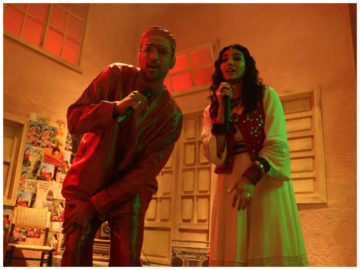 A few years ago, the musician Ali Sethi was driving through Punjab, behind a jingle truck—the long-haul trucks known in his native Pakistan for their filigreed paint designs—when he spotted a phrase in florid Punjabi calligraphy on its back. “Agg lavaan teriya majbooriya nu,” it said—a call to “set fire to your compulsions.” It’s not uncommon to glimpse bits of verse, or dire warnings—against straying eyes or losing yourself in the big world out there—among the fluorescent parrots and tropical fruit schemes of jingle trucks. But Sethi couldn’t stop thinking about that phrase.
It inspired the first line of “Pasoori,” the thirty-seven-year-old’s latest single, a joyous, dance-fuelled hit that has drawn more than a hundred million views on YouTube since its release three months ago and is playing on the radio everywhere, from the United Arab Emirates to Canada. The song is stealthily subversive: a traditional raga—the classical Indian framework for musical improvisation—has been laid over an infectious beat that sounds South Asian, Middle Eastern, and, improbably, reggaetón, all at once.
more here.
 In 1974, at the age of eighty-four, Jean Rhys was asked in a television interview whether she would prefer to write or be happy were she to live her life over again. ‘Oh, happiness!’ she replied without missing a beat.
 ROBERT
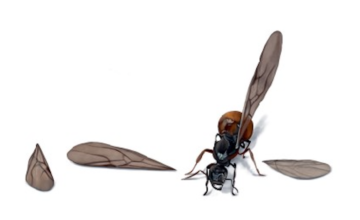 The fact that wings are not always a good thing is demonstrated by those animals whose ancestors used to have wings but who have given them up.
 Jonathan Haidt: The piece is the culmination of my eight-year struggle to understand what the hell happened. I’ve been a professor since 1995. I love being a professor, I love universities. I just felt like this is the greatest job on Earth. I got a glimpse, as a philosophy major, of Plato’s Academy—sitting under the olive trees talking about ideas. And then all of a sudden, from out of nowhere in 2014, things got weird. They got aggressive and they got frightening. This game has been going on for thousands of years, in which one person serves something, the other person hits it back—around 2014, intimidation came in. There was a new element, which was that if you say something, people won’t argue why you’re wrong, they’ll slam you as a bad person. On the left, they’ll call you a racist; on the right, they’ll call you a traitor. But something changed on campus.
 Europe is geographically much closer to Africa than America. Northern Africa has been part of the Eurasian culture since Alexander the Great conquered Egypt, over two millennia ago.
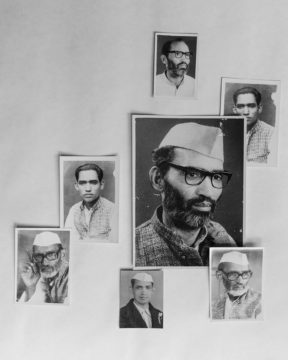 There is a particular collage in Indian photographer Devashish Gaur’s project This Is The Closest We Will Get that stands out in its cut-and-paste simplicity. Entitled Me and Dad, it’s a portrait, black and white, cropped at the shoulders, but most importantly, it depicts two men instead of one. The sitter of the original photograph—an archival one that’s been collaged over—wears a checkered suit and his hair is neatly swept to the side. It feels formal, perhaps a little dated even. Meanwhile, slices of a second face, arranged over this sitter, belong to his son—the photographer, Gaur himself. And their features, the contours and outlines of their faces, do seem to blend quite remarkably. Father and boy, artist and sitter, portrait and self-portrait, entwined.
 As a mother of six and a Mormon, I have a good understanding of arguments surrounding abortion, religious and otherwise. When I hear men discussing women’s reproductive rights, I’m often left with the thought that they have zero interest in stopping abortion. If you want to prevent abortion, you need to prevent unwanted pregnancies. Men seem unable (or unwilling) to admit that they cause 100% of them. I realize that’s a bold statement. You’re likely thinking, “Wait. It takes two to tango!” While I fully agree with you in the case of intentional pregnancies, I argue that all unwanted pregnancies are caused by the irresponsible ejaculations of men. All of them.
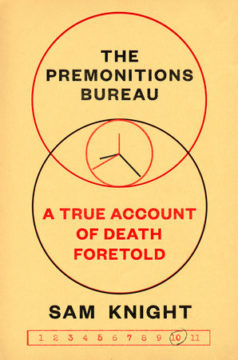 S
S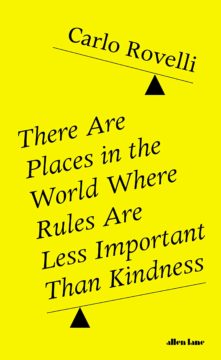 The nature of time. Black holes. Ancient philosophers. The struggle for democracy. Climate change. Buddhist philosophy. In his new collection of essays and articles, Carlo Rovelli, one of the world’s most renowned physicists, broadens his writing to include questions of politics, justice and how we live now.
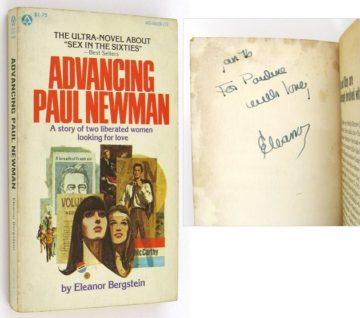 I became aware of Advancing Paul Newman, Eleanor Bergstein’s 1973 debut novel, through Anatole Broyard’s dismissive review, which I came across in some undirected archival wandering. His grating condescension spurred me to read the novel—one of the best minor rebellions I’ve ever undertaken. (Bergstein is best known for writing the movie Dirty Dancing.) “This is the story of two girls, each of whom suspected the other of a more passionate connection with life,” she writes of the protagonists, best friends Kitsy and Ila. The romance of their friendship holds together everything else: trips to Europe to collect experiences (which, of course, often disappoint), becoming or failing to become writers, love affairs and marriages and divorces, their idealistic campaigning for the anti-war presidential candidate Eugene McCarthy in 1968. But Advancing Paul Newman is not simply a story of friendship, albeit one between two complicated women. The book is also gorgeously deranged and witty, told in fragments and leaps. “Don’t find me poignant, you ass,” Kitsy snaps at her ex when he happens upon her eating alone in a restaurant. After bad sex in Italy, she says matter-of-factly, “This was a good experience because now I know what it feels like to have my flesh crawl.” Ila is “glorious when in love, undistinguished when not in love,” and sleeps with two men on the day of Kitsy’s wedding. “There were reasons.”