
The Such Thing As the Ridiculous Question –
Where are you from???
When I say ancestors, let’s be clear:
I mean slaves. I’m talkin’ Tennessee
cotton & Louisiana suga. I mean grave
dirt. I come from homes & marriages
named after the same type of weapon –
all it takes is a shotgun to know
I’m Black. I don’t got no secrets
a bullet ain’t told. Danger see me
& sit down somewhere.
I’m a direct descendant of last words
& first punches. I got stolen blood.
My complexion is America’s
darkest hour. You can trace my great
great great great great grandmother back
to a scream. I bet somewhere it’s a haint
with my eyes. My last name is a protest;
a brick through a window in a house
my bones built. One million
scabs from one scar.
Heavy is the hand that held
the whip. Black is the back that carried this
country & when this country’s palm gets
an itch, I become money. You give this country
an inch & it will take a freedom. You can’t talk slick
to this legacy of oiled scalps. You can’t spit
on my race & call it reign. I sound like my mama now,
who sound like her mama who sound like her mama who
sound like her mama, who sound like her
mama who sound like her mama who sound like her
mama who sound like her mama, who sound like a scream.
& that’s why I’m so loud, remember? You wanna know
where I’m from? Easy. Open a wound
& watch it heal.
by Siaara Freeman
from Split This Rock
Listen to reading: here
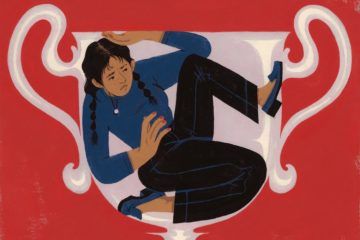 I am a recovering perfectionist.
 Science is “a shared experience, subject both to the best of what creativity and imagination have to offer and to humankind’s worst excesses”. So wrote the guest editors of this special issue of Nature, Melissa Nobles, Chad Womack, Ambroise Wonkam and Elizabeth Wathuti, in a
  I have worked in restaurants, lived on sustenance homesteads, volunteered for aquaponics and permaculture farms, and harvested at food forests from Hawaii to Texas. I invariably come home with a crate of spare cuttings and leftovers that no one else wants. My pockets are often full of uneaten complimentary bread.
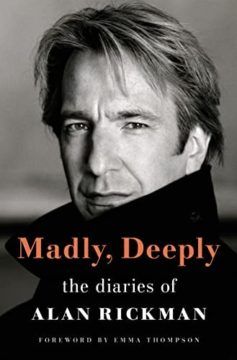 For anyone with a sneaker for the man and his work, these diaries are a delight. For one thing, they’re filled with his acerbic verdicts on the films and plays he sees. Vicky Cristina Barcelona he dismisses as ‘Woman’s Weekly tosh’, which seems about right. He’s no fan of the over-praised Last Seduction, noting that ‘an espresso is more rewarding’. As for Marvin’s Room, he complains it’s ‘another of those American plays which insist that you feel something’, before adding wryly, ‘I don’t think anger & frustration is what they had in mind.’
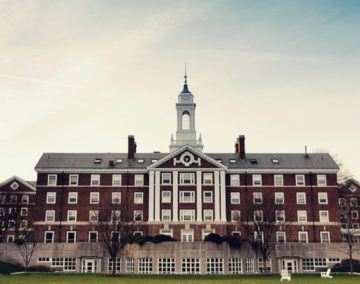 Life Studies is Robert Lowell’s best-known and most influential book. It won the National Book Award for poetry in 1960. I read it in 1962 and I hated it. In a shallow way, my dislike was a matter of social class. I said aloud to Lowell’s book, “Yeah, I had a grandfather, too.” Like my fellow would-be urban Beatniks at Rutgers, I preferred the manners of Allen Ginsberg’s “Kaddish”—the poet reading the Hebrew prayer for the dead while listening to Ray Charles and walking the streets of Greenwich Village.
 IN THE SPRING
 1) What are the most exciting projects that you’re currently working on? And the most exciting projects that you know of that others are working on?
 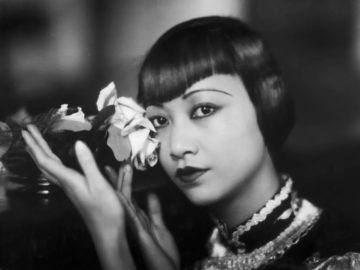 The U.S. Mint will begin shipping coins featuring actress Anna May Wong on Monday, the first U.S. currency to feature an Asian American. Dubbed Hollywood’s first Asian American movie star, Wong championed the need for more representation and less stereotypical roles for Asian Americans on screen. Wong, who died in 1961, struggled to land roles in Hollywood in the early 20th century, a time of “
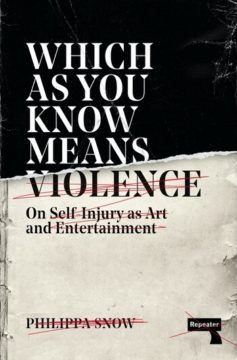 WHEN I FINISHED MY FIRST READ of Which as You Know Means Violence, critic Philippa Snow’s debut “on self-injury as art and entertainment,” I returned to my own cultural hallmark of suffering, the 2006 film adaptation of The Da Vinci Code. Reading Snow’s analysis of artist Chris Burden’s 1974 crucifixion atop a Volkswagen Beetle alongside the comical stunts of Johnny Knoxville and his squad of Jackass pranksters, I thought frequently of Paul Bettany’s fanatical Silas, who torments himself to such extremes that he plays at the brink of absurdity. Silas spends most of his screen time scurrying around church cloisters in monk’s robes and a bloody cilice, or flagellating his back in penance, a commitment to suffering so all-consuming and ridiculous that, by his third murderous jump-scare, it’s a challenge not to laugh mid-flinch.
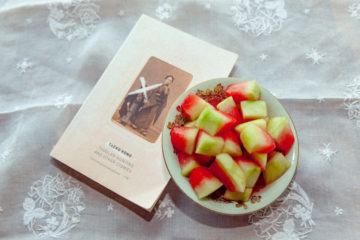 The Japanese writer Taeko Kōno is a maestro of transgressive desire whose stories often—and deliciously—use food as a metaphor for sexual appetite. Kōno, who died in 2015, is considered one of Japan’s foremost feminist writers and one of its foremost writers of any kind. She won many of the country’s top literary prizes, including the Akutagawa, the Tanizaki, the Noma, and the Yomiuri. The single selection of her work in English, Toddler-Hunting & Other Stories, first published by New Directions in 1996 and translated by Lucy North and Lucy Lower, contains ten dark, deceptively simple stories about women who find the gender roles in Japanese society unbearable, and are warped by them.
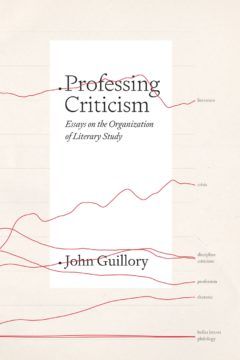 In this essay, I argue for a reorientation of discourse about the humanities to the objects of humanistic study rather than claims for their value or effect. Returning to an essay Erwin Panofsky published in 1940, “The History of Art as a Humanistic Discipline,” I build on Panofsky’s rich distinction between “monuments” and “documents” as the two sides of the humanistic object of study. By “monuments,” Panofsky refers to all of those human artifacts, actions, or ideas that have urgent meaning for us in the present. By “document,” he refers to all of those traces or records by means of which we recover monuments. Monuments and documents bring the long time of human existence, past or future, into relation to the short time of human life, a relation that defines the objects of study in all the humanities and confirms the undeniable interest of that study.
 Ben Bernanke at the Brookings Institution in Washington DC, Douglas Diamond at the University of Chicago in Illinois and Philip Dybvig at Washington University in St. Louis, Missouri, shared equal parts of the 10-million-Swedish-krona (US$915,000) award, formally known as the Sveriges Riksbank Prize in Economic Sciences in Memory of Alfred Nobel.