
Eleni Schirmer in The New Yorker:
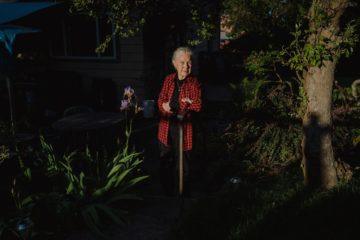 Americans aged sixty-two and older are the fastest-growing demographic of student borrowers. Of the forty-five million Americans who hold student debt, one in five are over fifty years old. Between 2004 and 2018, student-loan balances for borrowers over fifty increased by five hundred and twelve per cent. Perhaps because policymakers have considered student debt as the burden of upwardly mobile young people, inaction has seemed a reasonable response, as if time itself will solve the problem. But, in an era of declining wages and rising debt, Americans are not aging out of their student loans—they are aging into them.
Credit supposes that which we cannot afford today will be able to be paid back by tomorrow’s wealthier self—a self who is wealthier because of riches leveraged by these debts. Perhaps no form of credit better embodies the myth of a future, richer self than student loans. Under the vision of the free-market economist Milton Friedman, student loans emerged in the nineteen-fifties as an outgrowth of “human capital” theory, which posits the self as, above all, a unit of investment.
More here.
 Last May, after the Isla Vista shooter’s manifesto revealed a deep misogyny, women went online to talk about the violent retaliation of men they had rejected, to describe the feeling of being intimidated or harassed. These personal experiences soon took on a sense of universality. And so #yesallwomen was born—yes all women have been victims of male violence in one form or another. I was bothered by the hashtag campaign. Not by the male response, which ranged from outraged and cynical to condescending, nor the way the media dove in because the campaign was useful fodder. I recoiled from the gendering of pain, the installation of victimhood into the definition of femininity—and from the way pain became a polemic.
 W
W Gregory Afinogenov in The Nation (illustration by Lily Qian):
 Patrick Iber interviews Matt Duss in Dissent:
 N
N My bookshelves are a mess. It’s not just that I have too many books and too little space. I’m also simply disorganized. It wasn’t always so. Shelves I put together years ago, pre-children, remain generally intact: a full bookcase of poetry, alphabetized by author, and several jam-packed bookcases of fiction, also by authors’ last names. These shelves now serve primarily as decoration or reference or as a lending library for guests. But there’s more, much more: the tumbling pile on my desk — propping up the computer I am typing on — and the volumes stuffed frantically in the bookcase in my bedroom and stacked in towers on and around my nightstand. These are the books that are part of my daily life — for work, for pleasure, sometimes both. There is no rhyme or reason to how I arrange them, but as I read in
 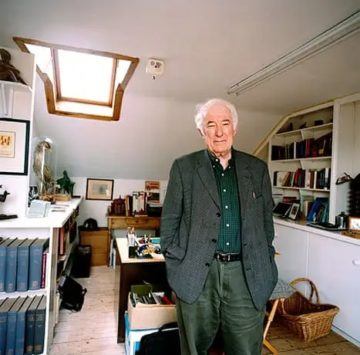 In the summer of 2012 Seamus Heaney wrote to me on some questions I had sent him about dictionaries and words and etymologies. Bits of what he had to say made it into a couple of talks I did around that time, but I recently rediscovered the original text, and thought it should see the light of day. So here’s a very lightly edited rendition of our exchange:
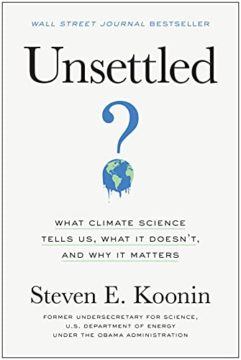 In a recent
  Pretexts:
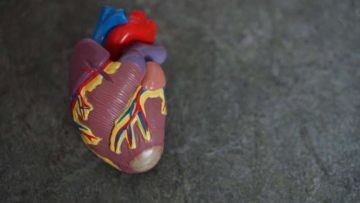 Researchers in the Biomedical Engineering Department at UConn have developed a new cardiac cell-derived platform that closely mimics the human heart, unlocking potential for more thorough preclinical drug development and testing, and model for cardiac diseases. The research, published in Cell Reports by Assistant Professor Kshitiz in collaboration with Dr. Junaid Afzal in the cardiology department at the University of California San Francisco, presents a method that accelerates maturation of human cardiac cells towards a state suitable enough to be a surrogate for preclinical drug testing.