
Peter J. van Dijk, Adrienne P. Jessop and T. H. Noel Ellis in Nature:
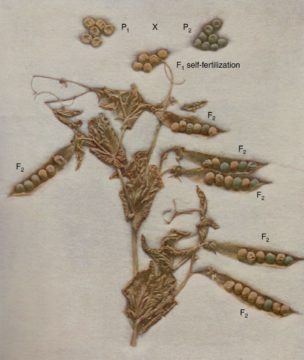 There are few historical records concerning Gregor Johann Mendel and his work, so theories abound concerning his motivation. These theories range from Fisher’s view that Mendel was testing a fully formed previous theory of inheritance to Olby’s view that Mendel was not interested in inheritance at all, whereas textbooks often state his motivation was to understand inheritance. In this Perspective, we review current ideas about how Mendel arrived at his discoveries and then discuss an alternative scenario based on recently discovered historical sources that support the suggestion that Mendel’s fundamental research on the inheritance of traits emerged from an applied plant breeding program. Mendel recognized the importance of the new cell theory; understanding of the formation of reproductive cells and the process of fertilization explained his segregation ratios. This interest was probably encouraged by his friendship with Johann Nave, whose untimely death preceded Mendel’s first 1865 lecture by a few months. This year is the 200th anniversary of Mendel’s birth, presenting a timely opportunity to revisit the events in his life that led him to undertake his seminal research. We review existing ideas on how Mendel made his discoveries, before presenting more recent evidence.
More here.
 AS SOMEONE WHO grew up in India in the early 2000s, after the once-colonized country had opened itself to the global economy, one thing was clear to me. Aspiration and English were synonymous. Both were essential. This lesson was drilled into me at my missionary-run English-medium high school in New Delhi. Whether we dreamed of becoming doctors or engineers or corporate hotshots, we were repeatedly told that we needed to have English. Students were penalized for speaking in any language other than English, and our pronunciations were disciplined in preparation for roles no one doubted we would take on. Away from the institutional ear, my peers and I still cherished our other languages, to varying degrees. But, for the most part, we learned to joke, dream, rebel, and obey in English.
 In the late afternoon of September 21, 2018, I exited my New York apartment building carrying a folding table and a big sign reading GRAMMAR TABLE. I crossed Broadway to a little park called Verdi Square, found a spot at the northern entrance to the Seventy-Second Street subway station, propped up my sign, and prepared to answer grammar questions from passersby.
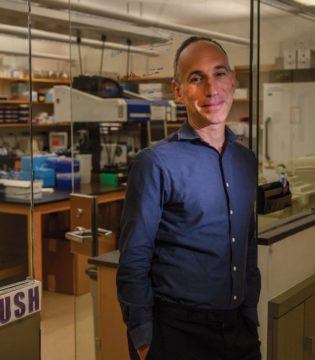 INTERPRETING ANCIENT DNA
 I remember all too well that day early in the pandemic when we first received the “stay at home” order. My attitude quickly shifted from feeling like I got a “snow day” to feeling like a bird in a cage. Being a person who is both extraverted by nature and not one who enjoys being told what to do, the transition was pretty rough.
 “O
“O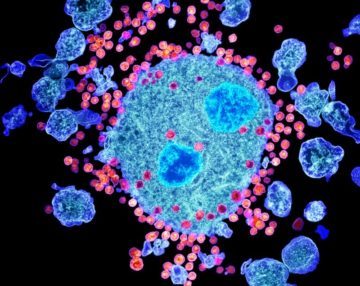 An injectable drug that protects people at high risk of HIV infection has been recommended for use by the World Health Organization (WHO). Cabotegravir (also known as CAB-LA), which is given every two months, was initially approved by the United States Food and Drug Administration in December 2021.
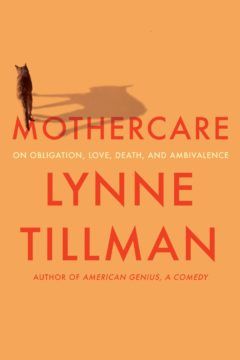 Care work — tending to the sick, the very young or the very old — has long been denied the kind of recognition (and remuneration) that
  Ever since ancient Uruk, the world’s first major city, founded around 4000
  Melinda Cooper in Phenomenal World:
 Thea Riofrancos in The Nation (illustration by Tim Robinson):
 Gordon Peake and Miranda Forsyth in Aeon:
 When my parents first told me I was going to Hindu camp, I was not happy. And, to be honest, I was more than a little scared. My parents claimed they knew what was best for me, vom. Most of my summer vacations were spent back in India with family, so it was almost a treat to be able to stay home for once. I’d miss swimming at Park N Pool, riding bikes to Dairy Queen and picnicking at Idlewild Park. Why would I want my perfect summer in the ‘burbs to be interrupted by some stupid camp where I wouldn’t know anyone? Would there be bears? And even more terrifying, would there be cute boys?
 Steven Preister’s house in Washington, D.C. is a piece of American history, a gorgeous 110-year-old colonial with wooden columns and a front porch, perfect for relaxing in the summer. But Preister, who has owned it for almost four decades, is deeply concerned about the environment, so in 2014 he added something very modern: solar panels. First, he mounted panels on the back of the house, and they worked nicely. Then he decided to add more on the front, facing the street, and applied to the city for a permit.
 Marina Herlop