
Elif Batuman in The New Yorker:
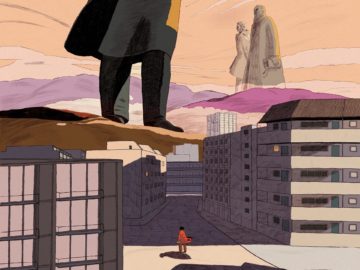 The first and only time I visited Ukraine was in 2019. My book “The Possessed”—a memoir I had published in 2010, about studying Russian literature—had recently been translated into Russian, along with “The Idiot,” an autobiographical novel, and I was headed to Russia as a cultural emissary, through an initiative of pen America and the U.S. Department of State. On the way, I stopped in Kyiv and Lviv: cities I had only ever read about, first in Russian novels, and later in the international news. In 2014, security forces had killed a hundred protesters at Kyiv’s Independence Square, and Russian-backed separatists had declared two mini-republics in the Donbas. Nearly everyone I met on my trip—journalists, students, cultural liaisons—seemed to know of someone who had been injured or killed in the protests, or who had joined the volunteer army fighting the separatists in the east.
As the visiting author of two books called “The Possessed” and “The Idiot,” I got to hear a certain amount about people’s opinions of Dostoyevsky. It was explained to me that nobody in Ukraine wanted to think about Dostoyevsky at the moment, because his novels contained the same expansionist rhetoric as was used in propaganda justifying Russian military aggression. My immediate reaction to this idea was to bracket it off as an understandable by-product of war—as not “objective.”
More here.
 The ant oncologist will see you now.
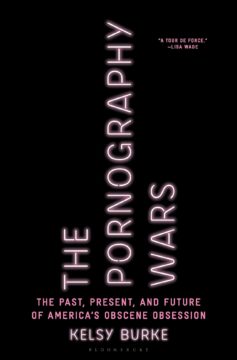 Turning toward the contemporary allows Burke to undertake firsthand observation, learning in the process that antiporn and sex-positive conferences share an affinity for dreary airport hotels. She masterfully profiles individuals involved in the porn wars, writing with empathy and nuance as she speaks with performers, conservative women, and a young “recovery coach” entrepreneur who parlayed his experience with porn addiction (a hotly contested concept, as Burke notes, with competing parties flinging lawsuits at one another constantly) into a career. None of these people collapses into caricature, and Burke allows ambivalence to hang productively in the air. A woman who produced material for Kink.com has come to accept that some of her audience was “rapists or aspiring rapists,” but she doesn’t renounce her work. One young woman who became a performer after majoring in women’s studies endured sexual harassment and career sabotage from her agent before a horrifying European shoot, in which she was pressured into a double anal scene despite never having had anal sex, leaving her in an urgent care facility with an infected rectum. As Burke unblinkingly narrates this, we prepare for the inevitable twist of her rebirth as an antiporn speaker; instead, she remains in the industry, jaded, critical, and now independent on OnlyFans, but still protective of sex work as a labor sector.
 However cantankerous or stubborn Crosby was offstage, when performing, he was seized by a kind of silent joy. You could see it spreading across his face, loosening his features. Music softened him. In his later years, he wore a white mustache, long frizzy hair, and an omnipresent red beanie (knitted by his wife, Jan). He looked like someone who might sell you some garden compost. He looked salty. Performing was the one thing that seemed to reliably animate and excite him.
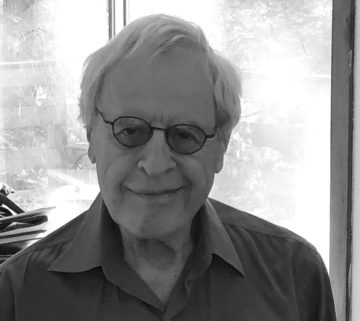 I first met Charles Simic in 1994 at a dinner to celebrate the Harvard Review’s special issue dedicated to Simic. I had written an essay for the issue titled “He Who Remembers His Shoes” that focused on several of his poems and so was invited to this dinner and seated next to him. While we were eating, a small black ant started crawling across the white table cloth. Simic became mesmerized by this ant. We both wondered if the ant was going to “make it” to the other side, and then, suddenly, our waiter appeared and swept it up. Simic almost wept. (I later learned that ants were his favorite insect.) What an object lesson it was for me in Simic’s compassion for the smallest creatures, what Czesław Miłosz called “immense particulars.” I stayed in touch with Simic off and on after this night, inviting him to read at the M.F.A. program I cofounded in 2001. Simic declined at first, saying he was “too pooped” after a reading tour in Europe, but then agreed to come in 2005. He read at The Fells, John Hayes’ elegant estate overlooking Lake Sunapee in New Hampshire which New England College rented for the occasion. The indelible image of him with the lake and gardens behind him has stayed with me ever since.
 So you have some information — how are you going to share it with and present it to the rest of the world? There has been a long history of organizing and displaying information without putting too much thought into it, but Edward Tufte has done an enormous amount to change that. Beginning with
  Being professionally heterodox has probably made it easier to make a name for myself, but it comes with its own set of hangups. There’s a tendency to sort anyone who steps outside of the usual partisan lines into the same bucket, despite the fact that defying orthodoxy should theoretically not consign you to any particular opinion at all. Typically, this pigeonholing is the work of people who are very much orthodox something, usually orthodox liberal Democrats – they’ll claim that anyone who is not exactly what they are is therefore necessarily the opposite of what they are, which is usually a conservative Republican. This is how you get people claiming that Matt Taibbi is a “far-right” journalist. (To add another layer to this onion, by saying that Taibbi is not a far-right journalist, in the eyes of some I have just marked myself as far-right myself.) This dynamic also exists on the right; the conservative Christian David French is frequently called a liberal by his many enemies on the right. None of this is particularly surprising. The orthodox tend to think only in terms of dueling orthodoxies, and if they’re sure you’re not a Yook, you must be a Zook. So it goes.
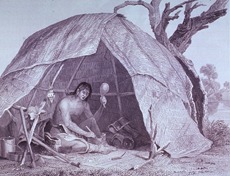 Along, long time ago, some Indians were running along a trail that led to an Indian settlement. As they ran, a rabbit jumped from the bushes and sat before them.
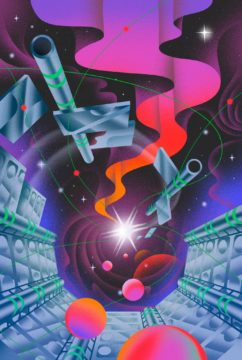 The future belongs to those who prepare for it, as scientists who petition federal agencies like NASA and the Department of Energy for research funds know all too well. The price of big-ticket instruments like a space telescope or particle accelerator can be as high as $10 billion.
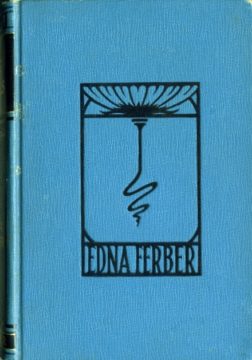 Certainly, Ferber’s approach—critical but forgiving to individual people and America at large—stems largely from who she was as a person and the way in which she moved through the world as a feme sole. A firsthand expert on the old maid lifestyle herself, Ferber was never known to have had a romantic or sexual relationship. But far from being a sad, sere figure whom life was passing by, she was vibrant, indefatigable, witty, and successful, a member of the Algonquin Round Table in New York and a winner of the Pulitzer Prize in 1925 for So Big, another wonderful Chicago novel. She saw that book eventually adapted into one silent picture and two talkies. Her 1926 novel Show Boat was made into the famous 1927 musical, and Cimarron (1930), Giant (1952), and The Ice Palace (1958) were all adapted into films as well. When
 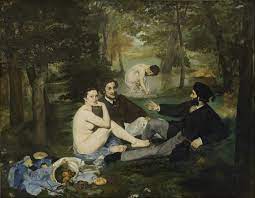 IF A SINGLE QUESTION is guiding for our understanding of Manet’s art during the first half of the 1860s, it is this: What are we to make of the numerous references in his paintings of those years to the work of the great painters of the past? A few of Manet’s historically aware contemporaries recognized explicit references to past art in some of his important pictures of that period; and by the time he died his admirers tended to play down the paintings of the first half of the sixties, if not of the entire decade, largely because of what had come to seem their overall dependence on the Old Masters. By 1912 Blanche could claim, in a kind of hyperbole, that it was impossible to find two paintings in Manet’s oeuvre that had not been inspired by other paintings, old or modern. But it has been chiefly since the retrospective exhibition of 1932 that historians investigating the sources of Manet’s art have come to realize concretely the extent to which it is based upon specific paintings, engravings after paintings, and original prints by artists who preceded him. It is now clear, for example, that most of the important pictures of the sixties depend either wholly or in part on works by Velasquez, Goya, Rubens, Van Dyck, Raphael, Titian, Giorgione, Veronese, Le Nain, Watteau, Chardin, Courbet . . . This by itself is an extraordinary fact, one that must be accounted for if Manet’s enterprise is to be made intelligible.
 Indeed, the
 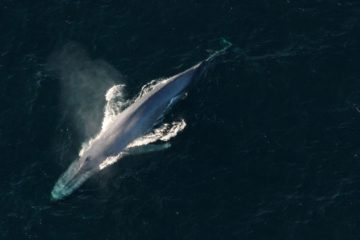 The blue, fin, bowhead, gray, humpback, right and sperm whales are the largest animals alive today. In fact, the blue whale is the largest-known creature ever on Earth, topping even the biggest of the dinosaurs.
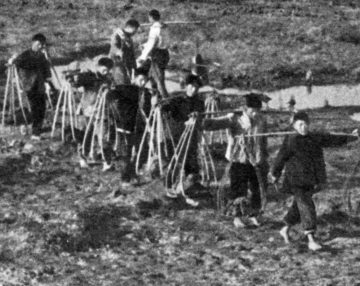 In late 1968, the train and bus stations of Chinese cities filled with sobbing adolescents and frightened parents. The authorities had decreed that teenagers – deployed by
 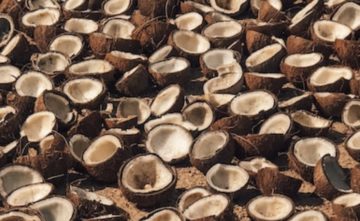 If the coconut symbolizes the natural bounty of the tropical zone in many people’s minds, it is often used to “explain” the human poverty frequently found in the zone. A common assumption in rich countries is that poor countries are poor because their people do not work hard. And given that most, if not all, poor countries are in the tropics, they often attribute the lack of work ethic of the people in poor countries to the easy living that they supposedly get thanks to the bounty of the tropics. In the tropics, it is said, food grows everywhere (bananas, coconuts, mangoes—the usual imagery goes), while the high temperature means that people don’t need sturdy shelter or much clothing.