
Category: Recommended Reading
Ready, set, share! making data freely available
Kaiser and Brainard in Science:
 Physiologist Alejandro Caicedo of the University of Miami Miller School of Medicine is preparing a grant proposal to the U.S. National Institutes of Health (NIH). He is feeling unusually stressed because of a new requirement that takes effect today. Along with his research idea, to study why islet cells in the pancreas stop making insulin in people with diabetes, he will be required to submit a plan for managing the data the project produces and sharing them in public repositories.
For his lab, that’s a daunting task. Unlike neuroscience or genomics, Caicedo’s field has no common platforms or standards for storing and sharing the kinds of data his lab generates, such as videos of pancreatic islet cells responding to a glucose stimulus. The “humongous” raw imaging files are currently stored in an on-campus database, notes Julia Panzer, a postdoctoral researcher in the lab. To protect patient privacy, the database is secured and not designed to provide access to outsiders. Sharing the data will mean uploading them somewhere else.
More here.
Could the “Chinese Century” Belong to India?
Pranab Bardhan in Project Syndicate:
 I think the century will probably not belong to China or India – or any country, for that matter. Chinese achievements in the last few decades have been phenomenal, but it is now experiencing a palpable – and expected – slowdown. And while international financial media have been hyping the arrival of “India’s moment,” a cold look at the facts suggests that such assessments are premature at best.
A key reason for this is demographic. Yes, India has most likely already surpassed China as the world’s largest country by population, and its youth bulge is substantial. But far from delivering a “demographic dividend,” India’s relatively young population may turn out to be a liability, as the country struggles to generate sufficient productive employment.
More here.
Benedict Cumberbatch reads a hilarious letter of apology to a hotel
The artist Marcel Duchamp — 1/27/23
From Delancey Place:
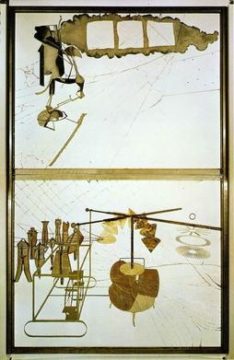 “Marcel Duchamp (1887-1968), the younger brother of the sculptor Duchamp-Villon, was perhaps the most stimulating intellectual to be concerned with the visual arts in the twentieth century — ironic, witty and penetrating. He was also a born anarchist. Like his brother, he began (after some exploratory years in various current styles) with a dynamic Futurist version of Cubism, of which his painting Nude Descending a Staircase, No. 2 is the best known example. It caused a scandal at the famous Armory Show of modern art in New York in 1913. Duchamp’s ready-mades are everyday manufactured objects converted into works of art simply by the artist’s act of choosing them. Duchamp did nothing to them except present them for contemplation as ‘art’. They represent in many ways the most iconoclastic gesture that any artist has ever made — a gesture of total rejection and revolt against accepted artistic canons. For by reducing the creative act simply to one of choice ‘ready-mades’ discredit the ‘work of art’ and the taste, skill, craftsmanship — not to mention any higher artistic values — that it traditionally embodies. Duchamp insisted again and again that his ‘choice of these ready-mades was never dictated by an aesthetic delectation. The choice was based on a reaction of visual indifference, with at the same time a total absence of good or bad taste, in fact a complete anaesthesia.’
More here.
Friday Poem
Main Street: Tilton, New Hampshire
I waited in the car while he
went into the small old-fashioned grocery
for a wedge of cheddar.
Late summer, Friday afternoon.
A mother and child walked past
trading mock blows
with paper bags full of —what—
maybe new clothes for school.
They turned the corner by the Laundromat,
and finally even the heel
of the girl’s rubber flip-flop
passed from sight.
Across the street a blue pickup, noisy,
with some kind of homemade wooden
scaffolding in the bed pulled
close to the curb. A man got out
and entered the bank . . .
………………………………….. A woman sat
in the cab, dabbing her face
with tissue. She might have been weeping,
but it was hot and still,
and maybe she wasn’t weeping at all.
Through time and space we came
to Main Street—three days before
Labor Day, 1984, 4:47 in the afternoon;
and then that moment passed, displaced
by others equally equivocal.
by Jane Kenyon
from Otherwise
Graywolf Press, 1997
Thursday, January 26, 2023
Is Sigrid Undset Underappreciated?
Ted Gioia at The Honest Broker:
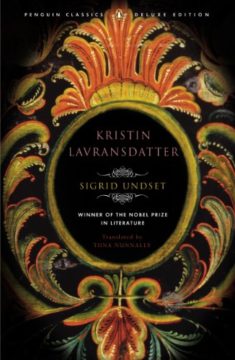 Sigrid Undset was an unlikely literary star. Modernist themes were on the ascendancy in those days, but she wanted to write medieval romances. So at night, after work, she researched her subject, studying the sagas, old ballads, and chronicles of the Middle Ages.
You might say she lived in the past. Or in a fantasy world of her own creation. But Undset wanted to deal with these kinds of tales in a brutally realistic manner. She started writing stories where, in her own words, “everything that seems romantic from here—murder, violent episodes, etc. becomes ordinary—comes to life.” Her first novel was rejected by publishers. But her second book got noticed—and caused a scandal. The opening line announced: “I have been unfaithful to my husband.”
Against Copyediting
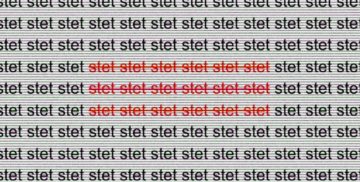
Do we really need copyediting? I don’t mean the basic clean-up that reverses typos, reinstates skipped words, and otherwise ensures that spelling and punctuation marks are as an author intends. Such copyediting makes an unintentionally “messy” manuscript easier to read, sure.
But the argument that texts ought to read “easily” slips too readily into justification for insisting a text working outside dominant Englishes better reflect the English of a dominant-culture reader—the kind of reader who might mirror the majority of those at the helm of the publishing industry, but not the kind of reader who reflects a potential readership (or writership) at large.
more here.
Salman Rushdie Has a New Book, and a Message: ‘Words Are the Only Victors’
Alexandra Alter and Elizabeth A. Harris in the New York Times:
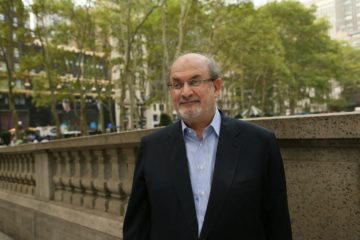 In “Victory City,” a new novel by Salman Rushdie, a gifted storyteller and poet creates a new civilization through the sheer power of her imagination. Blessed by a goddess, she lives nearly 240 years, long enough to witness the rise and fall of her empire in southern India, but her lasting legacy is an epic poem.
“All that remains is this city of words,” the poet, Pampa Kampana, writes at the end of her epic, which she buries in a pot as a message for future generations. “Words are the only victors.”
Framed as the text of a rediscovered medieval Sanskrit epic, “Victory City” is about mythmaking, storytelling and the enduring power of language. It is also a triumphant return to the literary stage for Rushdie, who has been withdrawn from public life for months, recovering from a brutal stabbing while onstage during a cultural event in New York last year.
More here.
The Alpha Female Wolf at Yellowstone
Leon Vlieger at The Inquisitive Biologist:
 The wolves reintroduced to Yellowstone National Park in 1995 are some of the best-studied mammals on the planet. Biological technician and park ranger Rick McIntyre has spent over two decades scrutinising their daily lives, venturing into the park every single day. Where his previous books focused on three notable alpha males, it is ultimately the females that call the shots and make the decisions with lasting consequences. This book is a long overdue recognition of the female wolf and continues this multigenerational saga.
If wolf 21, the subject of the second book, was the most famous male wolf in Yellowstone, then his granddaughter 06 (named after her year of birth, 2006) can safely be called the most famous female wolf. This fourth book picks up where the third book ended, covering the period 2009–2015. It tells 06’s life story, her untimely death, and the fate of one of her daughters.
More here.
Military Artificial Intelligence and the Principle of Distinction: A State Responsibility Perspective
Magdalena Pacholska at the Cambridge University Press:
 Military artificial intelligence (AI)-enabled technology might still be in the relatively fledgling stages but the debate on how to regulate its use is already in full swing. Much of the discussion revolves around autonomous weapons systems (AWS) and the ‘responsibility gap’ they would ostensibly produce. This contribution argues that while some military AI technologies may indeed cause a range of conceptual hurdles in the realm of individual responsibility, they do not raise any unique issues under the law of state responsibility. The following analysis considers the latter regime and maps out crucial junctions in applying it to potential violations of the cornerstone of international humanitarian law (IHL) – the principle of distinction – resulting from the use of AI-enabled military technologies. It reveals that any challenges in ascribing responsibility in cases involving AWS would not be caused by the incorporation of AI, but stem from pre-existing systemic shortcomings of IHL and the unclear reverberations of mistakes thereunder. The article reiterates that state responsibility for the effects of AWS deployment is always retained through the commander’s ultimate responsibility to authorise weapon deployment in accordance with IHL. It is proposed, however, that should the so-called fully autonomous weapon systems – that is, machine learning-based lethal systems that are capable of changing their own rules of operation beyond a predetermined framework – ever be fielded, it might be fairer to attribute their conduct to the fielding state, by conceptualising them as state agents, and treat them akin to state organs.
More here.
The secret to a happy life — lessons from 8 decades of research
Prince Harry Is Right, and It’s Not Just a Matter of Royal Gossip
Zeynep Tufecki in The New York Times:
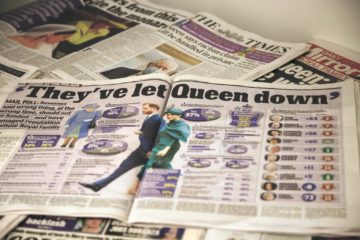 Any close follower of the British media should not have been surprised that after Prince Harry fell in love with Meghan Markle, the biracial American actress, years of vitriolic, even racist coverage followed. Whipping hatred and spreading lies — including on issues far more consequential than a royal romance — is a specialty of Britain’s atrocious but politically influential tabloids.
People like me, uninterested in celebrities, shouldn’t dismiss the brouhaha around Harry’s memoir as mere celebrity tittle-tattle. He has made credible, even documented claims that his own family refused to stand up against their ugly, sustained attacks against Meghan. In other words, it appears that Britain’s most revered institution, funded by tens of millions in taxpayer funds annually, plays ball with one of its most revolting institutions.
At the very least, it seems clear by now where some senior members of the royal family position themselves in all this.
More here.
The race to supercharge cancer-fighting T cells
Heidi Ledford in Nature:
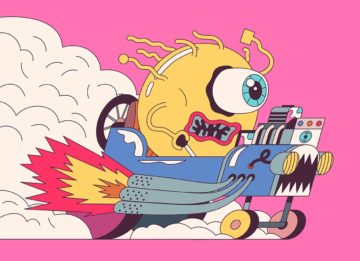 Crystal Mackall remembers her scepticism the first time she heard a talk about a way to engineer T cells to recognize and kill cancer. Sitting in the audience at a 1996 meeting in Germany, the paediatric oncologist turned to the person next to her and said: “No way. That’s too crazy.”
Today, things are different. “I’ve been humbled,” says Mackall, who now works at Stanford University in California developing such cells to treat brain tumours. The US Food and Drug Administration approved the first modified T cells, called chimeric antigen receptor (CAR)-T cells, to treat a form of leukaemia in 2017. The treatments have become game changers for several cancers. Five similar products have been approved, and more than 20,000 people have received them. A field once driven by a handful of dogged researchers now boasts hundreds of laboratory groups in academia and industry. More than 500 clinical trials are under way, and other approaches are gearing up to jump from lab to clinic as researchers race to refine T-cell designs and extend their capabilities. “This field is going to go way beyond cancer in the years to come,” Mackall predicts.
More here.
YELLOW MAGIC ORCHESTRA: A Complete Overview
Thursday Poem
What I’m Doing Here
I do not know if the world has lied
I have lied
I do not know if the world has conspired against love
I have conspired against love
The atmosphere of torture is no comfort
I have tortured
Even without the mushroom cloud
still I would have hated
Listen
I would have done the same things
even if there were no death
I will not be held like a drunkard
under the cold tap of facts
I refuse the universal alibi
Like an empty telephone booth passed at night
and remembered
like mirrors in a movie palace lobby consulted
only on the way out
I wait
for each one of you to confess
by Leonard Cohen
from Selected Poems, 1956-1968
Viking Press, 1968
Wednesday, January 25, 2023
Herbert Read: The Art of Everyday Life
Nicholas Burman in Jacobin:
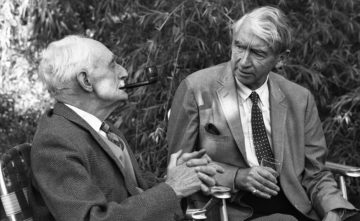
In a natural society there will be no precious or privileged beings called artists,” Herbert Read declares in his 1941 essay To Hell With Culture. “There will only be workers.” The eightieth anniversary of this essay’s publication provides an excuse to return to Read and consider him and the relevancy of his work today.
Read is often described as a contradictory figure: a bow-tied, softly spoken pacifist; an art critic open to automated processes but nostalgic for the medieval crafts guilds; a philosopher who stressed the importance of workers owning the means of production but who was far from an orthodox Marxist.
While being an early adopter of Nietzsche made him a Europeanizer of British criticism, he also stuck closely to the traditional objects of art history while continental counterparts expanded their analyses to include cities and social movements. Generally friendly toward him, George Orwell wrote that Read’s “open-mindedness has been his strength and weakness.”
More here.
All biology is computational biology
Florian Markowetz in PLOS Biology:
 Here, I argue that computational thinking and techniques are so central to the quest of understanding life that today all biology is computational biology. Computational biology brings order into our understanding of life, it makes biological concepts rigorous and testable, and it provides a reference map that holds together individual insights. The next modern synthesis in biology will be driven by mathematical, statistical, and computational methods being absorbed into mainstream biological training, turning biology into a quantitative science.
More here.
‘We do our work because we are angry’: Navalny’s right-hand woman Maria Pevchikh on taking on Putin
Carole Cadwalladr in The Guardian:
 Two years ago this week, the leader of the Russian opposition, Alexei Navalny, flew into Moscow knowing that he faced certain arrest and imprisonment. It was an extraordinary act of courage and leadership. He had only just recovered from an attempt on his life after collapsing on a plane poisoned with what was later found to be the nerve agent novichok. He was not meant to survive.
“There was no way he wouldn’t have gone back to Moscow,” the investigative journalist Maria Pevchikh tells me. “That wasn’t even on the table.” As the head of investigations for the Anti-Corruption Foundation (FBK), the organisation founded by Navalny, Pevchikh worked alongside him for a decade and was with him in Siberia when he was poisoned.
“We prepared for it very well,” she says of Navalny’s absence. And then hesitates. “It’s just a very noticeable loss. We’re fully functioning, probably better than before. But we lost a lot of our spirit. We do our work because we’re angry.”
More here.