Two Mass Shootings, Same Day, Michigan
I went to two locations of mass shootings this week.
One where every single person I talked to was white.
One where every single person I talked to was black.
The white shooter shot white people. And the black
shooter shot black people. The poor shooter shot
poor people. The middle-class shooter shot middle-
class people. The veteran killed a veteran. USMC
killed a Navy vet. Two kids and two adults were
shot by a dumpster. Too many to count were shot
in a church. The police said no comment. The fire
department said no comment. The neighbors, though,
had comments. I saw a man in his car; I walked up
and realized he was crying. I asked if his tears were
due to the shooting. “What shooting?” I told him
about it. “Did they die?” I don’t think so, I said.
Shot in the feet, shoulder, chest, but I think they
all lived. At the other shooting, a nurse told me
about seeing the body recovery trucks. I asked
why the man was crying. He told me work has
been hard. He’s a chef at the airport, told me
that’s all he does is work. We’re in Highland
Park. The crime index marks it as “Safer than
2% of U.S. cities.” That means that it’s more
dangerous than 98% of U.S. cities. Detroit.
This area is known for “high overall, violent
and property crime rates.” He’s an African-
American man in his 40s, crying in his car.
It’s not about the shootings. He didn’t know
about the shootings. I find he’s crying about,
really, poverty. The apartment complex we
are in front of is an area rated F for “violent
crime” and F for “property crime” and F for
“other crime” and yet the apartments here
cost over a thousand dollars. I ask if there
is anything I can do for him. He shakes his
head no, the tears streaming down his face
reflected in the streetlights. I go up to two
men in bright white T-shirts and ask them
how we lessen the gun violence. “I don’t
know,” one says. They tell me I seem like
a cop. I tell them I’m not, tell them I don’t
know how it works, but I think I’d have to
tell them if I’m a cop and I’m not. I ask
why they think I’m a cop. “The glasses,
the awkward laugh.” I give the awkward
laugh again, tell them I don’t want names,
ask how we lessen gun violence, especially
in black communities. They’re silent, one
lights up, and then the other says, “Poverty.”
One word. That’s it. The news is all about
guns and mental health, mental health and
guns, and he says one word that’s not at all
getting mentioned: Poverty. I ask if they’re
working. “Illegally,” one of them tells me.
They walk away. And then I’m an hour up
north, and a Marine has rammed his truck
into a Mormon church, opened fire, and I’m
in front of the church, because police let me
in as a journalist, and there’s a moment
where the other journalists get all their
footage and leave, a moment where I’m
alone, a moment where even the police
officer standing there, not letting any of
the journalists get closer, leaves, and I’m
alone in the dark in front of this church
that’s just burned down full of bullet
holes and the night is angry and eating
the entirety of the world and it’s quiet,
no crickets, the moon afraid to breathe,
and I feel sick to my stomach, to my
soul, and I just stare at the church sign
and I can’t feel the presence of God
and it hurts me, not to be able to feel,
and the dark aches and eats into me,
and it’s rural dark, Halloween-nearing
dark, fall dark, death dark, and I can’t
believe what we’re doing, and there’s
nothing I can say or do, so I stare and
I wish for God, but there’s a brutal
lacking of stars in the sky tonight.
by Journalist Ron Riekki:
Read more »

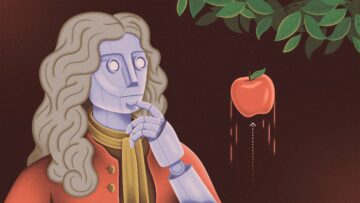 Here’s a test for infants: Show them a glass of water on a desk. Hide it behind a wooden board. Now move the board toward the glass. If the board keeps going past the glass, as if it weren’t there, are they surprised? Many 6-month-olds are, and by a year, almost all children have an intuitive notion of an object’s permanence, learned through observation. Now some artificial intelligence models do too.
 According to the existential-risk researcher Luke Kemp, globalization has produced a planetary “
 In a prescient essay published in 2000, the Princeton historian Robert Darnton – one of the grandees of the historical profession – proposed a new kind of history, one prompted as much by recent developments in Silicon Valley as anything gleaned in the archives. He called for ‘a general attack on the problem of how societies made sense of events and transmitted information about them, something that might be called the history of communication’. This, he argued, had to be much larger than just a history of newspapers. It had to encompass how information spread by word of mouth, the places where people convened to trade it and the multiple professions engaged in its dispersal.
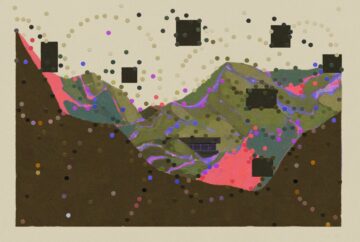 The thesis of Peter Brannen’s new book is right there on the cover: “The Story of CO2 Is the Story of Everything.” But surely there’s no way he means everything, right?
 Riding my bike recently through Baltimore’s swampy summer heat, I pulled up sharply to avoid running over a yard-and-a-half-long eastern rat snake slowly making her way across the hot asphalt. I picked her up and placed her at the root of the nearest tree, which she quickly scaled until she reached a branch at more or less the height of my head. Perched there, with her body draped around the tree trunk, she cocked her head forward in a classic snaky pose, and stared at me with what I took to be a look of astonished relief.
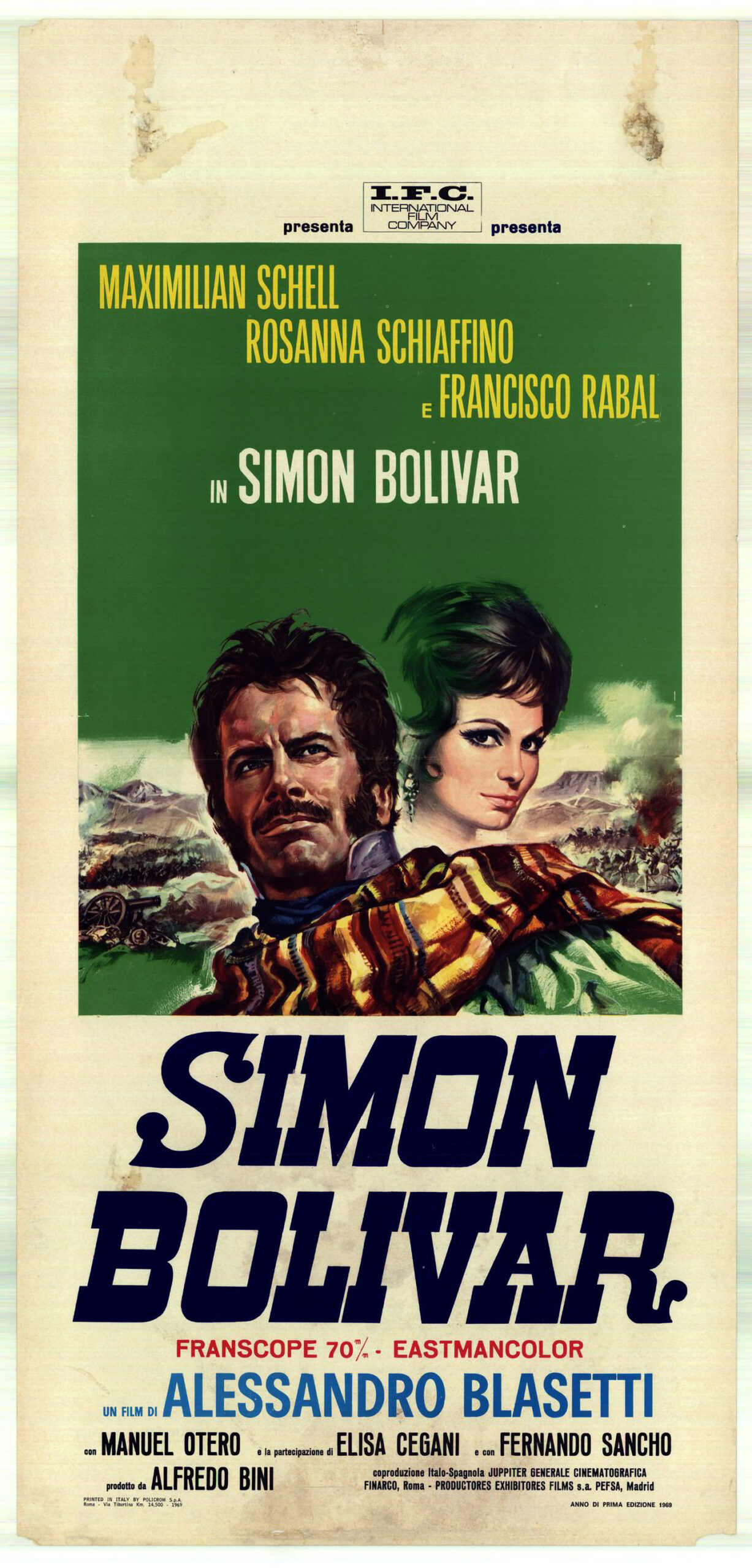 Sometimes it feels as if the tacos have been rubbed out of my tongue. For four years, I’ve been speaking a language that doesn’t belong to me, one that exists only through synonyms that are foreign to me. I’ve been living in the US for four years. The problem is not English — though I sometimes mistake a conjugation — but my own native language. My Spanish has not worsened, but it definitely has changed. My mexicanisms appear with lesser and lesser frequency in my daily speech. When I’m teaching Spanish and my undergrad students ask me the word for short, I have to fight my own instinct. I no longer say chaparro but pequeño. No longer cuate but amigo. No longer my Spanish but Spanish 101.
 There were many excellent science books among this year’s entries, but
  The two technologies often get lumped together, which is understandable given how similar they seem on the surface. But the reality is that, in many ways, fission and fusion are opposites. Knowing how each one works—and why they are different—is critical to understanding the roles they will play in the decades ahead.