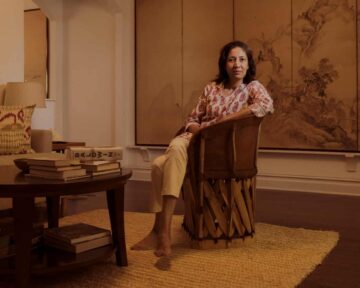
Was Pakistan necessary?

Muhammad Raiyd Qazi at the Express Tribune:

Post-independence, Pakistan faced deep identity dilemmas. Should it be a secular Muslim-majority state or an Islamic theocracy? The 1971 secession of East Pakistan into Bangladesh exposed the fragility of religious unity in the face of linguistic and ethnic differences. As Akeel Bilgrami (Secularism, Identity and Enchantment, 2014) observes, the premise of a single Muslim identity was flawed when confronted with South Asia’s diversity.

In India, Muslims who stayed behind became a vulnerable minority. The rise of Hindutva politics under BJP has reinforced some of Jinnah’s warnings, but others contend that the partition itself hardened communal divisions, making reconciliation harder.

So, was Pakistan necessary? It depends on the perspective.

More here.

Enjoying the content on 3QD? Help keep us going by donating now.

Thursday Poem

World Without Suffix

Why do you ask my name, which is mysterious?
……………………………………… —Judges 13:18

Methylchloroisothiazolinone.
It’s in all the shampoos that sit on the bathtub’s
edge. Having no idea what it is, I look it up
and after scanning some abstruse periodic
letters, I discover it belongs to a class
of heterocycles that kill various bacteria.

As I have no idea what a heterocycle is,
I look it up and learn it’s a cyclic
compound with atoms of differing
elements that form part
of the ring or rings.
But I don’t know what most of that
means, either, and everything hyperlinks
to yet another obscure Latin term
that makes me think of papal decrees
and bad news from the doctor.

I walk away from the screen
of blue words, trying to imagine
a world before altar bells
and liturgies and the scattered
debris of Babel’s fall.
Before all the drama
with serpents and apples—
when animals had not yet been named,
and the garden was wild
with coconut and sativa—
Before the first cry in the desert
became an alphabet,
and God became a word
we couldn’t say.

by Martin Vest
from Rattle Magazine

Enjoying the content on 3QD? Help keep us going by donating now.

Wednesday, August 13, 2025

Two savvy new books offer hope that there’s more to being terminally online than sore thumbs and brain rot

Alexandra Jacobs in the New York Times:

This much we know: Smartphones are making us dumber. Compelling essays suggest we memorize handscratched poetry in the morning before opening Pandora’s inbox, and warn that the declining literacy of the digitally oversaturated threatens democracy.

Phones are expensive. So are digital detox retreats where devices get squirreled in safe deposit boxes as if they were the house deed or Grandpa’s gold watch.

This summer, as an experiment, I decided to go the other way and submit utterly to the pleasures and terrors of the phone when alone, without self-recrimination or judgment.

More here.

Enjoying the content on 3QD? Help keep us going by donating now.

What (Not) To Expect from AGI Agents

Ali Minai at Bounded Alignment:

The main point made in the paper is that, to be meaningful, general intelligence should refer to the kind of intelligence seen in biological agents, and AGI should be given a corresponding meaning in artificial ones. Importantly, any general intelligence must have three attributes – autonomy, self-motivation, and continuous learning – that make it inherently uncertain and uncontrollable. As such, it is no more possible to perfectly align an AI agent with human preferences than it is to align the preferences of individual humans with each other. The best that can be achieved is bounded alignment, defined as demonstrating behavior that is almost always acceptable – though not necessarily agreeable – for almost everyone who encounters the AI agent, which is the degree of alignment we expect from human peers, and which is typically developed through consent and socialization rather than coercion. A crucial point is that, while alignment may refer in the abstract to values and objectives, it can only be validated in terms of behavior, which is the only observable.

More here.

Enjoying the content on 3QD? Help keep us going by donating now.

Michael Clune’s Novel Of A Panicked Teen Who Might Be Possessed By A Greek God

Jessi Jezewska Stevens at Bookforum.

ON THE SURFACE, Pan is the coming-of-age story of an ordinary teenage boy struggling with severe panic attacks while doing ordinary teenage things (losing his virginity, fretting over his popularity, negotiating rides to strip malls in the wake of his parents’ divorce) in suburban Illinois. On another level, it’s about a teenager who has possibly been possessed by Pan, the ancient Greek god of the wild, and who falls in with a cult of troubled young drug addicts who attempt to exorcise him.

Nick is initially concerned his “mental illness” will seem “weird.” He has reason to worry—and I am protective enough of the strange, idiosyncratic beauty of this book to worry in turn that some readers might not be up to the challenge of following his more baroque trains of thought. Precociously philosophical, Nick is the kind of fifteen-year-old who tunes out in geometry class while mentally plotting his experiences along axes named “OPEN/CLOSED.” He spends a great deal of time wondering where thoughts come from, convinced that his own feel like flies “bumping along the underside of my scalp.”

more here.

Enjoying the content on 3QD? Help keep us going by donating now.

Income inequality and the erosion of democracy in the twenty-first century

Eli G. Rau and Susan Stokes at PNAS:

Among the most pressing problems societies face today are economic inequality and the erosion of democratic norms and institutions. In fact the two problems—inequality and democratic erosion—are linked. In a large cross-national statistical study of risk factors for democratic erosion, we establish that economic inequality is one of the strongest predictors of where and when democracy erodes. Even wealthy and longstanding democracies are vulnerable if they are highly unequal (though national wealth might provide some resiliency). The association between inequality and risk of democratic backsliding is robust, and holds under different measures and structures of both income inequality and wealth inequality. The association is unlikely to be a case of reverse causation. For concerned citizens seeking to understand why so many democracies are eroding and how to stop this process, our study indicates that policies for ameliorating inequality are a promising path forward.

More here.

Enjoying the content on 3QD? Help keep us going by donating now.

Carceral Collapse Across The Middle East

Susan Aboeid at The Baffler:

The fall of Syria’s prisons and its regime prompted a wave of thought regarding the very notion of carceral collapse—no longer an aspiration for the oppressed but an inclement reality—throughout the region and diaspora. Palestinian factions debated the implications for the 1,784 Palestinian detainees who disappeared in Assad’s prisons, their fate unknown. On the other hand, Sudanese activists took to X in solidarity, recalling their own scenes of prison liberation in Khartoum in the aftermath of the 2019 revolution that toppled the long-standing dictatorship of Omar al-Bashir. In the United Kingdom, Egyptian activists gathered to reiterate their demands for the release of the over sixty thousand political prisoners in President Abdel Fattah el-Sisi’s prisons, including British Egyptian activist and writer Alaa Abdel Fattah. One former detainee recalled the horrors of Sednaya as “no less horrific” than what he witnessed in Egyptian prisons.

In Khiam and Damascus, the prison is open. But carceral abolition, as imagined and practiced, is not just about breaking chains and opening gates. Prisons across the Middle East and North Africa—including in Syria, Sudan, Egypt, and Palestine—remain the state’s single most effective means of oppression and the physical manifestations of the state’s violent carceral architecture. As such, their abolition not only demands the freedom of all the prisoners but also a complete restructuring of the societies that bred them. In the words of prison abolitionist Ruth Wilson Gilmore, “Abolition requires we change one thing, which is everything.”

more here.

Enjoying the content on 3QD? Help keep us going by donating now.

A Great Villain Is a Great American: The United States vs. Sean Combs

Harmony Holiday in The Paris Review:

Prisons are American tourist attractions, and criminals who become fugitives or inmates our outlaw heroes—Al Capone, Alcatraz, Charles Manson, Sing Sing, Angola, Luigi Mangione, O. J. Simpson, Diddy, né Sean Combs. A collective underdog fetish means that the image of a civilian outwitting, outrunning, or confronting “the man” is enough to negate his trespasses. Maybe achieving the apotheosis of success in the United States requires becoming a convict, being threatened with or facing real incarceration and exile, doing time, paying dues, and making a grand comeback. At that finale you can sell that story to restore your fortunes, dignity, and maverick glory. Combs is the latest public figure to go from celebrated to disgraced to tentatively redeemed in some eyes by a show trial and the masculine compulsion to cheer when men get away with terrorizing women. The rapper Jay Electronica stood outside of the courtroom with his two Great Danes on the day the verdict was delivered, and announced, “I’m just here supporting my brother.” He looked half-ashamed, half-deviant about it, like he was both courting and afraid of backlash. Others call Diddy’s comeuppance a legal lynching, insinuating he’s a survivor of a because-he’s-black character assassination, since other powerful, abusive men have yet to be held accountable. It’s a truly American malfunction, this belief that the once oppressed should have the freedom to become as evil and ruthlessly decadent as their oppressors. This is what is sold to the public as prestige, and imitations of it exist at every stratum. With this in mind, Diddy’s story could be construed as a bootstraps tale—from Harlem to Howard to Hollywood endings. His recent downward spiral might be just another buoy, one that will help him ascend anew.

More here.

Enjoying the content on 3QD? Help keep us going by donating now.

AI Scans Audio Recordings to Detect Voice Box Cancer

Andrea Lius in The Scientist:

People often “lose their voice” after spending the night cheering for a local sports team or singing along to their favorite songs at a concert. Such overuse can temporarily injure the vocal cords, making people’s voices sound hoarse and strained. But there’s a much more alarming cause that can also alter a person’s voice: laryngeal cancer, which may be fatal if left untreated. Clinicians typically assess this condition using invasive—and at times, unavailable in underserved areas—methods such as endoscopy and biopsy.

In a recent study, researchers found that certain acoustic features could distinguish people with vocal cord lesions from those without based on their voice recordings.1 One of the characteristics that the researchers measured could even differentiate between benign and cancerous lesions. This work, led by Phillip Jenkins, a general surgery resident at Oregon Health and Science University, put forward a non-invasive and more accessible way to diagnose voice disorders. Their findings were published in Frontiers in Digital Health.

More here.

Enjoying the content on 3QD? Help keep us going by donating now.

Wednesday Poem

On Our Furst Date He Takes  Me to a Fancy French Restaurant in the North End

Creamy linen, flickering centerpiece. My only goal
is to stay with this man. When he points to the vichyssoise
and chortles, what the heck is that? I don’t tell him
about the time I went to Paris on a dare, with a man
I didn’t know, because he promised we could sip
little cups of vichyssoise while staring up at the Eiffel Tower.
Don’t tell him about the wild leeks I’ve yanked
from the ground in both hemispheres, that I track
their ripe diameters on a chart on my wall. Don’t tell him
about the stage I did in New York City, where I burnt
the tattoo on the side of my palm clean off
while lifting a pan of butter-braised shallots
from the overhead grill. The pan that wasn’t mine
so I didn’t know its weight, didn’t know the cadence
of those onions. How the chef ran to save them
while I performed my own first aid, carefully spooning
the shallots into a pot with cream and potatoes and wine
and tarragon. I don’t tell him that at this time last year,
I was in bed with a man who would have licked raw chicken
from my belly button. Or about the girl who lost her job
because she favoured my coq au vin to a steady paycheque,
how she became my muse and I threw out all my bowls
so I could drink from her hips. Don’t tell him
I know exactly what vichyssoise is,
or that I have been in love fourteen and a half times.
No man wants to hear that. A man wants to hear
that this moment, under these lights, in these shoes,
with this air between us, is the only time you have ever felt
this good, this safe, and the only time you ever will.
So I giggle with this man, over everything we do not know,
and by the time I let him kiss me goodnight, I can’t tell
which one of us was lying.

by Yoda Olinyk
from Rattle #88, Summer 2025

Enjoying the content on 3QD? Help keep us going by donating now.

Tuesday, August 12, 2025

James Baldwin’s Apotheosis

Brooke Allen at the Hudson Review:

Hence the absurdity of the bland assumption among some writers of the younger generation that Baldwin would embrace the modern idea of intersectionality. Despite his ready admission that he was thrice challenged—Black, queer, and disadvantaged (at least initially!)—Baldwin’s core philosophy was the essential unity of humanity, “his rejection of all labels and fixed notions of identity as ‘myths’ or ‘lies,’” as his biographer Magdalena J. Zaborowska has written, and she provides ample evidence for this judgment. Art, Baldwin stated, “has its roots in the lives of human beings: the weakness, the strength, the absurdity. . . . It belongs to all of us, and this includes our foes, who are as desperate and as vacuous and as blind as we are and who can only be as evil as we are ourselves.” “[A] victim,” he wrote, “may or may not have a color, just as he may or may not have virtue.” Baldwin’s realization that suffering does not create virtue and that victims are not necessarily good people was, as he knew, a “difficult . . . unpopular notion, for nearly everyone prefers to be defined by his status, which, unlike his virtue, is ready to wear.”
 
This is even more true today, when the intersectional grid draws rigid lines between “oppressor” and “oppressed” that Baldwin, despite the animus against white America that ballooned as he aged, was far too subtle a thinker to accept. His friendships with Jews, whites, Communists, and atheists at DeWitt Clinton High School in the Bronx made him suspicious of easy racial categorization, and “[t]he rich mix of his white, Black, Jewish, leftist, southern, and queer teachers and mentors helped him craft the sophisticated literary tools he used to reach that understanding,” as Zaborowska says.

more here.

Enjoying the content on 3QD? Help keep us going by donating now.

Among the Blasphemers

Gerald Howard at n+1:

Paul Elie remembers things differently and far more deeply. A cradle Catholic and still an observant one, he has over the years carved out an admirable niche for himself as the thinking believer and village explainer of those hard to fathom people for the readers of the Times, the New Yorker, and similar publications. (He had a first-rate take on Pope Leo’s papacy up on the latter’s website within a day of the new pontiff’s ascent.) The Life You Save May Be Your Own, Elie’s group biography of four prominent midcentury Catholic writers and intellectuals (Flannery O’Connor, Dorothy Day, Walker Percy, and Thomas Merton), is one of the best achieved examples of a tricky genre. He manages to make the fact of his faith very clear while remaining uninsistent about it—unlike, say, the profoundly annoying Ross Douthat, who can’t and won’t shut up about his conversion to Catholicism (as strongly as many of us wish he would). As a critic and historian Elie has clarity, depth, and range—qualities that serve him well as he navigates the stormy and turbid high/low waters of his chosen decade’s cultural output.

Elie is an unusual figure in the secular publications and the lists of the publishers he writes for because he takes religion and its manifestations as primary—not simply as an area of culture (film, music, lifestyle, and so on) treated as just another subject for investigation.

more here.

Enjoying the content on 3QD? Help keep us going by donating now.

What’s Behind a Michelin Star?

Tulasi Srinivas in Sapiens:

Could a Philly Cheesesteak joint actually get a Michelin star?

The Michelin Red Guide is coming to Philadelphia, and inspectors are already scouting local restaurants to award the famed Michelin star. Michelin says the selected restaurants will be announced in a Northeast Cities edition celebration later this year. Boston will also be included for the first time.

As an anthropologist of ethics and religion who has an expertise in food studies, I read the announcement with some curiosity and a lot of questions. I had seen this small red guide revered by chefs and gourmands alike around the globe.

How did the Michelin guide begin reviewing restaurants? And what makes it an authority on cuisine worldwide?

More here.

Enjoying the content on 3QD? Help keep us going by donating now.

Barbara McClintock: “What does a cell know of itself?”

Claire L. Evans in Quanta:

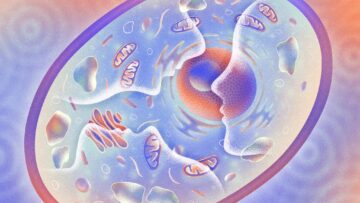
In a provocative study published in Nature Communications late last year, the neuroscientist Nikolay Kukushkin and his mentor Thomas J. Carew at New York University showed that human kidney cells growing in a dish can “remember” patterns of chemical signals(opens a new tab) when they’re presented at regularly spaced intervals — a memory phenomenon common to all animals, but unseen outside the nervous system until now. Kukushkin is part of a small but enthusiastic cohort of researchers studying “aneural,” or brainless, forms of memory. What does a cell know of itself? So far, their research suggests that the answer to McClintock’s question might be: much more than you think.

More here.

Enjoying the content on 3QD? Help keep us going by donating now.

The Second Amendment and the use and misuse of history

Dan Gardner at Past Present Future:

The NRA was founded in 1871. For most of its long history, it was an apolitical organization of sportsmen that promoted marksmanship and safety training so duck hunters wouldn’t shoot themselves in the toes. In the Eisenhower era, the NRA’s motto, emblazoned over its front door was “Firearms Safety Education, Marksmanship Training, Shooting for Recreation.”

But in 1977, a group of far-right activists led a coup, took over the organization, and changed the motto to: “The right of the people to keep and bear arms shall not be infringed.” Notice the stuff about Militias was omitted. The activists weren’t simply looking for something a little snappier. That omission was central to their audacious goal.

What followed that takeover was a deliberate, calculated, and wildly successful campaign to falsify popular perceptions of American history and change American constitutional law. It culminated in 2008, when the Supreme Court — for the first time in US history, please note — declared that the Second Amendment protected an individual’s right to own guns. It’s hard to overstate how radical that decision was. Until 2008 — a mere 17 years ago! — the Second Amendment did not protect an individual’s right to own guns.

More here.

Enjoying the content on 3QD? Help keep us going by donating now.