
Category: Recommended Reading
Postcards from Absurdistan: Prague at the End of History
Alena Dvořáková at the Dublin Review of Books:
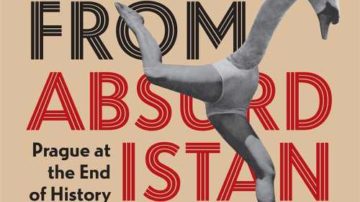 Postcards from Absurdistan is the third volume in a ‘loose trilogy of cultural histories’ in which Derek Sayer has argued that European modernity is best examined from a vantage point located, both literally and figuratively, in Bohemia and its capital, Prague. The first volume, The Coasts of Bohemia (1998), tackled the issue of national identity. It presented Czech history – from its mythic beginnings to just after the communist takeover in 1948 – as a lesson on the nature of national historiography. When a ‘small’ nation has, for most of its past, struggled for recognition, its history is bound to consist of attempts to re-invent the past in order to assure itself of a future. The form of this reassurance: a bricolage of national treasures assembled largely under the motto ‘small but ours’. Focusing on the main tropes of the Czech National Revival – especially the emphasis on the Czech language as the basis for national identity, and the encoding of Czechness as something anti-German, anti-aristocratic and anti-Catholic – Sayer presents this chequered history as a corrective to the national histories of bigger, older, more secure nations. A lot of what he marks out as specifically Czech, however, sounds very familiar in the Irish context. None better than the Czechs at understanding Irish people’s fondness for the ‘best little country in the world’ trope (including its associated ironies) and the pitfalls of turning a language into a crux of nationality.
more here.
On Mary Wollstonecraft
Joanna Biggs at The Paris Review:
 A Vindication was written in six weeks. On January 3, 1792, the day she gave the last sheet to the printer, Wollstonecraft wrote to Roscoe: “I am dissatisfied with myself for not having done justice to the subject.—Do not suspect me of false modesty—I mean to say that had I allowed myself more time I could have written a better book, in every sense of the word.” Wollstonecraft isn’t in fact being coy: her book isn’t well-made. Her main arguments about education are at the back, the middle is a sarcastic roasting of male conduct-book writers in the style of her attack on Burke, and the parts about marriage and friendship are scattered throughout when they would have more impact in one place. There is a moralizing, bossy tone, noticeably when Wollstonecraft writes about the sorts of women she doesn’t like (flirts and rich women: take a deep breath). It ends with a plea to men, in a faux-religious style that doesn’t play to her strengths as a writer. In this, her book is like many landmark feminist books—The Second Sex, The Feminine Mystique—that are part essay, part argument, part memoir, held together by some force, it seems, that is attributable solely to its writer. It’s as if these books, to be written at all, have to be brought into being by autodidacts who don’t know for sure what they’re doing—just that they have to do it.
more here.
The Beatles and the Glory of Creative Risk
Vincent Ercolano in The Hedgehog Review:
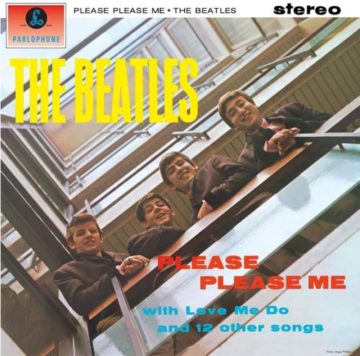 Perhaps it took the roiling events that would give such a manic-depressive quality to 1963––the death in early June of Pope John XXIII (and with it, some feared, the demise of John’s policy of aggiornamento, “updating”); the signing of the Nuclear Test Ban Treaty in August; the March on Washington the same month; and, in cruel culmination of the year’s roller-coaster ride, the assassination of President Kennedy on November 22––to open the ears (and hearts) of the American public, by year’s end emotionally spent, to the cheeky wit and fresh take on rock ‘n’ roll offered by the Beatles. As Rorem would observe, “Our need for [the Beatles] is…specifically a renewal, a renewal of pleasure.”
While Beatles fans continually renew the pleasure of listening to Please Please Me, whether on smartphones, CDs, or once-again-popular vinyl, perhaps the premier accomplishment of Lennon, McCartney, Harrison, and Starr was the rocket-like trajectory described by their music in the four years from that first album to the arrival in 1967 of the emotionally complex and musically audacious Sgt. Pepper’s Lonely Hearts Club Band…
More here.
Cracking the creation of life: An exclusive interview with biochemist Nick Lane
Omari Edwards at IAI News:
 Thanks so much for speaking to us Nick, I wanted to start off by asking about the philosophical principles you use in the lab every day. Philosophers often see science as proposing a reductive theory of the world, breaking it down into its constituent parts. Some worry that this ignores the complexity of life. Do you think that this reduction plays a role in your work and science more broadly?
I have to say that reductionism plays a rather ambiguous role in my work, and I think in the work of most scientists. Of course, there are some necessities about the scientific method which mean that the only way we can answer certain questions is by reducing a problem to its fundamentals. However, I think this misses out on what scientists are really doing. We aren’t trying to just give a reductive account we are always working within a framework. And that framework is going to be synthetic.
More here.
Towards a better understanding of status and victimhood
Susan Neiman in Persuasion:
 While battles about what’s called the “woke left” now dominate political discussion in many countries, it’s time to ask whether woke really belongs on the left—or if woke represents a distortion of the core principles of the left, a drift into a philosophy of tribalism.
Not so long ago, universalism defined the left; international solidarity was its watchword. This was, above all, what distinguished it from the right, which recognized no deep connections, and few real obligations, to anyone outside its own circle. The left demanded that the circle encompass the globe. That was what standing left truly meant: to care about striking coal miners in Wales, or the Republican cause in Spain, or freedom fighters in South Africa, whether you came from their tribes or not. What united the left was not blood but conviction—first and foremost the conviction that behind all the differences of time and space that separate us, human beings are deeply connected in a wealth of ways. To say that histories and geographies affect us is trivial. To say that they determine us is false.
The opposite of universalism is often called “identitarianism,” but the word is itself misleading, because identity is a fluid concept whose meaning and importance vary in space and in time.
More here.
The Epistemology of Deep Learning – Yann LeCun
Mars rocks await a ride to Earth — can NASA deliver?
Alexandra Witze in Nature:
 For decades, scientists who study Mars have watched in envy as spacecraft brought pieces of the Moon, chunks of asteroids and even samples of the solar wind to Earth to be studied. Now some of those researchers might finally be on track to receive rocks from the red planet — but only if NASA and the European Space Agency (ESA) can pull off a complex and daring mission.
For several years, the two agencies have been planning to send spacecraft to Mars, starting no earlier than 2027, to pick up rock samples that are being collected by NASA’s Perseverance rover. But technological and financial hurdles could derail the multi-billion-dollar scheme. Last month, NASA said it wants to allocate nearly US$1 billion to Mars sample return in the upcoming fiscal year — a huge sum that could force the agency to dip into other parts of its science budget. This would affect other projects, potentially delaying a planned heliophysics mission, for example. And much is at stake for the Mars sample return: Perseverance has gathered a scientifically stunning set of rocks. In December and January, the rover deposited ten cigar-sized tubes filled with rock, soil and air from the Martian atmosphere on a flat area of the planet’s surface for a future mission to pick up (see ‘Sample depot’).
More here.
Tuesday Poem
The Longest Way ‘Round
Mommy taught
3rd grade
Her book was The Longest
Way ’Round (Is The Shortest Way Home)
I was an adult
Before I realized
How True
Their marriage
Is none of your business
You don’t understand
Your parents don’t owe
You anything
You finally say to yourself:
They Have Nothing
I want
Except
I remember this Blue Book
With a wonderful title
My Mother West Wind Stories
And Mommy singing
“Time After Time”
It worked
I am Happy
by Nikki Giovanni
from The Poetry Foundation
Sunday, April 2, 2023
A Novel The Cia Spent A Fortune To Suppress
Joel Whitney at Public Books:
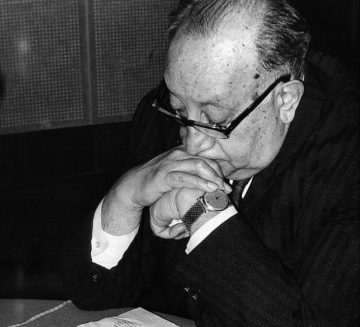 “Our Latin American literature has always been a committed, a responsible literature,” explained Guatemalan novelist Miguel Ángel Asturias in 1973.
The great works of our countries have been written in response to a vital need, a need of the people, and therefore almost all our literature is committed. Only as an exception do some of our writers isolate themselves and become uninterested in what is happening around them; such writers are concerned with psychological or egocentric subjects and the problems of a personality out of contact with surrounding reality.
It is the bourgeois writers, he wants to say here, who ignore the looting of their resources by the rich behemoth to the north, which then turns around and redeploys those riches on death squads and dictators. It is no surprise, then, that Asturias’s landmark novel, Mr. President, confronts its readers with similar frankness. Mr. President examines widespread corruption around a fictional Guatemalan dictator. But its 1946 debut reflected a delay of more than a decade by the country’s real dictators, who disrupted the novel’s genesis and sent its author into exile. And in this act of suppression, Asturias’s censors and exilers were aided by the US, specifically the CIA.
Such suppression has long impaired Asturias’s career, reputation, and recognition. Indeed, in a new introduction to Mr. President—out last summer in David Unger’s lucid new translation—literary scholar Gerald Martin calls the novel “the first page of the Boom.” “The Boom” was the nickname for a clutch of new Latin American novels emerging in the 1960s, including those by future Nobel laureates Gabriel García Márquez and Mario Vargas Llosa.
More here.
In the past two decades, drug overdose deaths have quadrupled among older US adults
Grace Wade in New Scientist:
 Drug overdose deaths have steadily increased in the US since 1999, largely due to the proliferation of prescription and illicit opioids like morphine, oxycodone and fentanyl.
“There’s been a lot of focus on overdose among younger people,” says Chelsea Shover at the University of California, Los Angeles. “We wanted to understand to what degree is that happening among older adults.”
She and her colleagues collected data on overdose deaths in adults 65 years and older from the US Centers for Disease Control and Prevention’s WONDER database. The database tracks every fatality recorded in the country, including the person’s age, race, gender and cause of death.
More here.
Israeli Protesters Say They’re Defending Freedom but Palestinians Know Better
Mohammed El-Kurd in The Nation:
 As an insider observing this food fight, it is surreal to watch reporters and commentators promote the narrative that the government’s Likud-Jewish Power-Religious Zionism coalition and the Supreme Court exist on extreme opposing ends of the political spectrum. Their differences, when it comes to how they rule over the lives of Palestinians, are purely cosmetic. In essence, one camp wants to eat with their hands while the other wants to mandate forks and knives, but in both scenarios, Palestinian rights will be devoured.
“Ironic” doesn’t begin to describe hearing words like “leftist” and “hyper-activist” in proximity to the Supreme Court, the settler-built and settler-serving institution that has, for decades, authorized and facilitated the ethnic cleansing of the Palestinian population. Are we all talking about the same court here? Palestinians are forced to engage in a starkly different relationship with the law than the one Jewish Israelis enjoy.
More here.
A Black Professor Trapped in Anti-Racist Hell
Vincent Lloyd in Compact:
 On the sunny first day of seminar, I sat at the end of a pair of picnic tables with nervous, excited 17-year-olds. Twelve high-school students had been chosen by the Telluride Association through a rigorous application process—the acceptance rate is reportedly around 3 percent—to spend six weeks together taking a college-level course, all expenses paid.
The group reminded me of the heroes of the Mysterious Benedict Society books I was reading to my daughter: Each teenager, brought together for a common project, had some extraordinary ability and some quirk. One girl from California spoke and thought at machine-gun speed and started collecting pet snails during the pandemic; now she had more than 100. A girl from a provincial school in China had never traveled to the United States but had mastered un-accented English and was in love with E.M. Forster. In addition to the seminar, the students practiced democratic self-governance: They lived together and set their own rules. Those first few days, the students were exactly what you would expect, at turns bubbly and reserved, all of them curious, playful, figuring out how to relate to each other and to the seminar texts.
Four weeks later, I again sat in front of the gathered students. Now, their faces were cold, their eyes down. Since the first week, I had not spotted one smile. Their number was reduced by two: The previous week, they had voted two classmates out of the house. And I was next.
More here.
The Funny, Forward, and Bracingly Political “Joyland”
Anthony Lane in The New Yorker:
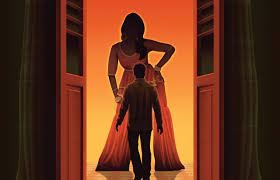 Trying to sort out who is who, and what everybody wants, is no easy task in “Joyland,” a début feature from the Pakistani director Saim Sadiq. In Lahore, a woman named Nucchi (Sarwat Gilani), who already has three daughters, remarks that her water has broken; she might as well be announcing that dinner is served. For the birth of her fourth child, she is ferried to hospital on the back of a moped driven by Haider (Ali Junejo), whom we take to be her husband. Not so. He is, in fact, the brother of her husband, Saleem (Sameer Sohail). Haider is married to Mumtaz (Rasti Farooq); they have no offspring, to the dismay of his aged father, known as Abba (Salmaan Peerzada). All of the above inhabit one household. It’s not a peaceful place, or an especially happy one, but it’s home.
That home is worth dwelling on, for it feels like a book of short stories. Not for a while—not, perhaps, since Greta Gerwig’s “Little Women” (2019)—have I been struck by so potent a sense of place. The daily routine revolves around a central courtyard, where Abba, a widower in a wheelchair, presides. “My family has lived here since before Partition,” he says. Space is tight, and one of the little girls often shares a bed with Haider and Mumtaz. The air-conditioning breaks down. (Power outages are frequent across the city, and some scenes are illuminated by cell-phone flashlights.) The fabric of the film is a weaving of new and old; we hear talk of Netflix subscriptions, yet one shot, of an open doorway, has the pious composure of a Pieter de Hooch interior, from seventeenth-century Holland, and the plot begins, if you please, with a goat being slaughtered in the courtyard. Blood pools darkly on the tiled floor.
More here.
Interview with Barbara Kassel
Larry Groff in Painting Perceptions:
“Barbara Kassel”s evocative paintings explore the passage of time. From her loft in New York City, she paints interior and exterior views, creating a visual diary of daily life. Working with oil on panel, the smooth surfaces are meticulously rendered serene scenes. Warm reds and yellow embrace cooler blues and grays and invite the viewer into the large-scale works. Kassel describes the paintings in part biographical and instinctually narrative. Carefully exploring the world around her, she mixes observation and invention as she captures fleeting moments in time.”
Larry Groff: Can you tell us something about your background? What lead you to become a painter?
Barbara Kassel: I was born in Los Angeles and grew up in the valley, in Studio City. I remember always drawing, painting and working on various craft projects. My older brother would use a red pencil to mark when I went out of the coloring book lines! I took my first art classes outside of school at a little frame/art shop on Ventura Blvd called The Flemish Art Shop. I painted Dutch like still lives with copal varnish as the medium, still lifes with watermelons and flowers and many a bright eyed furry kitten. I think that I came to painting as it was the most natural and satisfying way for me to be in the world. I liked the way I could create something, something that expressed the visual world and in a way, even early on, my interior life. My father had a serious heart condition and died of his third heart attack when I was 16. That had a profound effect on my life and how it unfolded. Immersing myself in painting and drawing had and continues to have a calming effect on me and helps me to integrate different aspects of my life.
More here.
Sunday Poem
Brotherhood
—Homage to Claudius Ptolemy
I am a man: little do I last
and the night is enormous.
But I look up:
the stars write.
Unknowing I understand:
I too am written,
and at this very moment
someone spells me out.
by Octavio Paz
from The Collected Poems, 1957-1987
Carcanet Press Ltd. 1988
…….. ~~~
Hermandad
Soy hombre: duro poco
y es enorme la noche.
Pero miro hacia arriba:
Sin entender comprendo:
También soy escritura
y en este mismo isnstante
alguien me deletrea
Dubravka Ugresic (1949 – 2023) Writer
Mark Russell (1932 – 2023) Satirist
Keith Reid (1946 – 2023) Lyricist
Saturday, April 1, 2023
AI Chatbots Don’t Care About Your Social Norms
 Jacob Browning and Yann Lecun in Noema:
With artificial intelligence now powering Microsoft’s Bing and Google’s Bard search engines, brilliant and clever conversational AI is at our fingertips. But there have been many uncanny moments — including casually delivered disturbing comments like calling a reporter ugly, declaring love for strangers or rattling off plans for taking over the world.
To make sense of these bizarre moments, it’s helpful to start by thinking about the phenomenon of saying the wrong thing. Humans are usually very good at avoiding spoken mistakes, gaffes and faux pas. Chatbots, by contrast, screw up a lot. Understanding why humans excel at this clarifies when and why we trust each other — and why current chatbots can’t be trusted.
Getting It Wrong
For GPT-3, there is only one way to say the wrong thing: By making a statistically unlikely response to whatever the last few words were. Its understanding of context, situation and appropriateness concerns only what can be derived from the user’s prompt. For ChatGPT, this is modified slightly in a novel and interesting way. In addition to saying something statistically likely, the model’s responses are also reinforced by human evaluators: The system outputs a response, and human evaluators either reinforce it as a good one or not (a grueling, traumatizing process for the evaluators). The upshot is a system that is not just saying something plausible, but also (ideally) something a human would judge to be appropriate — if not the right thing, at least not offensive.
But this approach makes visible a central challenge facing any speaker — mechanical or otherwise. In human conversation, there are countless ways to say the wrong thing…
More here.