
Sarah Hart in The New York Times:
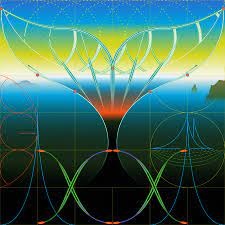 “Call me Ishmael.” This has to be one of the most famous opening sentences in all of literature, and I’m embarrassed to say that — until quite recently — I didn’t get beyond it. “Moby-Dick” was, for me, one of those books that languished in the guilt-inducing category of “things you should have read a long time ago,” and I just never got around to it. Plus, I am a mathematician. And despite my interest in literature, my intellectual priorities did not include 400-page novels about whales — or so I thought. That all changed one day when I overheard a mathematician friend mention that “Moby-Dick” contains a reference to cycloids.
Cycloids are among the most beautiful mathematical curves in existence — the French mathematician Blaise Pascal found them so distractingly fascinating that he claimed merely thinking about them could relieve the pain of a bad toothache — but applications to whaling are not usually listed on their résumé. Intrigued, I finally read “Moby-Dick,” and was delighted to find that it abounds with mathematical metaphors. I realized further it’s not just Herman Melville; Leo Tolstoy writes about calculus, James Joyce about geometry. Fractal structure underlies Michael Crichton’s “Jurassic Park” and algebraic principles govern various forms of poetry. We mathematicians even appear in work by authors as disparate as Arthur Conan Doyle and Chimamanda Ngozi Adichie.
There have been occasional academic studies on mathematical aspects of specific genres and authors. But the more holistic connections between mathematics and literature have not received the attention they deserve.
More here.
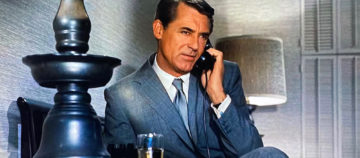 North by Northwest isn’t about what happens to Cary Grant, it’s about what happens to his suit. The suit has the adventures, a gorgeous New York suit threading its way through America. The title sequence in which the stark lines of a Madison Avenue office building are “woven” together could be the construction of Cary in his suit right there—he gets knitted into his suit before his adventure can begin.
 On 28 February 1989, a matter of days after the publication of what he had described as the first volume of a tetralogy, the Swiss writer Hermann Burger kept a long-held promise and killed himself. The world could not say it had not been warned: from his first novel, Schilten (1976), about a school teacher who prepares his pupils for death, to his collection of aphorisms Tractatus logico-suicidalis (1988), a gathering of over a thousand ‘mortologisms’ on the logic of self-slaughter, Burger was nothing if not consistently morbid. To rehearse Spike Milligan’s famous epitaph, he had told us he was ill.
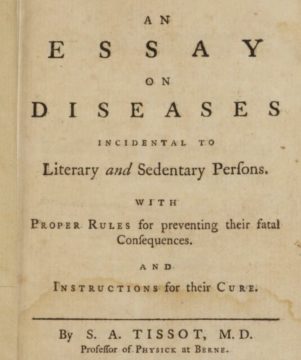 It was dangerous to be a man of letters in the eighteenth century. All that rumination; such single-minded concentration; countless hours hunched over the escritoire. “Some men are by nature insatiable in drinking wine, others are born cormorants of books”, wrote the Swiss physician Samuel-Auguste Tissot in An Essay on Diseases Incidental to Literary and Sedentary Persons (1768). As with the reckless consumer of claret, an overindulgence in books could have devastating consequences for the mind and body.
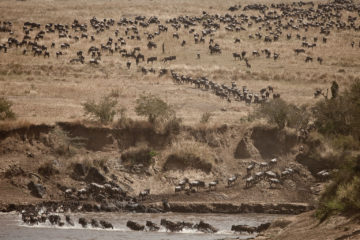 When it comes to climate solutions, your first thought may not be the wildebeest. But in the Serengeti, these buffalo-looking antelopes are the key to carbon capture.
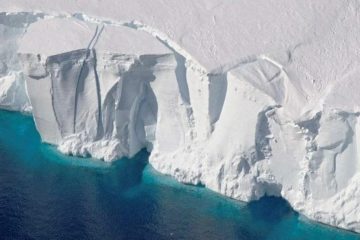 A major ocean circulation that forms around Antarctica could be headed for collapse, risking significant changes to the world’s weather, sea levels and the health of marine ecosystems, scientists say, offering a stark warning about the growing impacts of climate change.
 The Covid-19 pandemic has wreaked extraordinary destruction and misery, killing nearly 7 million people worldwide thus far and devastating the lives of many more. And yet, viewed through the long lens of human history, writes the public health sociologist Jonathan Kennedy, “there is little about it that is new or remarkable”. Previous pandemics have killed many more, both in absolute numbers and as proportions of populations, and so may future ones. Covid should be a wakeup call that helps us manage deadlier plagues in the future. But will we heed it?
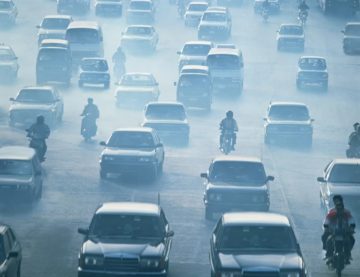 Air pollution could cause lung cancer not by mutating DNA, but by creating an inflamed environment that encourages proliferation of cells with existing cancer-driving mutations, according to a sweeping study of human health data and experiments in laboratory mice. The results, published in Nature on 5 April
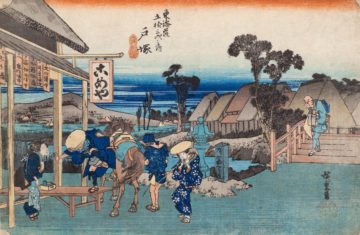 A major exhibition on the art and influence of Japanese printmaker Katsushika Hokusai
 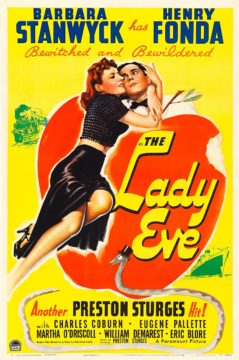 Klawans, like many before him, notes the echoes of Sturges’s life in his work: the juxtaposition of bohemians and stern squares, the fluency in both American vernacular and European argot, the linking of slapstick and hypocrisy. But he also wants to make this reading “wobble a bit,” and he peers between every snappy line for cultural references, Biblical allegories, political sympathies, and philosophies about love and suffering. A Sturges film, Klawans believes, is more than just its witty banter: “One of the chief distractions from thinking your way through the films is their most universally admired trait: the dialogue.”
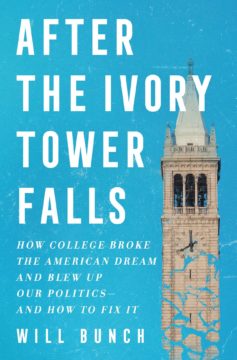 Talk-show host Rush Limbaugh, recipient of the Presidential Medal of Freedom under former president Donald Trump, relied on his listeners’ resentment of college-educated folks throughout the 1990s to stoke the fires of culture war. There was something about what colleges did that convinced many of Limbaugh’s listeners that, in journalist Will Bunch’s words, “nothing in America made sense anymore.” And it was this confusion, Bunch argues in his new book, After the Ivory Tower Falls: How College Broke the American Dream and Blew Up Our Politics—and How to Fix It, that produced the biggest divide in American politics, between those with and without college degrees. Rather than dismiss the concerns of Limbaugh’s listeners, Bunch takes them seriously. They are not wrong to sense that “the American way of college went off the rails,” Bunch concludes.
 Within the past decade, scientists have discovered a class of materials that, at extreme pressures, show superconductivity at temperatures just a few tens of degrees below freezing, but the goal of a room-temperature superconductor has remained out of reach. In
  Recently, I argued in this publication that one of our best guides to the world of social media is