
Category: Recommended Reading
On Ross Douthat’s Question: “Can The Meritocracy Find God?”
Rick Moody at Salmagundi:

It’s easy, when reading Ross Douthat, with his talk of a “tribe” of meritocrats and culture workers, with his feel-good conservative Catholicism, to know what you are against spiritually. Being against things is at the heart of Douthat’s article. It’s at the heart of certain kinds of evangelical practice, it’s at the heart of the ideologically pure Left and the ideologically pure Right. What’s much harder, especially in the Christianity of the present, is to say what you stand for, even if standing “for” things is theologically central to all that Christianity imagined of itself, when, e.g., it codified the Nicene Creed.
Let me, then, say what I imagine liberal Protestantism, e.g., stands for. In my daily reading of the work of Franciscan contemplative Richard Rohr I recently came across the following from Julian of Norwich, a profound early English mystical voice, and a writer much admired by Rohr and other contemporary thinkers about Christian theology: “Would you like to know our Lord’s meaning in all this? Know it well: love was his meaning. Who revealed this to you? Love. What did he reveal to you? Love. Why did he reveal it to you? For love. Stay with this and you will know more of the same.”
more here.
The longer a person’s telomeres, the greater the risk of cancer and other disorders
Gina Kolata in The New York Times:
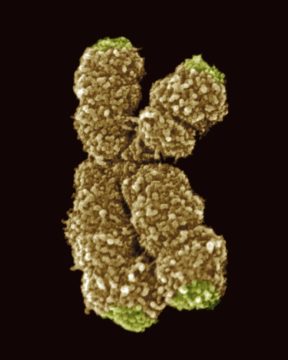 The story, as often happens in science, sounded so appealing. Cells have a molecular clock that determines how long they live. If you can just stop the clock, cells can live indefinitely. And the same should go for people, who are, after all, made from cells. Stop the cell clocks and you can remain youthful.
The clocks come in the form of caps on the end of chromosomes — the long twisted strings of DNA carrying the cells’ genes. The caps on chromosomes, called telomeres, are chains of short, repeated segments of DNA. Every time a cell divides, its telomeres get a little shorter, until finally they get so short that the cell dies. “Short telomeres were thought to be bad — people with premature aging syndromes had short telomeres — so, by analogy, long telomeres were thought to be good,” said Dr. Mary Armanios, professor of oncology at Johns Hopkins University School of Medicine and director of the Telomere Center at the medical school’s Sidney Kimmel Comprehensive Cancer Center. “And the longer the better.”
But, of course, nothing in biology is so simple. And a paper published Thursday in the New England Journal of Medicine, with results of a study that Dr. Armanios led, shows that the telomere story is no exception. While short telomeres do lead to health problems, long telomeres lead to health problems of their own. Far from extending life, long telomeres appear to cause cancer and a blood disorder known as CHIP, a condition that increases the risk of blood cancers and heart disease.
More here.
Henry Darger’s Book of Weather Reports
Lytle Shaw at Cabinet Magazine:
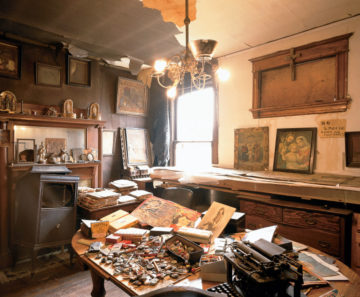 From December 31, 1957 until December 31, 1967, the artist and writer Henry Darger (1892–1973) kept a series of six ring-binder notebooks with almost daily entries on the weather in his native Chicago. On the outside cover of the first book, Darger describes the project, with encyclopedic enthusiasm, as a “book of weather reports on temperatures, fair cloudy to clear skies, snow, rain, or summer storms, and winter snows and big blizzards—also the low temperatures of severe cold waves and hot spells of summer.”
Though generally short, the entries abound in peculiarities. Darger is concerned, for instance, as much with periods of continuous temperature as with shifts—“3 to 7 am 57” (10/21/1958). Often up at 3am taking readings, Darger’s descriptive vocabulary also tends toward the moral and anthropomorphic: terms like “unsettled” and “threatening” are as common as “cool” or “hot.” Moreover, as the above epigraph suggests, the weatherman becomes a special figure. Darger’s notebooks can, in fact, frequently be read as an excruciatingly detailed moral account book of how well the weatherman was doing his job.
more here.
Tuesday Poem
The Void
you,
the void i write into
your silence
is resounding
……….. on the edges of
……….. comings and goings
you make the word
break into
petals
dropping
……….. one
……….. by
……….. one
before my eyes
into
a hall of mirrors
you,
the void
i write
into
your silence is
resounding.
by Ayça Çubukçu
Sunday, May 7, 2023
Perambulating
Bastian Fox Phelan in the Sydney Review of Books:
 For the first six weeks I can’t walk further than a few hundred metres. I feel like I’m practicing a walking meditation without experiencing the mental effects of this exercise – to focus on one activity, to centre myself. I’ve just had a baby; I am profoundly de-centred. In my current state, I can’t push the pram, or wear my new baby on my body, or drive a car. When I lie down at night, it feels like all my organs will spill onto the bed. Other fluids seep out – milk, tears. My body produces these things, and I cannot control them. I had not planned for the baby to exit my body in the way that she did, and for some reason this causes me more pain than the scar that now bisects my abdomen.
More here.
How we decided alcohol was a health boon in the ’90s—and how it all fell apart
Tim Requarth in Slate:
 In 1991 an academic debate spilled out of ivory towers and into the popular imagination. That year, Serge Renaud, a celebrated and charismatic alcohol researcher at the French National Institute for Health and Medical Research—who also hailed from a winemaking family in Bordeaux—made a fateful appearance on 60 Minutes. Asked why the French had lower rates of cardiovascular disease than Americans did, even though people in both countries consumed high-fat diets, Renaud replied, without missing a beat, “The consumption of alcohol.” Renaud suspected that the so-called French paradox could be explained by the red wine at French dinner tables.
The French paradox quickly found a receptive audience. The day after the episode aired, according to an account in the food magazine the Valley Table, all U.S. airlines ran out of red wine. For the next month, red wine sales in the U.S. spiked by 44 percent. When the show was re-aired in 1992, sales spiked again, by 49 percent, and stayed elevated for years.
More here.
More radical and practical than Stoicism – discover Shugendō
Tim Bunting in Psyche:
 Wearing the white robes that are used to dress the dead in Japan, I bow my head deeply as drums are beaten and conch shells are blown – reminders that the first rite of my yamabushi ascetic training is beginning. My funeral is starting. Along with a small group of uninitiated who are also preparing to ‘die’, I start a symbolic pilgrimage into the afterlife, descending the slopes of Mount Haguro, a cedar-covered mountain in Japan’s northern Yamagata Prefecture.
Mt Haguro, along with and nearby Mt Gassan and Mt Yudono, form the Dewa Sanzan, the three sacred mountains of Dewa, as the region was once called. For yamabushi, and the Shugendō tradition they practise, there are few holier places. Mountain ascetics have been practising rituals and magic on Dewa Sanzan since at least the 8th or 9th century, and perhaps much longer, back to a point in history where myth and memory begin to blur.
More here.
‘Statistically impossible’ heat extremes are here
Nicholas Leach in The Conversation:
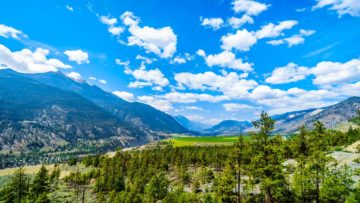 In the summer of 2021, Canada’s all-time temperature record was smashed by almost 5℃. Its new record of 49.6℃ is hotter than anything ever recorded in Spain, Turkey or indeed anywhere in Europe.
The record was set in Lytton, a small village a few hours’ drive from Vancouver, in a part of the world that doesn’t really look like it should experience such temperatures.
Lytton was the peak of a heatwave that hit the Pacific Northwest of the US and Canada that summer and left many scientists shocked. From a purely statistical point of view, it should have been impossible.
More here.
Gordon Lightfoot (1938 – 2023) Singer-Songwriter
Dorothy Bohm (1924 – 2023) Photographer
Bruce McCall (1935 – 2023) Retrofuturist And Illustrator
Pills, Politics, and Pence
Rafia Zakaria in The Baffler:
 IT WAS HIGH TIME for someone to throw Mike Pence a bone. It arrived on April 7, hurled all the way from Texas. On that day, Matthew Kacsmaryk, a U.S. District Court judge, issued a bizarre but consequential ruling that sought to halt the use of mifepristone, which is part of a two-drug regimen to induce a medical abortion. Kacsmaryk, a judge in northern Texas who was appointed by former president Donald Trump, took issue with the Food and Drug Administration’s approval of mifepristone twenty-three years ago. The U.S. Court of Appeals for the Fifth Circuit took on the case soon after, narrowing some of Kacsmaryk’s ruling but also questioning the FDA’s efforts in recent years to ensure easier access to the pill. They issued a preliminary ruling, with a full-case appeal to come.
Pence, who lives in a McMansion in a tony Indianapolis suburb, excitedly caught the bone from Texas in his teeth. The former vice president, who is trying to position himself as the great hope of evangelicals in the GOP presidential race, took to the airwaves prepped with all the talking points he had been dying to use. On CBS’s Face the Nation he declared that he wanted the abortion pill “off the market.” It was an A-plus performance, with Pence frowning and extrapolating on how problematic he found the FDA’s approval of the drug twenty-three years ago, as if it had been on his mind every day since. Finally, to make sure that he was also pinning blame on the Biden administration as evangelical enemy number one, he decried current policies that have permitted the drug to be obtained through the mail.
More here.
Sunday Poem
Woodstock
I came upon a child of God
He was walking along the road
And I asked him, where are you going
And this he told me…
I’m going on down to Yasgur’s farm
I’m gonna join in a rock ‘n’ roll band
I’m gonna camp out on the land
I’m gonna try and get my soul free
We are stardust
We are golden
And we’ve got to get ourselves
Back to the garden
Then can I walk beside you
I have come here to lose the smog
And I feel to be a cog in something turning
Well maybe it is just the time of year
Or maybe it’s the time of man
I don’t know who I am
But you know life is for learning
We are stardust
We are golden
And we’ve got to get ourselves
Back to the garden
By the time we got to Woodstock
We were half a million strong
And everywhere there was song and celebration
And I dreamed I saw the bombers
Riding shotgun in the sky
And they were turning into butterflies
Above our nation
We are stardust
Billion year old carbon
We are golden
Caught in the devil’s bargain
And we’ve got to get ourselves
Back to the garden
by Joni Mitchell
from Ladies of the Canyon, 1970
A Reading by Author and Activist: Ruchira Gupta
Saturday, May 6, 2023
B-SIDES: READING, RACE, AND “ROBERT’S RULES OF ORDER”
 Kent Puckett in Public Books:
Does anyone read Robert’s Rules of Order? We often threaten to consult it, but it’s hard to imagine someone really reading any of the many versions of Henry Robert’s 1876 text. Even in Robert’s own early editions, the guidance on secondary, subsidiary, incidental, privileged, unclassified, and other motions was presented in a pointedly systematic form that invited not slow perusal but rather tactical, and sometimes supercilious, consultation. “If only you had looked at page 47 of Robert’s Rules,” we can hear someone saying, “you would have known that a Motion to Suppress the Question requires a two-thirds vote. You moron.”
Its talismanic power is such that an effective use of the book might not even require consultation. Sitting down at a committee table and placing an unopened, unread copy where others could see it is a power move all its own: an index of the paradoxically occult sway of ostensibly transparent procedure, a threat and a promise. Its potential as both an effective tool and a bespoke weapon has long been a part of the book’s appeal. Arthur T. David, in his 1937 Robert’s Rules Simplified, acknowledges that for some, Robert’s rules look like “a ‘bag of tricks’ with which a few members can run things to suit themselves.” In his Notes and Comments on Robert’s Rules, Jon Ericson acknowledges that, for many, “parliamentary procedure is that tricky, pedantic, officious, dull, boring, unfair system that tyrants use to suppress the rights of all us good folk.” “Meetings,” says Mary A. De Vries in The New Robert’s Rules of Order, “are one of the few things in life that are pursued relentlessly even though they provoke endless complaints of frustration, stress, wasted hours, and dissatisfaction with the outcome.” And Doris P. Zimmerman dedicates her Robert’s Rules in Plain English “to everyone who has served as a member or leader of a group, and who has, at one time or another, felt ignorant, ineffectual, helpless, frustrated, repressed, or just plain bored.”
More here.
The End of the Cold Peace
 Tim Sahay and Kate Mackenzie in Polycrisis:
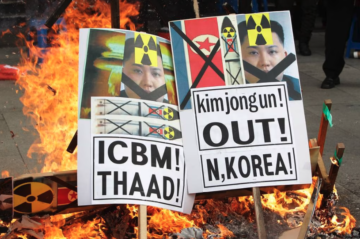
Watch the Korean Peninsula. It is in South Korea that the New Cold War has most visibly upset the delicate balance between industry, security, and domestic politics.
South Korea’s growth miracle has been based on deterrence and detente between China, its main trading partner; the United States, its ally and security guarantor; and North Korea, its neighbor with newly developed intercontinental ballistic missiles. The country has been on hair-trigger alert since last October, when North Korea stepped up its barrage of ballistic missile tests, including launching one over Japan. In a show of strength, South Korea launched its own ballistic missile, but the weapon malfunctioned, crashing in the coastal city of Gangneung, where the resulting fire raised panic of a North Korean attack.
Now that North Korea has demonstrated the ability to strike the US homeland, South Koreans worry that Washington might abandon them in a conflict to protect US cities instead. Today, 71 percent favor developing their own nuclear weapons. “New York for Berlin” was the central extended deterrence dilemma of the old cold war. The new question is: Would the Americans really trade “Seattle for Seoul?”
Last week, while the national security advisor Jake Sullivan was unrolling the “new Washington consensus” (the subject of our next dispatch), Presidents Biden and Yoon were holding security and trade negotiations in DC that resulted in a Washington Declaration. “Our mutual defense treaty is ironclad, and that includes our commitment to extended deterrence,” Biden said, referring to the treaty signed to end the Korean War seventy years ago. For his part, Yoon referred to the “unprecedented expansion and strengthening” of the US nuclear umbrella. The upshot was that South Korea agreed not to pursue its own nuclear weapons program in return for a greater decision-making role in US military planning should North Korea launch a nuclear attack.
More here.
Economists We’ll Be Talking About: Wassily Leontief
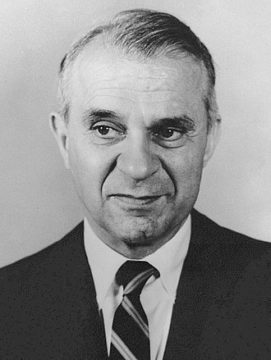 Yakov Feygin in Building a Ruin:
My theory of how economics interacts with policy is a bit more complicated than some more popular accounts. Very good studies on the anthropology of economics as a profession and policy-making discipline. For example, Marion Fourcade, and Elizabeth Popp Berman’s work, have noted that economics’ political influence and professional formation are deeply embedded in particular differences in local political cultures. Thus, for example, I think that in the United States, lawyers tend to be very important transmitters of economic ideas into policy. American policymakers tend, themselves, to be lawyers, and the government itself has deep legal performativity, even in the bureaucracies.
Despite these longer structural patterns, in the past few decades, I think there has been a bit of technological disruption in how economics and economic ideas move into action. A few years ago, I coined the term “posting to policy pipeline” to describe how the econ blogosphere and Twitter have become key sites of idea making. Before the advent of these new forums, the top economic journals really dominated everything and painted the conventional wisdom as having some scientific validity. After the advent of social media, one could not only call Larry Summers an idiot to his face without being invited to an exclusive meeting but also explain to a large audience precisely why he was an idiot.
Like all technical changes, the emergence of the posting-to-policy pipeline had a strong social component.
More here.
The two-hundred-year search for botanical memory
Virginia Morell in Lapham’s Quarterly:
 A member of the pea family, M. pudica is a small plant with tiny leaflets paired along the length of each stem and pretty lavender-pink globular flowers. The leaves give it a fernlike, feminine look, although it is also armed with thorns to ward off attacks. It’s native to Central and South America but has spread throughout the tropics partly because of its popularity as a novel ornamental that exhibits a fascinating behavior: if you touch a single leaf, the plant will swiftly fold up all its leaves before your eyes. Only a soft touch is required to bring on this collapse; after a while, you can also watch as the wilted-appearing mimosa sets about righting itself and reopening its leaves. You may have discovered the mimosa’s animal-like trick in an arboretum or store where the plants are sometimes displayed or sold. The rapid response to being touched is another defensive tactic—it startles most insects, as it does naive humans.
M. pudica and its curious actions were known to Western science even before 1753, when Linnaeus officially named the species. Many leading scientists of the day, including Robert Hooke (the English natural philosopher best known for being the first to see and describe a cell via a microscope) and later the French naturalist Jean-Baptiste Lamarck studied the plant. Lamarck was particularly struck by how mimosas eventually no longer respond to being repeatedly touched.
More here.
Author Fatimah Asghar is the first winner of the Carol Shields Prize for Fiction
Tilda Wilson in NPR:
 Fatimah Asghar is the first recipient of the Carol Shields prize for fiction for their debut novel When We Were Sisters. The award was announced Thursday evening at Parnassus Books in Nashville, Tenn. They will receive $150,000 as well as a writing residency at Fogo Island Inn in Newfoundland and Labrador.
Asghar’s When We Were Sisters is a coming-of-age novel that follows three orphaned Muslim-American siblings left to raise one another in the aftermath of their parents’ death. The prize jury wrote that Asghar “weaves narrative threads as exacting and spare as luminous poems,” and their novel is “head-turning in its experimentations.” When We Were Sisters reflects some of Ashgar’s own experiences both as a queer South Asian Muslim and a person whose parents died when they were young. In October, they told NPR’s Scott Simon that being on the margins of society and vulnerable from such a young age was a window into “a certain kind of cruelty that I think most people don’t have a reference point for.”
Ashgar said that the stories they read about orphans while growing up never really rang true — that they’d always think “this doesn’t feel accurate.”
More here.