
Justin E. H. Smith in his Substack newsletter, The Hinternet:
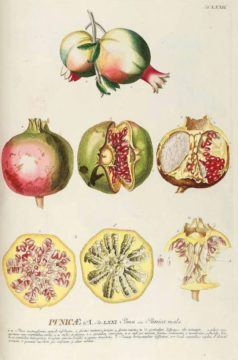 Is any product of bourgeois consumer ideology more noxious than the “bucket list”? At just the moment a person should be adjusting their orientation, in conformity with their true nature, to focus exclusively on the horizon of mortality, they are rudely solicited one last time, before it’s really too late, for a final blow-out tour of the amusement parks and spectacles that still held out some plausible hope of providing satisfaction back in ignorant youth, when life could still be imagined to be made up of such things. “Travel is a meat thing”, William Gibson wrote, to which we might add that the quest for new experiences in general is really only fitting for those whose meat is still fresh.
But our economic order cannot accept this. Capitalism obscures from view first the meaning of life, which properly understood is a preparation for death, and then it obscures the meaning of death, which properly understood is the all-surrounding horizon of a mortal life.
More here.
 An experimental
 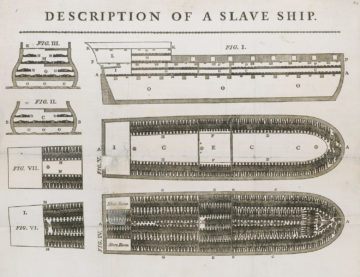 Asterisk: Your book Moral Capital is about why the movement to abolish the slave trade in Britain happened in the late 1780s and not earlier. Would you mind briefly walking through the thrust of that argument?
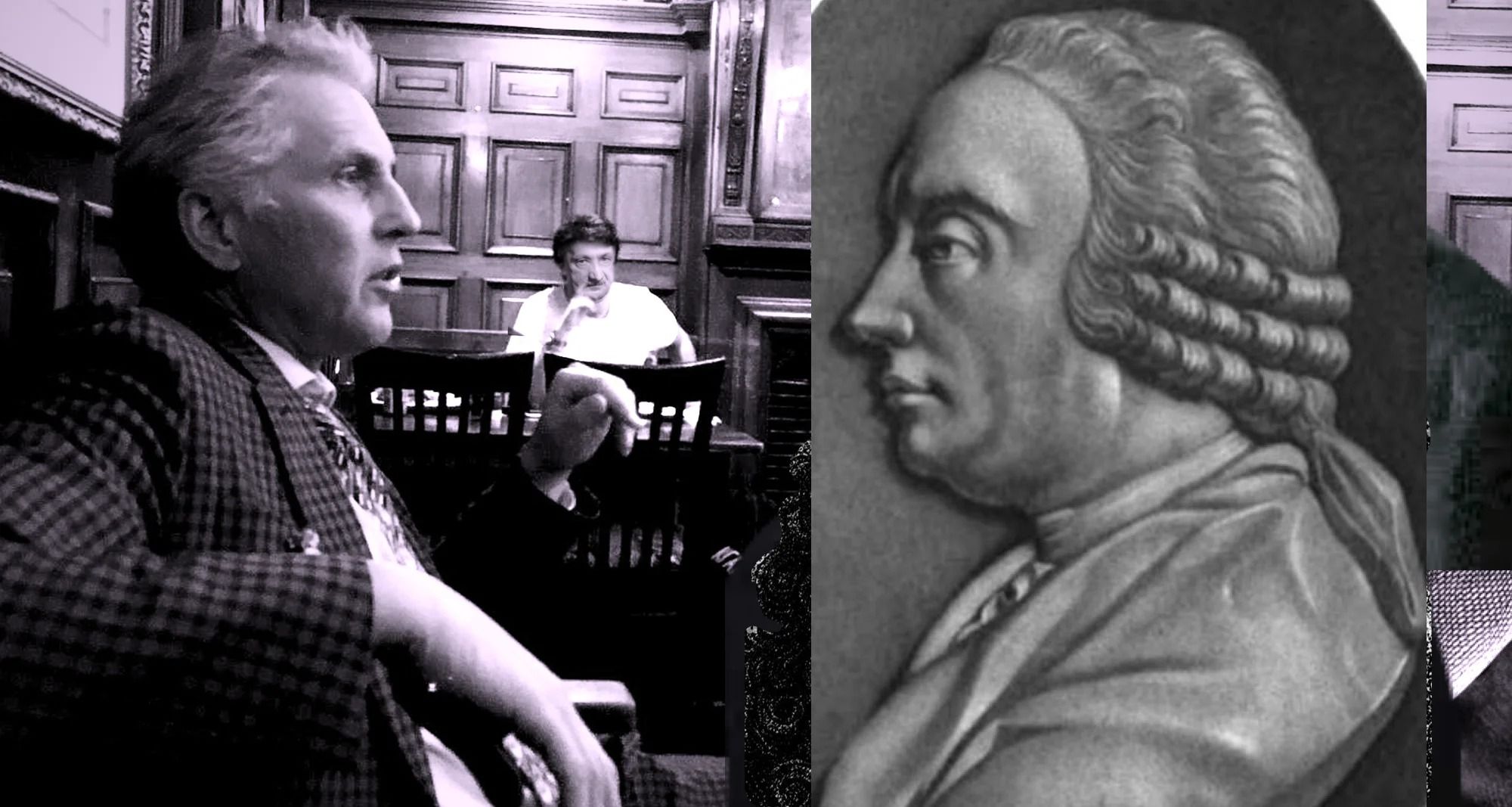 3:16: What made you become a philosopher?
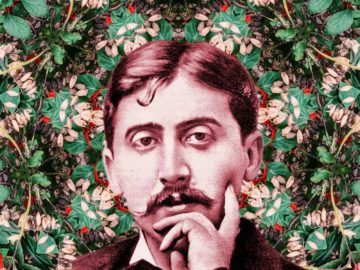 One hundred years ago, on Nov. 18, 1922, Marcel Proust breathed his last in Paris at age 51. His death, from pneumonia and a pulmonary abscess, was perhaps the final nail in the coffin of the belle epoque, an age of gentility, civility and artistic achievement that had mostly ended with the outbreak of World War I. At the time, several volumes of Proust’s gargantuan, seven-part novel, “À la recherche du temps perdu” (“
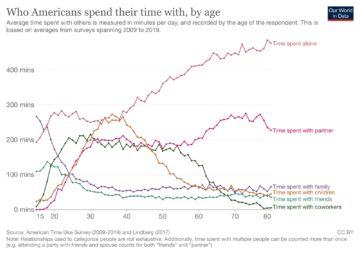 I recently shared a
  Michael Pettis in American Compass:
 Martijn Konings in Sidecar:
 Daniela Gabor in Phenomenal World:
 Mona Ali in Green:
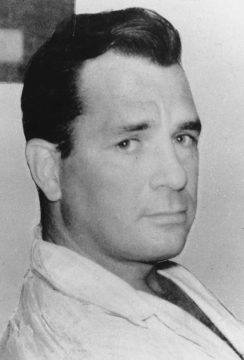 In early September 1957, Jack Kerouac achieved the dream of every writer. Around midnight he and his girlfriend, Joyce Glassman, left her brownstone apartment in New York City for a nearby newsstand at Broadway and 66th Street. They waited while the nightman cut the twine around the morning edition of the New York Times. Rifling through the paper, they found on Page 27 an expected review of Kerouac’s new book, “
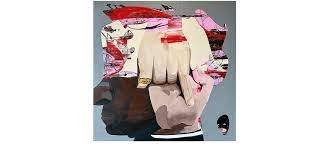 In their controversial 2013 opus The Undercommons, radicals Fred Moten and Stefano Harney detail the eponymous academic-activist ferment to which they owe their radicality. The undercommons is located in the university—more generally, in the swarm of relations and systems we could call “academia” or “intellectual life”—but is not a physical place; rather, it is a “downlow lowdown maroon community of the university … where the work gets done, where the work gets subverted, where the revolution is still black, still strong.”
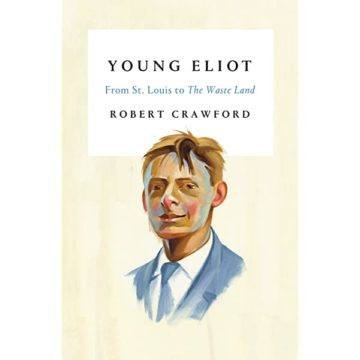 Of most interest to us, the readers of Eliot’s poetry, is the writing of verse for which he somehow found the time and energy. The early drama in Crawford’s account is Eliot’s composition of “The Hollow Men” and “Ash Wednesday” out of his struggles with the frailty of the body (exemplified in Vivien’s constant and severe intestinal illness and his own frequent bouts of flu and bronchitis) and the soul (tormented by shame over the body’s needs and failures, including the repeated fall into sexual guilt). Tormented, Eliot turned to an array of cultural resources. While Baudelaire and Dante continued to inform his thinking, they were joined now by an increasing interest in the theatre, especially the non-naturalistic modes available in puppetry, ballet, and mechanistic work. The poetry of other languages and the suspension of access to meaning entailed in the act of translation helped him to incorporate estrangement into his own poems; Eliot’s labor on a translation of Saint-John Perse’s Anabasis shaped the lines and phrases of his work of the mid-1920s. But the cultural resources Eliot brought to the processing of pain were not limited to the literary.
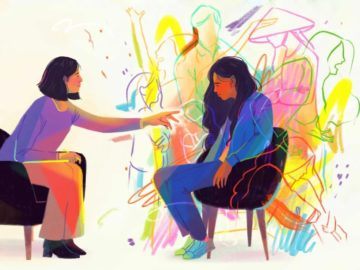 Cambodian American Eden Teng was was born in a refugee camp on the border of Thailand and Cambodia just a few years after the Cambodian genocide. She moved to the U.S. with her mom and aunt when she was 6. Teng attributes much of her own resilience in transitioning to the U.S. to her exuberant mom, who wore whatever she wanted and wasn’t afraid to defy social norms — even when it was embarrassing for a teenage Teng.
 Political strategists on winning campaigns are visited like gurus after an election, with reporters looking to discern secrets of success that might be replicated at scale. In this spirit, in the days after the midterms, the
 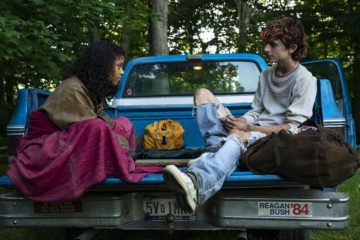 IF ’80S CINEMA experienced a “
 The digital era has two basic axioms. The first is that information has no form; information technology is a means of disseminating and aggregating data, but data itself belongs to no place or context. Data cannot tell the story; information is uninforming and uninformative. The digital age can therefore have no real culture of its own, no culture in the etymological sense of cultivation and accumulated growth. Things trend or happen online, but nothing settles into lasting place or takes its time to show itself significant. Each day’s frenzy and distraction are as overwhelming unto the day as they are forgettable.
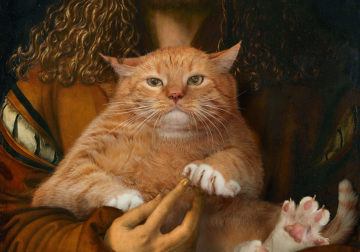
 The second axiom is that the Internet is for cat pictures; everyone knows that transmitting images of cute animals is the whole point of it. It remains astounding that pet videos run into the tens of millions of views. That they have their own film festival. That they are used as bait to pull people into political misinformation campaigns. That there are bona fide pet celebrities and pet influencers. That some of them are raking it in, with spin-off merch and copyrighted brand clout all their own.