
Brian Gallagher in Nautilus:
Grief-stricken at the recent death of her brother, and sitting alone at the foot of her bed, Wanda Maximoff, the superhero with telepathic and telekinetic powers, is watching the family sitcom Malcolm in the Middle when she calls after her roommate, Vision. The perceptive and charmingly English-accented humanoid AI fades through her bedroom wall and, after some small talk about the show’s perplexing slapstick humor (Vision wonders why a pergola collapsing on Malcolm’s dad is funny) he quickly gathers, by how guarded and distant she seems, that Wanda’s not in a happy mood. What follows is one of the most celebrated and touching moments in the Marvel miniseries WandaVision.
“Wanda, I don’t presume to know what you’re feeling,” Vision says. “But I would like to know, should you wish to tell me, should that be of some comfort to you.” Her guard still very much up, Wanda says, “What makes you think that talking about it would bring me comfort?” Vision, believing this to be a sincere question rather than a dismissal, starts to explain something he’s read, only for Wanda to break him off: “The only thing that would bring me comfort is seeing him again.”
More here.
 Janet Afary and Kevin B. Anderson in Dissent:
 Bruno Latour in Green:
 Kate Mackenzie, Lee Harris, and Tim Sahay in The Polycrisis at Phenomenal World:
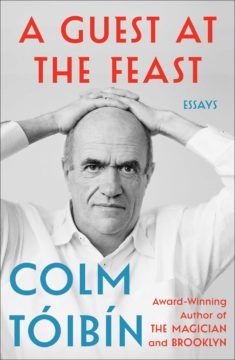 It’s all very meticulous, even his horror, which is considerable when it comes to the way the bishops covered up for their paedophile priests. On every subject, Tóibín’s writing is what people these days inevitably describe as nuanced, a word that has become a kind of shorthand for expressing a person’s rare ability to understand – or to try to understand – the foibles of others (how sad that this should be thought unusual). But he can be gripping, too. This country that censored the hell out of people’s hearts is so much his territory. If the speed with which the power of the church in Ireland has been undermined is still astonishing, it’s nevertheless important to consider the hold it may continue to have over those citizens – Tóibín is one – who remember when its authority was ironclad. In the end, this is a book of shadows: tumours in testicles, fog in Venice, expensively clad cardinals who may be up to no good.
 Remember boredom? The first English translation of the French writer
  S
S It was late in 1972 — a year in which the science of genetic engineering really began to sizzle — that two California researchers announced the unusually tidy transfer of genetic information from one bacterium to another with help from a specialized enzyme. It was a scientifically heralded result, but behind the hoopla was just one small catch. The information transferred enabled a common human disease bacterium, E. coli, to resist not just one antibiotic, but two. “Alarm bells should have rung,” writes Matthew Cobb, in his deeply researched and often deeply troubling history of gene science. And that nothing did ring — that scientific success trumped the obvious risks of the work — becomes the focus of his book’s primary inquiry: whether a research community capable of altering life is also capable of putting ethical decisions first.
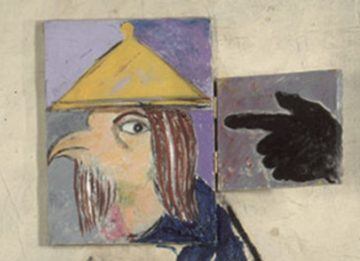 Missing persons cases are seldom about finding someone. Too often, people who have disappeared are not missing at all. They are either hiding or long dead, possibly victims of murders waiting to be solved. Such cases, in short, are best to avoid. But when I heard that there had been recent sightings of the long-lost Wandering Jew, I knew I had to investigate.
 Blood-sucking mosquitoes have their uses. An innovative approach analysing their last blood meals can reveal evidence of infection in the people or animals that the flying insects feasted on.
 Can Americans’ trust in elections be rebuilt?
 Weber says that most writings about the Beatles can be categorised into one of four principal narratives ‑ four ways of seeing and telling the band’s story. The first and earliest of these is the Fab Four Narrative. This is the more or less official version of the Beatles that evolved following their initial breakthrough. It was propagated by a largely friendly media nudged along by the Beatles themselves, their management and publicists. In the Fab Four Narrative, the Beatles are depicted as four friends whose relationship with each other is easy and free of tension. This is how they come across in their early interviews, their monthly fan magazine, and, especially, in their first two films: A Hard Day’s Night and Help. In Help, for example, the fictionalised Beatles live in a luxurious communal home that is, by mid-sixties standards, high-tech. These are rich young men, leisured and with few responsibilities, but who get along together, well enough to live in the same shared space like perpetual teenagers. As Weber comments, these mainstream films were especially important in differentiating one Beatle from another for a wider public (Jonathan Miller, commenting when they were new on the scene, had thought they all looked the same, like the Midwich Cuckoos).
 THE WORD “GENIAL” IN ENGLISH
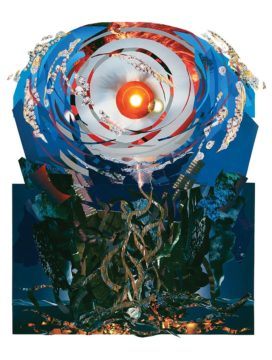 I first read the Book of Revelation in a green pocket-size King James New Testament published by the motel missionaries Gideons International. I was in seventh grade. I remember reading the tiny Bible in the hallway outside my chemistry classroom, in which lurked a boy I loathed named Glenn, who would make fun of my Journey T-shirts. It would be years before I really got into Iron Maiden, but at my friend Jonathan’s house I’d heard Barry Clayton’s creepy recitation of Revelation 13:18 on the title track of The Number of the Beast: “Let him who hath understanding reckon the number of the beast: for it is a human number; its number is six hundred and sixty-six.”
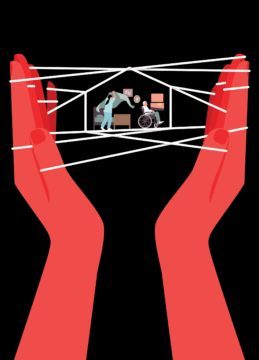 Over the years, Marsha Farmer had learned what to look for. As she drove the back roads of rural Alabama, she kept an eye out for dilapidated homes and trailers with wheelchair ramps. Some days, she’d ride the one-car ferry across the river to Lower Peach Tree and other secluded hamlets where a few houses lacked running water and bare soil was visible beneath the floorboards. Other times, she’d scan church prayer lists for the names of families with ailing members.