
David Stromberg in The Hedgehog Review:
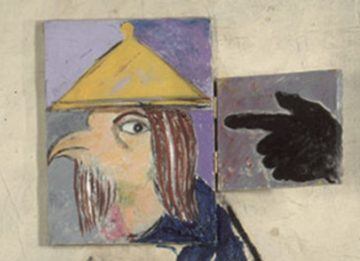 Missing persons cases are seldom about finding someone. Too often, people who have disappeared are not missing at all. They are either hiding or long dead, possibly victims of murders waiting to be solved. Such cases, in short, are best to avoid. But when I heard that there had been recent sightings of the long-lost Wandering Jew, I knew I had to investigate.
The challenge was that no one could actually say where the Wandering Jew had been sighted. Since allegedly taunting Jesus in Jerusalem on his way to being crucified, resurfacing in thirteenth-century Christian folklore in England as an immortal penitent, making regular appearances throughout Europe in booklets published during the Renaissance and the Enlightenment, and finally being mentioned in reports published in Salt Lake City’s Deseret News in 1868, the Wandering Jew had left no visible trail. Forced to take a different tack, I decided to focus less on the question of the wandering and more on the question of the Jew. If I could find some answers to the Jewish question, I thought, I might also discover where the Jew might have gone. But first I had to see what the Jewish question was all about. What, in fact, was the question?
So I went straight to the source: the German Protestant theologian Bruno Bauer and his 1843 essay “Die Judenfrage,” translated in turn as “The Jewish Question” and “The Jewish Problem.” Obviously, much had happened with and to the Jews since Bauer tried to address the question, but since he was the first to put it so directly, his essay seemed like a good start.
More here.
 Blood-sucking mosquitoes have their uses. An innovative approach analysing their last blood meals can reveal evidence of infection in the people or animals that the flying insects feasted on.
 Can Americans’ trust in elections be rebuilt?
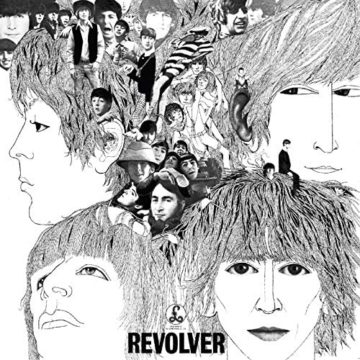 Weber says that most writings about the Beatles can be categorised into one of four principal narratives ‑ four ways of seeing and telling the band’s story. The first and earliest of these is the Fab Four Narrative. This is the more or less official version of the Beatles that evolved following their initial breakthrough. It was propagated by a largely friendly media nudged along by the Beatles themselves, their management and publicists. In the Fab Four Narrative, the Beatles are depicted as four friends whose relationship with each other is easy and free of tension. This is how they come across in their early interviews, their monthly fan magazine, and, especially, in their first two films: A Hard Day’s Night and Help. In Help, for example, the fictionalised Beatles live in a luxurious communal home that is, by mid-sixties standards, high-tech. These are rich young men, leisured and with few responsibilities, but who get along together, well enough to live in the same shared space like perpetual teenagers. As Weber comments, these mainstream films were especially important in differentiating one Beatle from another for a wider public (Jonathan Miller, commenting when they were new on the scene, had thought they all looked the same, like the Midwich Cuckoos).
 THE WORD “GENIAL” IN ENGLISH
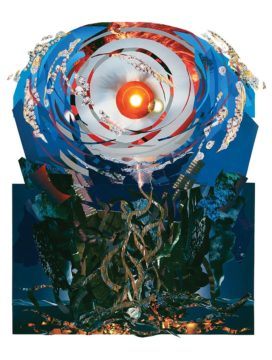 I first read the Book of Revelation in a green pocket-size King James New Testament published by the motel missionaries Gideons International. I was in seventh grade. I remember reading the tiny Bible in the hallway outside my chemistry classroom, in which lurked a boy I loathed named Glenn, who would make fun of my Journey T-shirts. It would be years before I really got into Iron Maiden, but at my friend Jonathan’s house I’d heard Barry Clayton’s creepy recitation of Revelation 13:18 on the title track of The Number of the Beast: “Let him who hath understanding reckon the number of the beast: for it is a human number; its number is six hundred and sixty-six.”
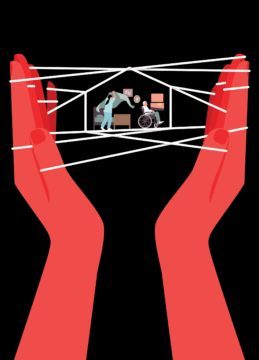 Over the years, Marsha Farmer had learned what to look for. As she drove the back roads of rural Alabama, she kept an eye out for dilapidated homes and trailers with wheelchair ramps. Some days, she’d ride the one-car ferry across the river to Lower Peach Tree and other secluded hamlets where a few houses lacked running water and bare soil was visible beneath the floorboards. Other times, she’d scan church prayer lists for the names of families with ailing members.
 After the Internet arrived and flooded the market with new voices, some outlets found that instead of going after the whole audience, it made more financial sense to pick one demographic and dominate it. How? That’s easy. You feed the audience news you know they will like. When Fox had success targeting suburban and rural, mostly white, mostly older conservatives – the late Fox News chief Roger Ailes infamously described his audience as “55 to dead” – other companies soon followed suit.
 Physicists have purportedly created the first-ever wormhole, a kind of tunnel theorized in 1935 by Albert Einstein and Nathan Rosen that leads from one place to another by passing into an extra dimension of space.
 With or without the COVID-19 pandemic, China has maintained a greater capacity to control the internal movement of its population than perhaps any other country in the world. This is primarily enforced through the household registration system (hukou) which has linked the provision of social services to regional locales since 1958. Under Deng Xiaoping, China set about constructing a national labor market, which today allows citizens to enjoy the narrow market freedom to seek employment throughout the country. But social citizenship, including access to state subsidized health care, education, pensions, and housing, is structured at the level of the city.
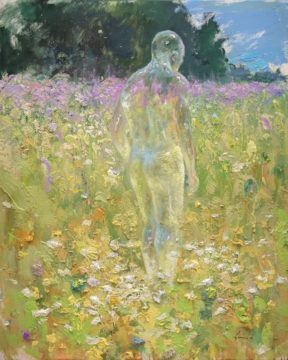 Man is an
 T
T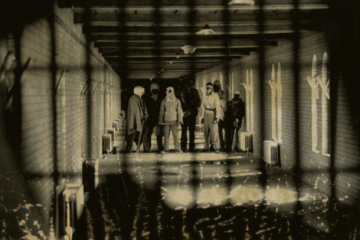 On a May evening in 1972—eight months after the uprising—Tisdale passed through Attica’s security gates and held his first workshop. He began by asking his students, “What is poetry?” He recorded their answers in his journal: “Personal, deals with emotions, historical, compact (concise), eternal, revolutionary, beauty, rhyme, rhythm, a verbal X-ray of the soul.” Knowing he was under nearly as much scrutiny as the imprisoned men, Tisdale approached the “revolutionary” aspects of poetry with caution. Attica’s administrators feared another revolt. Officers were always present for the workshops; Tisdale’s journal makes special note of the occasions when a Black officer, recruited after the uprising, attended. Regardless of the surveillance, the workshop began to gel after the first few weeks as participants became more comfortable with Tisdale. He noticed quickly that many contributors possessed great skill as poets. They told him that nothing had changed at Attica since the revolt; prison conditions remained abhorrent. They shared an urgency to write about the violence they had witnessed and America’s carceral system in general, and they did not hold back.
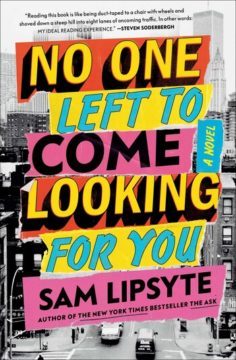 ONE OF SAM LIPSYTE’S SIGNATURE ACCOMPLISHMENTS has been to find the baroque musicality in the emergent vocabularies—commercial, bureaucratic, wellness-industrial, pornographic—opened up by twenty-first-century English. “Hark would shepherd the sermon weirdward,” he writes in his 2019 novel about an entrepreneurial inspirational speaker, “the measured language fracturing, his docile flock of reasonable tips for better corporate living driven off the best practices cliff, the crowd in horrified witness.” Across his first six books, Lipsyte’s sentences have been excessive, pun-laden, and lyrically raunchy. When language threatens to sound measured, a character with a zany name can be counted on to fracture it.