
Kevin Birmingham in The New York Times:
 There’s a moment deep in the Marquis de Sade’s novel “120 Days of Sodom” when a libertine laments the numbness of having committed every possible debauchery. “How many times, by God, have I not longed to be able to assail the sun, snatch it out of the universe, make a general darkness or use that star to burn the world!” The most destructive binge has limits, he realizes. Just knowing that will dampen the best sadistic orgy.
Sade toiled to find his imagination’s limits. In 37 days, he wrote 157,000 words on a 40-foot scroll while imprisoned in the Bastille, creating, he bragged, “the most impure tale ever written since the world began.” “120 Days of Sodom” chronicles four months of depravity involving multiple victims in a remote castle. Sade wrote in secret, by candlelight, covering the scroll in microscopic script. When he was suddenly transferred to a mental asylum days before revolutionaries stormed the Bastille in 1789, he hid his unfinished scroll in a crevice of his cell wall.
More here.
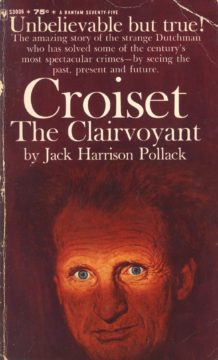 In Hound of the Baskervilles (1902) by Sir Arthur Conan Doyle, Sherlock Holmes examines a note written on a snippet from The Times. He concludes its author was an « educated man who wished to pose as an uneducated one, and his effort to conceal his own writing suggests that that writing might be known. » Dr. Mortimer calls it guesswork, but Holmes disagrees: « It is the scientific use of the imagination. »
 Researchers have made eggs from the cells of male mice — and showed that, once fertilized and implanted into female mice, the eggs can develop into seemingly healthy, fertile offspring.
 I would like to focus on a special way of predicting the future, and to invite you to take a trip down paths that are rarely trodden by humanists. As we are living at a time of unusual uncertainty and anxiety about what will happen next, this topic is on many people’s minds, prompting us to ask: “What is our future going to be like?” And also: “Can we foresee it to any degree at all?” When I say “our future” I’m not thinking of the next few years, but rather about the gradual processes whose effects will be visible several centuries from now.
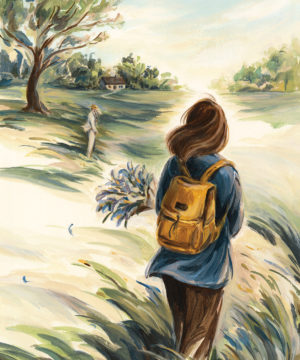 She too was a link, though a precious one, the only living connection to the ghost I stalked. Katherine Mansfield. The romantic renegade writer, older by five years at her death at 34 in January 1923 than I was/am on this June day in 1975.
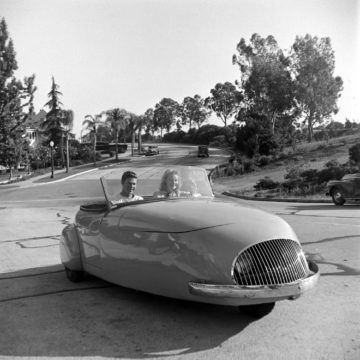 California’s population growth was one of defining trends of 20th-century America. From 1900 to 1950 the population increased 500%, going from two million to ten million. Then things really exploded, and by the year 2000 the state’s population had climbed to 34 million, making California the most populous state in America. People have been lured west for a variety of reasons, from the gold rush to Hollywood dreams, but beyond riches and fame there has been also the promise of the sunny California lifestyle, one captured by LIFE staff photographer
 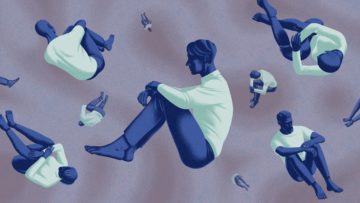 Loneliness can be difficult to study empirically because it is entirely subjective. Social isolation, a related condition, is different — it’s an objective measure of how few relationships a person has. The experience of loneliness has to be self-reported, although researchers have developed tools such as the
  Someone asks: why is “Jap” a slur? It’s the natural shortening of “Japanese person”, just as “Brit” is the natural shortening of “British person”. Nobody says “Brit” is a slur. Why should “Jap” be?
 After years of debates and discussions, nations have agreed on a High Seas Treaty to protect marine biodiversity and provide oversight of international waters. It is being lauded by researchers as an important step for conservation that encourages international research collaboration without hindering science.
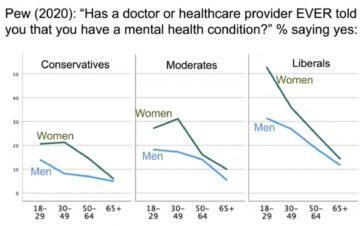 In May 2014, Greg Lukianoff invited me to lunch to talk about something he was seeing on college campuses that disturbed him. Greg is the president of FIRE (the
 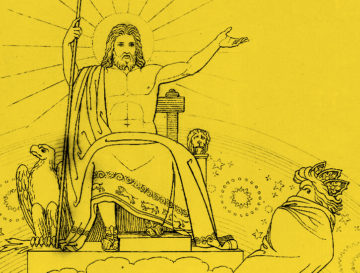 UNTIL THE NINETEENTH CENTURY
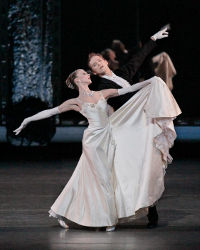 The map of Balanchine’s life once he left Russia in 1924 and until he finally settled into the New York City Ballet in 1948 may read as a kind of wandering, but his life as an artist was made of circles: the revolving of the repertory, the return to old ballets, the rethinking and recalibration of steps and phrases. To the dismay of his audience, for instance, Balanchine pared back the iconic
  One afternoon a few weeks ago, Alicea Hotchkiss’s 14-year-old son, Eli, came home from his high school in Tampa with a question about something a classmate had said to him. He’d heard the student use the word “gay” as an insult, so Eli responded the way he always does when this happens. “Hey,” Eli said, “my dad’s gay.” But this time, Eli told his mom, the other kid offered a startling rebuke: You’re not allowed to say that at school.