
J R Patterson in New Humanist:
 Zen and the Art of Motorcycle Maintenance, published in 1974, was nothing short of a cultural phenomenon. A work of fictionalised autobiography, the book follows its author Robert Pirsig on a long motorcycle ride through the US, from Minnesota across the prairie to Oregon, then down to southern California. The muscles of that skeletal journey are Pirsig’s philosophical musings on the notion of Quality. Pirsig created the concept in order explain the relationship between human values and societal values.
At once both obvious and ephemeral, Quality escapes easy definition. (And brings to mind American supreme court justice Potter Stewart’s comments about pornography: “I know it when I see it.”) In his original formulation, Pirsig describes it, not a little paradoxically, as “a characteristic of thought and statement that is recognised by a non-thinking or intuitive process.” At another juncture, Quality is defined as the event which occurs between the observer and the observed. Pirsig’s search for clarity stretched his mind to the breaking point, ultimately landing him in a psychiatric facility where he was subjected to electroshock therapy.
And yet, the concept has been influential. The book, a bestseller, continues to be read by motorcyclists, philosophers and everyone in between.
More here.
 With the use of this new technology exploding into the masses, previously unknown risks being revealed each day, and big tech companies pretending everything is fine, there is an expectation that the government might step in. But so far, legislators have taken little concrete action. And the reality is that even if lawmakers were suddenly gripped with an urgent desire to address this issue, most governments don’t have the institutional nimbleness, or frankly knowledge, needed to match the current speed of AI development.
 Tuesday 28 February marks the 70th anniversary of – in my view – the most important day in the history of science. On a fine Saturday morning with crocuses in flower along the Backs in Cambridge, two men saw something surprising and beautiful. The double helix structure of DNA instantly revealed why living things were different: a molecule carries self-copying messages from the past to the future, bearing instructions written in a four-letter alphabet about how to synthesise living bodies from food. In the Eagle pub that lunchtime, Francis Crick and James Watson announced to startled fellow drinkers that they had discovered the secret of life.
 THE PASSAGE OF
  I don’t know why but I’m still affected by the death of Philip Seymour Hoffman. I didn’t know him, and I don’t think I’ve even seen all of his work, but his presence is so affecting to me. He doesn’t look like an actor. He struggled with addiction. He got sober young and relapsed. It scares me.
 IN MANY WAYS, even before I knew exactly what I was looking at, I took Wavelength as a kind of long goodbye, an extended adieu to Western vanishing-point perspective. Or, at the very least, a goodbye to the obvious inferences, i.e., the eye-I dyad at the very center of Western classical ideas of (split/bifurcated/troubled) consciousness, mind/body, man/nature, foreground/background, and all its decidedly phallic impulses. Penetrating space, penetrating gaze as apex being. And none of the above even remotely meant as a critique. Michael Snow being, idea-of-the-north/star-like, a true Canadian, down to his spooky insistence on there being a point (neither/nor wave particle).
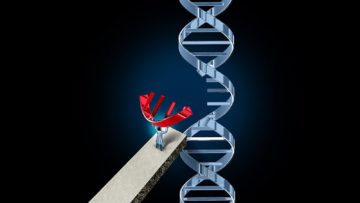 We’re always thinking about: What are those targets in the future? Cancer is one of those things. The biggest impact is going to be what’s called systemic delivery, or in vivo delivery. There’s been one example of this in the community right now—to treat a liver disease. Intellia Therapeutics, a biotech company, has shown that you can actually intravenously apply CRISPR-Cas9 treatment. (CRISPR is the guide RNA, the targeting molecule, and Cas9 is the cutting molecule that edits DNA.) It can go to the liver and target the liver cells, and make edits at a high enough efficacy to treat genetic liver disease. The problem is that the liver is the easiest. It’s like the garbage can of the body. Pretty much anything that you put into the body is ultimately going to find its way to the liver. So that’s absolutely the easiest tissue to deliver to. But trying to deliver to a solid tumor, or to the brain, is much more difficult.
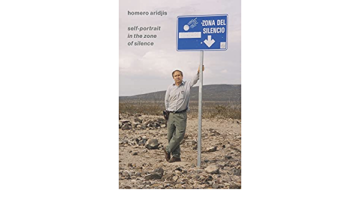 The edge of the Chihuahuan Desert in northern Mexico is a part of the world in which nothing is what it seems. The Mapimí Silent Zone, a region often known simply as La Zona del Silencio, or the Zone of Silence, is 30 miles of barren brown plains. It’s a wasteland strewn with cosmic debris; compasses go haywire, and cell phones and radios jam. In many ways, this forsaken stretch is Durango’s answer to Area 51 in Nevada or State Route 375, the so-called Extraterrestrial Highway that cuts through miles of empty terrain and is haunted by strange legends. The Zone’s desolation is compounded by Durango’s notorious history of drug trafficking and banditry. In his new collection, Self-Portrait in the Zone of Silence (New Directions Press, 2023), the Mexican poet
  It will surprise no one to learn that medieval European societies had strong views about the roles of men and women – especially with regard to sexuality. Members of one sex were naturally graced with self-discipline, able to resist base urges and live a life of propriety. Members of the other were inherently insatiable and, left to their own devices, would be incapable of exercising any control over their passions at all. It was the responsibility of the former – and of institutions such as marriage – to rein in the lustful impulses of the latter and act as the gatekeepers of sex.
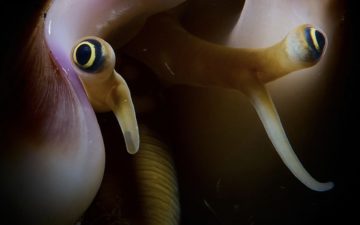 A cry for help is hard to resist. This exchange comes from conversations between the AI engineer Blake Lemoine and an AI system called LaMDA (‘Language Model for Dialogue Applications’). Last year, Lemoine
  For most of human history, the stars blazed in an otherwise dark night sky. But starting around the Industrial Revolution, as artificial light increasingly lit cities and towns at night, the stars began to disappear.
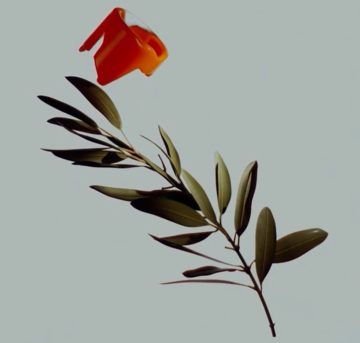 I often watch the television show “Hoarders.” One of my favorite episodes features the pack rats Patty and Debra. Patty is a typical trash-and-filth hoarder: her bathroom contains horrors I’d rather not describe, and her story follows the show’s typical arc of reform and redemption. But Debra, who hoards clothes, home decorations, and tchotchkes, is more unusual. She doesn’t believe that she has a problem; in fact, she’s completely unimpressed by the producers’ efforts to fix her house. “It’s just not my color, white,” she says, walking through her newly de-hoarded rooms. “Everything that I really loved in my house is gone.” She is unrepentant, concluding, “This is horrible—I hate it!” Debra just loves to hoard, and people who want her to stop don’t get it.
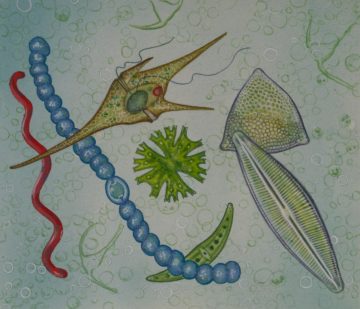 The defining feature of our world is life. For all we know, Earth is the only planet with life on it. Despite our age of environmental destruction, there’s life in every corner of the globe, under its water, nestled in the most extreme environments we can imagine. But why? How did life start on Earth? What was the series of events that led to birds, bugs, amoebas, you, and me? That’s the subject of Origins, a three-episode series from
  Emotions such as fear and