A Statin Alternative Joins Drugs That Can Reduce Heart Attack Risk

Gina Kolata in The New York Times:

Millions of Americans who are at high risk for heart attacks and whose LDL cholesterol levels are disturbingly high have been told over and over again by their doctors to take a statin. These cheap generic drugs have been shown repeatedly to slash cholesterol levels and prevent heart attacks, strokes and deaths. But many people cannot or will not take the drugs, often reporting that statins make their muscles ache.

Now, a study with 14,000 patients of a drug that lowers LDL levels and was designed to avoid muscle aches was found to modestly reduce the risk of heart attacks, strokes and other complications from heart disease. It was published Saturday in The New England Journal of Medicine and presented at the annual meeting of the American College of Cardiology. The medication joins several statin alternatives that have been shown to reduce cardiac illnesses, and some experts say they doubt the drug is any more likely to be embraced by patients who are wary of statins and, often, other LDL-lowering drugs. The drug, bempedoic acid, is not new; the Food and Drug Administration approved it three years ago because it lowers LDL levels.

More here.
Sunday, March 5, 2023

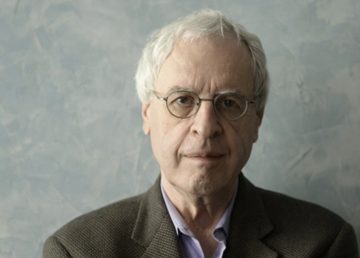
Carolyn Forché Remembers Charles Simic

Carolyn Forché in Literary Hub:

In memory we are standing in the kitchen of the Treman Cottage at Breadloaf. It is late afternoon in the summer of 1976 and I have brought my copies of Return to a Place Lit by a Glass of Milk and Dismantling the Silence for Charles Simic to sign. He is slouching a bit, leaning against the counter, and seems genuinely touched that I had carried the books, deeply penciled and dog-eared, all the way from home.
As he leafed through them, I blurted out that my family was from Czechoslovakia, and of course because it was a country that had been cobbled together in 1918, conjoining several parts of former Austro-Hungary, he wanted to know precisely where my ancestors had lived. I told him Slovakia, in Bardejov, in the eastern part of the country, in one of the oldest towns. “So you are Slovak!” he said, “and we are both peasants!” He laughed, then scrawled in his book with a fat pen: “Now that the Serbs and Slovaks have learned to read and write, look out world! Yours, Charlie.

More here.

The Art of the Shadow: How Painters Have Gotten It Wrong for Centuries

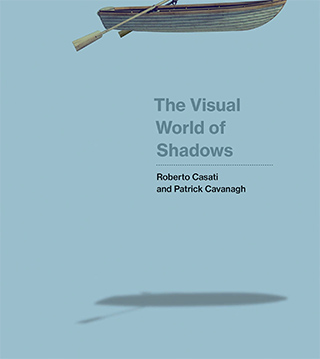
Roberto Casati & Patrick Cavanagh in The MIT Press Reader:

Painters have long struggled with the difficulties of depicting shadows, so much so that shadows — after a brief, spectacular showcase in ancient Roman paintings and mosaics — are almost absent from pictorial art up to the Renaissance and then are hardly present outside traditional Western art.
Here, we embark on a journey that takes us through a number of extraordinary pictorial experiments — some successful, some less so, but all interesting. We have singled out some broad categories of solutions to pictorial problems: depicted shadows having trouble negotiating obstacles in their path; shadow shapes and colors that stretch credibility; inconsistent illumination in the scene; and shadow character getting lost. We also find some taboos, that is, self-inflicted limitations on where or what to depict of a shadow.

More here.

Why are young liberals so depressed?

Matthew Yglesias in Slow Boring:

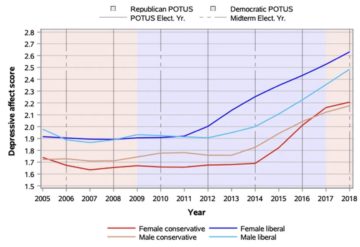
Earlier this month the CDC released the results of its Youth Risk Behavior Survey of American teenagers. The findings have been much discussed, with the focus largely and understandably on the fact that teenage girls are suffering from extraordinarily high levels of sadness and depression. But I think the conversation has overlooked a few things.
One possible culprit for this widespread sadness is that social media apps are especially damaging to girls’ psychological health, a thesis long championed by Jonathan Haidt. And even though on its face Haidt’s point seems left-wing (new technology has downside risks and big companies need to be regulated more), the idea has taken on a mostly right-wing inflection, with Josh Hawley as its most vocal champion in the Senate.

More here.

Many Words for Heat, Many Words for Hate

Amitava Kumar in Granta:

In Delhi the heat is chemical, something unworldly, a dry bandage or heating pad wrapped around the body. I sent a note to my friend Ravish, who was an anchor on NDTV’s Hindi show Prime Time. I asked Ravish that if Inuit supposedly have more than fifty words for snow (a specific word, for example, for snow used to make water), why don’t we Indians have more words for heat? Ravish asked members of his audience to respond to this question. Words and phrases that Ravish and I didn’t know, in a mix of Indian languages, came in from different cities and parts of the country, adding nuance and variety to what the newspapers were only calling a ‘heatwave’. Ravish concluded his monologue by saying that if you forget the many words for heat in your own language, you will also forget the names of your neighbors or the fact that people of two different religions used to live peaceably together. You will also forget why you are beginning to forget.

My publisher provided a car for me to go to bookshops and sign copies of my books. At one point I passed a billboard that showed a fighter jet in the sky and above it these words: Join IAF and give your career a flying start. That Indian Air Force ad hadn’t changed for forty years. I remember seeing it from bus windows in my late teens, and how, because I lacked any sense of direction, I would imagine myself in a jet, my head in the clouds.

More here.

The inside story of how ChatGPT was built from the people who made it

Will Douglas Heaven in the MIT Technology Review:

To get the inside story behind the chatbot—how it was made, how OpenAI has been updating it since release, and how its makers feel about its success—I talked to four people who helped build what has become one of the most popular internet apps ever. In addition to Agarwal and Fedus, I spoke to John Schulman, a cofounder of OpenAI, and Jan Leike, the leader of OpenAI’s alignment team, which works on the problem of making AI do what its users want it to do (and nothing more).
What I came away with was the sense that OpenAI is still bemused by the success of its research preview, but has grabbed the opportunity to push this technology forward, watching how millions of people are using it and trying to fix the worst problems as they come up.

More here.

The Jaguar Sun

From The New Yorker:

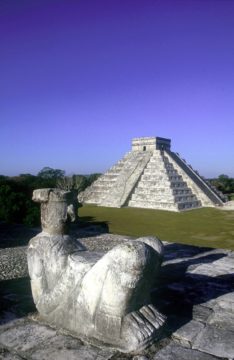
In this week’s New Yorker, the contributing writer Merve Emre examines the life and work of Italo Calvino, whom she describes as “word for word, the most charming writer to put pen to paper in the twentieth century.” Born a hundred years ago in Cuba, Calvino relocated as a child to his parents’ native Italy, and eventually became the most-translated Italian author of his era. In 1983, The New Yorker published “The Jaguar Sun,” Calvino’s first story in the magazine and the only one to appear in its pages while he was alive. In the story, a couple enters an odd and rocky phase of their marriage while vacationing in Mexico—and while bonding over a sampling of dishes that contain the native hot chile pepper. With vivid descriptions of the dishes—and of the physical responses they elicit—the piece also opens “Under the Jaguar Sun,” Calvino’s unfinished collection of stories about the senses.

On the outskirts of Mexico City, the unnamed narrator and his wife, Olivia, visit a former convent’s cloister and eat chiles en nogada, “somewhat wrinkled little peppers, swimming in a walnut sauce whose harshness and bitter aftertaste were drowned in a creamy, sweetish surrender.” In Oaxaca, a folkloric painting of a nun, who died of love, seems to make the couple hungry; at the hotel restaurant, they snack on guacamole, “scooped up with crisp tortillas that snap into many shards and dip like spoons into the thick cream.” After the pair visit the sacred and spooky ruins of Monte Albán, the menu turns fleshy and visceral: over roast goat and shrimp soup, the narrator imagines being chewed up, swallowed, and digested by his wife, who is openly bored and annoyed by him. (He should, he thinks, eat her instead.) Can two individuals—by sharing a flavorful meal, or through another activity—ever completely unite? As the trip continues, the narrator searches for the answer not in his wife’s eyes but in her teeth.

More here.

Sunday Poem

“Spring and All”

By the road to the contagious hospital
under the surge of the blue
mottled clouds driven from the
northeast—a cold wind. Beyond, the
waste of broad, muddy fields
brown with dried weeds, standing and fallen
patches of standing water
the scattering of tall trees
All along the road the reddish
purplish, forked, upstanding, twiggy
stuff of bushes and small trees
with dead, brown leaves under them
leafless vines—
Lifeless in appearance, sluggish
dazed spring approaches–

They enter the new world naked,
cold, uncertain of all
save that they enter. All about them
the cold, familiar wind–
Now the grass, tomorrow
the stiff curl of wildcarrot leaf
One by one objects are defined–
It quickens: clarity, outline of leaf
But now the stark dignity of
entrance–Still, the profound change
has come upon them: rooted, they
grip down and begin to awaken

by William Carlos Williams
from Spring and All
Contact Publishing Co., 1923

Saturday, March 4, 2023

The IMF Trap

Devaka Gunawardena , Niyanthini Kadirgamar, and Ahilan Kadirgamar in Phenomenal World:
Massive demonstrations that swept Sri Lanka last year exposed the serious challenges at the heart of the global economy. In July 2022, former President Gotabaya Rajapaksa was forced to flee the country, only a few months after announcing a hasty default of Sri Lanka’s foreign debt obligations. He faced a wall of opposition as the nation suffered infamous kilometers-long fuel queues, power outages, and food and medicinal shortages, crippling everyday life.

In the months since, the current government led by Ranil Wickremesinghe—allied with the party of the disgraced Rajapaksa family—has appeared savvier than its predecessor, implementing a quota system to manage fuel distribution and end the queues. However, the government has also tripled fuel prices, which has severely dampened demand. Fuel consumption is half of what it was a year ago, bringing economic activity to a grinding halt. Inflation has skyrocketed, with food inflation peaking at 94 percent in September 2022. A quarter of Sri Lankans are facing severe food insecurity; household incomes across the board have decreased. The Central Bank dramatically doubled interest rates, making access to credit for economic activity extraordinarily difficult. Rural livelihoods have been disrupted. Many small businesses are collapsing.

More here.

Two Great Losses

Perry Anderson in New Left Review:

Since the composition of the last issue of the journal, nlr has lost the two most gifted political writers to have ignited its pages over the years, Tom Nairn and Mike Davis. Both were magnitudes whose life and work extended far beyond this journal, requiring consideration by others on another scale. Only that portion of what they achieved which is connected with nlr, not to be exaggerated, and some of the differences between them, are in place here. Death claimed them close together. Did they touch in any other respect? Each was a mind so entirely original that, virtually by definition, it would seem they had little in common. Generation, class, nationality, formation, temperament—all set them quite radically apart. Tom was fourteen years older, born in a small Scottish village, his father headmaster of a nearby school. A natural polymath, he won a privileged education, first in an art college, then studying philosophy at two universities in Britain—Edinburgh and Oxford—thereafter spending time at the apex of higher education in Italy, the Scuola Normale in Pisa, where he acquired fluent Italian.

Returning to England in the early sixties, he earned post-graduate awards and lectured in an art college in London. There he supported the student revolt of 1968, and was dismissed for doing so. For a quarter of a century he never had a teaching job again, and for the rest of his life was always in difficult straits, often in poverty, scraping a nomadic living in places as remote from each other as Amsterdam, Washington, Prague, and finally Melbourne—where, in his seventies, he found employment for a decade in a university ten thousand miles away from where he lived in West Lothian. A Scot to whom conventional English forms of conviviality were foreign in ways that could be mistaken for shyness, he was generally quiet and reserved, and avoided publicity. He could be fierce in print, his mockery scalding; yet he was warm and gentle as a person. Italian released the high spirits in him.

More here.

A Piece of One’s Past

Kenda Mutongi in Boston Review:

You need to do a police investigation,” wrote one of my siblings on our family group chat, “a thorough investigation.” On January 17, 2023, someone set fire to my brother Jumba’s five-acre sugarcane garden. Three days after the fire, my brother received a phone call informing him that thieves had gotten into his compound and broken the cement cover on his borehole and stolen the electric pump.

Jumba’s land is in western Kenya, about sixty miles from the village where we grew up. The area, known as the western highland plateau during the colonial period, was occupied by white settlers who confiscated land from the local Nandi people. After independence the land was redistributed to Kenyans but somehow Luyias (my family is Luyia) and Kikuyus ended up buying most of it, further displacing the original Nandi owners. Since the 1970s the Nandi people have intermittently fought these “outsiders” in attempts to reclaim their land; some of the ethnic tensions have resulted in the loss of life.

More here.

Who Will Power the Climate Revolution?

Dylan Saba in Jewish Currents:

THE UNCOMFORTABLE TRUTH about the struggle to avoid climate catastrophe is that no one has a realistic plan. The challenge itself, as set out by scientific consensus, is relatively straightforward: Reduce carbon emissions, build infrastructure for renewable energy, and protect and restore biodiversity. But achieving these objectives—especially in the tight window we have—requires a degree of foresight and coordination that is incompatible with the political economy of our present. Without a global body to enforce them, state benchmarks are governed only by voluntary treaties, and these commitments can’t withstand the caprices of domestic electorates or the imperative to compete in a global marketplace. Meanwhile, private firms and asset managers are likewise driven to prioritize short-term profits over long-term sustainability. These capitalist incentives are compounded by colonialist ones, which ensure that the very nations responsible for the overwhelming majority of emissions are also the most insulated from the consequences. All in all, those in power have the least to lose from inaction—not a recipe for success.

In the face of this rather dismal state of affairs, every approach to green politics on offer requires a degree of magical thinking—even the supposedly pragmatic liberal strategy, which pins all hope for humanity on persuading elites to adopt a series of woefully insufficient technocratic adjustments.

More here.

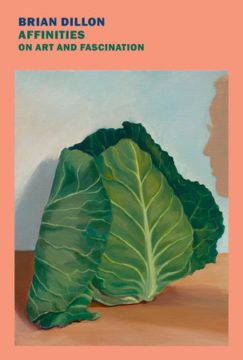
‘Affinities’ by Brian Dillon

Anil Gomes at The Guardian:

Why do some things combine and others separate? Add nitric acid to gold, and nothing happens. Pour on aqua regia, a mixture of nitric and hydrochloric acids, and the gold dissolves. The chemical doctrine of affinity emerged as a way to explain these reactions. In his 1809 novel Elective AffinitiesJohann Wolfgang Goethe applied the idea to human relationships. Charlotte and Edward may form a stable union but if Edward has an affinity with young Ottilie – ah, well, then all bets are off.

What is an affinity? A little like a crush, I suppose, at least at the beginning. And sometimes just as fleeting. But sometimes more stable, more serious, and more revealing of our ways of engaging with things. Brian Dillon’s writings have always been marked by affinities – for artworks, for writers, even for particular sentences.

more here.

Polaroid’s Secret Showman

Jonathan Allen with Jan Isenbart at Cabinet Magazine:

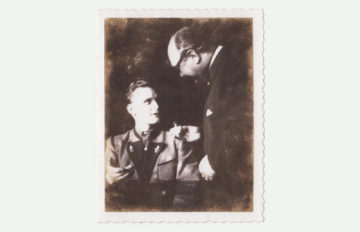
In the spring of 1954, Reinhard Müller stepped onto a stage in the German city of Wolfsburg as a volunteer in a magic show. His presence was captured in a small sepia photograph, where he can be seen in conversation with a tuxedoed magician holding the elegant pocket watch that Müller has just entrusted to him. The conjurer is Helmut Ewald Schreiber (1903–1963), better known by his stage name Kalanag. He is in the final stages of a trick called “The Devil’s Mail,” a popular feature of his world-touring magic revue, Simsalabim. A few moments before, Müller’s watch had been reduced to fragments in a mortar by sharp blows of the magician’s wand. In the photograph, Kalanag can be seen returning the now miraculously restored timepiece to its owner. But his watch is not all that Müller will take with him when he leaves the stage. To his delight, he will also carry this snapshot, delivered to him in an envelope by the magician within moments of the very scene that it depicts.
more here.

Saturday Poem

Aubade:The Morning Beast

Maybe she’s the dew-crystalled web
and the great furred spider inside it.
Maybe she’s bus exhaust and sirens.

You don’t need to know. For certain
she is not worried about haircuts or lists
or televised debates. She is not worried

about certainty. She isn’t here to smooth
anything over. She isn’t here to judge
or forgive. She has fog. She has seven deer

and a massive growling garbage truck.
She does not care about the research
you’ve done. She does not notice

your mouth. She herself doesn’t need one.
She herself doesn’t speak because
speaking goes one way only, is non-

dimensional, air-colored and leafless.
She is all leaves. She is all cisterns
of stone. She towers when she wants to.

Other times she mists-and-murmurs.
She sees you wanting her to absolve you.
She sees you making your sunrise resolutions:

good morning, restraint and improvement!
She finds you sweet, the way you might
find a vole or a small ceramic cactus sweet.

She is a non-translation, a no thank you.
She wants for nothing. She’s insatiable.
Brimless, she’s filled to the brim.

by Catherine Pierce
from the Ecotheo Review

Do no unconscious harm

Rodrigo Perez Ortega in Science:

EVERYONE HAS prejudices that affect how they perceive and behave with others. And although many people might be aware of some—their explicit or conscious biases—and intentionally try to compensate for them, other hidden ones still lurk and can influence attitudes and interactions. These implicit biases are widespread among health care providers, as Janice Sabin discovered in the late 2000s. In her research back then —as a social welfare Ph.D. student at UW—Sabin had asked 95 doctors from the Department of Pediatrics at Seattle Children’s Hospital to take a test that would determine whether they had a “hidden” bias toward a certain race. “I was terrified,” Sabin, now a biomedical informatics professor at UW, recalls. “This wasn’t just asking them questions about bias and racism, this was actually going into their mind.”

Sabin used the well-known Implicit Association Test (IAT), which determines how strongly an individual associates a trait—such as race or sexual orientation—with a subjective value, such as “good” or “bad.” The quicker you match each concept to a subjective value, the greater the association and the higher your score, which broadly indicates a stronger implicit association between the trait and value. Sabin found the doctors she tested—a few of them nonwhite—had a clear, unconscious preference for white people over Black people.

More here.