
Amanda Gefter in Nautilus:
 I was never into house plants until I bought one on a whim—a prayer plant, it was called, a lush, leafy thing with painterly green spots and ribs of bright red veins. The night I brought it home I heard a rustling in my room. Had something scurried? A mouse? Three jumpy nights passed before I realized what was happening: The plant was moving. During the day, its leaves would splay flat, sunbathing, but at night they’d clamber over one another to stand at attention, their stems steadily rising as the leaves turned vertical, like hands in prayer.
“Who knew plants do stuff?” I marveled. Suddenly plants seemed more interesting. When the pandemic hit, I brought more of them home, just to add some life to the place, and then there were more, and more still, until the ratio of plants to household surfaces bordered on deranged. Bushwhacking through my apartment, I worried whether the plants were getting enough water, or too much water, or the right kind of light—or, in the case of a giant carnivorous pitcher plant hanging from the ceiling, whether I was leaving enough fish food in its traps. But what never occurred to me, not even once, was to wonder what the plants were thinking.
More here.
 The Polish poet Adam Zagajewski’s great poem “To Go to Lvov” has a special importance for many young poets in different languages. That poem weaves the historical and the personal, the rhythms of cataclysm and of ordinary life, loss and persistence, all embodied in Zagajewski’s native city. “To Go to Lvov” has provided a model — intensely local, adamantly not nationalistic — for poems rooted in Philadelphia, Buenos Aires and Lahore.
 Human behavior is often paradoxical. We show humility to prove we’re better than other people, we bravely defy social norms so that people will praise us, and we donate to charity anonymously to get credit for not caring about getting credit. Here, I argue that these and other social paradoxes have a common thread: they are all attempts to signal a trait while concealing the fact that one is signaling the trait. Such self-negating signals emerge from the interaction of two cognitive abilities: 1) cue-based inference, and 2) recursive mentalizing. If agents can model each other’s mental states, including their intentions to signal positive traits, then intentional signals of positive traits can, themselves, become cues of negative traits. The result is that status-seeking and virtue-signaling are forced to occur covertly, without becoming common knowledge among signalers or recipients. Social paradoxes also play a crucial role in enabling intergroup dominance by inhibiting common knowledge of the group’s dominance-seeking tactics, which would otherwise disrupt coordination by eliciting moral disapproval. The analysis of social paradoxes can explain a variety of puzzling aspects of human social life, including the cultural evolution of status symbols, the function of sacred values, and the nature of political belief systems.
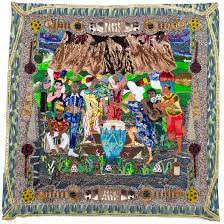 The large masterpieces in the upper two rooms mushroom into psychological and spatial multitudes. Constant is working at the scale of the Mexican muralists while echoing something of Chris Ofili’s early dazzling dotted paintings with elephant dung attached. You look at Constant’s work all at once and also millimeter by millimeter, bead by bead. The maniacal density of visual information is transporting.
 As a scholar, I decided to bring my devotion to BTS to my research. Because of my growing fascination with this segment of BTS fandom and their love for the group, I interviewed 25 Gen-X women of diverse backgrounds who currently reside in the United States. Older women face enormous stigma for loving a “boy band,” and the seven Korean men of BTS are wholly different from the men many of us were taught to idealize. Women my age are rarely given the space to express desire, let alone lust, and I wanted to understand the contours and contexts of their experience.
 A
A It didn’t take long for Microsoft’s
 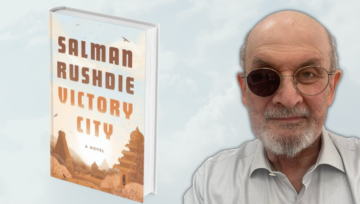 Salman Rushdie found his voice in 1975. His first novel, Grimus, published earlier that year, had been ignored by the public and derided by the critics. At the same time, Rushdie was watching younger contemporaries such as Ian McEwan and Martin Amis cement their places among the British literary elite, while he remained saddled with his day job as an advertising copywriter.
 Given the new reality, and my full acknowledgment of the new reality, and my refusal to go down with the sinking ship of “AI will probably never do X and please stop being so impressed that it just did X”—many have wondered, why aren’t I much more terrified? Why am I still not fully on board with the Orthodox AI doom scenario, the Eliezer Yudkowsky one, the one where an unaligned AI will sooner or later (probably sooner) unleash self-replicating nanobots that turn us all to goo?
 Speculation encompasses a duality at the core of all financial activity. When pushed to its outermost limit, it can unleash formidable destructive forces and lead to the burst of market bubbles, such as seventeenth-century Amsterdam’s notorious tulip craze, the Victorian era’s railway manias, last century’s Great Depression, or the more recent 2008 global financial crisis. During these periods, market “passions” take hold: traders venerate ethereal values with no material referents or links to “fundamentals.” Yet speculation is also the market’s indispensable lubricant. All speculative trades calibrate risks to generate yields and prevent markets from “overheating.”
 I’ve been clean for over twenty years. Let me give you an example of the kind of problem addiction is, the scale of the thing. In April 2019 I went to the dentist. I had a mild ache in a molar. He said the whole tooth was totally rotted all the way through, that they couldn’t do anything more with it. It was hopeless. The tooth was a total piece of shit and would have to be extracted. He gave me the number of a dental surgeon and I called and made an appointment. I talked to my dad, who’d had many teeth extracted, and he told me it was no big deal. When I got to the dental surgeon’s office I told him that I’m a recovering addict, and that I wanted to avoid opiate painkillers. He looked in my mouth and when he got out he said, “You’re going to need opiate painkillers.”
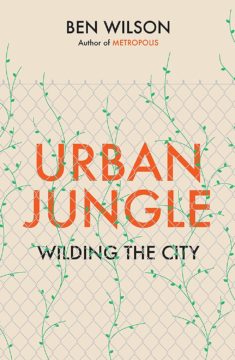 For all mankind’s meddling, nature is obdurate. It didn’t stop evolving just because humans tried to keep it out. Wilson asks us to imagine our cities from the perspective of certain plants or animals. If you’re a seaside goldenrod or a strip of Danish scurvy grass, then the sodium-enriched verges created by winter salt trucks are a dream habitat. For a peregrine falcon, the difference between a twenty-storey skyscraper and a hundred-foot cliff is minimal: the dive-bombing potential is equally great. Nonetheless, not all natural species can adapt. As Wilson admits, our cities as they currently stand are the ‘site of eco-apocalypse’. Even putting the rights of nature aside, wilding our streets is in our self-interest. Just ask a psychologist or a physician. We’re happier, healthier and safer with nature near at hand.
 In 1696, Damaris Cudworth Masham, an Englishwoman and a reluctant philosopher, stepped from obscurity to publish a book whose title – A Discourse Concerning the Love of God – concealed the feminist gems within. For instance, she insisted, contrary to some philosophers and theologians of her day, that mothers were not corrupting forces but foundational to the pursuit of knowledge. Then in 1705 she entered the public sphere again with another work, more radical than the first, titled Occasional Thoughts in Reference to a Vertuous or Christian Life, in which she argued that women should contribute to all intellectual subjects: ‘I see no Reason why it should not be thought that all Science lyes as open to a Lady as to