
Huw Price and Ken Wharton in The Conversation:
 In 2022, the physics Nobel prize was awarded for experimental work showing that the quantum world must break some of our fundamental intuitions about how the universe works.
Many look at those experiments and conclude that they challenge “locality” — the intuition that distant objects need a physical mediator to interact. And indeed, a mysterious connection between distant particles would be one way to explain these experimental results.
Others instead think the experiments challenge “realism” — the intuition that there’s an objective state of affairs underlying our experience. After all, the experiments are only difficult to explain if our measurements are thought to correspond to something real. Either way, many physicists agree about what’s been called “the death by experiment” of local realism.
But what if both of these intuitions can be saved, at the expense of a third? A growing group of experts think that we should abandon instead the assumption that present actions can’t affect past events. Called “retrocausality”, this option claims to rescue both locality and realism.
More here.
 After Donald Trump won the 2016 presidential election there was widespread
 DeepMind’s
  “Good morning, my soul-licious listeners” is how Felix Hernandez recently greeted his Saturday-morning audience, the many thousands who tune in for his long-running Rhythm Revue show, which airs and streams on WBGO, Newark’s public-radio outlet. I’ve counted myself among them since early 1995, when my boss on the copy desk of the magazine I worked at informed me of the show’s existence. Nearing what then seemed to me the wise old age of forty, he possessed an edgy wit and encyclopedic knowledge of mid-century American jazz and soul, his headlines sometimes containing sly references to Charlie Parker or Wilson Pickett. On Mondays he would grill me about what I’d heard on Rhythm Revue that weekend, and, clearly more important, what I’d liked. Bill Withers’s “Lovely Day” or Al Green’s “I Can’t Get Next to You”? Aretha Franklin’s “Think” or Little Sister’s “You’re the One”? Pickett’s version of “You Keep Me Hangin’ On,” or The Supremes’—and why? It was like a test I had to pass to gain his trust, which I think I did, eventually. When I told him a few months later that I’d received the special three-CD Rhythm Revue compilation for giving money during WBGO’s spring pledge drive, he reacted as if I’d been saved from perdition.
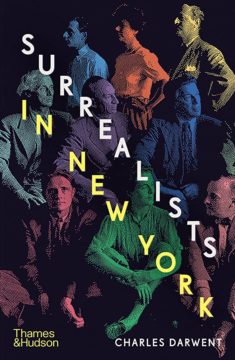 The accelerated uptake of Surrealism in America followed the accelerated intake of Surrealist artists. By 1941, the arrival in New York City of émigrés like André Masson, Salvador Dalí, Max Ernst and the ‘Pope of Surrealism’ himself, André Breton, was precipitating what Darwent calls ‘one of the greatest cultural exchanges in modern history’. The full story is in Martica Sawin’s Surrealism in Exile and the Beginning of the New York School. Darwent’s book examines an often-overlooked channel of transmission, Atelier 17, and its founder, the English printer, painter and teacher Stanley William Hayter.
 Do you want to live a better, healthier and longer life? Me too.
 Three years since
  The truth is that American society has made persistent grief disabling, because the demands that grief makes on a person are at odds with the way that American capitalism expects people to comport themselves as workers. The normal worker, in our economic system, is a person whose ability to work is not impaired by grief—not someone who doesn’t experience loss, which would of course be impossible, but someone who simply doesn’t let it get to them. There is no statutory entitlement to bereavement leave in the United States, except in the state of Oregon. In fact, Department of Labor guidance on the Fair Labor Standards Act explicitly cites mourning as the example par excellence of unprotected non-work: Federal law “does not require payment for time not worked, including attending a funeral.”
 Scientists have generated the first complete map of the brain of a small insect, including all of its neurons and connecting synapses.
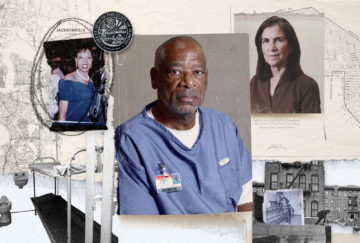 The United States has inherited competing impulses: It’s “an eye for an eye,” but also “blessed are the merciful.” Some Americans believe that our criminal justice system — rife with
  In 2018, Sundar Pichai, the chief executive of Google — and not one of the tech executives known for overstatement — said, “A.I. is probably the most important thing humanity has ever worked on. I think of it as something more profound than electricity or fire.”