
Amelia Soth at JSTOR Daily:
 Wave charts aren’t maps so much as mnemonic devices. They’re not brought on board in order to navigate; rather, the navigator makes them as a personal reference, studying them while on land and bringing that knowledge onto the sea. There were a few different kinds: rebbelib, which represented whole island chains; meddo, which showed ocean swell patterns in a smaller area; and mattang, simple teaching tools used to diagram the basic interactions between land and sea.
While this particular mode of proprioceptive navigation was unique to the Marshall Islands, navigators throughout Micronesia and Polynesia used swells to orient themselves, along with other methods. To those who knew how to read it, the sea is full of signs: driftwood gathers at convergence zones; specific birds appear only near land; distant forests cast a greenish tint on the underbellies of the clouds above. As they traveled, songs helped to keep time, remind the sailors of important landmarks, and confer ritual protection on the voyagers.
more here.
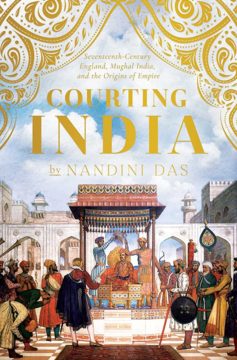 Pity Sir Thomas Roe. He was sent to India in February 1615 by James I as the first English ambassador to the fabulously glamorous Mughal court – a privilege and an extraordinary opportunity, one might think. But diplomats in the 17th century, in Europe at least, were woefully underpaid and were expected to make up any shortfall out of their own pockets in anticipation of a refund on their return. The amount reimbursed was at the whim of the monarch, who might be grateful for their years of travail but might just as easily be disappointed or no longer interested. It is a measure of their unrealistic expectations that the East India Company, formed only fifteen years before Roe set off on the hazardous six-month voyage to India and partial sponsors of his expedition, imagined that the ‘Grand Mogore’ might be persuaded to give Roe an allowance, enabling him to return their investment in him.
 A recent podcast series digs into the beginnings of conservative talk radio and tracks its rise. NPR’s Steve Inskeep talks to Katie Thornton, the host of “The Divided Dial.”
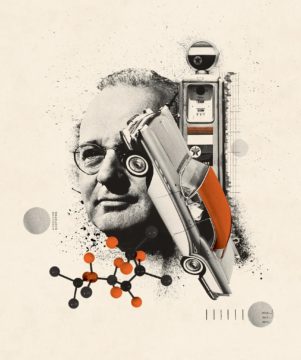 It was said that Thomas Midgley Jr. had the finest lawn in America. Golf-club chairmen from across the Midwest would visit his estate on the outskirts of Columbus, Ohio, purely to admire the grounds; the Scott Seed Company eventually put an image of Midgley’s lawn on its letterhead. Midgley cultivated his acres of grass with the same compulsive innovation that characterized his entire career. He installed a wind gauge on the roof that would sound an alarm in his bedroom, alerting him whenever the lawn risked being desiccated by a breeze. Fifty years before the arrival of smart-home devices, Midgley wired up the rotary telephone in his bedroom so that a few spins of the dial would operate the sprinklers.
 English may have become universal, but not everyone believes it is a gift. In fact, many hold diametrically opposite views. In an article in The Guardian in 2018, the journalist Jacob Mikanowski described English as a ‘behemoth, bully, loudmouth, thief’, highlighting that the dominance of English threatens local cultures and languages. Due to the ways in which English continues to gain ground worldwide, many languages are becoming
  Recent investigations like the one Dyer worked on have revealed that LLMs can produce hundreds of “emergent” abilities — tasks that big models can complete that smaller models can’t, many of which seem to have little to do with analyzing text. They range from multiplication to generating executable computer code to, apparently, decoding movies based on emojis. New analyses suggest that for some tasks and some models, there’s a threshold of complexity beyond which the functionality of the model skyrockets. (They also suggest a dark flip side: As they increase in complexity, some models reveal new biases and inaccuracies in their responses.)
 In a recent Substack post, free-range social critic Freddie deBoer
  The first precept of survivors’ justice is the desire for community acknowledgment that a wrong has been done. This makes intuitive sense. If secrecy and denial are the tyrant’s first line of defense, then public truth telling must be the first act of a survivor’s resistance, and recognizing the survivor’s claim to justice must be the moral community’s first act of solidarity.
 A
A This week the conservative writer Bethany Mandel had the kind of moment that can happen to anyone who talks in public for a living: While promoting a new book critiquing progressivism, she was asked to define the term “woke” by an interviewer — a reasonable question, but one that made her brain freeze and her words stumble. The viral
 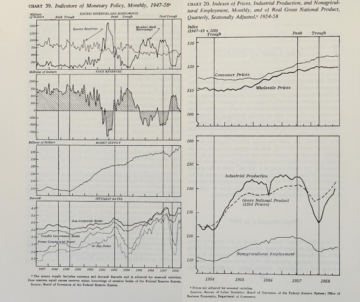 Gardiner Means in Phenomenal World:
 Pranab Bardhan in Boston Review:
 Susan Neiman in Unherd:
 Malcom Kyeyune in Compact Magazine: