
The Park
In that oblivious, concentrated, fiercely fetal decontraction
. . . . peculiar to the lost,
a grimy derelict is flat out on a green bench by the sandbox,
. . . . gazing blankly at the children.
“Do you want to play with me?” a small boy asks another,
. . . . his fine head tilted deferentially,
but the other has a lovely fire truck so doesn’t have to answer
. . . . and emphatically he doesn’t,
he just grinds his toy, its wheels immobilized with grit, along
. . . . the low stone wall.
The first child sinks forlornly down and lays his palms against
. . . . the earth like Buddha.
The ankles of the derelict are scabbed and swollen, torn with
. . . . arching varicose and cankers.
Who will come to us now? Who will solace us? Who will
. . . . take us in their healing hands?
by C.K. Williams
from C.K. Williams Selected Poems
The Noonday Press, 1994
 T
T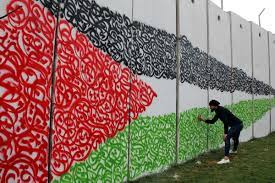 In the Arab world, people have been as quick to show support for Palestine as most American politicians have for Israel. On Friday, after prayers at Egypt’s al-Azhar Mosque, protesters filled the streets. As did tens of thousands of
 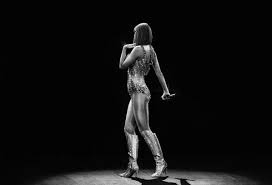 Section 301, in the second-to-highest tier of Levi’s Stadium, floats 105 feet above Santa Clara, Calif. It comprises 251 seats — a mere hamlet in the vast 64,000-seat general kingdom of the place, but it was our hamlet, and on the last Saturday in July, we took up each one of those seats and watched, our collective breath held, as Taylor Swift emerged from a bevy of billowing pastel parachutes and rose up on a platform to perform the 47th show of her Eras Tour. A few songs in, she announced, laughing, that her father told her that Santa Clara had named her its honorary mayor during her two-night stay there and that the entire town had been
 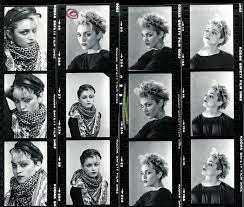 It was a more physical world, though we thought it quite advanced. There seemed nothing “terrestrial” about twisting a radio knob to some eccentric decimal point, dialling static into song. In the summer of 1985, we all knew someone, usually an older sibling, who owned a portable, cassette-playing stereo. The rest of us remained stuck catching Top Forty countdowns on AM radio, or playing, on our parents’ imperial turntables, the one or two LPs in our possession. Increasingly, we listened to music by watching it on TV, our dance parties often overseen by a strutting, tattered sprite who wore bangles like opera gloves and held the camera’s gaze with her entire being, as though locked in a dare she was not going to lose.
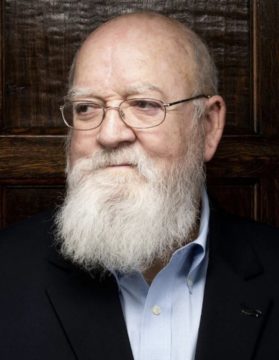 In the book, Dennett describes his intellectual growth and the role he played in many philosophy developments over the years. There’s plenty of inside baseball, but it is lively reading even for those with no stake in the game.
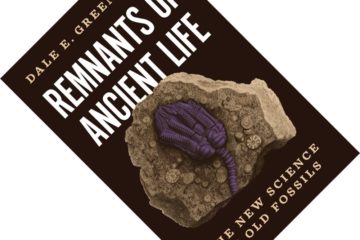 This is the second of a two-part review about ancient biomolecules; think of them as the other fossil evidence. Having just reviewed Jones’s
  Hamas’s brazen and vicious attacks within Israel have rightly drawn condemnation from around the world. If this is a war, as both sides agree it is, then Hamas’s deliberate targeting of civilians counts as a major war crime.
 AMONG THE OLDEST REFERENCES to menstruation in literature is in the book of Genesis, in a story about a lie. Rachel stole her father’s household gods, it goes, and when he came to retrieve them, she threw a covering over the objects and sat on it. She couldn’t stand, she apologized to her father, because she was in “the way of women.” At the end of the sixteenth century, an English clergyman clarified in his guide to Genesis that Rachel wasn’t pretending to be incapable of standing, just uncomfortable, due to her “monethly custome,” an ancestor to our contemporary “period.” As Jenni Nuttall explains in her new book Mother Tongue: The Surprising History of Women’s Words, “period” has been in use to name a quantity of time since the Middle Ages, but “only at the end of the seventeenth century”—so, a little after the clergyman’s time—“does the phrase ‘monthly period’ appear in medical books as a name for menstruation.”
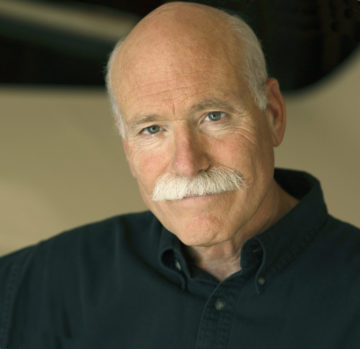 In an
In an 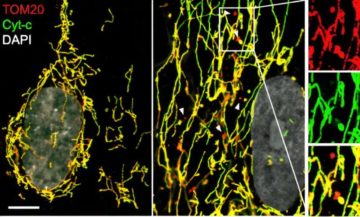 How we grow old gracefully—and whether we can do anything to slow down the process—has long been a fascination of humanity. However, despite continued research the answer to how we can successfully combat aging still remains elusive.
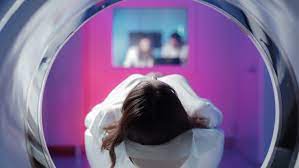 Over the last several decades, the rates of new cases of lung cancer have fallen in the United States. There were roughly 65
 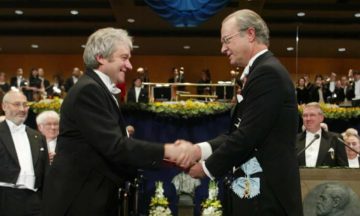 The prize changed our lives. It is the one scientific prize everyone knows. Suddenly you become a public figure being asked to do all sorts of things: to give lectures, quite often on topics you know little about; to sit on committees and reviews you are not always well qualified to be on; to visit countries you have barely heard of; to sign endless petitions on what are probably good causes, but you never know. It is like having a whole new extra job, with upwards of 500 requests a year. It is
 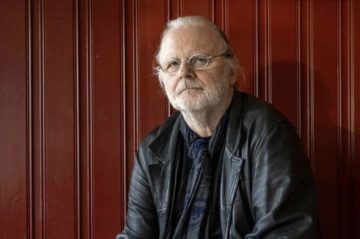 I have for years been an evangelist for Fosse, who
 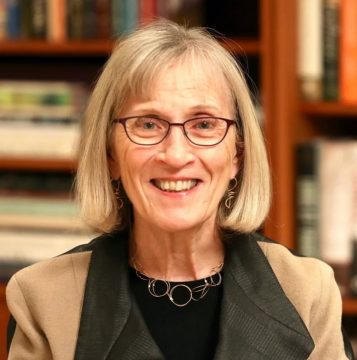 The 2023 Econ Nobel
 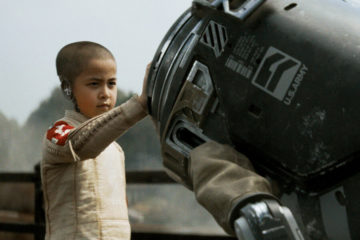 Humans are at war with machines. In the near future, an artificial intelligence defense system detonates a nuclear warhead in Los Angeles. It deploys a formidable army of robots, some of which resemble people. Yet humans still have a shot at victory. So a supersoldier is dispatched on a mission to find the youth who will one day turn the tide in the war.