
Two Poems of truth, injustice, & backbone
A Man Said to the Universe
A man said to the universe:
“Sir, I exist!”
“However,” replied the universe,
“The fact has not created in me
A sense of obligation.”
by Stephan Crane 1871-1900
Mother to Son
Well, son, I’ll tell you:
Life for me ain’t been no crystal stair.
It’s had tacks in it,
And splinters,
And boards torn up,
And places with no carpet on the floor—
Bare.
But all the time
I’se been a-climbin’ on,
And reachin’ landins’
And turnin’ corners,
And sometimes goin’ in the dark
Where there ain’t been no light.
So boy, don’t you turn back.
Don’t you set down on the steps
‘Cause you finds it’s kinder hard.
Don’t you fall now—
For I’se still goin’, honey,
I’se still climbin’,
And life ain’t been for me no crystal stair.
by Langston Hughes 1902-1967
 Aviation produces about
 Staring into the mirror, on a Tuesday morning, you decide that your self needs all the help it can get. But where to turn? You were reading James Clear’s “
 Artificial General Intelligence (AGI) means many different things to different people, but the most important parts of it have already been achieved by the
 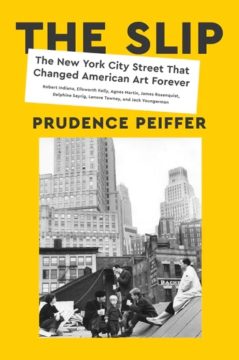 BETWEEN 1956 AND 1967, the Coenties Slip on the lower tip of Manhattan was home to a group of artists who had moved to the city with grand ambitions for their work and little money to their names. In those lean years, before they were canonized, Robert Indiana, Ellsworth Kelly, Agnes Martin, James Rosenquist, Lenore Tawney, Jack Youngerman, and Delphine Seyrig all took up residence in this “down downtown,” on a dead-end street on the East River where they nested themselves among fishing ships and sailors, the changing tides and unremitting grime, living at a remove from the New York City art world. Here on “the Slip”—a commercial dock designed for transience and exchange—they lived in cheap and drafty lofts, nurturing intuitions and ideas into radical practices, producing bodies of work that would, in the end, be very much a part of the zeitgeist.
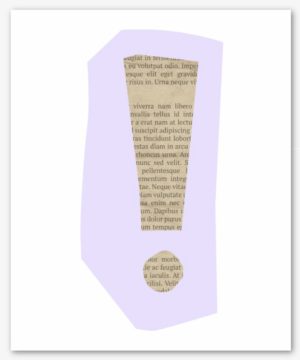 Noisy. Hysterical. Brash. The textual version of junk food. The selfie of grammar. The exclamation point attracts enormous (and undue) amounts of flak for its unabashed claim to presence in the name of emotion which some unkind souls interpret as egotistical attention-seeking. We’ve grown suspicious of feelings, particularly the big ones needing the eruption of a ! to relieve ourselves. This trend started sometime around 1900 when modernity began to mean functionality and clean straight lines (witness the sensible boxes of a Bauhaus building), rather than the “extra” mood of Victorian sensitivity or frilly playful Renaissance decorations.
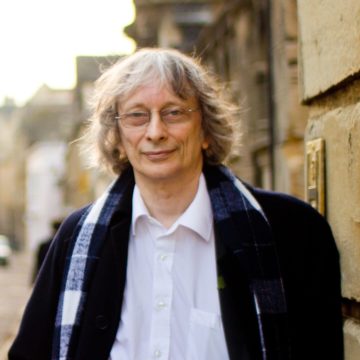 David Deutsch is one of the most creative scientific thinkers working today, who has as a goal to understand and explain the natural world as best we can. He was a pioneer in quantum computing, and has long been an advocate of the Everett interpretation of quantum theory. He is also the inventor of
  What happens when lonely men, embittered by a sense of failure in the sexual marketplace, find each other and form communities on the internet? The result can be deadly.
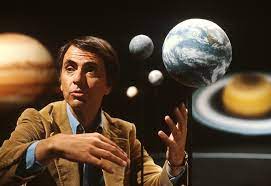 Early in 1993, a manuscript landed in the Nature offices announcing the results of an unusual — even audacious — experiment. The investigators, led by planetary scientist and broadcaster Carl Sagan, had searched for evidence of life on Earth that could be detected from space. The results, published 30 years ago this week, were “strongly suggestive” that the planet did indeed host life. “These observations constitute a control experiment for the search for extraterrestrial life by modern interplanetary spacecraft,” the team wrote (
 Last week the literary association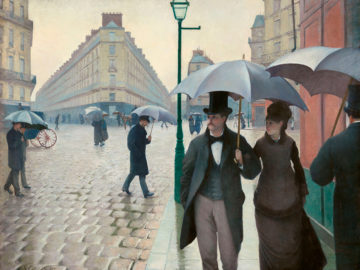
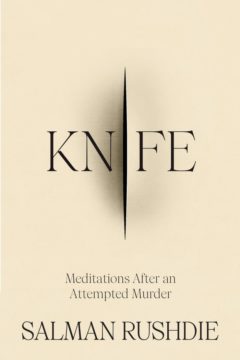 “It’s not the easiest book in the world to write, but it’s something I need to get past in order to do anything else. I can’t really start writing a novel that’s got nothing to do with this,” he said. “So I just have to deal with it.”
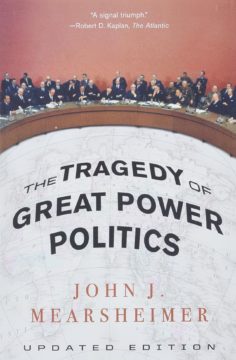 RELATIONS BETWEEN the United States and China have taken a dark and perilous turn. For much of this century, there was reason to hope that China could be welcomed into the liberal international order, and that its thriving there might mitigate the unavoidable tensions of great power politics. Recently, however, positions have hardened in both East and West. China has taken a discouraging, repressive turn towards personalist authoritarianism; in the United States, increasingly illiberal and politically dysfunctional, a more hawkish posture towards the People’s Republic is one of the vanishingly rare postures that garners bipartisan support in Washington.*
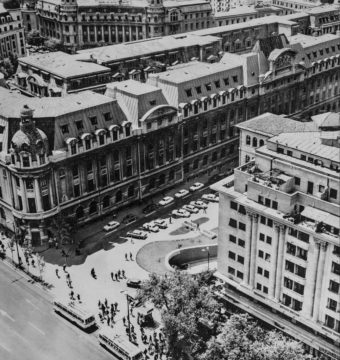 I had read a few of the novels of Herta Müller with their bleak depictions of a world of social deceptions and betrayals, of people losing their humanity under an inhuman system. “The ant is carrying a dead fly three times its size. The ant can’t see the way ahead, it flips the fly around and crawls back.” Eviscerations of the private life; victim and perpetrator one Janus face. This was a nightmare vision, not a tragic vision, as Claudio Magris put it about so much modern literature of mitteleuropa. But she had left Romania in the 80s and never returned. Then there was the Romanian philosopher, Emil Cioran, one of Susan Sontag’s favorites. He had climbed “the heights of despair,” the title of one of his early books, in 1934. Unsurprisingly, he reached further dismal “heights” through the decades that followed. But then again Cioran, on further study, turned out to be a self-proclaimed “Hitlerist” aligned with the Iron Guard (Romanian fascists), who had left Romania for France in the forties. They had not seen the democratic outpouring just a year before my visit, when crowds had taken to the streets to protest government corruption. The parliament had had the gall to legalize low-level graft and fire the judges who challenged it, but the rallies had shamed them, at least for awhile. (The PSD turned hoses full force on demonstrators, injuring hundreds; but the real news, I want to believe, is that the crowds were back again the next night.)
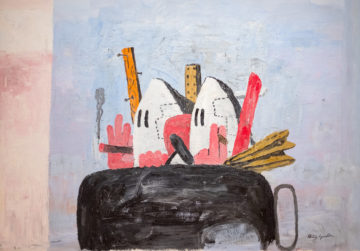 The curators have wisely given the exhibition a chronological hang which allows the viewer to see clearly just how much Guston’s art changed. His paintings of the 1930s and 1940s started in crisp-edged European modernism – with Picasso prominent – and moved into American social realism. He painted murals under the auspices of the New Deal Federal Art Project and works of social and political commentary. In Sunday Interior (1941), for example, he created a potent image of the marginalised – a young black man smoking against the background of an empty street. With Bombardment (1937), a tondo of explosions and hurtling bodies, he expressed his horror at the fascist bombing of the town of Guernica during the Spanish Civil War, the subject also of Picasso’s most celebrated work.