
 Alvin Camba in Phenomenal World:
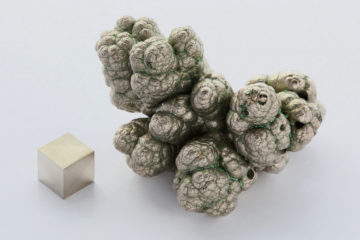
A pillar of Indonesia’s unprecedented economic growth over the last decade has been its ban on the export of raw nickel ore. This national experiment in downstream industrial policy began with the 2009 Mining Law signed by former president Susilo Bambang Yudhoyono, which mandated the domestic processing of all commodities mined in the country. The export ban on nickel was only partially implemented in 2014 amid widespread opposition from the mining sector, and it came into full effect in 2020.
Before the ban, Indonesia predominantly exported raw nickel ore, which is minimally processed into nickel matte. The country’s nickel-related exports were a modest US$6 billion in 2013. By 2022, this figure had risen to nearly US$30 billion, propelled by the exports of higher value-added products such as stainless steel and battery materials.
Chinese firms that were large players in the downstream nickel-based production had no choice but to expand their operations within Indonesia to secure access to its abundant nickel resources. The rapid growth of the nickel sector was facilitated by direct investments under the Belt and Road Initiative. Chinese state-owned banks financed the construction of coal power plants and basic infrastructure, integral components of the industrial areas that fostered economies of scale and agglomeration.
The outcomes of these policies have been mixed.
More here.
 William Callison in Sidecar:
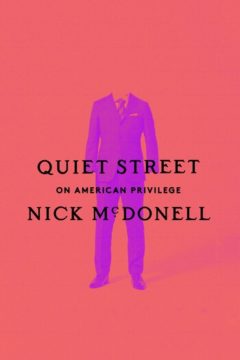 IN HIS 1980 ESSAY ON THE AMERICAN SCENE, “Within the Context of No Context,” George W. S. Trow supplies an anecdote from Harvard in the early 1960s. During an art history class on the Dutch masters, a Black student described Rembrandt as “‘belonging’ to the white students in the room.” The white students totally agreed with this. “They acknowledged that they were at one with Rembrandt,” Trow writes. “They acknowledged their dominance. They offered to discuss, at any length, their inherited power to oppress.”
 Not long ago our mother died, or at least her body did—the rest of her remained obstinately alive. She took a considerable time to die and outlasted the nurses’ predictions by many days, so that those of us who had been summoned to her bedside had to depart and return to our lives.
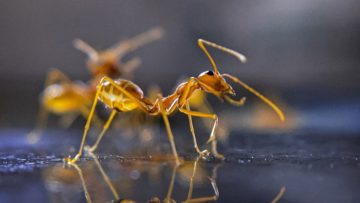 Picture this: the setting sun paints a cornfield in dazzling hues of amber and gold. Thousands of corn stalks, heavy with cobs and rustling leaves, tower over everyone—kids running though corn mazes; farmers examining their crops; and robots whizzing by as they gently pluck ripe, sweet ears for the fall harvest.
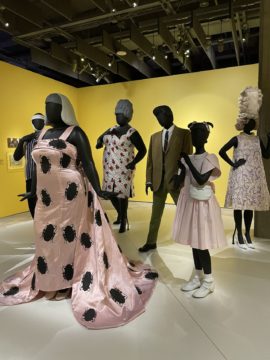 John Waters was kicked out of NYU film school for smoking marijuana. Even that incubator for original filmmakers couldn’t handle him. Now, among people I know, announcing yourself as a graduate of NYU film school is a shorthand for being an uppity, social-climbing brat (I should know, I’m one of them). It’s so much cooler to be John Waters. He’s a degenerate and an iconoclast, making even the most daring artists look like uninspired conformists. In fact, I don’t know anyone who dislikes John Waters. If I did, I would think it was an easy tell that they were boring and had bad sex.
 A string of job postings from high-profile training data companies, such as
 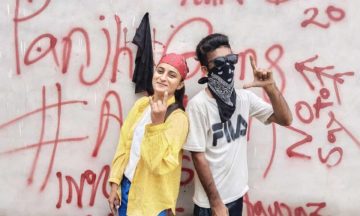 Deep in Pakistan’s countryside, Sindhi Chhokri and her teenage brother Toxic Sufi are raising a few eyebrows.
 In 1978, Kathy Kleiner was asleep in her bed at the Chi Omega sorority house at Florida State University when serial killer Ted Bundy entered through an unlocked door. After attacking two of her sorority sisters, Bundy found Kathy’s door also unlocked.
 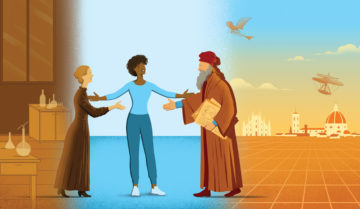 We asked young scientists this question: If you could introduce any two scientists, regardless of where and when they lived, whom would you choose, and how would their collaboration change the course of history? Read a selection of the responses here. Follow NextGen Voices on social media with hashtag #NextGenSci.
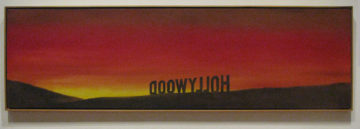 In a past life, he was an arsonist. A bold accusation, I realize, but nobody makes that many paintings, drawings, and photographs of fire without some buried lust for the real deal. By the time I left “Ed Ruscha / Now Then,” an XXL retrospective at moma comprising some two hundred works produced between the Eisenhower years and the present, I had lost count of the burning things, which are as lowbrow as a diner and as la-di-da as the Los Angeles County Museum of Art. The title of Ruscha’s 1964 photo series, “Various Small Fires and Milk,” could have been, minus the milk, a reasonable title for the exhibition itself, if he hadn’t painted various large ones, too.
 A famous
  Right now, many forms of knowledge production seem to be facing their end. The crisis of the humanities has reached a tipping point of financial and popular disinvestment, while technological advances such as new artificial intelligence programmes may outstrip human ingenuity. As news outlets disappear, extreme political movements question the concept of objectivity and the scientific process. Many of our systems for producing and certifying knowledge have ended or are ending.
 R
R The word that comes to mind to describe all this—the light, the music, the sacred waters, the sacred garments—is “pilgrimage.” One rarely sees living writers treated with such reverence. “I am just a strange guy from the western part of Norway, from the rural part of Norway,” Fosse told me. He grew up a mixture of a communist and an anarchist, a “hippie” who loved playing the fiddle and reading in the countryside. He enrolled at the University of Bergen, where he studied comparative literature and started writing in Nynorsk, the written standard specific to the rural regions of the west. His first novel, “Red, Black,” was published in 1983, followed throughout the next three decades by “