
Joseph Horowitz at The American Scholar:
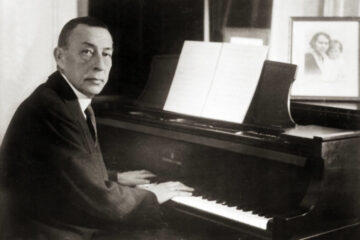 The biggest recent find in classical music was the discovery that in 1940, Sergei Rachmaninoff was privately recorded by the conductor Eugene Ormandy. Seated at Ormandy’s piano, he played through his new Symphonic Dances, which Ormandy would soon premiere with the Philadelphia Orchestra. Singularly, Rachmaninoff never permitted his public performances to be broadcast—so this surreptitious home recording is the best evidence we have of what Rachmaninoff’s legendary pianism sounded like outside the confines of recording studios sucked clean of the oxygen a body of listeners can activate.
Rachmaninoff’s RCA recordings are justly famous. They document his imperious, interpretive mastery, embellished with miracles of color and texture. But they are also emotionally controlled. When we eavesdrop on Rachmaninoff playing privately for Ormandy, the cork is out of the bottle: his keyboard presence surges with cataracts of feeling and sound. (It’s all documented in a three-CD set, Rachmaninoff Plays Symphonic Dances, issued in 2018 on the Marston label.)
more here.
 F
F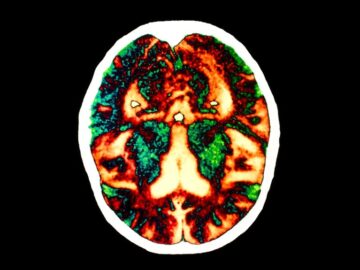 For the past decade, Collinge and his team have studied people in the United Kingdom who in childhood
  The first video portapacks arrived in the 1970s, cameras that skipped the lab and allowed the cameraman to be mobile, but they were so expensive only those who had connections with a TV station could experiment with them. Or if you had a rich aunt who needed to document a wedding, sometimes exorbitant rentals were available. Those with the ties to TV stations became the pioneers of art video. The rest of us painfully wove our laurels out of what could be cadged or granted. The tech, always changing, improved year by year, as did access and the imagery. We were offered new ways to think about color, resolution, and the translation of experience to video. Seeing invention at work as each new video tool appeared – sometimes developed by the artists themselves – was thrilling.
 Why do we enjoy showing and sharing?
 A theory developed by
  One unfortunate feature of American politics is that both Republicans and Democrats tend to work themselves into a frenzy over the other party’s presidential candidate, no matter who it is. To put it bluntly, both sides cry wolf all the time. Yes, I am a Democrat, but Democrats do this too — I’m old enough to remember when people I knew went crazy over poor old Mitt Romney saying that he had “
 Greetings, gentle readers! Welcome to the very first installment of Am I the (Literary) Assh*le, a series where I get drunk and answer your burning (anonymous) questions about all things literary.
 On Monday, tens of millions across
  There’s a scene in that modern classic of screwball existentialism,