
Category: Recommended Reading
Photos That Capture the Soul of 1960s Dublin
Erica Ackerberg at the NYT:
For six months between 1965 and 1966, the German-born photographer Evelyn Hofer worked in Dublin, creating beautifully crafted portraits of the city and its people. Hofer took her time composing each shot, whether it captured a pair of housekeepers in brief repose or James Joyce’s death mask. The results were published in book form in 1967, to accompany an extended essay by V.S. Pritchett. Now, in DUBLIN (Steidl, $58), those images stand on their own to tell a thoughtful story of the city both in black-and-white and in quiet color.
Hofer, who died in Mexico City in 2009, was raised in Switzerland and Spain before settling in New York in 1946, where she contributed photo essays to Harper’s Bazaar and Vogue. In 1959, she began crafting literary portraits of cities, collaborating with Pritchett as well as Mary McCarthy and Jan (then James) Morris.
more here.
Is Pedagogy About Us?
Isabella Cho in Harvard Magazine:
 DURING A HISTORY seminar in my sophomore year, we opened class with a question derived from an assigned reading: What civic and political ills had made certain regions of Chicago sites of gang violence? We mulled the question for a few directionless minutes before a student raised her hand. Though I don’t remember what she said, I do remember that she prefaced the thought with, “As someone from the Chicago area….” She had lived there for 18 years. This phenomenon is common. It marks the moment in a classroom discussion, often a difficult or complex one, in which a student broaches a feature of her identity or lived experience that pertains to the topic at hand.
The Chicagoan’s viewpoint changed the dynamic of the conversation. Because she was the only person who identified as a long-time resident of the area, her perspective took on an air of heightened authority. I had wanted to advance a counterpoint, but now felt disinclined to do so. For one, it seemed that it would go against the authority of someone who had a deeper personal stake in the issue. Second, I thought that raising a counterpoint to the student’s perspective might be interpreted by my classmates not only as a challenge on intellectual grounds, but also as callous.
Neither are legitimate reasons to have withheld my comment. But I couldn’t help but feel both at that moment.
More here.
Researchers develop implantable device that can record a collection of individual neurons over months
From Phys.Org:
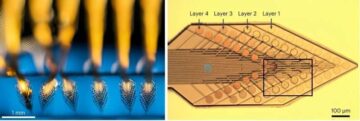 Recording the activity of large populations of single neurons in the brain over long periods of time is crucial to further our understanding of neural circuits, to enable novel medical device-based therapies and, in the future, for brain–computer interfaces requiring high-resolution electrophysiological information. But today there is a tradeoff between how much high-resolution information an implanted device can measure and how long it can maintain recording or stimulation performances. Rigid, silicon implants with many sensors, can collect a lot of information but can’t stay in the body for very long. Flexible, smaller devices are less intrusive and can last longer in the brain but only provide a fraction of the available neural information.
Recently, an interdisciplinary team of researchers from the Harvard John A. Paulson School of Engineering and Applied Sciences (SEAS), in collaboration with The University of Texas at Austin, MIT and Axoft, Inc., developed a soft implantable device with dozens of sensors that can record single-neuron activity in the brain stably for months. The research was published in Nature Nanotechnology.
“We have developed brain–electronics interfaces with single-cell resolution that are more biologically compliant than traditional materials,” said Paul Le Floch, first author of the paper and former graduate student in the lab of Jia Liu, Assistant Professor of Bioengineering at SEAS. “This work has the potential to revolutionize the design of bioelectronics for neural recording and stimulation, and for brain–computer interfaces.”
More here.
Saturday Poem
A Star is Born
There was a pretty girl,
with a pretty voice
and true words
singing.
Please understand,
there was a pretty song
and pretty words,
a young girl’s voice.
To be plain,
I’m pretty sure
there was a girl
and a song
and ancient truth.
In case you wondered,
everything
beautiful and horrid
is contained
in this
and, no surprise,
I have always
been old.
Happy or sad, there is no
such thing
as time.
Only pretty girls
singing pretty songs
with all the pretty words
by Jeff Weddle
from Poetry Feast
Friday, January 26, 2024
Rediscovering Alan Watts
Christopher Harding at Aeon Magazine:
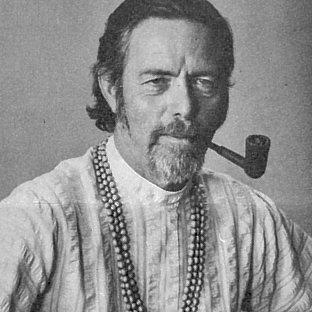 For anyone who has seen or heard Watts at his best – courtesy, perhaps, of his podcast talks – ‘immeasurably alive’ is quite a good description of the man himself. It is easy to see how a basic understanding of God in these terms might have resonated with him. Watts also had moments when the sheer wonder of life around him made it feel as though it was not merely ‘there’, as brute fact, but was being poured out with extraordinary generosity. It seemed ‘given’, convincing Watts that there must be a giver and filling him with the desire to say ‘thank you’. He found backing for all of this in the writings of the 14th-century German theologian Meister Eckhart and the 6th-century Greek author Pseudo-Dionysius the Areopagite. It was there, too, in the ‘I-Thou’ thought of the modern Jewish philosopher Martin Buber.
more here.
Alan Watts And The Shadow
Tell Me Why the Watermelon Grows
Jori Lewis at Switchyard:
 The air conditioner was malfunctioning. When I bought the car used in January, the owner said she had just fixed it, but here I was on a steamy August day on the Atlantic coast of Senegal, with the vents pouring hot air into the already hot car. So, it was my imminent dehydration talking when I skidded to a stop in front of a roadside fruit seller’s table. I was once told by a grandmother, who lives in my seaside village but grew up in the northern dry regions where the Senegal River winds across a crispy and prickly savanna not far from the great desert, about a watermelon varietal called beref, which is cultivated mostly for its seeds but also serves as a kind of water reserve.
“There’s water that you can drink from it like a coconut,” she said.
More here.
Family Wars
Tomas Pueyo in Uncharted Territories:
 Why is giving birth so dangerous despite millions of years of evolution?
Why do humans only have one child per litter?
Why do human women menstruate?
Why does it take us so long to become adults?
Why are there so many stories about evil stepparents?
Why are partners chosen in arranged marriages different from those in love marriages?
Why are parents of small children so tired?
These and many other questions can be answered by realizing that family members are at war.
More here.
Visiting the Most Important Company in the World
Nicholas Kristof in the New York Times:
 “If China takes Taiwan, they will turn the world off, potentially,” Donald Trump told Fox News recently, apparently referring to a potential seizure of one company that is central to, well, pretty much everything. Indeed, it’s arguably the most important company in the world.
The company Trump alluded to, Taiwan Semiconductor Manufacturing Company, or T.S.M.C., is the only corporation I can think of in history that could cause a global depression if it were forced to halt production.
These days it seems impossible to have a conversation about geopolitics or economics without coming back to T.S.M.C., which makes about 90 percent of the world’s most advanced chips.
More here.
Medieval LOLs: Chaucer’s ‘Miller’s Tale’
Ed Ruscha And His Buildings
Mark Krotov and Thomas de Monchaux at n+1:
 DE MONCHAUX: In the mid-1960s, Ed Ruscha and his close friend, the Canadian-turned-Californian architect Frank Gehry, used to hang out at the fashionable clubs and bars on the Sunset Strip. One of the many documentary materials that the MoMA survey directs you to on your phone is a quick interview with the latter about the former. “It was the highlight of Hollywood nightlife,” says Gehry of the Strip. “Ed was curious to document it, and he made a book about it. It’s very cool the way he represented it. There was no emotion about what goes on in there. It was just, look at the Hollywood strip, the Sunset Strip. There it is. It’s a bunch of stupid buildings. . . . We all got copies. I still have that in my library somewhere.” Every Building on the Sunset Strip, a 1966 pamphlet, was initially self-published in an edition of one thousand. It folds out, accordion-style, from a trim size of 7×5 5/8 inches x 3/8 inches thick to a satisfying length of 24 feet, 11 1/2 inch when open. Along the top of the pages runs in black and white a continuous horizontal panorama of all the buildings on the north side of the two and a half miles of the Strip. Along the bottom of the pages runs in black and white a continuous horizontal panorama of all the buildings on its south side. “I felt like [Sunset Boulevard] should be recorded with no prejudice, with no agenda, and no moral,” says 2023 Ed Ruscha, in MoMA material also available on your phone.
more here.
In Lebanon, the art of resistance endures
Scott Peterson in The Christian Science Monitor:
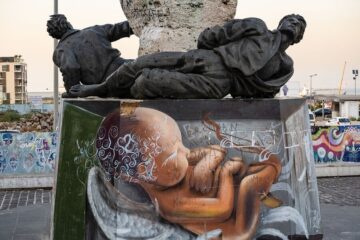 Rarely have so many Lebanese turned out on the streets to demand wholesale political change as when they began their self-declared “October Revolution” of 2019. And rarely has there been so little positive result.
In recent years, Lebanon has been engulfed by a multitude of crises, starting with economic collapse in late 2019. The following year brought the COVID-19 pandemic. And in August 2020 came the second-largest nonnuclear explosion ever recorded, when illegally stored ammonium nitrate at the Port of Beirut exploded, taking more than 200 lives, forcing 300,000 from their homes, and leaving some $15 billion in damage.
Three-quarters of the population has since been pushed below the poverty line, and shortages, power cuts, and surging prices have become facts of life.
More here.
Scientists Extend Life Span in Mice by Restoring This Brain-Body Connection
Shelly Fan in Singularity Hub:
 Longevity is complicated. Multiple factors influence how fast our tissues and organs age, such as genetic typos, inflammation, epigenetic changes, and metabolic problems. But there is a throughline: Decades of work in multiple species have found that cutting calories and increasing exercise keeps multiple organ functions young as we age. Many of the benefits come from interactions between the brain and body. The brain doesn’t exist in a vat. Although protected by a very selective barrier that only lets certain molecules in, neurons react to blood components which bypass the barrier to alter their functions—for example, retaining learning and memory functions in old age.
Recent studies have increasingly pinpointed multiple communication channels between the brain and muscles, skeleton, and liver. After exercise, for example, proteins released by the body alter brain functions, boosting learning and memory in aging mice and, in some cases, elderly humans. When these communication channels break down, it triggers health problems associated with aging and limits life span and health span (the number of healthy years).
The brain-body connection works both ways. Tucked deep in the base of the brain, the hypothalamus regulates myriad hormones to modify bodily functions. With its hormonal secretions, the brain region sends directions to a wide range of organs including the liver, muscle, intestines, and fatty tissue, changing their behavior with age. Often dubbed the “control center of aging,” the hypothalamus has long been a target for longevity researchers.
More here.
Friday Poem
Dia de los Muertos
The oddity that was put in my hands—
your truck. It used to be I drove this road
each week to pick you up. Now I drive this road
each week to lay you down again. Today
is the day of the dead: When did you die?
Today I bring you chicharron con huevo,
chile. Which is to say, I brought breakfast
to the goats. I want to slip my hand into
the photo of you, fix your hair as I did,
help you with your sweater, guide heavy salt
to your plate. Grass is starting to grow over
you. Shards of rock gone smooth. I sing to bees.
I lay my ear to stone; it doesn’t hurt:
I hear your song—water rising from dirt.
by Lauri Ann Guerrero
from Dreamflowers
Poet Hound
Thursday, January 25, 2024
IMF’s Summer of Discontent?
Mario Arriagada Cuadriello in the Ideas Letter from Open Society Foundations:
Evita, the Falklands, the Hand of God: if you are an English speaker you have already guessed the subject. For the Spanish-speaking world, the key terms would be different: Peronismo, Malvinas, and, again, Maradona. But irrespective of language there is a more robust set of signifiers that (all too often) effectively describes Argentina’s zeitgeist: Inflation, debt, and the International Monetary Fund (IMF). And it’s the last that will be the central protagonist of this story.
Rotten governance in Argentina is undoubtedly to blame for the country’s knocking on the IMF’s door to the point of becoming it largest debtor. But what about the IMF? How are they reacting to newly-inaugurated President Javier Milei’s promise of a radical reboot via old-line shock therapy? In a world in which “we are all post-neoliberals now” (in the way that we were all Keynesians once upon a time) has the progressives’ Darth Vader, the International Monetary Fund, mended its ways? Can it push back against the paleo-austerity ideas of President Milei? Or will the world find out that the world’s last neo-liberal, an Argentine far-right devotee of libertarian economics, is just the ticket for the IMF’s return to form?
Before we go there let’s rewind and travel back to the annus horribilis of 1976. On 29 March, a civilian-military coup deposed Isabel Perón, who had assumed the presidency after her recently returned husband Juan died in 1974, and made Jorge Rafael Videla the de facto president of Argentina.
More here.
How do we hold contradictory beliefs at the same time?
Alex Worsnip in Aeon:
 …incoherence can hold between mental states of various types: for example, between beliefs, preferences, intentions, or mixtures of more than one of these types. In all cases, though, it’s crucial that the defect is in the combination of states, not necessarily in any of them taken individually. There’s nothing wrong with preferring chocolate ice cream to vanilla, or preferring vanilla to strawberry, or preferring strawberry to chocolate; but there is something very strange about having all of these preferences together.
More here.
Free Agents: How Evolution Gave Us Free Will
Leon Vlieger in The Inquisitive Biologist:
 Despite millennia of arguments, the question of whether we have free will or not remains unresolved. Last year October, two neurobiologists stepped into the fray, giving me the chance to dip my toes into the free-will debate. I just reviewed Robert Sapolsky’s Determined which presented a case against. Though successfully showing that we have less of it than we think, I remain unconvinced by his total rejection of free will. For the second half of this two-part review, I turn to Kevin J. Mitchell’s Free Agents which, also starting from neurobiology, presents a tightly argued and compelling case in favour.
More here.
A Guide for the Politically Homeless
Sam Kahn in Persuasion:
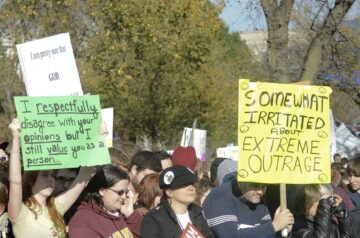 There seem to be two words in the air at the moment, that keep popping up in articles and finding their way into American political discourse. One is “sleepwalking.” The other is “homelessness.”
The “sleepwalking” is obvious enough. After the most consequential election in American history, pitting Biden against Trump, with democracy in the balance, we once again have… the most consequential election in American history, pitting Biden against Trump, with everything even more in the balance and with everybody just that much angrier at each other.
On the Democratic side, the sense is of spending the last year waiting to have what David Brooks calls “The Conversation” about Joe Biden… and never quite getting around to it. None of the major potential rivals were willing to challenge him. He wasn’t willing to step down. And it’s not clear that anybody ever really pushed it—even as Biden’s poll numbers continued to plummet.
On the Republican side, there was the charade of a primary campaign, dutifully covered by the media.
More here.