
Samuel Moyn in Granta:
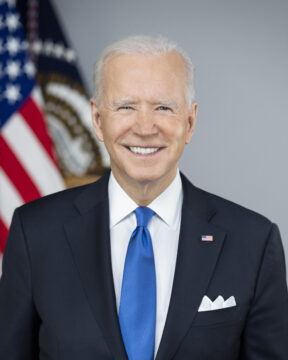
Gerontocracy is as old as the world. For millennia, to greater or lesser degrees, it has been the default principle of governance, from ancient Greek city-states to the Soviet republics. Though there have been exceptions, when you look for gerontocracy today, you find it everywhere – aged men and women at the helms of states the world over.
The presidential contest in the United States this year is likely to pit two decrepit men against each other. Were the incumbent to win, he would be eighty-six by the end of his second term. Nor is the aging of politicians restricted to the chief executive of the country, or even an American syndrome. Paul Biya, president of Cameroon, recently celebrated his ninetieth birthday (he was born the same year as California senator Dianne Feinstein, who died in office in September), making Michael Higgins, president of Ireland, appear sprightly by comparison at eighty-two.
It wasn’t supposed to be this way. At the birth of political modernity, the French revolutionaries explicitly targeted the empowerment of the elderly: what came to be known as the ‘old regime’.
More here.
 Recent years have seen successive waves of book bans in Republican-controlled states, aimed at pulling any text with “woke” themes from classrooms and library shelves. Though the results sometimes seem farcical, as with the banning of Art Spiegelman’s Maus due to its
  From Zarastro Art:
 Rithika Ramamurthy and Ajay Singh Chaudhary in Non-Profit Quarterly:
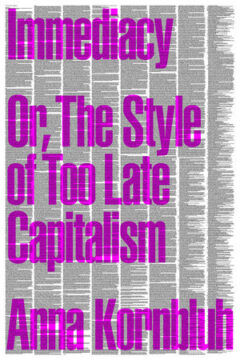 Anna Kornbluh in e-Flux:
 James Stafford in Dissent:
 O
O I
I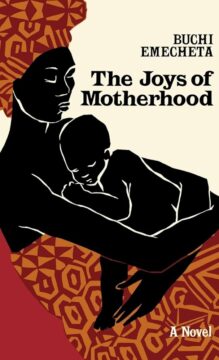 Lagos is an experience of a lifetime. The city will enchant and wreck you. The bedlam. The 15-minute journeys that stretch to five hours because of traffic jams. The multitudes everywhere you turn, each individual fizzing with hope and energy and stories, each unfazed by the maladies of living here — crumbling infrastructure, an oppressive kleptocratic government, the daily whiff of disasters brewing.
 Nuclear weapons
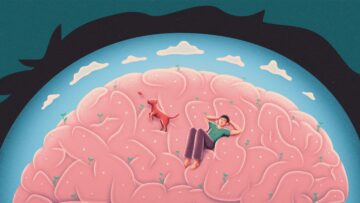 But is your brain active even when you’re zoning out on the couch?