
Michiko Kakutani at Literary Hub:
 In the mid-1960s, network TV was suddenly awash in what scholars would later call “supernatural sitcoms.” My Favorite Martian featured an anthropologist from Mars who crash-lands in Los Angeles and hides out at a newspaper reporter’s apartment while he tries to repair his spacecraft. Mister Ed starred a talking horse who only speaks to his bumbling owner, Wilbur, and constantly gets him in trouble. Bewitched depicted a nose-twitching witch named Samantha who marries a nervous ad executive who insists she refrain from using her magical powers.
I Dream of Jeannie recounted the story of a genie named Jeannie who falls in love with an astronaut who finds her bottle when his space capsule splashes down near a deserted island. And The Addams Family concerned a macabre family with supernatural gifts who don’t understand why their neighbors think they are weird.
At the time, such shows were regarded as simple ditzy, escapist fun. Later, academics would argue that the sitcoms were products of the civil rights era of the day: They metaphorically examined the subjects of “mixed marriages” and integration; and in the case of Bewitched and I Dream of Jeannie they reflected growing tensions between empowered women and men who want them to just be ordinary, stay-at-home housewives.
More here.
 Last summer, OpenAI CEO Sam Altman
  T
T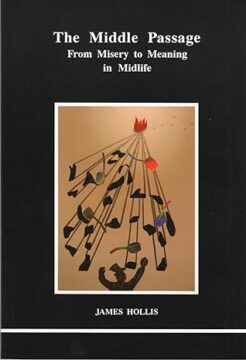 Hollis envisions these shifting identities as a change of axes, moving from the parent-child axis of early life to the ego-world axis of young adulthood to the ego-Self axis of the Middle Passage — a time when “the humbled ego begins the dialogue with the Self.” On the other side of it lies the final axis: “Self-God” or “Self-Cosmos,” embodying philosopher Martin Buber’s recognition that
 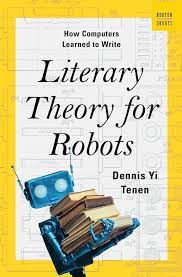 Literary Theory for Robots is mainly concerned with an alternative view—the “Aristotelian,” instrumental idea that intelligence represents the ability to successfully do shit—and not some internal, mental model. Intelligence is a set of mechanisms that one applies to one’s problems. It doesn’t matter what’s contained in those mechanisms, how conscious or self-conscious or “correct” they are, just that they work. Negotiating a ceasefire; completing a jigsaw puzzle; shifting gears; turning bread into toast—each of these requires intelligence to solve, and the degree of this intelligence is evaluated by (a) how well the set of mechanisms performs; and (b) how capably the same cocktail can be applied to other problems. A toaster is intelligent, Tenen argues, because its mechanism succeeds at turning bread into toast. And it sits at the bottom rung of a ladder, incapable of applying its wits to any other test.
 Young women’s social media feeds are flooded with
  From the very early days of the pandemic,
  Donald Trump made an entire career out of whining about the mainstream media and still lives on nuggets of outrage dispensed to the faithful about how unfairly the media covered his glorious rule and the election he says was stolen from him. Democrats constantly gripe about the press identifying obvious weaknesses with Joe Biden, such as his age, his abysmal poll numbers, the lackluster support for his economic agenda, and his inability to hold together a basic coalition. Meanwhile, ideological outsiders and self-described “truth-tellers” have turned complaints about the media into a full-time business model of caterwauling about supposed censorship of their out-of-the-mainstream or
  People are constantly telling Ophelia what to do. No sooner has Laertes left the room, with an injunction to remember his words to her, than Polonius, never one to mind his own business, asks Ophelia what her exchange with her brother was all about. The conversation between father and daughter that follows is squirm-worthy. The more Ophelia tries to explain how things stand between her and Hamlet—how he has behaved in courting her and how she has responded to the “many tenders / Of his affection to me”—the more her father belittles her. “You speak like a green girl”; “think yourself a baby”; “Tender yourself more dearly”; “Go to, go to.” Each time Ophelia tries to speak up for herself—and, for that matter, speak up for Hamlet—Polonius overrides her. Finally, in his last twenty lines, he stifles her effort at reasoning with him, adding a father’s authority to the brother’s condescension: “I would not, in plain terms, from this time forth / Have you so slander any moment leisure / As to give words or talk with the Lord Hamlet. / Look to’t, I charge you. Come your ways.” By the scene’s end any resistance left in Ophelia has wilted. Not for the last time she is silenced. “I shall obey, my lord.”
 M
M AFTER THE NAKBA OF 1948
 Forced into exile in 1917 by the October Revolution, Nabokov had good reasons to champion freedom as passionately and consistently as he did. From his point of view and that of most Russian émigrés, the Bolsheviks substituted the tsarist tyranny with a tyranny of their own. For Nabokov in particular, this was especially painful because his father had been one of the “liberationists” who dedicated his life to transforming Russia into a modern liberal-democratic state. His father’s political activism and his murder in a bungled political assassination by far-right extremists is one of the most poignant chapters of Nabokov’s biography. Nabokov’s philosophically complex account of freedom is a consistent seam throughout his major works – and it has also led to confusion in their popular and critical reception.
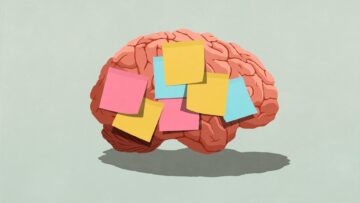 “The problem isn’t your memory, it’s that we have the wrong expectations for what memory is for in the first place,” Ranganath writes in his introduction, a theme that he returns to throughout the book. “