
Category: Recommended Reading
The U.S. Paid Money to Support Hugo Banzer’s 1971 Coup in Bolivia
Robert P. Baird in Digital Emunction:
For nearly four decades, there’s been an open question about the 1971 coup that brought dictator Hugo Banzer Suárez to power in Bolivia: was the U.S. government involved? Thanks to newly declassified documents, we now have an answer.
Banzer was a dictator of Bolivia from 1971-8 and a democratically elected president from 1997-2001. His three-day coup in August 1971 was significant not only for the fighting that accompanied it, which left 110 dead and 600 wounded, but for the seven-year regime that followed, one of the most repressive in Bolivia’s history. Under Banzer’s rule, more than 14,000 Bolivians were arrested without a judicial order, more than 8,000 were tortured—with electricity, water, beatings—and more than 200 were executed or disappeared.
More here.
Cool
Ben Zimmer in the New York Times Magazine:
The Times Literary Supplement, the erudite British weekly, isn’t the first place you would expect to find an outbreak of cool. But for a recent stretch of a few months, its letters page was home to a protracted debate over exactly how cool got cool.
It all started in January, when Toby Lichtig reviewed “Journey by Moonlight,” a 1937 novel by the Hungarian writer Antal Szerb that has recently been translated into English by Len Rix. Lichtig gave a thumbs up to Rix’s rendering, but he complained about the text’s occasional anachronisms, particularly the use of cool “in its contemporary sense” — that is, in the “stylish” or “admirable” meaning popularized by the cool cats and chicks of the postwar era and exemplified by the all-purpose expression of appreciation or approval, “That’s cool.”
A parade of nine T.L.S. readers questioned how modern the “contemporary sense” of cool actually is, pulling out 19th- and early-20th-century quotations from writers as diverse as Wilkie Collins and T. E. Lawrence to support the idea that our current understanding of cool is not so new after all. E. D. Hirsch Jr., the American author of “Cultural Literacy,” even chipped in with a line from Abraham Lincoln (“That is cool”). The whole discussion, unfortunately, drifted into a muddle of anecdotes without any firm grip on the semantics of cool.
More here.
Dutcher’s Notch

I am afraid of airplanes. I am afraid of boats. I am afraid of automobiles, especially as a passenger and especially at night. I am afraid of heights, and elevators, and cliff faces. I am afraid of any seat in a theater more than one away from an aisle. I am afraid of the dark, and of snapping twigs in a forest. I am afraid of murky water, of depth, currents, sharks. I am afraid of snakes. I am afraid of dogs. I am afraid of teenaged boys who travel in groups. I am afraid of anyone at any time with a gun. I am afraid of my heart and the million and one blood vessels that connect it to every part of my body, I am afraid of my freckles and pimples and glands, swollen or otherwise, and I am afraid of my brain. I monitor every scrape for signs of gangrene, and believe that every wheezing breath, whether induced by exercise or panic, is a sign of my weakness, if not of body then of mind: if I don’t die then I will kill myself, over and over and over again. There are moments when I forget to be afraid, and when I remember those moments later, I am afraid of them most of all. As I write this I sit on a moss- and fern-covered boulder in a place called Dutcher’s Notch, which is nothing more than a crossroads on the side of a mountain on the eastern edge of the Catskills.
more from Dale Peck at Threepenny Review here.
too much hitch

With no narrative through-line of political or literary development, Hitch 22 relies on the assumption that its readers will want to follow its author’s arbitrary recollections of family, friends, opinions and travels. He gives over whole chapters to [James] “Fenton,” “Salman” [Rushdie], and “Martin” [Amis]. But the more he writes about them, the less he seems to reveal. Fenton, he declares, was a marvellous poet who liked long walks and “the ancient buildings and antique trees and botany of Oxford.” Did that sentence really fall from the pen of Christopher Hitchens? The friend on whom he lavishes the purplest ink is Martin Amis, and there are mortifying hints that he has used Amis’s own masterpiece of memoir, Experience, as a model. Hence, perhaps, the leaps in theme and chronology, the lurches between private and public worlds, and the grizzly fumbling for comic self-exposure. Mutual masturbation at public school, or homosexual encounters at university—with future cabinet ministers in a Thatcher government—are referred to at once coyly (he withholds significant names) and tastelessly. He and his Oxford contemporary Bill Clinton, he reveals, were at different times involved “with a pair of Leckford girls who, principally Sapphic in their interests, would arrange for sessions of group frolic.”
more from Alexander Linklater at Prospect Magazine here.
Castelli changes the world

In 1975, when I was a critic for the Times, an editor sat me down and told me that the paper was cutting back on reviews in favor of features. He added that there was a big future for a young man who wanted to be an investigative reporter in the art world. What story did he have in mind? The dealings of Leo Castelli. Perhaps I shouldn’t have been surprised. That year, a celebrated conviction of the dealer Frank Lloyd, for conspiring to plunder the estate of Mark Rothko, fed popular suspicions that the art world was a quasi-criminal enterprise zone, in which Castelli—who had a near-monopoly on the top artists and sold their work for prices that seemed fantastic—figured to be the gangster-in-chief. And what young journalist didn’t ache for the laurels of a Woodward or a Bernstein? I didn’t. I liked the art world, and I revered Castelli, though he made me nervous. Treated to the silken manners and melting gaze of the small, neat man from Trieste—with his unplaceable accent, which Tom Wolfe described as “soft, suave, and slightly humid, like a cross between Peter Lorre and the first secretary of a French embassy”—I felt like a farm boy with cow pies in my pockets. He sensed this, I’m convinced, and left me alone when I visited the holy of holies that was his gallery, first at 4 East Seventy-seventh Street and, after 1971, at 420 West Broadway, flashing me the odd quick knowing smile. Leo (almost no one who met him even once called him anything else) wielded custom-tailored ways of making people feel special—all people, because he crowned his Continental glamour with a faintly comic and completely endearing American-style openness.
more from Peter Schjeldahl at The New Yorker here.
Monday, May 31, 2010
Richard Dawkins to judge 2nd Annual 3QD Prize in Science
June 21, 2010, UPDATE: The winners have been announced.
June 11, 2010, UPDATE: See list of nine finalists here.
June 8, 2010, UPDATE: Voting round closed. See list of twenty semifinalists here.
June 2, 2010, UPDATE: Nominations are now closed. Go here to see the list of nominees and vote.
May 31, 2010, UPDATE: Today is the last day for nominations.
Dear Readers, Writers, Bloggers,
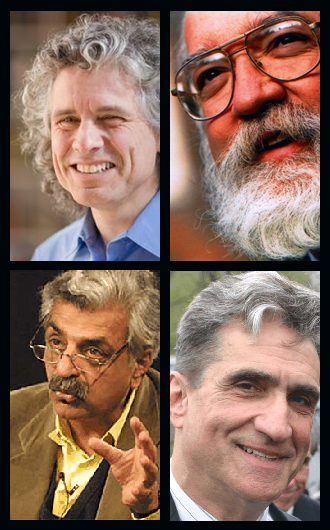
Thus we completed our first annual cycle of prizes having exceeded our own expectations of success: through our contests we found, for our readers as well as for ourselves, great new blogs and writers to read and follow, and the quality and range of the submissions was excellent in general. And we hope that in our own small way we also managed to spur and encourage good writing in the blogosphere by acknowledging and rewarding it. We are proud that well-known and highly accomplished experts agreed to serve as final judges for each of the four sets of prizes in the first year. We thank each of them again.

As usual, this is the way it will work: the nominating period is now open, and will end at 11:59 pm EDT on May 31, 2010. There will then be a round of voting by our readers which will narrow down the entries to the top twenty semi-finalists. After this, we will take these top twenty voted-for nominees, and the four main editors of 3 Quarks Daily (Abbas Raza, Robin Varghese, Morgan Meis, and Azra Raza) will select six finalists from these, plus they may also add up to three wildcard entries of their own choosing. The three winners will be chosen from these by Richard.
The first place award, called the “Top Quark,” will include a cash prize of one thousand dollars; the second place prize, the “Strange Quark,” will include a cash prize of three hundred dollars; and the third place winner will get the honor of winning the “Charm Quark,” along with a two hundred dollar prize.
* * *
(Welcome to those coming here for the first time. Learn more about who we are and what we do here, and do check out the full site here. Bookmark us and come back regularly, or sign up for the RSS feed.)
* * *

The winners of the science prize will be announced on June 21, 2010. Here's the schedule:
May 24, 2010:
- The nominations are opened. Please nominate your favorite science blog entry by placing the URL for the blog post (the permalink) in the comments section of this post. You may also add a brief comment describing the entry and saying why you think it should win.
- Blog posts longer than 4,000 words are not eligible.
- Each person can only nominate one blog post.
- Entries must be in English.
- The editors of 3QD reserve the right to reject entries that we feel are not appropriate.
- The blog entry may not be more than a year old. In other words, it must have been written after May 23, 2009.
- You may also nominate your own entry from your own or a group blog (and we encourage you to).
- Guest columnists at 3 Quarks Daily are also eligible to be nominated, and may also nominate themselves if they wish.
- Nominations are limited to the first 200 entries.
- Prize money must be claimed within a month of the announcement of winners.
- You may also comment here on our prizes themselves, of course!
May 31, 2010
- The nominating process will end at 11:59 PM (NYC time) of this date.
- The public voting will be opened soon afterwards.
June 7, 2010
- Public voting ends at 11:59 PM (NYC time).
June 21, 2010
- The winners are announced.
And another Mini-Contest!
For each of our contests, I have asked designer friends of mine to produce “trophy” logos that the winners of that prize can display on their own blogs. You can see all of them here. I am now running out of designer friends, so here is an offer: send me your design for a logo for the winners of the Arts & Literature Prize (it must contain the same info as in the examples I have linked to, and the size is 160 X 350 pixels), and if I use it, I'll send you $25. Try. It'll be fun. Deadline: June 10, 2010.
One Final and Important Request
If you have a blog or website, please help us spread the word about our prizes by linking to this post. Otherwise, post a link on your Facebook profile, Tweet it, or just email your friends and tell them about it! I really look forward to reading some very good material, and think this should be a lot of fun for all of us.
Best of luck and thanks for your attention!
Yours,
Abbas
perceptions
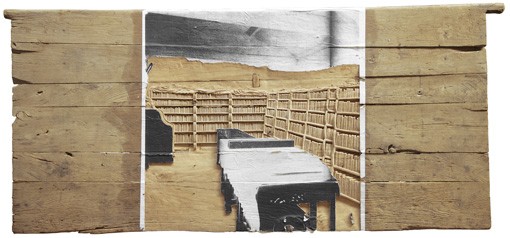
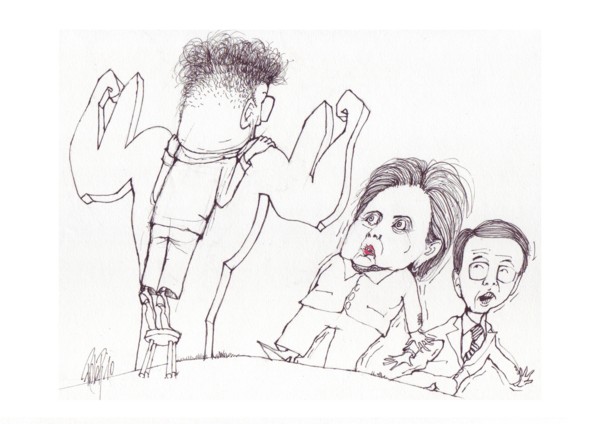
Caption Needed
Editor's Note: In the spirit of The New Yorker's popular caption contest, we will be presenting original cartoons done for 3QD by the very talented Robert Pichler. Unlike The New Yorker, we are not running a real contest, but just for fun, we encourage you to suggest captions in the comments area.
Sunday, May 30, 2010
Why are people so eager to invade their own privacy?
Rochelle Gurstein in The New Republic:
What astounds me about today's metaphorical glass-house dwellers—those people who eagerly publicize on websites every detail of their “health” (DNA profile), “finances” (shopping bills and consumer preferences), “family situation” (online dating profile)—is how cheerfully they participate in “one of the most horrifying aspects of modern life.” Self-invasions of privacy on the Internet now compete with “bureaucracy with its documents” and “the press with its reporters” for a place on Kundera's list of the institutionalization and I would add normalization of this “age-old form of aggression.” And so, too, it seems to me, do all those glass apartment houses which sprang up everywhere in New York City during the glory years of the last building boom. I am still baffled as to why architects thought it was a good idea to erect pricey, luxury apartments without solid, exterior walls on streets that are exposed not only to the casual glance of thousands of city walkers from below but also to the unavoidable notice of those who live or work in the many neighboring buildings, and that a new breed of fashionable New Yorkers couldn't wait to live in them.
More here.
In Between Layers
From Lensculture:
Diverse, affluent cultures around the world have recently embraced a mash-up of photography, trompe-l’oeil imagery, conceptual art and super-large-scale digital printing, to cloak the temporary “ugliness” of construction scaffolding with building-size outdoor art displays.
Photographer Han Sungpil has documented this trend worldwide, with an obsession for making large-format photos of these huge temporary installations from ideal viewing locations — precisely at the times of day when the light is perfect to make the illusions appear almost seamless.
More here.
Mating competition explains excess male mortality
From PhysOrg:
Researchers have long known that women outlive men on average, and more recently have discovered that men have higher mortality risks across the entire lifespan. University of Michigan researcher Daniel Kruger offers this explanation: It is all about sex. Women invest more physiologically in reproduction than men, thus men compete with other men for mating partners and try to make themselves attractive to women. This competition leads to strategies that are riskier for men both behaviorally and physiologically, and these result in higher levels of mortality.
“If mating competition is responsible for excess male mortality, then the more mating competition there is, the higher excess male mortality will be,” said Kruger, an assistant research professor in the U-M School of Public Health. In the current study, Kruger shows that two factors related to the level of male reproductive competition contribute to higher rates of risk-taking and mortality. The first factor is polygyny, the social situation in which one man maintains sexual relations with many women (the opposite is polyandry—one women and many men). Several species of primates show high levels of polygyny, where one dominant male mates with most of the females in the group, and other males are left out. Human cultures have varying degrees of polygyny, and Kruger found that the more prevalent the practice, the higher the rate of male mortality.
More here.
Sunday Poem
(intuition, black rose)
the city lay pressed together, steaming at the joints
the city, a rosebud composed of metal,
pressed together, steaming at joints,
it wheels its rose-head, sucks in a cold night, thick night
sucks in night like ink through a straw
my city is a rose-bud all cold metal
some nights i walked circles through her folds
shadows flapped and tore, broke loose like a storm
a dream made of black lace smothered my mouth
with the scent a man would chase through sheets
(which man? mine!)
a dream made of black lace come scratching my throat
i walk toward the man who loves with ice
lungs aching with a scent he’d chase through sheets
my heart, it twists like rope
but i walk toward the man who loves like ice
my sweetheart crush my bones at the steaming corner
but my heart, she twists quietly.
pressed to my ribs this man (my man!)
pressed to my ribs, ice, ice.
the dream clogs my throat with her careful lace
and my lips go off burning with his lips
the whole city wheels its head off
off comes the rose from its stalk of brute wanting.
see what you’ve done, i thought, when my city
loosed and split, folds cracked with ice
and streets fell away with buildings and night.
(we stood froze like a root, but twisting)
by Mara Jebsen
from Union Station Magazine
February 2010
habermas!
Audrey’s Dance
The Haunted House
Saturday, May 29, 2010
Terrorism, Shameless Religious Bigotry and Pakistani Mindset
Raza Habib Raja in Pak Tea House:
As I write these sentences, the details of the most shameful attack on the religious sites of Ahmedis in Lahore are unfolding. However, this is not new as Pakistan has been the victim of this brazen behavior repeatedly. The thirty years of state sponsored “true” Islam is showing its colors. In Pakistan all the minorities are constantly harassed and state’s protection has often proved completely ineffective when a serious attack occurs. Although the counterargument can also be made that state is not also able to protect even when Muslims are attacked.
In case of Ahmedis it is a well known fact that they have been victims of state induced discrimination also apart from being openly hated by the public. In fact even today as this most in human barbarity was unfolding I had the opportunity to actually hear people in my office saying that though terrorism is bad Ahmedis deserved it. Muslims are an extremely intolerant group and yet extremely sensitive when it comes to their own religious sensitivities. And when such minorities are under attack the state protection has often been particularly inadequate and public condemnation virtually absent.
More here. [Thanks to Mustafa Ibrahim.]
sarah!
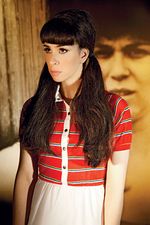
If you want to watch Silverman’s TED routine, you can’t: It was never put online. So she tells me the joke. “The bit was tied into the theme of the conference, which was ‘What the World Needs Now.’ So I say I’d like to adopt a retarded baby because I don’t have this urge to have a little version of myself to get right this time.” She stops to explain her feelings about the word retard. “I don’t like it. I think it’s a negative bummer word. Retarded, however, technically means [mentally challenged].” She continues: “So I say I’m adopting a retarded baby and I’ll be worried about who will take care of my child when I’m gone. So, solution! I’m going to adopt one with a terminal illness. Now, you’re probably thinking, what kind of person looks to adopt a terminally ill retarded child? An amazing person! I don’t see those 9/11 firefighters adopting retarded children with terminal illnesses. I’m just saying. Of course, there’s going to be the uncomfortable, inevitable question in the adoption process: Are you sure there are absolutely no cures on the horizon?”
more from Will Leitch at New York Magazine here.
the larsson phenomenon
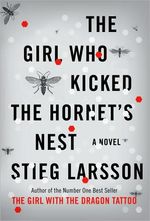
It’s an authentic phenomenon. As “The Girl Who Kicked the Hornet’s Nest,” the last of three posthumous thrillers by the Swedish writer Stieg Larsson, goes on sale this week in the United States, his books have already sold 40 million copies worldwide in a mere five years, while the modestly mounted movie version of his first title has already grossed something like $100 million, with talk of remaking these Swedish productions in Hollywood versions. There is simply no precedent for figures of that magnitude, especially in the mystery-thriller category, where authors become brand names only after they have patiently added many titles to their bodies of work. It’s possible, of course, that Larsson’s own rather dramatic story is helping to fuel the phenomenon. The writer was well-known as a crusading anti-fascist journalist and as a genial, rather careless man whose addiction to cigarettes and junk food might have hastened his premature demise (at age 50, of a heart attack), not long after delivering his three manuscripts to his publisher. The fact that he also left behind a widely reported controversy is also a good story. Larsson died without a will, meaning his fortune in royalties went to his family, a father and brother with whom he was not close, instead of to his helpmate of 30-odd years, whom he never married but whom everyone (except the lawyers) thinks deserves more than a grass widow’s mite of his earnings. But none of that quite explains the mystery that lies beneath the phenomenon.
more from Richard Schickel at the LAT here.
Central European classics
From The Telegraph:
Just as rich people assume that they have nothing to learn from poor people, big nations assume that they have nothing to learn from small nations. This is not true of scientists, nor does it apply to the super-educated in general, but the majority of big nations know very little of the wider world, starting with their ignorance of any language but their own.
Here it is possible to graduate from a top university without having read, even in translation, the classic authors of France and Russia, let alone of Central Europe. As the insights of small, poor, oppressed nations do not come naturally to the British, many aspects of life remain a closed book to them. Which is why this new series of Central European Classics is important well beyond simply providing 'good reads’.
More here.