The Winners of the 3 Quarks Daily 2010 Prize in Arts & Literature

3qd_artsandletters2010TQ Strange Quark Charm logo

Robert Pinsky has picked the three winners:

  1. Top Quark, $1000: Tomasz Rozycki: Scorched Maps
  2. Strange Quark, $300: Amitava Kumar: Postmortem
  3. Charm Quark, $200: Lydia Kiesling: Proust’s Arabesk: The Museum of Innocence by Orhan Pamuk

Here is what Professor Pinsky had to say about them:

A splendid batch, not easy to decide, but here are my selections, in order:

Tomasz Rozycki's poem “Scorched Maps” — translated by Mira Rosenthal into real lines of poetry in English. I will remember this poem about memory and Rozycki's commentary (same translator) on it. The image of the past and its losses as “subterranean” is familiar. Re-imagined in “Scorched Maps,” the image regains its emotional force: the seeker face-down and speaking to the earth, and the earth along with the lives it contains responding, “vast and wild around my head.”

Amitava Kumar's short-short story “Postmortem” has also entered my imagination in a way I will not forget. The surface of this story about an atrocity is reportorial, rather than self-righteous or melodramatic. On the other hand, the author does not pretend to be impartial or unmoved: there is judgment in the terse description of the corpse's wounds. Judgment, too, in how the Colonel looks: “calm and extremely clean, the way bullfrogs do.”

Lydia Kiesling's review of Orhan Pamuk's The Museum of Innocence maintains an informal, personal tone along with a high standard of insight. Her fondness for Arabesk music, her evocation of it (“titles like 'God Hates a Lie'”), the fact that some Turkish people laugh at her for liking it: all is carried off compactly, with great flair. The offhand remark about similarities between the Unites States and Turkey (wondering, in her example from Pamuk, what the Europeans think of oneself, or of one's nation), illustrates an active mind with a light touch.

All the entries are really good. I have learned from them. It is encouraging to find artful writing, and ambitious range, in the digital medium.

Congratulations to the winners (please contact me by email, I will send the prize money later today–and remember, you must claim the money within one month from today). And feel free to leave your acceptance speech as a comment here! And thanks to everyone who participated. Thanks also, of course, to Robert Pinsky for doing the final judging.

The three prize logos at the top of this post were designed, respectively, by Carlos, Carla Goller, and Sughra Raza. Our thanks to each of them. I hope the winners will display them with pride on their own blogs!

Details about how the 3QD Arts & Literature prizes work, here.

Sunday, March 21, 2010

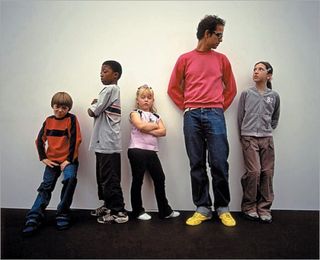
On Reading and This Progress, Connecting Lévi-Strauss and Tino Sehgal

Sehgal-500x406 Dan Visel over at he Future of the Book:

Buried in the middle of Claude Lévi-Strauss's Tristes Tropiques, a book digressive in exactly the right way, is an astonishing argument about writing. Lévi-Strauss considers what the invention of writing might mean in the history of civilizations worldwide, arriving at a conclusion that still surprises:

The only phenomenon with which writing has always been concomitant is the creation of cities and empires, that is the integration of large numbers of individuals into a political system, and their grading into castes or classes. Such, as any rate, is the typical pattern of development to be observed from Egypt to China, at the time when writing first emerged: it seems to have favoured the exploitation of human beings rather than their enlightenment. This exploitation, which made it possible to assemble thousands of workers and force them to carry out exhausting tasks, is a much more likely explanation of the birth of architecture than the direct link referred to above. My hypothesis, if correct, would oblige us to recognize the fact that the primary function of written communication is to facilitate slavery. The use of writing for disinterested purposes, and as a source of intellectual and aesthetic pleasure, is a secondary result, and more often than not it may even be turned into a means of strengthening, justifying or concealing the other. (p. 299)

An idea this inflammatory is perhaps one that can only appear deep in a book like this, where the reader will find it only by mistake. But this is an argument that I haven't seen resurrected in all the present talk about what's happening to reading and writing in their present explosions. One sees on an almost-daily basis recourse to the position of Socrates in Plato's Phaedrus – technology, no matter how simple, inevitably leads to a lessening of human facilities of memory – but this is something different, and one that I think merits consideration. Periodically, I wish that someone would present a cogent argument against reading, rather than the oft-regurgitated pablum that “at least the kids are reading.”

Sunday Poem

In This Deadend

They smell your mouth.
To find out if you have told someone,
I love you!
They smell your heart!

Such a strange time it is, my dear;

They punish Love
At thoroughfares
By flogging.

We must hide our love in dark closets.

In this crooked deadend of a bitter cold
They keep their fire alive
By burning our songs and poems;
Do not place your life in peril by your thoughts!

Such a strange time it is, my dear;

He who knocks on your door at middle-night,
His mission is to break your lamp!
We must hide our lights in dark closets!

Behold! butchers are on guard at thoroughfares
With their bloodstained cleavers and chopping boards;

Such a strange time it is, my dear!

They cut off the smiles from lips,
and the songs from throats!

We must hide our emotions in dark closets!

They barbecue canaries
On a fire of lilacs and jasmine!

Such a strange time it is, my dear!

Intoxicated by victory,
Satan is enjoying a feast at our mourning table!

We must hide our God in dark closets!

by Amad Shamloo

translation: Mahvash Shahegh & dan Newsome

Against Beauty

Adam Kirsch in The New Republic:

Smith5 One of the running jokes in On Beauty, Zadie Smith’s third novel, is that its main character is philosophically opposed to beauty. Howard Belsey is a professor of art history at Wellington College, and like all middle-aged professors in campus novels, he is a ludicrous figure–unfaithful to his wife, disrespected by his children, and, of course, unable to finish the book he has been talking about for years. In Howard’s case, the book is meant to be a demolition of Rembrandt, whose canvases he sees as key sites for the production of the Western ideology of beauty.

“What we’re trying to … interrogate here,” Howard drones in a lecture on Rembrandt’s Seated Nude, “is the mytheme of artist as autonomous individual with privileged insight into the human…. What are we signing up for when we speak of the ‘beauty’ of this ‘light’?” Throughout this rather stereotypical classroom vaudeville, Smith cements the reader’s antagonism to Howard and his cheap aesthetic nihilism by having us view it through the eyes of his most naïve student, Katie Armstrong, a sixteen-year-old from the Midwest who is uncomplicatedly in love with art. “She used to dream about one day attending a college class about Rembrandt with other intelligent people who loved Rembrandt and weren’t ashamed to express this love,” Smith writes, and she makes us indignant at Howard on Katie’s behalf. Indignation turns to scorn when it turns out that Howard Belsey is just as enthralled by beauty as anyone–specifically, by the beauty of another young student, Victoria Kipps, with whom he has a disastrous affair.

Howard’s downfall–he loses his wife and his career–is the revenge of beauty, and in the novel’s last scene Smith forces Howard to admit defeat.

More here.

Sceptic challenges guru to kill him live on TV

Jeremy Page in the Times of London:

ScreenHunter_04 Mar. 21 08.57 When a famous tantric guru boasted on television that he could kill another man using only his mystical powers, most viewers either gasped in awe or merely nodded unquestioningly. Sanal Edamaruku’s response was different. “Go on then — kill me,” he said.

Mr Edamaruku had been invited to the same talk show as head of the Indian Rationalists’ Association — the country’s self-appointed sceptic-in-chief. At first the holy man, Pandit Surender Sharma, was reluctant, but eventually he agreed to perform a series of rituals designed to kill Mr Edamaruku live on television. Millions tuned in as the channel cancelled scheduled programming to continue broadcasting the showdown, which can still be viewed on YouTube.

First, the master chanted mantras, then he sprinkled water on his intended victim. He brandished a knife, ruffled the sceptic’s hair and pressed his temples. But after several hours of similar antics, Mr Edamaruku was still very much alive — smiling for the cameras and taunting the furious holy man.

More here.

Gandhians with a Gun? Arundhati Roy plunges into the sea of Gondi people

Arundhati Roy in Outlook India:

ScreenHunter_03 Mar. 21 08.51 There are many ways to describe Dantewada. It’s an oxymoron. It’s a border town smack in the heart of India. It’s the epicentre of a war. It’s an upside down, inside out town.

In Dantewada, the police wear plain clothes and the rebels wear uniforms. The jail superintendent is in jail. The prisoners are free (three hundred of them escaped from the old town jail two years ago). Women who have been raped are in police custody. The rapists give speeches in the bazaar.

Across the Indravati river, in the area controlled by the Maoists, is the place the police call ‘Pakistan’. There the villages are empty, but the forest is full of people. Children who ought to be in school run wild. In the lovely forest villages, the concrete school buildings have either been blown up and lie in a heap, or they are full of policemen. The deadly war that is unfolding in the jungle is a war that the Government of India is both proud and shy of. Operation Green Hunt has been proclaimed as well as denied. P. Chidambaram, India’s home minister (and CEO of the war), says it does not exist, that it’s a media creation. And yet substantial funds have been allocated to it and tens of thousands of troops are being mobilised for it. Though the theatre of war is in the jungles of Central India, it will have serious consequences for us all.

More here. [Thanks to Manan Ahmed.]

That’s a big, fat sack of no!

Ben Zimmer's first column as William Safire's official replacement for the On Language column at the New York Times:

21FOB-onlanguage-t_CA0-articleLarge Yes and no can accrue symbolic heft through what linguists call “zero nominalization,” whereby a noun is created from some other part of speech without adding a typical suffix like –ness or –ation. Nouny versions of yes and no have enjoyed quite a ride from the political class, but they also get plenty of play in pop culture. On the positive side of the ledger, Wendy Macleod’s play and subsequent movie adaptation “The House of Yes” tells the story of an entitled rich girl who will not be denied. Maria Dahvana Headley’s 2006 memoir of a year spent accepting dates from any man who asked her out is titled, naturally enough, “The Year of Yes.”

But the power of no is even more primal, perhaps because it is so often among the first words that English speakers learn as children. The poet James Tate imagines it as a territory of sorts, writing, “I went out of myself into no, into nowhere.” In slangy vernacular, no can turn into a material substance: the teenage title character in the 2007 movie “Juno” protests, “That’s a big, fat sack of no!” Bauer-Griffin Online, a paparazzi photo blog, critiques celebrities with snarky headlines like “Kelly Preston Is a Bucket of ‘No’ ” or “Phoebe Price, Pile of ‘No.’ ” In our culture of negativity, all too often the noes have it.

More here.

What Drives Us

From City Journal:

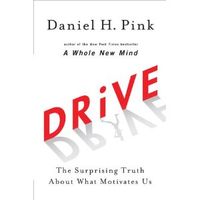
Drive For as long as big business has been around, management has operated under a simple principle: if you want people to do more of something, pay them more. Hence, bankers earn bonuses for posting big gains. Managers earn bonuses for meeting quarterly earnings targets (and get fired when they don’t). It’s worked reasonably well as the economy has trudged along over the past few decades.

But lately, people have begun questioning the efficacy of this approach. “In the first ten years of this century—a period of truly staggering underachievement in business, technology, and social progress—we’ve discovered that this sturdy, old operating system doesn’t work nearly as well” as it could, Daniel Pink writes in his new book, Drive: The Surprising Truth About What Motivates Us. Why? The carrot-and-stick approach was created for an economy of assembly lines and mindless number-crunching. But these days, “for growing numbers of people, work is often creative, interesting, and self-directed rather than unrelentingly routine, boring, and other-directed,” says Pink, a former speechwriter for Al Gore whose previous book, A Whole New Mind, so captivated Oprah Winfrey that she gave copies to the entire 2008 graduating class at Stanford, where she delivered the commencement address.

An accumulating pile of academic research shows that rewards tend to focus the brain more narrowly on the specific task that earns the rewards—thus making it harder to encourage employees to develop creative, innovative solutions.

More here.

The Language of Life: DNA and the Revolution in Personalised Medicine

From The Guardian:

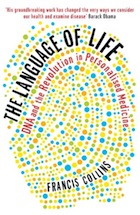
The-Language-of-Life-DNA-and Francis Collins was appointed director of the National Institutes of Health (equivalent of the Medical Research Council) by President Obama in August 2009. He is the Pete Seeger of molecular biology. When he has made a great discovery he writes a song about it. And the connection is not just a matter of uplifting songs: Collins is a geneticist, but his spiritual, emotional and political inheritance comes from Roosevelt's New Deal (his parents worked with Eleanor Roosevelt), folk music and God, just as much as from Darwin, Mendel and Crick.

The cover of The Language of Life carries Obama's endorsement: “His groundbreaking work has changed the very ways we consider our health and examine disease.” His is a brilliant appointment, albeit controversial among some scientists: Collins is the highest-profile scientist and public administrator who is also a proselytising Christian. His previous book, The Language of God, contains both the most concise exposition I have read on why evolution is demonstrable fact and a moving account of his religious conversion from early atheism to strong belief. This stance has brought him into conflict both with Richard Dawkins and with Christian groups in the US. But, as right-wing attacks on evolution and global warming science broaden into a generalised anti-science movement, Collins is an important figure – someone who can wrong-foot people who have polarised attitudes.

In his new book, he is here to tell us that the era of personalised genetic testing is nigh.

More here.

Saturday, March 20, 2010

Who Speaks for Human Rights?

AID.D. Guttenplan and Maria Margaronis in The Nation:

Its leaders may not wear white hats–or wings–but most people would put Amnesty International on the side of the angels. Decades of denunciations by dictators across the political spectrum have only increased the organization's prestige. Yet in recent weeks a new wave of criticism has portrayed Amnesty as “a threat to human rights,” whose “leadership is suffering from a kind of moral bankruptcy.” And this time the attack, which may affect not only Amnesty's reputation but also its funding, originates inside Amnesty itself.

Gita Sahgal is the head of Amnesty's gender unit and has a long and distinguished track record as a fighter for women's rights here in Britain and in South Asia. In February she gave an interview to the Sunday Times objecting to Amnesty's collaboration with Moazzam Begg, a former Guantánamo prisoner who has been touring Europe on behalf of Amnesty's campaign to persuade other countries to admit inmates from the detention center in Cuba. “To be appearing on platforms with Britain's most famous supporter of the Taliban, whom we treat as a human rights defender, is a gross error of judgment,” Sahgal said. Claiming she had gone public only after her bosses brushed aside repeated attempts to raise the issue internally, Sahgal, who was immediately suspended by Amnesty, soon became an international cause célèbre. Salman Rushdie issued a statement in her support; so did feminist groups and bloggers in Algeria, Bangladesh, India, Sri Lanka and the United States. Christopher Hitchens wrote a column (a reprise, with variations, of a 2005 piece branding Amnesty's advocacy for Guantánamo detainees a “disgraceful performance”) urging Amnesty supporters to “withdraw funding until Begg is cut loose.”

Sahgal's case was also taken up with relish by Britain's self-styled “decent left” of journalists and commentators, whose superior moral compasses led them to support the invasion of Iraq–unlike Sahgal, who opposed it. The controversy offered a convenient distraction from February's headlines revealing that officials of MI5, the British security service, were complicit in the CIA's torture of Binyam Mohamed, a British resident detained in Guantánamo from 2004 to 2009. On March 8 the British government went to court to argue that a civil suit by Begg, Mohamed and other former Guantánamo detainees seeking damages for their mistreatment should be heard entirely behind closed doors. For Moazzam Begg, Sahgal's accusations add insult to injury, branding as dangerous a man who was never charged with any crime, and undermining his efforts on behalf of his fellow prisoners.

“Misunderstanding Darwin”: An Exchange

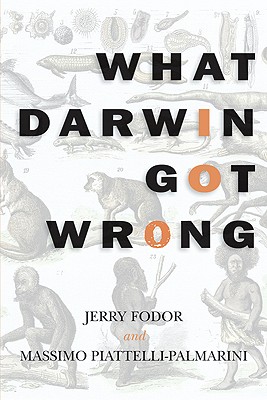
FodorJerry Fodor and Massimo Piattelli-Palmarini's exchange with Read Ned Block and Philip Kitcher,in the wake of Block and Kitcher's review of What Darwin Got Wrong, in the Boston Review:

When we were writing our book, it occurred to us that there was a kind of misinterpretation of which a very incautious reader might be guilty, and which we ought to do our very best to block. We did do our very best; but to no avail. Ned Block and Philip Kitcher make precisely the mistake that we’d dreaded. Worse, they then proceed to commit several other misreadings, the possibility of which, we admit, had not occurred to us. We’ll now do our very best to correct their mistakes, but time and space are pressing, and the opportunities for misinterpretation are, it appears, boundless.

First misreading: Block and Kitcher think we argue, erroneously, that “with respect to correlated traits in organisms—traits that come packaged together—there is no fact of the matter about which of the correlated traits causes increased reproductive success.” They then speculate that we are making “the very ambitious claim that whenever there are correlated traits there is no fact of the matter about which of the traits causes any effect.”

But, of course, we don’t believe, still less endorse, either of these theses. In fact, we think both are preposterous. We therefore spent our whole seventh chapter discussing a number of ways in which the causal roles of confounded variables can be, and routinely are, successfully distinguished. There are many such, the most obvious of which is perhaps John Stuart Mill’s “method of differences.” In effect, you run an experiment in which one but not the other of the correlated variables is suppressed. If you still get the effect, then it must be the variable you didn’t suppress that’s doing the causing. (If you think it’s maybe the ice rather than the alcohol that makes you tipsy, try taking one or other out, drink what’s left, and see what happens). People, scientists very definitely included, do this sort of experiment all the time. And often it works fine; we report lots of cases in our book. All this is familiar from Philosophy 101; do Block and Kitcher really believe that, old and case-hardened as we are, we could have failed to notice this?

us, liars

Pinnochio

A new biography of the Polish war correspondent Ryszard Kapuscinski alleges that he frequently forged details, invented images and claimed to have witnessed events that he didn’t, in fact, witness. Gerald Posner resigned from the Daily Beast after admitting that he had lifted sentences from a Miami Herald editorial, a Miami Herald blog, Texas Lawyer magazine and a health journalism blog; Posner blamed the “warp speed of the net” and his “master electronic files system.” The publisher of Charles Pellegrino’s new book, “The Last Train to Hiroshima,” withdrew it from publication following allegations that Pellegrino had created characters and extensively used a source whose status as witness to the bombing of Hiroshima was fabricated. A review of John D’Agata’s “About a Mountain” criticized him for compressing the timeline of some of the events in the book — which he acknowledges doing in the afterword.

more from David Shields at the LAT here.

practice, practice, practice

Paul-t_CA0-articleInline

Shenk’s “ambitious goal,” he tells us, is to take this widely dispersed research and “distill it all into a new lingua franca, adopting helpful new phrases and metaphors” to replace old and misleading ones. Forget about genes as unchanging “blueprints” and talent as a “gift,” all tied up in a bow. “We cannot allow ourselves to think that way anymore,” he declares with some fervor. Instead, Shenk proposes, imagine the genome as a giant control board, with thousands of switches and knobs that turn genes off and on or tune them up and down. And think of talent not as a thing, but as a process; not as something we have, but as something we do. It’s ambitious indeed to try to overthrow in one go the conventional ideas and images that have accumulated since 1874, when Francis Galton first set the words “nature” and “nurture” against each other. Yet Shenk convinces the reader that such a coup is necessary, and he gets it well under way. He tells engaging stories, lucidly explains complex research and offers fresh insights into the nature of exceptional performance: noting, for example, that profound achievements are often driven by petty jealousies and resentments, or pointing out the surprising fact that great talent seems to cluster geographically and temporally, undermining the assumption that it’s all due to individual genetic endowments.

more from Annie Murphy Paul at the NYT here.

Saturday Poem

In Defence of Adultery

We don't fall in love: it rises through us
the way that certain music does –
whether a symphony or ballad –
and it is sepia-colored,
like split tea that inches up
the tiny tube-like gaps inside
a cube of sugar lying in a cup.
Yes, love's like that: just when we least
needed or expected it
a part of us dips into it
by chance or mishap and it seeps
through our capillaries, it clings
inside the chambers of the heart.
We're victims, we say: mere vessels,
drinking the vanilla scent
of this one's skin, the lustre
of another's eyes so skilfully
darkened with bistre. And whatever
damage might result we're not
to blame for it: love is an autocrat
and won't be disobeyed.
Sometime we manage
to convince ourselves of that.

by Julia Corpus

from In Defence of Adultery
publisher: Bloodaxe, Newcastle, 2003

Health Reform 3.0: What’s in the bill’s final draft?

Timothy Noah in Slate:

Rosie%20and%20HealthCare A friend of mine wrote the original script for a Hollywood movie I prefer not to name. The script was full of wonderful stuff, but the director gave it to another writer who crapped it up. So far, a familiar story. What happened next, though, was a little unusual. The director recognized the error of his ways—not completely enough to return to the original version, but enough to get my friend to put some of his wonderful stuff back in. The movie, although no masterpiece, ended up being a huge hit.

This is more or less the pattern health care reform has followed. The House passed a bill full of wonderful stuff, the Senate crapped it up (mainly by tossing out the public option), and now the House, with a strong assist from the Obama White House, has restored some of the House's wonderful stuff (though not, alas, the public option, whose inclusion in this round would doom the bill—not necessarily in the Senate, ironically enough, but in the House, where the Democratic leadership is still short a half-dozen or so votes). What we're left with falls short of what health care reform could have been—it's no masterpiece—but it's better than it almost was, and it lays a workable and long-overdue foundation for health policy in the United States that, I predict, will eventually win support even from the Republican Party. In spite of the dark threats we've been hearing. (Fred Barnes: “The Health Care Wars Are Only Beginning.” Booga-booga!) Assuming the damn thing passes.

More here. If you support passage of health care reform (as you should!), now is the time to write or call your representative in congress.

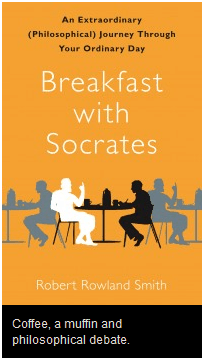
Breakfast With Socrates

Curtis Silver in Wired:

ScreenHunter_02 Mar. 20 12.35 Every day we follow a routine filled generally filled with the same day to day activities. Some of our routines vary from week to week and every once in a while we mix in other similarly mundane but less frequent activities. We have a passive acceptance of the behavior and mental state associated with these tasks, taking for granted the psychological possibilities that exist within each routine activity. From waking up, driving to work to going to lunch, on vacation or having sexual relations there are deeper meanings for our particular function in each of these seemingly mundane routine behaviors. It’s these deeper meanings that Breakfast with Socrates: An Extraordinary (Philosophical) Journey Through Your Ordinary Day seeks to explore and explain.

Author and former Oxford Philosophy Fellow Robert Rowland Smith takes the reader into a worm hole of psychology, sociology and theology when explaining these aforementioned every day activities. With help from some artists, philosophers, poets and some of the other great minds throughout history, Smith sets out to show us the hidden meanings in our daily lives.

For example, in reading Breakfast one of the most stunning revelations was how deeply rooted in psychology a simple act of taking your parents out to lunch actually is.

More here.