STUFF

From The Washington Post:

Stuff I had to make a few formal apologies after I read this book. To a dear friend who, on a business trip to New York, rummaged through her carry-on bag and pulled out a 36-inch-long Japanese cucumber. “I brought this along for us just in case,” she said. And to my sainted ex-husband, who some years ago came back from a beach run with a very large, dead fish. “We can have this for dinner,” he said. “I'm sure it died of natural causes.” And to a beloved relative who recently invited everyone over for Thanksgiving dinner. The floor was awash in newspapers, and the dining room table was stacked high with laundry, which we all had to fold before we could get to the business of the turkey. And finally, 200 pages into this amazing book, I remembered my first stepmother, who, in a quandary about what she called a “window treatment,” acquired about 17 couches from thrift shops to possibly go with that “treatment” and then stored them out in the back yard. Being a rebellious teenager at the time, I moved out, but the couches lay there moldering until the lady herself finally sickened and died.

I apologized to all these people, in words and in prayers, as well as to a dozen others I had unwittingly written off as eccentric, or very sloppy, or bad house keepers, or all three. They were (and are) simply compulsive hoarders. It's a medical condition, and it needs to be not just “forgiven” but understood.

More here.
Technique triggers rapid regrowth in damaged bone

From PhysOrg:

Brokenbonesg They stimulated the rapid bone growth by injecting a protein called Wnt known to be involved in the growth of many types of tissues in animals like salamanders, zebrafish and mice. The feat marks the first time that researchers have managed to package the Wnt protein in a form that could be used in humans, and opens the door to additional experiments to heal skin, muscle, brain and other tissue injuries.

“We believe our strategy has the therapeutic potential to accelerate and improve tissue healing in a variety of contexts,” said Jill Helms, DDS, PhD, professor of surgery. “There is an enormous amount of literature about the role of Wnt in tissue growth, but until now we’ve not been able to directly test whether Wnt proteins could aid regeneration in mammals.” It may also eventually provide a much needed alternative to currently available drugs based on bone morphogenetic proteins, or BMPs. BMPs have been approved for use in humans to speed bone growth in spinal fusions and long bone fractures, but they’ve become increasingly associated with a number of adverse side effects.

More here.

Debt: The first five thousand years

Throughout its 5000 year history, debt has always involved institutions – whether Mesopotamian sacred kingship, Mosaic jubilees, Sharia or Canon Law – that place controls on debt's potentially catastrophic social consequences. It is only in the current era that we have begun to see the creation of the first effective planetary administrative system largely in order to protect the interests of creditors.

David Graeber in Eurozine:

Business-debt119 What follows is a fragment of a much larger project of research on debt and debt money in human history. The first and overwhelming conclusion of this project is that in studying economic history, we tend to systematically ignore the role of violence, the absolutely central role of war and slavery in creating and shaping the basic institutions of what we now call “the economy”. What's more, origins matter. The violence may be invisible, but it remains inscribed in the very logic of our economic common sense, in the apparently self-evident nature of institutions that simply would never and could never exist outside of the monopoly of violence – but also, the systematic threat of violence – maintained by the contemporary state.

Let me start with the institution of slavery, whose role, I think, is key. In most times and places, slavery is seen as a consequence of war. Sometimes most slaves actually are war captives, sometimes they are not, but almost invariably, war is seen as the foundation and justification of the institution. If you surrender in war, what you surrender is your life; your conqueror has the right to kill you, and often will. If he chooses not to, you literally owe your life to him; a debt conceived as absolute, infinite, irredeemable. He can in principle extract anything he wants, and all debts – obligations – you may owe to others (your friends, family, former political allegiances), or that others owe you, are seen as being absolutely negated. Your debt to your owner is all that now exists.

This sort of logic has at least two very interesting consequences, though they might be said to pull in rather contrary directions.

More here. [Thanks to Kris Kotarski.]

Thursday, April 29, 2010

Past Forward

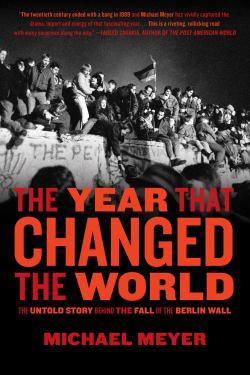
Year-that-changed-the-world-the-untold-story-behind-the-fall-of-the-berlin-wallPaul Hockenos in The Boston Review:

The end of the Cold War produced so much ostensible consensus—on democracy, on free-market economics, on liberal values—that one is struck by how little consensus there is, even twenty years later, on how and why the Cold War actually met that abrupt end.

The explanations for communism’s spectacular collapse fall into three basic camps. First, there are the conservatives, such as U.S. Republicans and European Christian Democrats, who champion Ronald Reagan and Pope John Paul II as communism’s noble slayers. It was their unstinting anti-communism, and Reagan’s full-throttle arms race, that undermined and bankrupted the Soviet bloc. Another camp, which includes historians Tony Judt and Timothy Garton Ash, credits above all the defiant, opposition-minded dissidents who challenged communist regimes in the name of human rights. It was they who initiated the nonviolent movements that swept their jailers onto the dust heap of history. And then there are the Gorbachev fans, who argue that the father of glasnost and perestroika was the prime mover of the transformative events of 1989 and 1990.

With the twentieth anniversary of the peaceful revolutions of 1989 just passed, a deluge of new books attempts to shed light on the forces that ultimately uprooted the East bloc’s dictatorships. While this may appear to Americans as an academic exercise, in Central Europe today, the competing narratives of “how” and “why” and “who” starkly delineate political fronts and still supply powerful election-time fodder.

In The Year That Changed the World, U.S. journalist Michael Meyer offers a somewhat new take on the spark that ignited communism’s implosion. Meyer, Newsweek’s Central Europe correspondent in the late ’80s and early ’90s, was on-the-spot at just about every twist and turn in this remarkable story: in East Berlin when the wall was breached, reporting from Bucharest as Romania’s dictator Nicolae Ceauseşcu was executed, at Prague’s Wenceslas Square when Vaclav Havel delivered his famous 1990 New Year’s address. Meyer’s literary flourishes are eloquent, and his vivid, gripping account of these events, and many others he witnessed first-hand, is a pleasure to read. Meyer has also kept up with the enormous outpouring of scholarship since then and conducted more on his own. This book is not a simple recounting of journalistic glories.

Yet the most novel—and problematic—aspect of Meyer’s book is his thesis that the real heroes of 1989 (Meyer’s “untold story”) were a handful of mild-mannered Hungarian communists.

american woman

E788ce06-4e86-11df-b48d-00144feab49a

For a long time people have been trying to define the American woman, mostly for the purpose of mocking, dismissing or putting her in her place. “There is no such thing as ‘the fast girl’ in America,” says one of Henry James’s Englishmen, meaning, of course, that all American girls are fast – and this is more or less the view of an ambitious new Costume Institute exhibition at the Metropolitan Museum of Art. The show, American Woman: Fashioning National Identity, roams over various fantasies of the emancipated American woman from 1890 to 1940, and there is a current issue of American Vogue on the same theme. The exhibit is pleasingly broken down into seductive, if random-seeming archetypes: the heiress, the Gibson girl, the suffragette, the patriot, the bohemian, the flapper and the screen siren, all exquisitely decked out, all involved in breaking rules, defying the old order. The American woman emerging from this lush panorama of satins, linens and silks, is jaunty, slim-hipped, athletic, informal, independent, and free. Her clothes are the canvas for her modernity, says Andrew Bolton, the show’s curator, who was also responsible for the Met’s 2008 show, Superheroes. And yet, does she really exist?

more from Katie Roiphe at FT here.

the guy who made fluffy DayGlo birds out of sequins while the revolution came and went

20_farhad_01

A few months ago, the artist Farhad Moshiri received a curious email. “Hello, Mr. Moshiri,” it read. “I wish that you would stop producing art.” A few weeks later, an article in a prominent online arts magazine derided a body of work he showed at the Frieze Art Fair as “toys for the anaesthetized new rich.” The author, a fellow artist and gallerist, declared the assembled pieces — a series of elaborately embroidered birds sparkling in DayGlo colors, titled Fluffy Friends — “an insult to all brave Iranians who have shed their blood for more freedom.” In a final scabrous blow — it was only a few months after the contested presidential elections of 2009 and all the bloodshed that ensued — the author wrote that the artist had “amputated his Iranian heart and replaced it with a cash register.” Moshiri, who lives and works in Tehran, was delighted. “I cherish these letters,” he told me. “They turn out to be like the diplomas people hang. I keep them close.”

more from Negar Azimi at Bidoun here.

Némirovsky

TLS_Raphael_712030a

Nathalie Sarraute’s novel Les Fruits d’or (1963) was a satire, largely in dialogue, about the reception of a novel, greeted as a masterpiece and then shredded to mereness by the literary judiciary. Irène Némirovsky’s Suite française was written in 1941 and 1942; but the manuscript was not discovered, and published, until 2006. Since then, it has gone through a belittling mill similar to that of Sarraute’s fictional fiction. Hailed at first as a posthumous chef-d’oeuvre inconnu, it was talked down into a sort of documentary which did not – as prim critics so often say – “work” as a novel. It works fine, however, as a reminder of how, in May 1940, sauve qui peut became the French order of the day. Recollected in nothing like tranquillity in the early years of the Occupation, Suite française was composed by an author in increasing danger of deportation to – as her smart erstwhile friends pretended to believe – “work in the East”; in fact, to Auschwitz. While living in suspended animation in rural Issy-l’Évêque, in Saône-et-Loire, Némirovsky had time to recall, with implacable objectivity, the disintegration of Parisian society in flight from the advancing “Boches”. Fearful for her family, she drew with a steady hand a warty profile of the France which had become – in a phrase which Picasso applied to modern art – “a sum of destructions”.

more from Frederic Raphael at the TLS here.

Derek Walcott, Man of Many Voices

Karl Kirchwey in the New York Times Book Review:

Kirchwey-t_CA0-articleInline More than almost any other contemporary poet, Derek Walcott might seem to be fulfilling T. S. Eliot’s program for poetry. He has distinguished himself in all of what Eliot described as the “three voices of poetry”: the lyric, the narrative or epic, and the dramatic. Since at least his 1984 book “Midsummer,” Walcott has been publishing what might be described as concatenated lyrics, individual poems numbered consecutively and intended to form a conceptual whole. His long 1990 poem “Omeros” would be called canonical were that word not so problematic these days. And, like Eliot, Walcott is also a playwright. Through his long connection with the Trinidad Theater Workshop, he has amassed an impressive body of dramatic works, both in prose and in that tricky form called verse drama.

But the kinship with Eliot, for Walcott, extends beyond genre. In his essay “Tradition and the Individual Talent” (1919), Eliot opined that “the more perfect the artist, the more completely separate in him will be the man who suffers and the mind which creates.” Walcott has deliberately avoided the confessional path pioneered by his early friend and supporter Robert Lowell, choosing instead a post-Romantic voice, closely allied with landscape, in which the particulars of a life are incidental to a larger poetic vision, one in which the self is not the overt subject.

All the more striking, then, is Walcott’s new book, “White Egrets” — for it is both visionary, in the best sense of that word, and intensely personal, even autobiographical. It is an old man’s book, craving one more day of light and warmth; and it is a book of stoic reckoning.

More here.

The new new Nano reminds me of the old Volkswagen

Our own Morgan Meis in The Smart Set:

ScreenHunter_01 Apr. 29 12.28 The Nano, made by Indian car manufacturer Tata, is billed as “the people's car.” We've seen this sort of thing before. The first time was in Europe — Germany to be precise. The car was the Volkswagen, which means, quite literally, “The People's Car.” It was Hitler's idea, more or less. He wanted to build a car for the common man. “A car for the people, an affordable Volkswagen, would bring great joy to the masses and the problems of building such a car must be faced with courage,” he proclaimed at the 1934 Berlin Auto Show. It would be of simple design and able to carry two adults and three children at a speed of 100 kilometers per hour. Hitler asked Dr. Ferdinand Porsche to take up the job and he did. Hitler and Porsche started up a little company called Gesellschaft zur Vorbereitung des Deutschen Volkswagens mbH (Society for the Preparation of the German People's Car Co. Ltd.) Thus, Volkswagen was born, and you can still buy one today, though it no longer functions as a cheap and basic car affordable to all.

The VW was the result of mass production techniques from the age of the masses, the early 20th century. Really, it isn't so surprising that the Third Reich would be involved in the development of such a car. The whole idea of the VW was that centralized modes of production could provide the general population with cheap goods. And this was essentially the relationship between industry, the state, and the populace imagined by National Socialism. The people provide their “people-like goodness,” and the state provides for those people, who then provide more people for the state, which then supports the people in being the pure and good people that they are, and so on for 3,000 years at least. Nobody was more committed to the idea of “the people,” properly defined, than the Nazis. In the modern mass society of the 1930s as the Nazi state envisioned it, one of the things “the people” needed to do was to get around (attending, no doubt, mass rallies where they would better learn how to be “the people”). They needed to do so relatively cheaply.

The problem, from a design perspective, was how to make a car for next to nothing.

More here.

“Wisdom: From Philosophy to Neuroscience”

From Salon:

Book Is there such a thing as wisdom — a thing, stuff, an abstract entity — or are there only wise individuals and wise actions and attitudes, these latter not exclusively the possession of the individuals in question given that even fools can sometimes be wise?

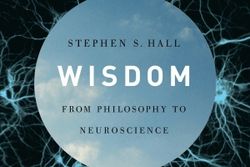
This question is a significant one, because it bears on the enterprise of “wisdom studies,” a parallel endeavour to the “happiness studies” now big in the neuropsychologically informed social sciences. (And there too the question has to be: Is there such a thing as happiness, or only happy individuals and happy times and experiences, the latter not the exclusive property of the individuals in question, given that even the gloomiest of us can occasionally be happy?) If you aim to study wisdom, or happiness, presumably in the hope of finding out how we can all be wiser and happier, you had better be clear about the object of study; and, as Stephen S. Hall's “Wisdom: From Philosophy to Neuroscience” shows, that is hard to do.

More here.

Water Ice Found on the Surface of an Asteroid

From Scientific American:

Asteroid-24-themis_1 An asteroid circling the sun between the orbits of Mars and Jupiter has for the first time been shown to harbor water ice and organic compounds. Those traits had been associated with comets, which spring from colder, more distant reservoirs in the outer solar system, but not their asteroidal cousins. The finding supports the notion that asteroids could have provided early Earth with water for its oceans as well as some of the prebiotic compounds that allowed life to develop.

Two teams of researchers report complementary observations of the 200-kilometer-wide asteroid, known as 24 Themis, in the April 29 issue of Nature. (Scientific American is part of Nature Publishing Group.) Both analyses are based on spectroscopic observations from the NASA Infrared Telescope Facility atop Mauna Kea in Hawaii, which show absorption features that indicate the presence of water and unidentified organic compounds. The ice appears to coat the entire asteroid as a thin layer of frost. The evidence for water on 24 Themis had been presented at conferences by the two groups in 2008 and 2009 but is only now appearing in a peer-reviewed journal.

More here.

Wednesday, April 28, 2010

Gillo Pontecorvo’s “Kapo”

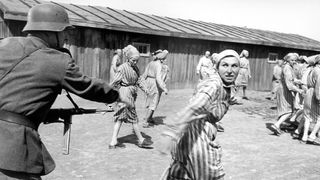
Current_655_014Sean Axmaker over at his blog:

In an age where Holocaust dramas and fictional recreations of the concentration camp experience are perhaps too plentiful—how could a mere movie come close to communicating the inhumanity of such an event, even in microcosm?—Gillo Pontecorvo’s 1959 Kapò (Criterion: Essential Art House) is something of a revelation. It’s not the earliest concentration camp drama, though they were rare in the era (Alain Resnais’ discreet, poetic and haunting nonfiction meditation Night and Fog was only a few years earlier), but it is the earliest I’ve seen. Was the history still a fresh wound that needed time to, if not heal, at least scar over before gingerly exploring the tender area? Or was the horror just too great to even comprehend?

Gillo Pontecorvo, an Italian Jew with a commitment to tackling politically volatile issues head on, took the challenge with this harrowing drama of a teenage Parisian Jew (American actress Susan Strasberg) who is literally swept up off the streets and sent to Auschwitz within minutes of the opening. Pontecorvo doesn’t give us time to settle into the situation and it’s only as when we see SS uniforms on the street that we notice the yellow star on her coat. Edith is just a kid, a fourteen-year-old girl who hasn’t the self-preservation to run when she watches her parents herded into a truck outside her building. Even when separated in the camp, all she can think to do is look for her parents and look for a way out, a futile gesture that ultimately save her life. While the rest of the youngsters wait patiently, unaware that they are marked for the gas chambers, she sees the reality of the camp where prisoners are stacked in bunks and the bodies of the dead are stacked like cordwood everywhere else. She’s ushered out of the cold by a mercenary survivor (an uncharacteristically generous gesture on her part, but perhaps there’s a jab of maternal protectiveness in her) and into the office of the camp doctor, who takes her coat (with the Star of David brand of death) and gives her the identity of recently deceased thief. “You’re lucky,” he says. “If no one had died tonight, I wouldn’t be able to help you.” That’s what counts for luck here.

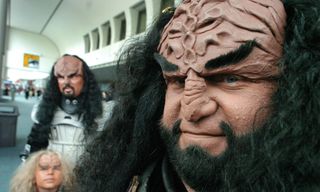
How do you say “realpolitik” in Klingon?

51112493 Stephen Hawking suggests that if aliens do exist there are good reasons to avoid contact. “If aliens ever visit us, I think the outcome would be much as when Christopher Columbus first landed in America, which didn’t turn out very well for the Native Americans.” Dan Drezner considers the question:

Hmmm… this is undeniably true, but dare I say that Hawking is being a bit simplistic? Oh, hell, who am I kidding, I'm a blogger. Of course I'll say that Hawking is being simplistic.

Critics might accuse me of being soft in the Theoretical War Against Aliens, embracing the mushy-headed liberalism of Contact over the hard-headed realpolitik of, say, Independence Day. And the risk-averse approach suggested by Hawking is certainly a viable policy option. But let's dig a bit deeper and consider four five thought-provoking questions from an interplanetary security perspective.

1) In space, does anybody understand the security dilemma? In international relations, there is at least full information about who the other actors are and where they are located. Clearly, we lack this kind of information about the known universe.

What Hawking is suggesting, however, is that efforts to collect such information would in and of themselves be dangerous, because they would announce our presence to others. He might be right. But shoiuldn't that risk be weighed against the cost of possessing a less robust early warning system? Isn't it in Earth's interests to enhance its intelligence-gathering activities?

2) Carried to its logical extreme, isn't Hawking making an argument for rapidly exhausting our natural resources? If Hawking is correct, then the sooner we run out of whatever might be valuable to aliens, the less interest we are to them. Of course, this does beg the question of which resources aliens would consider to be valuable. If aliens crave either sea water or bulls**t, then the human race as we know it is seriously screwed.

Stephen Walt on the issue here.

the posthuman debate

Facts_about_leonardo_da_vinci-300x225

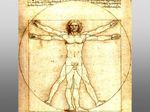
The posthuman worldview goes a step beyond demoting human begins in the hierarchy of value. It promotes other species, proposing that animals are more rational than we knew. We are forced to ask: If rationality is not our Imago Dei, what is? Will you say next that we don’t have souls? Well, unfortunately, yes. Not only does Wolfe say we need to move beyond anthropocentrism (thinking that humans are the center of the universe) and speciesism (prejudice based on our species – differences from “nonhuman animals”); his entire theory is anti-ontological, and also assumes we all gave up metaphysics a long time ago. It is thoroughly materialistic, the heir to a long line of thought that traces itself back through cybernetics and systems theory to Lacan, Foucault, and Derrida, then to Darwin, and thence to the most anti-religious minds of the Enlightenment. Although it resists reduction and terse definition, one major premise of Wolfe’s book is that the nature of thought must change (xvi): human beings are, in his construction, thinking themselves out of existence. One possible Christian reaction to posthumanism, then, might be vigorous and total rejection. We are certainly not about to think ourselves out of existence, nor out of our Lord’s care and regard. Nor are we about to share our place in the plan of salvation with spotted newts and thorny hedgehogs.

more from Sørina Higgins at Curator Magazine here.

At the age of seventy, he remains a bit of a badass

100503_r19582_p233-1

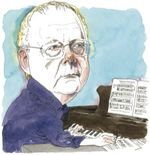
In November, 1969, a group of radical young Dutch musicians ran amok at the Concertgebouw, the fabled Amsterdam concert hall. At the start of a performance by the Concertgebouw Orchestra, the troublemakers, who included the composers Louis Andriessen and Reinbert de Leeuw, began making noise with nutcrackers, rattles, bicycle horns, and other devices. They also distributed leaflets denouncing the orchestra as a “status symbol of the ruling élite.” The Netherlands being both a tradition-minded and a tolerant land, the Nutcracker Action, as it was called, elicited an ambivalent response: the provocateurs were summarily ejected from the hall, but their ideas prompted much serious discussion. Forty years on, the Nutcrackers have become eminences: Andriessen is the most influential of Dutch composers, and de Leeuw, who has focussed on conducting, has held posts from Tanglewood to Sydney. Yet they haven’t quite sold out. Although Andriessen occupies the Richard and Barbara Debs Composer’s Chair at Carnegie Hall—the kind of big-money post that his younger self might have mocked—Carnegie’s recent survey of Andriessen’s work and that of his colleagues and protégés, de Leeuw among them, has revealed an undiminished capacity for making mischief. The composer still resists Romantic trappings, favoring what he has called a “terrifying twenty-first-century orchestra” of electric guitar, keyboards and Hammond organ, saxophones, bongos, and other non-Wagnerian instruments. He likes amplified, pop-style voices better than pure-toned, vibrato-heavy ones. His pantheon of idols has Bach and Stravinsky at the center, but also makes room for Count Basie, Charlie Parker, and the Motown greats.

more from Alex Ross at The New Yorker here.

Train 2000

You are the train that leaves at zero hour
of the new year.
Again the same compartments, illuminated,
like smoke in the vast night.

The same passengers —masks on their faces,
loved, dear ones.
And vigorously clasped in the hand,
traveling glasses.

You are the train that will pour
burning wine on the skin,
so that it will blaze
madly.

So that among pillows and shelves,
slander and deception,
intrusive flocks of night romances
will come flying.

…You are the train, the murderer and the target,
the weakness of time;
the two thousandth railway abhorrence
of an old God.

But even in the pre-cancer fog,
in the foam of a stroke—
the soul, as if it was a candle on the table,
stands in a beam of light.

by Natalka Bilotserkivets
from
Allergy
publisher: Krytyka, Kyiv, 1999

The Patience Stone

From The Guardian:

Burqa-clad-Afghan-woman-w-001The freeing of women from Taliban rule became a belated war aim for US‑led troops in Afghanistan; this, despite western bolstering of the Taliban's precursors, the mujahideen, in their resistance to Soviet occupation during the cold war. The latest novel by writer and filmmaker Atiq Rahimi imagines what such liberation might entail, for both women and men. It also hints at how relations between the sexes in his country of birth have been deformed, not just by residual tradition, but by the political interventions of recent history. Women were off-stage in Earth and Ashes, Rahimi's powerful debut novella set after the Soviet invasion of 1979, which traced an almost mythic cycle of vengeance among generations of men. It was written in Dari (a form of Persian) in 1999, years after the author had fled the Soviet occupation to asylum in France. His film version won a prize at Cannes in 2004. The Patience Stone, awarded the prix Goncourt in 2008, is his first novel written in French. Like his previous novel, A Thousand Rooms of Dream and Fear, it adopts the viewpoint of women, for whom war can bring both suffering and a curious freedom.

Set “somewhere in Afghanistan or elsewhere” in the near-present, the action is confined to a room where a woman tends her comatose husband, shot weeks before in a trivial brawl over honour. War intrudes sporadically, with black-turbaned fighters and the acrid smoke of explosions, as she hides her patient from patrols and looters. Whereas Earth and Ashes revealed a clash between Soviet-trained workers and US-backed mujahideen, here the conflict has descended into meaningless fratricide, the woman's urban neighbourhood marked out as the next frontline between squabbling factions. As she tells her husband, his father “was proud of you when you were fighting for freedom . . . It was after freedom came that he started to hate you – you, and also your brothers, now that you were all fighting for nothing but power.” Though the couple have been married for 10 years – the first three while he was away fighting – only his enforced silence frees her to speak. “Your breath hangs on the telling of my secrets,” she says, savouring a reversal of power. “I can talk to you about anything, without being interrupted, or blamed!” The supine object of her dramatic monologue becomes her sang-e sabur, the patience stone of Persian lore to which “you confess everything in your heart, everything you don't dare tell anyone”. The magic stone “listens, absorbing all your words, all your secrets, until one fine day it explodes . . . And on that day you are set free from all your pain, all your suffering.”

Her unburdening grows into an outspoken riff on all that is wrong between the sexes, and the codes or prejudices that bar true intimacy. She has never understood “why, for you men, pride is so much linked to blood”, or the myriad hypocrisies of virginity and virility, virtue and honour, pure and impure blood. Singled out for scorn is the new-found religious zealotry, commanded by mullahs she considers cowardly and sanctimonious. The husband she now tends was wont to order her to cover up by shouting, “hide your meat”.

More here.