The Battle for Justice Heats Up

Charlotte Dennett in the Huffington Post:

Untitled The growing accountability movement got a major shot in the arm recently when it learned that on April 19, an Argentinian judge sentenced the last of Argentina's dictators, Reynaldo Bignone, age 83, to 25 years in prison. Bignone's crime: kidnapping and torturing 56 victims in a concentration camp during the reign of terror known as the “dirty war” that gripped Argentina from 1976-1983. This is huge, surpassing the arrest of Chilean dictator Augusto Pinochet in his hospital bed back in 1998. (Pinochet died before justice could be done). The conviction of a former head of state for crimes he committed while in office sends a powerful message to all those suspected war criminals still on the loose, including some of the top leaders of the Bush administration.

George W. Bush, who lied our country into war resulting in the deaths of over 4,000 American troops, heads the list. He, former Vice President Dick Cheney and former Secretary of Defense Donald Rumsfeld also authorized waterboarding of prisoners seized in Afghanistan, violating U.S. and international law against torture in the process. Worse yet, they authorized torture, at least initially, not to get actionable intelligence, but to get forced confessions from detainees about nonexistent links to Al Qaeda, Saddam Hussein, and 9/11 in a horrific attempt to strengthen their nonexistent case for sending troops to Iraq. Evidence abounds that all three are guilty of murder and war crimes.

More here. Click on the ad for Charlotte Dennett's book in the right-hand column to buy it.

Saturday, May 8, 2010

The Shadow Biosphere

Caleb Scharf guest posting at Cosmic Variance:

Microbes In recent weeks one might be forgiven for thinking that a shadowy biosphere surrounds us, aliens are poised to dismantle civilization, and that time traveling species are flitting in and out of view like barflies on a Saturday night. It’s a little disconcerting, does the Kool Aid have something special in it this Spring?

Unfortunately I think that all of these headline grabbing items miss the real story of what life is, here on Earth and potentially further afield. The idea of ‘shadow biospheres’ or multiple origins of terrestrial life sounds intriguing, and certainly helps bring focus to the fact that we can be very blinkered in our outlook. It also steers attention away from a more interesting and demonstrably real point.

In the past couple of decades we have found a shadow biosphere, except that far from lurking in the cracks it turns out to be the biggest, most critical, biosphere on the planet. An astonishing 99.9% of life on Earth cannot be coerced to grow in a lab, and so we have overlooked it. Microbial life – single-celled bacteria and our ancient cousins the Archaea – is not just the stuff under your fingernails, it is what makes multi-cellular life like us function, and it helps govern the grand chemical cycles of our planet, from the continents to the oceans to the atmosphere. Such organisms have, over three to four billion years, evolved into an eye popping array of microscopic machines, the ultimate nano-bots. They can extract energy and raw materials from, it seems, almost any environment. A particularly good example is Desulforudis audaxviator – discovered 2.8 km down in a South African gold mine in a pocket of isolated water. Little audaxviator lives all alone when the vast majority of microbial life is utterly reliant on colonial symbiosis. It earns a living by mopping up the molecular detritus left after radioactive decay in the uranium rich rocks dissociates water and bicarbonates. That’s a very, very neat trick.

More here.

It was a dazzling piece of wartime espionage. But does it argue for or against spying?

Malcolm Gladwell in The New Yorker:

100510_r19603_p233 On April 30, 1943, a fisherman came across a badly decomposed corpse floating in the water off the coast of Huelva, in southwestern Spain. The body was of an adult male dressed in a trenchcoat, a uniform, and boots, with a black attaché case chained to his waist. His wallet identified him as Major William Martin, of the Royal Marines. The Spanish authorities called in the local British vice-consul, Francis Haselden, and in his presence opened the attaché case, revealing an official-looking military envelope. The Spaniards offered the case and its contents to Haselden. But Haselden declined, requesting that the handover go through formal channels—an odd decision, in retrospect, since, in the days that followed, British authorities in London sent a series of increasingly frantic messages to Spain asking the whereabouts of Major Martin’s briefcase.

It did not take long for word of the downed officer to make its way to German intelligence agents in the region. Spain was a neutral country, but much of its military was pro-German, and the Nazis found an officer in the Spanish general staff who was willing to help. A thin metal rod was inserted into the envelope; the documents were then wound around it and slid out through a gap, without disturbing the envelope’s seals. What the officer discovered was astounding. Major Martin was a courier, carrying a personal letter from Lieutenant General Archibald Nye, the vice-chief of the Imperial General Staff, in London, to General Harold Alexander, the senior British officer under Eisenhower in Tunisia. Nye’s letter spelled out what Allied intentions were in southern Europe. American and British forces planned to cross the Mediterranean from their positions in North Africa, and launch an attack on German-held Greece and Sardinia. Hitler transferred a Panzer division from France to the Peloponnese, in Greece, and the German military command sent an urgent message to the head of its forces in the region: “The measures to be taken in Sardinia and the Peloponnese have priority over any others.”

The Germans did not realize—until it was too late—that “William Martin” was a fiction. The man they took to be a high-level courier was a mentally ill vagrant who had eaten rat poison; his body had been liberated from a London morgue and dressed up in officer’s clothing. The letter was a fake, and the frantic messages between London and Madrid a carefully choreographed act. When a hundred and sixty thousand Allied troops invaded Sicily on July 10, 1943, it became clear that the Germans had fallen victim to one of the most remarkable deceptions in modern military history.

More here.

Faisal Shahzad’s anti-Americanism

Pervez Hoodbhoy in Dawn:

Capt_a6ad023d4907449d8147e488f754452a-a6ad023d4907449d8147e488f754452a-0 As anti-US lava spews from the fiery volcanoes of Pakistan’s private television channels and newspapers, a collective psychosis grips the country’s youth. Murderous intent follows with the conviction that the US is responsible for all ills, both in Pakistan and the world of Islam.

Faisal Shahzad, with designer sunglasses and an MBA degree from the University of Bridgeport, acquired that murderous intent. Living his formative years in Pakistan, he typifies the young Pakistani who grew up in the shadow of Ziaul Haq’s hate-based education curriculum. The son of a retired air vice-marshal, life was easy as was getting US citizenship subsequently. But at some point the toxic schooling and media tutoring must have kicked in.

There was guilt as he saw pictures of Gaza’s dead children and related them to US support for Israel. Internet browsing or, perhaps, the local mosque steered him towards the idea of an Islamic caliphate. This solution to the world’s problems would require, of course, the US to be destroyed. Hence Shahzad’s self-confessed trip to Waziristan.

Ideas considered extreme a decade ago are now mainstream. A private survey carried out by a European embassy based in Islamabad found that only four per cent of Pakistanis polled speak well of America; 96 per cent against.

More here.

rebecca west reviews The Barbarians (from 1915)

West

Yesterday I went into a bookshop in one of those streets which, though only a mile or so from the heart of London, have kept themselves inviolate from London. It has such dignified enjoyment of its own spaciousness that it might be the high street of a county town, or at least a part of London in the eighties. The shops are small and restrained, the pavements give hospitality to violet-sellers and their dispersed wares, the ladies walk, slow and unruffled and lovely like the ladies in Whistler’s pictures, the white stucco houses shine clean and their linden trees are dustless. Yet the first thing I saw in the bookshop of this delicate-spirited suburb was a pile of thick red books which I knew to be, at the first sight of their binding, Mrs. Constance Garnett’s translations of Dostoevsky’s novels. And as I turned over the pages of “The Brothers Karamazov” and looked on that wonderful story that works like a yeast, that struggles like a live thing to be born, it struck me that it is really art which governs the world. It was plainly due to the book in my hand that the Germans are floundering in the mud of Flanders instead of stealing our spoons in the interests of the Pan-Germanic ideal. That England, with her habit of judging other nations by their political institutions, should be the ally of Russia is almost a miracle. It is only to be explained by the fact that wherever people who write and think gather together, Russian literature is loved and praised.

more from TNR here.

laura bush, a decent lady

53665960

One of Laura Bush’s best qualities as a memoirist — and she is a particularly fine, lyrical one — is her ability to speak the language of feelings without recourse to cant or contemporary psychobabble. Partly, that may reflect her deep — and deeply appreciated — roots in the hardscrabble West Texas oil country where she grew up. Partly, it probably reflects her deep reading and obvious appreciation of great literature, something that surfaces here again and again, though always unselfconsciously. She was, after all, the bookish only child of a doting father and bookish mother, and would go on to become a teacher of inner-city children and, later, a librarian trained at the University of Texas’ great school of that so painfully underappreciated vocation. The former first lady has written two actual memoirs in this book. The first, more compelling of the two concerns her girlhood in Midland, Texas, and her life up until her husband decided to run for president, a decision she signed onto with some reluctance. (She clearly would have preferred an earlier retreat to the ranch she so loves in Crawford.) The first section is rich in elegantly recounted detail; the second has a somewhat flat and, often, detached tone — except in a few crucial instances. Even so, the account of her eight tumultuous years in the White House is singularly free of the mean-spiritedness and payback that has become a routine feature of contemporary political memoirs.

more from Tim Rutten at the LAT here.

hitle ….. i mean ….. heidegger

09kirsch-articleInline

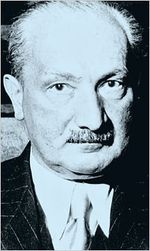
It may seem surprising that so many books continue to be written debating Martin Heidegger’s Nazi affiliations, since the fact that Heidegger was a Nazi has never been in dispute. How could it be, when the great philosopher took office as rector of Freiburg University in April 1933 specifically in order to carry out the Gleichschaltung, or “bringing into line,” of the school with Hitler’s new party-state? Didn’t he tell the student body, in a speech that November, that “the Führer and he alone is the present and future German reality and its law”? After the war, didn’t he go out of his way to minimize Nazi crimes, even describing the Holocaust, in one notorious essay, as just another manifestation of modern technology, like mechanized agriculture? Yet by the time of his 80th birthday, in 1969, Heidegger had largely succeeded in detaching his work and reputation from his Nazism. The seal was set on his absolution by Hannah Arendt, in a birthday address broadcast on West German radio. Heideg­ger’s Nazism, she explained, was an “escapade,” a mistake, which happened only because the thinker naïvely “succumbed to the temptation . . . to ‘intervene’ in the world of human affairs.” The moral to be drawn from the Heidegger case was that “the thinking ‘I’ is entirely different from the self of consciousness,” so that Heideg­ger’s thought cannot be contaminated by the actions of the mere man.

more from Adam Kirsch at the NYT here.

Saturday Poem

Waiting

There are no calls from the outside.
Miracles are the perversity of literature.
We should know that by now.
Only that these never revealed connections of things
lead us oddly on. Caesar's legions
enetering Greenland ice, the scout far in front
wanting to do battle where there are
no enemies,
never were any enemies.

by Jim Harrison

from Selected & New Poems;
Dell Publishing, 1982

A life in writing: Tariq Ali

From The Guardian:

Tariq-Ali In photographs and news footage of political demonstrations of the 1960s, Tariq Ali is unmistakeable: the thick black hair and thatchy moustache; the clenched fist and characteristic surge to the foreground amid a sea of fair faces. Almost immediately on coming down from Oxford in 1966, Ali began to agitate for a workers' uprising – not just in Britain but across the world. His book 1968 and After: Inside the Revolution (1978) stressed “the key importance of the working class as the only agency of social change”. His hero was Che Guevara. Meeting Malcolm X at an Oxford Union debate in 1964, he was pleased to discover that Malcolm was “a great admirer of Cuba and Vietnam”. Ali was Britain's own “other”, a role he took up with zeal and played with dash and style. He didn't get his revolution, but he did get a Rolling Stones anthem in his honour. Mick Jagger is said to have written “Street Fighting Man” for him. Ali returned the compliment by calling his autobiography Street Fighting Years.

Ali had a strong personal presence then, and he has it still. Now 66, he lives in a roomy neogothic house in Highgate, north London – friends have been heard to call it “Chateau Tariq” – with his partner of 35 years, Susan Watkins. She edits New Left Review, to which Ali has been a longstanding contributor. They have two children (Ali has another, with a former partner). In 1974, he ran for parliament as the International Marxist candidate, but the sloganeering public persona is tempered by an erudite domestic man.

More here.

Nietzsche: A Philosophy in Context

Francis Fukuyama in The New York Times:

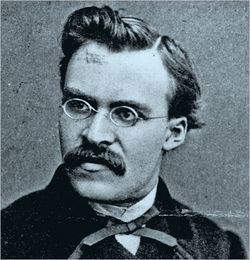
Fukuyama-t_CA0-popup Context is particularly important in Nie­tzsche’s case because his life story was so dramatic. The young Friedrich (or Fritz, as he was known) was, by all accounts, simply the most brilliant student any of his formidable professors had ever encountered, going all the way back to his boarding school days at Pforta. His teacher of classical philology at Leipzig, Friedrich Ritschl, said that in his 39 years of teaching he had “never known a young man who has matured so early.” Nie­tzsche was awarded a doctorate at age 24 and a professorship at the University of Basel the same year; he was promoted to full professor at 25 — a feat not even Larry Summers could duplicate.

From a very early age, however, ­Nie­tzsche was afflicted with a host of maladies, including blinding headaches that would last for days, problems with his digestion that would leave him vomiting and bedridden, and a progressive blindness that allowed him to read, painfully, for only a couple of hours a day. So debilitating did these symptoms become that he was forced to give up his professorship at age 34, after which he withdrew into a solitary and nomadic life, traveling between Switzerland and the South of France in search of a climate that would marginally ease his suffering. His great works were written in the few days of lucidity that were permitted him between long bouts of physical disability, “On the Genealogy of Morals” having been composed for the most part in a mere three weeks in 1887.

More here.

Friday, May 7, 2010

Save A Mother in Uttar Pradesh, India

UPDATE May 7, 2010: Last chance to give a little bit to this worthwhile charity! Please do. I did.

We at 3 Quarks are proud that our own Dr. Shiban Ganju does so much more than write brilliant essays for us. I will let 3QD friend Ruchira Paul explain what I am talking about, as she is directcly involved with Shiban's work. This is Ruchira in her own blog, Accidental Blogger:

The Indian or Indian American charities that I support are usually small, and their sponsors are often people that friends, family members or I myself know and admire. Recently I became involved with Save A Mother, a foundation that does most of its fundraising in the US to benefit rural outreach programs in India that promote, facilitate and raise awareness of maternal health care.

ScreenHunter_04 Apr. 27 11.35 The organization was founded and is spearheaded by Dr. Shiban Ganju, a gastroenterologist in Chicago. Dr. Ganju and I first became acquainted through my frequent comments on 3 Quarks Daily where he is a guest columnist. A few months ago he invited me to join Save A Mother as a volunteer. After a couple of meetings with Dr. Ganju and his sister Veena Kaul who heads the Houston chapter of the charity, during which they educated me about the structure and the operational methods of the foundation, I agreed. I am impressed by the ambitious objectives of the program and the simple solutions it offers for a problem which affects a vast number of poor women in India. Here they are in a nutshell:

India Development Service (IDS) Save-A-Mother project aims to minimize suffering and death associated with pregnancy and child birth. We have been working in partnership with local NGOs in the state of Uttar Pradesh, India, which has one of the highest maternal mortality rates in the world. Many other regions in India and rest of the world are in a similar situation where this program can be replicated.

Every day, over 160 women die in India from pregnancy and complications of child birth.

Save-A-Mother programs educate women about pregnancy, nutrition, immunization, delivery and care of the child. Save-A-Mother has a complementary benefit in saving the child also.

Our Objectives

1. Decrease maternal mortality by 50% in Sultanpur in 5 years. (Pilot Project)
2.
Replicate this model to two more districts in 2 more years and institutionalise the program.
3.
Replicate the program to vulnerable districts where mortality exceeds the national average.
4.
Partner with NGOs in other high MMR countries

More here. We have also placed the ChipIn widget below in the right-hand column to help raise funds for Shiban and Ruchira's organization (it is just below the BlogAds). Please give generously to this worthwhile charity if you can. Thank you.

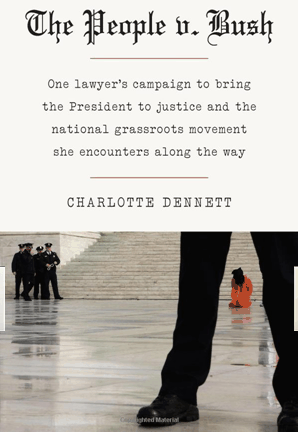
THE PEOPLE v. BUSH & Company

H. P. Albarelli Jr in News From the Underground:

ScreenHunter_02 May. 07 15.32 That small group of people in the United States attuned to the ever-evolving sounds and gyrations coming out of both Washington, D.C. and the country’s heartland are becoming keenly aware that something new is amidst the land of the free and brave. Of late, there is a new elemental sense at play across the country. Occasionally, through the billowing dust of social and economic turmoil and misery there is spotted a rough beast of sorts plodding across the landscape toward the general populace; a previously unseen harbinger of forthright principles and convictions strongly laced with courage and perseverance. Last week, master political observer and analyst Brent Budowsky remarked on the same when he wrote, “The battle in truth has only begun. On many of our great issues we stand with the center of America. Our numbers are huge, our potential is unlimited.” Budowsky is spot on.

With a little bit of luck, maybe, just maybe, a woman named Charlotte Dennett may end up riding the crest of the approaching wave of conviction that may push an old and new generation of fed-up Americans toward affecting real change across the nation. Who is Dennett? And what is her message in these times of mixed-messages and all around turmoil?

The best answers to these questions, and more, can de discovered in a new book intriguingly entitled, The People v. Bush. The book is the remarkable story, told in her own words, of attorney Charlotte Dennett’s fight to bring President George W. Bush to justice for his crimes while in office and the “national grassroots movement” she encountered along the way.

More here.

two carvers

Carver-Lish-150x150

Vladimir Nabokov referred to editors as “pompous avuncular brutes.” T.S. Eliot said that many of them were just “failed writers.” And Kingsley Amis, that laureate of cantankerousness, spoke of how the worst kind

prowls through your copy like an overzealous gardener with a pruning hook, on the watch for any phrase he senses you were rather pleased with, preferably one that also clinches your argument and if possible is essential to the general drift of the surrounding passage.

Raymond Carver, at least to begin with, was on altogether better terms with his editor, Gordon Lish, to whom he once wrote, “If I have any standing or reputation or credibility in the world, I owe it to you.” Elsewhere Carver acknowledged his debt to Lish by saying simply that his editor held an “irredeemable note.” This brief, eloquent tribute is paid in the essay “Fires,” which Carver wrote during a stay at Yaddo, the artist’s colony in upstate New York, in the summer of 1981. He had every reason to be feeling grateful. A few months earlier his second short-story collection, What We Talk About When We Talk About Love, had been published and was still being hailed and heralded by the literary world.

more from Giles Harvey at the NYRB here. My own thoughts on the Craver/Lish thing (Will You Please Stop Editing, Please?) here.

short on cubism

Artreview100510_370

It took the Metropolitan Museum of Art nearly 50 years to wake up to Pablo Picasso. It didn’t own one of his paintings until 1946, when Gertrude Stein bequeathed that indomitable quasi-Cubistic picture of herself—a portrait of the writer as a sumo Buddha—to the Met, principally because she disliked the Museum of Modern Art. Yet even this didn’t provide the Met a shot in its curatorial arm. (As late as the fifties, Met director Francis Henry Taylor was still calling MoMA “that whorehouse on 53rd Street.”) Only in 1979, after hiring the curator William S. Lieberman away from MoMA, did it start its long game of catch-up. Today, after relying on the kindness of donors and spending untold millions, the Met owns more of his work than any American museum except MoMA. “Picasso in the Metropolitan Museum of Art” includes 300 works—nearly all the Picassos it owns. Given the fitful way this collection was assembled, it’s not surprising that it provides an uneven view of the artist’s singular career. Certain bodies of work (notably the Blue- and Rose-period paintings; several fantastic works on paper from the early teens; a handful of stunning masterpieces from the thirties) are jaw-dropping. Other periods, like his Cubist years and the late decades of his life, are practically absent. Yet in its meandering way, the Met’s show keeps an important revisionist ball rolling. Along with two other stellar Picasso exhibitions currently running, it’s helping sweep away the ridiculous, pernicious conventional view that Picasso was mediocre before Cubism and washed up afterward—that after his one huge paradigm shift from about 1906 to 1914, he sputtered through a sad, 60-year end.

more from Jerry Saltz at New York Magazine here.

The dolphin as our beast of burden

D. Graham Burnett in Orion:

ScreenHunter_01 May. 07 14.58 Tursiops truncatus—a slate-gray, slick-skinned net thief, which coastal fishermen of the late nineteenth-century Atlantic sometimes called the “herring hog” in disgust—would, by the 1970s, leap in the vanguard of the Age of Aquarius, enjoying an improbable secular canonization as the superintelligent, ultrapeaceful, erotically uninhibited totem of the counterculture. And to this day, for many, the bottlenose—mainstay of aquatic ecotourism, beloved water-park performer, smiling incarnation of soulful holism—represents a cetacean version of our better selves. If, as Thoreau wrote a few years after the slaying of the Dart River dolphin, “animals . . . are all beasts of burden, in a sense, made to carry a portion of our thoughts,” then there are few creatures that have done more hauling for Homo sapiens in the twentieth century than Tursiops truncatus.

How? Why? Answering these questions demands a turn through the strange history of postwar American science and culture, and the unbraiding of a set of unlikely historical threads: Cold War brain science, military bioacoustics, Hollywood mythopoesis, and early LSD experimentation. Recovering our strange and changing preoccupations with the bottlenose dolphin across the twentieth century is, in the end, an adult swim.

More here. [Thanks to S. Asad Raza.]

the shudderer

Eliotts

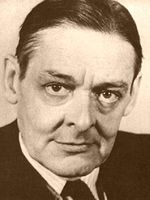
So Eliot was sensitive to certain manifestations of the uncanny, and to terrors that might well cause shuddering. We have now to ask a more difficult question: why did those lines of In Memoriam affect Eliot so exceptionally, move him to use ‘shudder’ as a laudatory critical term? Of course we may say that Victor Hugo had already done this when he told Baudelaire that in writing Les Fleurs du mal he was creating ‘un frisson nouveau’. And many of us remember the days when ‘the metaphysical shudder’ was a stock term in discussions of Donne and his contemporaries. But in the In Memoriam passage the shudder is not a metaphysical shudder. In what is as far as I know his only essay on Tennyson, Eliot certainly intends praise. His first sign of enthusiasm is for a line or a fragment of a line from ‘Mariana’, which, he thinks, offers something ‘wholly new’: ‘The blue fly sung in the pane.’ So far the youthful Tennyson has excelled as a metrist and indeed is credited with most of the attributes of greatness without quite deserving to be called ‘great’. Yet, Eliot says, this line or fragment ‘is enough to tell us that something important has happened’. Now the line has many clear merits, it conveys a recognisably melancholy, apprehensive mood of waiting; and it may conceivably be true to say, as Eliot does, that its effect depends finally on reading ‘sung’ for ‘sang’. The line belongs to a good poem, rightly praised as a whole; but there was still something distinctive about it: it got itself chosen. The only explanation offered is that ‘something important has happened.’

more from Frank Kermode at the LRB here.

Friday Poem

The Immigrants

They are allowed to inherit
the sidewalks involved as palmlines, bricks
exhuasted and soft, the deep
lawnsmells, orchards whorled
to the lands contours, the inflected weather

only to be told they are too poor
to keep it up, or someone
has noticed and wants to kill them; or the towns
pass laws which declare them obsolete.

I see them coming
up from the hold smelling of vomit,
infested, emaciated, their skins grey
with travel; as they step on shore

the old countries recede, become
perfect, thumbnail castles preserved
like gallstones in a glass bottle, the
towns dwindle upon the hillsides
in a light paperweight-clear.

They carry their carpetbags and trunks
with clothes, dishes, the family pictures;
they think they will make an order
like the old one, sow miniature orchards,
carve children and flocks out of wood

but always they are too poor, the sky
is flat, the green fruit shrivels
in the prairie sun, wood is for burning;
and if they go back, the towns

in time have crumbled, their tongues
stumble among awkward teeth, their ears
are filled with the sound of breaking glass.
I wish I could forget them
and so forget myself:

my mind is a wide pink map
across which move year after year
arrows and dotted lines, further and further,
people in railway cars

their heads stuck out of the windows
at stations, drinking milk or singing,
their features hidden with beards or shawls
day and night riding across an ocean of unknown
land to an unknown land.

by Margret Atwood
from Marget Atwood Selected Poems;
Simon and Shuster, 1976

Death Penalty: Shehzad should get same punishment as McVeigh

Moin Ansari in Dawn (Karachi):

Faisal The rapid arrest, prosecution, and detention of Mr. Faisal Shahzad and the way it was handled makes us all proud of America and its judicial system. The FBI did the right thing in reading Mr. Faisal Shahzad his legal rights. Mr. Shahzad is no different than Timothy McVeigh or Jeffery Dahmer. American society knows well how to deal with humans and with animals. The FBI did not resort to torture, yet it accomplished its goals–of preventing damage to life and property of Americans, and preventing the escape of “person” who has truly lost his right to call himself human.

Mr. Shahzad should have known that there is no discrimination, or war that justifies the killing of innocent human beings in Times Square. There is no excuse for parking a car laden with murder in the heart of New York. There is no calamity great enough to try to justify the plan to kill the hard working and the innocent in the commercial hub of America. No matter how bad the grievance, there is nothing that can ever justify anyone to take the law in his own hands.

Murder is murder.

There is no excuse for murder.

The Bible says “Thou shalt not kill”. The Quran says “the murder of one human being is like the murder of all humanity”. No religion on this planet allows a human being to target bombs and shrapnel at passersby. commuters, shopkeepers, strollers, women, children and simply people going about their business.

These people have not harmed anyone.

Mr. Shahzad you are not one of us–we are all human beings first–you have fallen below that category. We are all Americans, you sir do not qualify either as a human being, or an American. And for the love of God, you certainly do not qualify as a Muslim.

Don’t even try that—you are not my brother–and we want nothing to do with your credo. You have brought shame to your family, to your country of birth and to America–which was hospitable and generous to you.

More here.