Lewis Lapham in Lapham's Quarterly:

More here.

Lewis Lapham in Lapham's Quarterly:
More here.
As Nietzsche constantly reminds us, morality owes a great deal, including its own existence, to the fact that it is not obeyed. It can seem to achieve closure on its own absolute kind of value only because the space in which it operates has been created, historically, socially and psychologically, by kinds of impulse that it rejects.
—Bernard Williams

I take Moosa's argument to be quite simple. Human society depends vitally on procreation and on parenting. Without these, we literally have no future. Procreation is a given: children inevitably spring up all over the world for reasons that most of us understand quite well. Parenting involves the love and care of children. It does not necessarily involve the love and care of one's biological children. Given that countless needy orphans exist all over the world, a well-off person in the industrialized world is acting selfishly by having their own children. They ought to just adopt the less fortunate children.
Now, one might engage critically with this argument on several factual or practical fronts. Yet, what is most troubling about it is its uncritical acceptance of a certain form of ethical reasoning, one where our choices are evaluated from a “zoomed out” or objective perspective, one that ignores how and why individual people actually make these kinds of decisions. We see this ideology–that is what it is–at work in the idea that a child is an object into which love and care must be poured. Since young, unsocialized children are all morally interchangeable, there is no important difference between biological procreation and adoption. Potential parents are therefore morally obligated to choose the option which is better for the world in general: adoption.
From the current issue of Granta devoted to Pakistan:
Binyavanga Wainaina’s satirical piece from Granta 92, ‘How to Write About Africa’, is the most popular article on our website. When we were digitizing our archive, Binyavanga gave us permission to put his article up, but only on the condition that it remain free to read and not behind a paywall. ‘Always use the word “Africa” or “Darkness” or “Safari” in your title’, it begins – and goes on to send up every imaginable cliché of writing about Africa.
An equivalent for Pakistan seemed only appropriate for our current issue. Below, four contributors to the issue – Mohsin Hamid, Mohammed Hanif, Daniyal Mueenuddin and Kamila Shamsie – tell you, in case you’re thinking of starting out, How to Write About Pakistan.
This is one of the four bits:

When it comes to Pakistani writing, I would encourage us all to remember the brand. We are custodians of brand Pakistan. And beneficiaries. The brand slaps an extra zero onto our advances, if not more. Branding can be the difference between a novel about brown people and a best-selling novel about brown people. It is our duty to maintain and build that brand.
I know I don’t need to reiterate here what brand Pakistan stands for, but since my future income-stream is tied up with what you all do with it, I’m going to do so anyway. Brand Pakistan is a horror brand. It’s like the Friday the 13th series. Or if you’re into humor, like Scary Movie. Or Jaws, if nature-writing is your thing.
Anyway, the point is that people from all over the world have come to know and love brand Pakistan for its ability to scare the shit out of them. Whatever you write, please respect this legacy. We’re providing a service here. We’re a twenty-storey straight-down vertical-dropping roller coaster for the mind. Yes, love etcetera is permissible. But bear in mind that Pakistan is a market-leader. The Most Dangerous Place in the WorldTM.
It took a lot of writing to get us here, miles of fiction and non-fiction in blood-drenched black and white. Please don’t undo it. Or at least please don’t undo it until I’ve cashed in a couple more times. Apartments abroad are expensive.
More here.
Robert Paul Wolff in The Philosopher’s Stone:

The event was a daylong celebration of the 50th anniversary of an undergraduate interdisciplinary program at Harvard, Social Studies, of which I was the first Head Tutor in 1960-61. The program was stocked with eminent people — Adele Simmons, former president of Hampshire College and also of the MacArthur Foundation, Amy Gutman, president of the University of Pennsylvania, Michael Walzer, world-famous political theorist now at the Princeton Institute for Advanced Study, Seyla Benhabib, Professor of :Political Science and Philosophy at Yale, E. J. Dionne, the Washington Post columnist, and so forth. The program consisted of a morning panel, a lunch at which I was listed as “principal speaker,” an afternoon panel chaired by Walzer, and then a lecture by Amy Gutman, who was introduced by her opposite number, Drew Faust, president of Harvard. There was an evening reception that Susie and I skipped because it was too far for Susie to walk.
The entire event was accompanied by a very vocal protest by a large number of Harvard students carrying beautifully made signs on which were printed a selection of the ugly and appalling things Peretz has said and published over the years. A great video of the protest is already up on YouTube, and I encourage everyone to view it.
Readers of this blog know that I anguished a good deal about whether I should even attend the event. In the end, I decided to do so because the program was altered so that no announcement of the scholarship fund would be made at the lunch at which I was scheduled to speak. I learned on Sunday morning that there was a small dinner Friday evening at which the honoring of Peretz was done. I was not invited to it.
More here. You can see the YouTube video below, and read the Crimson article here.
God's Small Beings
1
Alef
Lam
…… Mim.
in the Order of the Prophet
an invisible singer of my faith
in the Order of Love
but with
only the caprice of a gulp and
this tiny hyacinth entwines my crystal body.
2
Man, sinks in the mirror
woman,
……………… grows up in the mirror.
3
Relation
a reverse beginning
on the way of lost voyagers of dreams.
4
Man,
……. a burnt stub
Woman,
……. her heart lost to
………………….. the powder compact.
5
When the grey curtain of the nights
from the verdant stature of panicles
……………………………………… fell
the Meteor of lust
……………………………………… was also
……………………………………………….. dead.
6
Without shoes
bare feet, his heart
……………………… man moved through life,
through sand,
………………… smoke
………………………….. and
………………………………… fog
meanwhile
………………… woman had already arrived.
by Robab Moheb
from ânâme kuchàke xodâ
publisher: Libris, Teheran, 1996
translation: 2008, Sam Vaseghi
Johann Hari in The Independent:

The story of Gideon Levy – and the attempt to deride, suppress or deny his words – is the story of Israel distilled. If he loses, Israel itself is lost.
I meet him in a hotel bar in Scotland, as part of his European tour to promote his new book, ‘The Punishment of Gaza’. The 57 year-old looks like an Eastern European intellectual on a day off – tall and broad and dressed in black, speaking accented English in a lyrical baritone. He seems so at home in the world of book festivals and black coffee that it is hard, at first, to picture him on the last occasion he was in Gaza – in November, 2006, before the Israeli government changed the law to stop him going.
He reported that day on a killing, another of the hundreds he has documented over the years. As twenty little children pulled up in their school bus at the Indira Gandhi kindergarten, their 20 year-old teacher, Najawa Khalif, waved to them – and an Israel shell hit her and she was blasted to pieces in front of them. He arrived a day later, to find the shaking children drawing pictures of the chunks of her corpse. The children were “astonished to see a Jew without weapons. All they had ever seen were soldiers and settlers.”
More here.
David Hirschman in Big Think:

“When you are asked to remember a certain experience that you had today in which you’re talking with person A, listening to the person’s voice, but you also are in a certain context, B, which is the context of a certain room in a certain building,” says Damasio, as an example. “You are going to have the separate recordings of the voice of the person, the sight of the person, the place—but those recordings are going to be reactivated only if another recording of the simultaneity of the event has been made in a convergence/divergence zone.”
More, including video, here.
Vivian Gornick in the Boston Review:
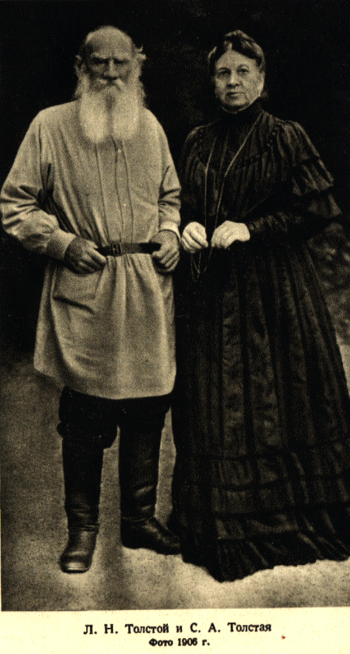
Sophia Andreyevna Behrs was the eighteen-year-old daughter of Andrey Behrs, a court doctor, and Lyubov Alexandrovna Behrs, a childhood classmate of Tolstoy’s. As full of intelligent high spirits as the Natasha of War and Peace, Sophia read, dreamed, larked about, loved music passionately, and fantasized conquering the world through marriage to a Great Man. Sonya (as she was known) could, in fact, have grown into a woman of sensibility and character had she ever had some real work to do. As it was, all she ever did have was the inherent sturm-und-drang of being married to Lev Nikolayevich. This would become not only her subject, but her organizing principle, her all-encompassing reality: the circumstance that nourished a richly talented arrest.
More here.
From PhysOrg:

Ms Molly Crockett of the Behavioural and Clinical Neuroscience Institute (a Medical Research Council and Wellcome Trust funded initiative) is the lead author of the paper. She said: “Our study suggests that these medications can affect people's sense of right and wrong, which influences the choices they make in everyday life. “Interestingly, the drug's effects were strongest in people who were naturally high in empathy, suggesting that serotonin could enhance people's concern for others by making the prospect of harming them feel worse.” Antidepressants, which include SSRIs like the one used in the study, are among the most widely prescribed drugs worldwide. In the United States and the UK, an estimated ten per cent of the population take antidepressants for a range of psychiatric and medical conditions.
More here.
From The New York Times:
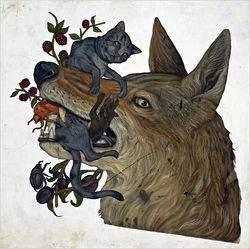
Yet as familiar as the coyote seems, these animals remain remarkably poorly understood. They have remained elusive despite fantastic ecological success that has been described as “a story of unparalleled range expansion,” as they have moved over the last century from the constrictions of their prairie haunts to colonize every habitat from wild to urban, from coast to coast. And they have retained their mystery even as interest has intensified with increasing coyote-human interactions — including incidents of coyotes dragging off small dogs and cats, and even (extremely rarely) attacks on people, from Los Angeles to the northern suburbs of New York City, where four children were attacked in separate incidents this summer.
More here.
Critics would likely seize upon the sight to observe that popular approval does not equal artistic quality, especially when the art in question is insufficiently socially aware. Certainly that’s the view of Washington Post art critic Blake Gopnik, who in reviewing the show derided Rockwell as the cowardly, “aw, shucks” epitome of Middle America. Rockwell “doesn’t challenge any of us, or himself, to think new thoughts or try new acts or look with fresh eyes,” wrote Gopnik. “From the docile realism of his style to the received ideas of his subjects, Rockwell reliably keeps us right in the middle of our comfort zone.” This perception of the artist’s work as soothing sentiment for the masses is nothing new, but “Telling Stories” proves it simplistic. The show, drawn from the collections of fellow storytellers George Lucas and Steven Spielberg, confirms that Rockwell had a deep understanding of America’s character and a masterly ability to convey it to canvas. True, his vision focused on our virtues, not our sins. But only in the self-loathing landscape of contemporary intellectual thought would that be cause for criticism.
more from Ryan L. Cole at City Journal here.
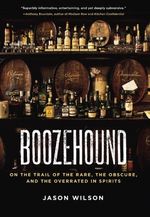
When it comes to flavor, I am drawn to the Old World. I like liquor with hard-to-define tastes: the bitter complexity of Italian amari, the ancient herbs of Chartreuse, the primal maltiness of Dutch genever. And I’m also drawn to the wilder, untamed parts of the New World: the agave bite of real tequila; the earthy, rustic edge to Brazilian cachaca; the strange, dry conundrum of Peruvian pisco. I don’t know why. I guess it’s the same reason I like stinky cheeses, funky wines, wild game and yeasty beers. I’m of a similar mind to A.J. Liebling, who wrote in his classic food memoir, “Between Meals”: “I like tastes that know their own minds.” Whatever it is, this impulse, this search for flavor is in response to the relatively bland tastes that defined my upbringing. There is much more going on in the glass when we sit down to drink a particularly profound spirit: a smoky 1928 rum from Fidel Castro’s cellar; a cognac that was bottled before the 19th-century phylloxera plague destroyed acres of Europe’s vineyards; one of the only vintage Calvados to have survived the German occupation of Normandy. And it’s about more than just being rare and obscure for the sake of being rare and obscure.
more from Jason Wilson at the Washington Post here.
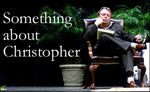
HAS THERE ever been anyone quite like Christopher Hitchens? As a writer and a thinker, Hitchens may be the greatest performance artist the profession has ever produced. He is Oscar Wilde without the plays; Gore Vidal without the novels; Edmund Wilson without the ideas; George Orwell without the integrity; and Richard Burton without the movies (and Elizabeth Taylor). What he is not, however, is the author of lasting works of reportage, criticism, philosophy, or, dare I say it, literature. Despite his myriad (and on occasion, damn-near miraculous) talents as literary critic, columnist, and long-form journalist, Hitchens’s genius undoubtedly lies in the art of the argument. “The world I live in is one where I have five quarrels a day, each with someone who really takes me on over something; and if I can’t get into an argument, I go looking for one, to make sure I trust my own arguments, to hone them,” he has explained, adding, “I would often rather have an argument or a quarrel than be bored, and because I hate to lose an argument, I am often willing to protract one for its own sake rather than concede even a small point.”
more from Eric Alterman at Dissent here.
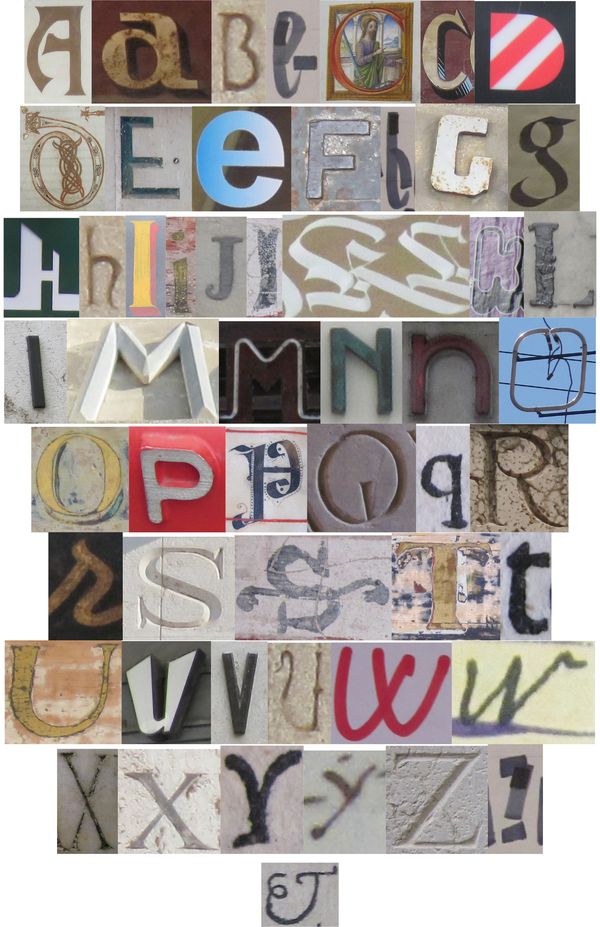
When life lacks character, you have to actively seek it out. For me, it usually returns in the form of characters themselves—letters, scrawlings, and texts of all sorts. This past summer I co-organized a brief, intense trip through northeastern Italy to look at a broad variety of lettering with a group called Legacy of Letters. I'm preparing a lengthier article on the experience, but with 3,000+ images and a lot of notes to sort through, it's taking its own time. Meanwhile, for those who've asked, those who know of the tour, and others who love letters, here's a small sampling of what we saw.
These snippets—robbed of their proper scale and context—can only convey so much. But alongside their morphology, the stories that accompany them speak volumes. In addition to examples by anonymous letterers, we saw work by Giambattista Bodoni, Francesco Griffo (whose Y is above), Aldus Manutius, Giovanni Mardersteig, Bob Noorda (D), Aldo Novarese, Carlo Scarpa, Bartolomeo Sanvito, and several others—including the contemporary calligrapher Luca Barcellona (K). Until the next installment, thanks for looking, and I'll return with more next month.
Previous Lunar Refractions can be read here.
Few players have ever glided across the field like Randy Moss. Moss is the wide receiver for the New England Patriots. I sometimes imagine him playing in slippers. He’s just gotten up from a long winter’s sleep. He is heading out in the snow to pick up the morning paper. And then, he drifts out on to the field of play, lifts up his long right arm, and into his fingers drops the oblong spherical object we call a football. He has scored a touchdown, and he hasn’t even spilled his coffee. He did that against the New York Jets. He slid down the field in his slippers and raised his arm to the heavens. In dropped the football. He didn’t even bother to use his other hand. All he needed was the gentle lift of his right arm. One or two fingers were enough. An absolute economy of motion. A beautiful thing. A beautiful thing. Like the hand of an angel. For a moment it did not bother me that the Patriots had pulled ahead 14 to 7.
more from me at The Owls here.
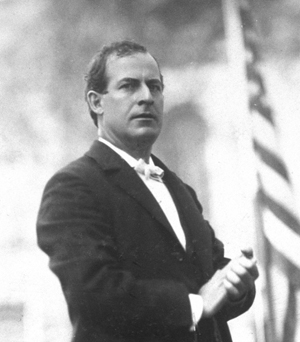
“Save America.” “Take the country back.” “Armed and dangerous.” “Lock and load.” Such are the slogans of the right-wing populist resurgence that began in 2008.
The new populism embraces members of the Tea Party, who object to what they see as confiscatory taxation, excessive government debt, and assaults on the right to bear arms; fans of Sarah Palin, who assails the Obama administration and the Democratic Party for being out of touch with what she defines as the lives and aspirations of ordinary Americans; and some Republican elected officials. They not only reject Obama administration policies, and political liberalism in general, but also cast their rejection in questing, confrontational language as an epic battle for the soul of American democracy, which they accuse liberalism of defiling.
In the face of this rejection, liberal voices in the press largely have failed to illuminate the new right-wing movement. Frank Rich, a columnist for The New York Times, applies epithets (“cowed” Republican politicians bowing before “nutcases”), makes airy dismissals (“the natterings of Mitch McConnell, John Boehner, Michael Steele”), and, using scary metaphors (the grass-roots right as “political virus,” “tsunami of anger,” even “the dark side”), warns of threats to civilization itself. The historian and critic Jill Lepore, in an otherwise thoughtful New Yorker article on a Tea Party rally in Boston, becomes uncharacteristically bemused when it comes to interviewing Tea Party members directly. Chip Berlet, asking his readers to view with compassion what he and others have called right-wing American populism, reveals an even deeper prejudice.