
Where should society draw the line on extreme wealth?

Lucas Chancel in Nature:

As radical as they might seem, calls for limits on wealth are as old as civilization itself. The Hebrew Bible and Torah recognized years during which debts should be cancelled, slaves set free and property redistributed from rich to poor. In classical Greece, Aristotle praised cities that kept wealth inequality in check to enhance political stability. And in 1942, then-US president Franklin D. Roosevelt argued that annual incomes should be capped at the current equivalent of US$480,000.

In Limitarianism, Dutch and Belgian economist and philosopher Ingrid Robeyns argues that it’s time for twenty-first-century governments to do the same. She explores what setting limits on wealth ownership might mean, and why our societies should want to do so. It is a fresh take on a much-needed discussion at a time when, for example, the richest 1% of the US population owns about as much wealth as the bottom 90%.

More here.

Jim Simons, Math Genius Who Conquered Wall Street, Dies at 86

Jonathan Kandell in the New York Times:

Mr. Simons equipped his colleagues with advanced computers to process torrents of data filtered through mathematical models, and turned the four investment funds in his new firm, Renaissance Technologies, into virtual money printing machines.

Medallion, the largest of these funds, earned more than $100 billion in trading profits in the 30 years following its inception in 1988. It generated an unheard-of 66 percent average annual return during that period.

That was a far better long-term performance than famed investors like Warren Buffett and George Soros achieved.

More here.  Also see this, “RIP to the man who beat the efficient market hypothesis” by Eric Hoel.

Tuesday Poem

Dominion

God separated the light from the darkness,
but I have a light switch.
Once there was morning and evening,
but now someone has torn the heart out of a mountain,
and they’re burning it for me.

God gave every green and growing thing,
every seed and every fruiting tree,
to all the beasts and birds for food,
but my desire sets the market price.
The patents are in my name.

If Noah had known what I know
about ventilated barns and gestation crates
he could have fit more than two of every animal in that ark.
He could have made them forget
they were animals at all.

I surveyed creation. I saw that it was profitable.
My ads fall from satellites like doves.
You’d be surprised what I can turn into a weapon.
You’d be surprised how many people
will wave my flag as they die.

God divided the light from the darkness,
but I have a light switch, a patent, a nation, a bomb,
I have mountains to burn and rivers to dye red and gray.
The old world has passed away. This is my new heaven and new earth.
Let all the people say “Amen.”

by Claire Hermann
from Split This Rock

Sunday, May 12, 2024

The kitsch we need

Morgan Meis in The Easel:

Ron Mueck, A Girl, 2006. Installation view from Ron Mueck’s solo show at the Fondation Cartier, Paris, 2023. Scottish National Gallery of Modern Art, Edinburgh. Purchased by Art Fund support, 2007. © Marc Domage

It’s a baby lying on the floor. The eyes and squishy forehead are particularly impressive. There’s a gooey-ness and rawness to the flesh that is particular to newborn babies. I happen to like knobby knees and this baby’s knees are nice and knobby. The new skin on baby knees looks  like it could also be old skin. It is startling, the way that tiny infants can resemble elderly people. There is a shared vulnerability to bodies just coming into the world and bodies soon to make their way back out again.

The sculpture, A Girl, is also quite large. Much larger than an adult human being. The scale is affecting, though it is hard to put one’s finger on exactly why. Maybe it’s that the giant size actually increases the viewer’s experience of fragility. Everything that makes a newborn baby new is magnified.

More here.

Illuminating ‘the ugly side of science’: fresh incentives for reporting negative results

Rachel Brazil in Nature:

Editor-in-chief Sarahanne Field describes herself and her team at the Journal of Trial & Error as wanting to highlight the “ugly side of science — the parts of the process that have gone wrong”.
She clarifies that the editorial board of the journal, which launched in 2020, isn’t interested in papers in which “you did a shitty study and you found nothing. We’re interested in stuff that was done methodologically soundly, but still yielded a result that was unexpected.” These types of result — which do not prove a hypothesis or could yield unexplained outcomes — often simply go unpublished, explains Field, who is also an open-science researcher at the University of Groningen in the Netherlands. Along with Stefan Gaillard, one of the journal’s founders, she hopes to change that.

Calls for researchers to publish failed studies are not new. The ‘file-drawer problem’ — the stacks of unpublished, negative results that most researchers accumulate — was first described in 1979 by psychologist Robert Rosenthal. He argued that this leads to publication bias in the scientific record: the gap of missing unsuccessful results leads to overemphasis on the positive results that do get published.

More here.

South Africa’s Enduring Unfreedom: An interview with S’bu Zikode, leader of the shack dwellers’ movement, 30 years after apartheid’s end

S’bu Zikode and Richard Pithouse in the Boston Review:

Richard Pithouse: Mandela was released from prison on February 11, 1990, suddenly opening up the field of political possibility after a long and exhausting stalemate between the progressive forces, which were largely organized in two groups: the United Democratic Front (UDF) and the trade unions, and the apartheid state. What did Mandela’s release mean to you?

S’bu Zikode: I was fourteen years old, and in school. At that time, we were divided. It was the time of the war between [the right-wing Zulu nationalist organization] Inkatha and the UDF. People could easily draw the line between the two sides along a river or a road. Everyone on one side was Inkatha; everyone on the other side was UDF. A lot of people were killed or had their homes burnt down just because they were living on this or that side of the line.

Some people had guns; we young people had sticks. If you turned back from a battle you would be shot. You had to face bullets from the front and the back. Terrible things happened, very painful things. We don’t talk about it.

More here.

Before Palmer Penmanship

Katrina Gulliver in JSTOR Daily:

In the years following American independence, many questions would be asked, in different spheres, of what it meant to be a citizen, and what it meant to be an American. New England schoolmaster John Jenkins focused on penmanship as the key to building a strong American middle class, creating his own book of instruction for handwriting.

“Writing in the shadow of the American Revolution, Jenkins recognized that subtle changes in everyday cultural practices like handwriting could have significant effects on the character of the new nation,” explains historian Richard S. Christen.

Literacy on both sides of the Atlantic had increased during the sixteenth and seventeenth centuries, but a fine hand tended to be the mark of the well born and well educated.

More here.

From Gilgamesh to Kurzweil: Mankind’s Quest for Immortality

Roy Datanielson in Medium:

Longevity and eternal youth have frequently been sought after down through the ages, and efforts to keep from dying and fight off age have a long and interesting history.
“Six days and seven nights I mourned over him, and I would not allow him to be buried until a maggot fell out of his nose. I was terrified. I began to fear death, and so roam the wilderness.”
-Gilgamesh

Written in Stone
History is the story of humanity’s quest for immortality. And anyone who examine it closely enough in a serious attempt to find the cultural roots and philosophical antecedents of modern immortalism, shall discover that mankind’s seemingly endless quest to conquer death has been expressed several times down through the ages. In fact, the earliest attested record of a mortal man’s pursuit of immortality can actually be found in what is considered to be the first great work of literature ever made: ‘The Epic of Gilgamesh’, an Akkadian poem about Gilgamesh, or Bilgamesh, a Sumerian king who reigned in the ancient Mesopotamian city of Uruk, somewhere between 2800 and 2500 BC. The epic most likely existed in oral form long before it was written down on stone tablets around 2200 BC, and the main character of the story, Gilgamesh, is widely considered by scholars to be the historical 5th king of Uruk.

More here.

Sunday Poem

Rune

The word in the bread feeds me,
The word in the moon leads me,
The word in the seed breeds me,
The word in the child needs me,

The word in the sand builds me,
The word in the fruit fills me,
The word in the body mills me,
The word in the war kills me,

The word in the man takes me,
The word in the storm shakes me,
The word in the work makes me,
The word in the woman rakes me,
The word in the word wakes me.

by Muriel Rukeyser
from Strong Measures
Harper Collins, 1986

Saturday, May 11, 2024

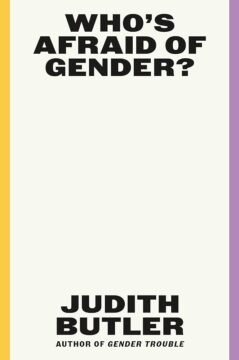
Who’s Afraid of Judith Butler?

Parul Sehgal at The New Yorker:

Butler is soft-spoken and gallant, often sheathed in a trim black blazer or a leather jacket, but, given the slightest encouragement, they turn goofy and sly, almost gratefully. When they were twelve years old, they identified two plausible professional paths: philosopher or clown. In ordinary life, Butler incorporates both.
Butler apologized for the mess in their car, an old BMW, when we went for a drive one day—this amounted to a few books by the phenomenologist Maurice Merleau-Ponty, strewn around the back seat. Butler’s marginalia in those books are in a precise, hunched hand. Merleau-Ponty propounded the idea that the body, not consciousness, is our primary instrument for understanding the world. To be in a body is not to be contained but to be exposed to the world; from our first breath, we are in need of care from other people. Merleau-Ponty is a deep influence; one can feel him tumbling around in the back seat of much of Butler’s thinking. “I am open to a world that acts on me in ways that cannot be fully predicted or controlled in advance, and something about my openness is not, strictly speaking, under my control,” they have said.

more here.

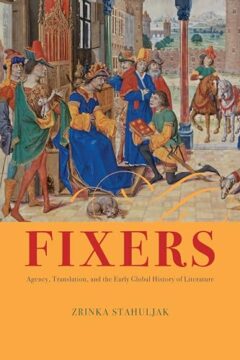
The Early Global History of Literature

Marion Turner at the LRB:

Scholars of medieval literature and history have been thinking about the idea of the ‘global Middle Ages’ for twenty years or more. Books such as Janet Abu-Lughod’s Before European Hegemony: The World System AD 1250-1350 (1989) laid the groundwork that has been built on by scholars such as Geraldine Heng and Susan Noakes, who set up the Scholarly Community on the Global Middle Ages (its website features projects ranging from ‘Global Jerusalem’ to ‘East Africa between Asia and Mediterranean Europe’ to ‘The Story of Global Ivory in the Premodern Era’). There are problems with the concept, of course: Nora Berend has argued that the term ‘Middle Ages’ is Eurocentric, and that ‘global’ is anachronistic when applied to the period.

One of the structures that underpinned medieval European culture was multilingualism. Petrarch, Dante and Boccaccio all wrote in both Latin and Tuscan. In later medieval England, educated men were trilingual, fluent in French, Latin and English, and some knew more (Chaucer, for example, was proficient in Tuscan). At the Council of Constance, in 1417, the English cleric Thomas Polton reported that the English spoke five different native languages: English, Welsh, Irish, Gascon and Cornish.

more here.

The Winning Side

Thomas Meaney in Sidecar:

If the battle of Điện Biên Phủ – the Stalingrad of decolonization – were in need of a symbol, you could do worse than a bicycle. One saddled with pieces of Katyusha rocket artillery, en route to be reassembled on the rim of the highlands overlooking the valley where the army divisions of Võ Nguyên Giáp smashed the French imperial forces seventy years ago. To commemorate their victory, the Vietnamese state this week staged a full-scale re-enactment of the events, with thousands taking up the roles of peasant porters and army regulars who won the First Indochina War. Everything was in place except for actors to play the French, though if the invitation had gone out to veterans of the French New Wave, it’s hard to see them turning down the call. Jean-Pierre Léaud as Henri Navarre!

One of the central dramas of Điện Biên Phủ is that both sides wanted the showdown. The commander of the French, Navarre, was confident they could rout the Vietnamese army just as they had done at Nà Sản two years before. He wanted to shut off any Vietnamese incursion into Laos in the north, turning Điện Biên Phủ into an ‘entrenched camp’ populated by 12,000 French troops, while simultaneously dispatching 53 battalions to root out the Vietnamese forces in the southern river delta. His second in command, René Cogny, wanted to meet Giáp’s soldiers out in the open in the style of battles of the previous century: ‘I want a clash at Điện Biên Phủ. I’ll do everything possible to make him eat dirt and forget about wanting to try his hand at grand strategy.’ Giáp was happy to take up the gauntlet, telling his planners that ‘Điện Biên Phủ could be the battle’.

More here.

Behind the Ivy Intifada

Musa al-Gharbi in Compact Magazine:

To understand broad trends, it can often be helpful to dig into a particular case. With respect to the tumult over the encampments protesting the US-backed Israeli offensive in Gaza, it would be hard to find a more illuminating example than Columbia University. Here, we may observe students’ sincere concern for the least among us, on one hand, and their ambitious social climbing, on the other. Here, we can clearly recognize elite institutions’ deep commitment to sterile forms of activism—and we can readily see how identitarian and safetyist approaches to “social justice” are weaponized in the service of the status quo. At Columbia, we can most readily perceive the jarring dissonance between the spectacle of unrest over Gaza and the realities of the conflict that has been overshadowed by the spectacle.

But let’s start with some basic facts.

On April 17, Columbia’s president, Nemat “Minouche” Shafik, appeared before the US House of Representatives to testify about the prevalence and nature of anti-Semitism on campus. Eager to avoid the fate of her peers at Harvard and the University of Pennsylvania, Shafik kept her head down and assented to assertions that Columbia, and universities writ large, are awash in Jew-hatred, and that Columbia wasn’t doing enough to fight it. Over the course of the three-hour hearing, she paid comparatively little attention to pro-Palestine students who have faced assaultsdoxxing, and alleged harassment—including by professors—under her watch. She also didn’t voice any objection when the term “intifada” was equated with hate speech, despite knowing well—as a native Arabic speaker born in Egypt—that the term is used broadly for mass uprisings in many contexts; it’s how the Warsaw Uprising is described in Arabic.

More here.