
Michael O’Donnell at The Millions:
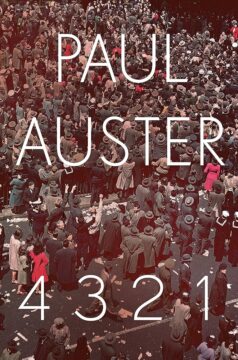 Auster spoke in a rolling purr that was equal parts seduction and lament. His voice sounded like cognac poured over stones instead of ice. In narrating 4321, he covered the whole range of human experience: birth, death, illness, sex, hope, failure, parents, children, revolution, and disillusion, all against the noisy backdrop of the midcentury American colossus. In an eerie parallel, one of the novel’s subplots deals with the student protests at Columbia University in 1968, which have been repeating themselves in a different context this spring. As a result of his constant presence, the topicality of his subject matter, I felt a keen pang of the false intimacy that sometimes strikes when celebrities die. I had listened to Auster speak for nearly the entire month of April. It is dreadful to know that his voice in all senses has been silenced. 4321 explores the life and times of a young man named Archie Ferguson born in 1947 to a Jewish family in Newark. The novel tells four diverging stories of a single individual in parallel chapters. The Archie described in chapters 1.1, 2.1, 3.1, and so on, is born into a stable family with loving parents who occupy traditional gender roles and harbor modest aspirations.
more here.
 Human spontaneity in Lawrence’s work—and indeed in his life as well—is not the simple, cheerful business that popular culture has often made it out to be. Think of those TV commercials in which an office worker suddenly does something unexpected, like dancing down the corridor of his office, to the comical dismay of his fellow workers. In Lawrence, spontaneity is dangerous and sometimes destructive, but it is necessary to being truly alive. The force of spontaneous love prompted Lawrence to run off with a married woman, Frieda Richthofen Weekley, and Frieda would regret leaving her three children for the rest of her life. Throughout their relationship, Lawrence and Frieda suffered continual eruptions of hostility that left them in pieces, but the marriage endured. It’s not uncommon to read in Lawrence’s biographies sentences like this: “The tension between Frieda and Lawrence abated after she struck him with an earthenware plate…” Lawrence would make creative use of this fight in Women and Love, when Hermione strikes Birkin with a paperweight, “almost breaking his neck, and shattering his heart.”
 John Guillory is an award-winning teacher and scholar. His varied and influential work includes Poetic Authority: Spenser, Milton, and Literary History (Columbia University Press, 1983) and the field-transforming Cultural Capital: The Problem of Literary Canon Formation (University of Chicago Press, 1993). His brilliant new book, Professing Criticism: Essays on the Organization of Literary Study, argues that modern literary study remains anxious about the century-old professionalism that betrays the discipline’s relation to its amateur precursor, criticism. He discusses it here with John Plotz of Brandeis and Public Book’s coeditor in chief, Nicholas Dames. Dames is author of such prize-winning books as Amnesiac Selves (Oxford University Press, 2001) and The Physiology of the Novel (Oxford University Press, 2007), and most recently The Chapter: A Segmented History from Antiquity to the Twenty-First Century (Princeton University Press, 2023).
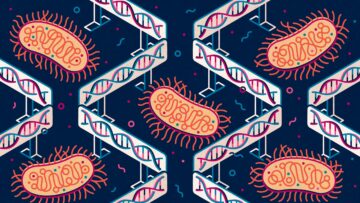 Every organism visible to the naked eye is a mass of genetically identical cells. Each of these multicellular creatures started as a single cell that divided countless times to produce its body. And while each cell contains the same genome, they express their DNA in a variety of ways, giving rise to specialized cells and tissues that perform different roles, such as skin, liver or immune cells. This complex multicellularity has evolved independently in at least five lineages: animals, land plants, brown algae, red algae and fungi.
 In his latest book,
 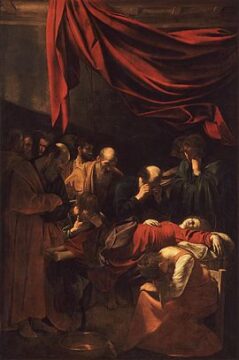 When the water-logged, bloated corpse of the drowned Maddalena Antognetti, a sex worker who used the name “Lena,” was dredged from Rome’s Tiber river in the summer of 1604, she was still beautiful. We know this because her sometimes-lover Michelangelo Merisi, who hustled under the name Caravaggio, used Lena’s dead body as a model in a masterpiece entitled “Death of the Virgin.”
  Traditionally, love is seen as a profound and enduring connection. Yet, as Lacan and Deleuze describe, love is also a mad compulsion where we throw ourselves repeatedly against the wall between self and other. Insofar as love is necessary, Sinan Richards writes, it lies in identifying and seeking this madness in each other, and embracing imperfection. While writing
  T
T Although the dictionary was not founded at the university, the OED might be described as the Oxford of dictionaries, so revered is it among reference works and books in general. It is the gold standard of academic English-language lexicography and a key tool behind many research projects into the history of English, including many other dictionaries. “It is as unthinkable that any contemporary lexicographer be without the OED,” wrote Sidney Landau in Dictionaries: The Art and Craft of Lexicography, first published in 1984, “as it is that a professional photographer fail to own a tripod to support his camera when needed.”
 Suddenly, everyone is talking about aliens. After decades on the cultural margins, the question of life in the Universe beyond Earth is having its day in the sun. The next big multibillion-dollar space telescope (the successor to the James Webb) will be tuned to search for signatures of alien life on alien planets and NASA has a robust, well-funded programme in astrobiology. Meanwhile, from breathless newspaper articles about unexplained navy pilot sightings to United States congressional testimony with wild claims of government programmes hiding crashed saucers, UFOs and UAPs (unidentified anomalous phenomena) seem to be making their own journey from the fringes.
 Chip Walter’s new book is titled “Immortality Inc.: Renegade Science, Silicon Valley Billions and the Quest to Live Forever.” It’s about the money, and the research, that’s seeking a way to extend human life indefinitely. Sounds like science fiction, but Walter thinks breakthroughs are just around the corner. “I think it’s going to begin to happen in the next five years,” said the Pittsburgh-based science writer in a recent interview.
 Stem-cell researcher Carolina Florian didn’t trust what she was seeing. Her elderly laboratory mice were starting to look younger. They were more sprightly and their coats were sleeker. Yet all she had done was to briefly treat them — many weeks earlier — with a drug that corrected the organization of proteins inside a type of stem cell. When technicians who were replicating her experiment in two other labs found the same thing, she started to feel more confident that the treatment was somehow rejuvenating the animals. In two papers, in 2020 and 2022, her team described how the approach extends the lifespan of mice and keeps them fit into old age