Amygdala at the centre of your social network

From Nature:

Amygdala-i1_0 How many friends do you have? A rough answer can be predicted by the size of a small, almond-shaped brain structure that is present in a wide range of vertebrates, scientists report today in Nature Neuroscience. The researchers studied the amygdala, which is involved in inter-personal functions such as interpreting emotional facial expressions, reacting to visual threats and trusting strangers. Inter-species comparisons in non-human primates have previously shown that amygdala volume is associated with troop size, suggesting that the brain region supports skills necessary for a complex social life1. On the basis of these past findings, psychologist Lisa Feldman Barrett of Northeastern University in Boston, Massachusetts, wondered whether a larger amygdala size allows some humans to build a richer social world.

Barrett's team measured the amygdala volume in 58 healthy adults using brain images gathered during magnetic resonance imaging sessions. To construct social networks, the researchers asked the volunteers how many people they kept in regular contact with, and how many groups those individuals belonged to. They found that participants who had bigger and more complex social networks had larger amygdala volumes. This effect did not depend on the age of the volunteers or their own perceived social support or life satisfaction, suggesting that happiness is not the underlying causal factor that links the size of this brain structure in an individual to their number of friends2.

More here.

Tuesday, December 28, 2010

Electrifying Language

Brian Hayes in American Scientist:

20109271632388125-2010-11BREVHayesFA Dennis Baron’s extended essay A Better Pencil looks back over the entire history of writing technologies (clay tablets, pens, pencils, typewriters), but the focus is on the recent transition to digital devices. His title implies a question. Is the computer really a better pencil? Will it lead to better writing? There is a faction that thinks otherwise:

These computerphobes are convinced that the machines will corrupt our writers, turn books into endangered species, and litter the landscape with self-publishing authors. In addition, computers will rot our brains, destroy family life, put an end to polite conversation, wreak havoc with the English language, invade our privacy, steal our identity, and expose us to predators waiting to pervert us or to sell us things that we don’t need.

Putting this bill of indictment in perspective, Baron points out that just about every other new writing instrument has also been seen as a threat to literacy and a corrupter of youth. The eraser had a particularly bad reputation, under the thesis that “if the technology makes error correction easy, students will make more errors.” I have to add that my own view of the computer as a writing instrument has always been that it’s not so much a better pencil as a better eraser, allowing me to fix my mistakes and change my mind incessantly, without ever rubbing a hole in the page. The first time I held down the delete key on an early IBM PC and watched whole sentences and paragraphs disappear, one character at a time, as if sucked through a straw—that was a vision of a better future for writers.

More here.

Why doesn’t the latest sunset fall on the longest day of the year?

If the summer solstice falls on the longest day, why doesn't it also coincide with the earliest sunrise and the latest sunset?

Rebecca Jenkins in ABC News [Australia]:

Summer In essence, it all comes down to how we measure time.

As a rule the sun isn't a very reliable time keeper, Watson points out, mainly because the Earth orbits the sun in an elliptical pattern, running faster when it is closest to the sun in January and slower when it is furthest away from the sun in July.

“It's slightly faster in [the Southern Hemisphere] summer than in our winter,” says Watson.

This quirk means that the length of a solar day — the time between two solar noons (when the sun is at the highest point in the sky) — is not always the 24 hours we measure on a clock. It's about 20 seconds longer in January and around 40 seconds shorter in July.

But while the solar day is getting longer during December and into January, the clock still only registers 24 hours. The difference between actual solar time and clock time changes by about 30 seconds every day, Watson explains. And that extra time effectively delays the following sunrise according to our clocks.

At the same time, the Earth's axial tilt means we are getting a few seconds more daylight every day in the Southern Hemisphere in the lead up to summer solstice, but this has a small effect on the sunset and sunrise times compared with the much larger difference between solar time and clock time.

The earliest sunrise occurs before the Earth hits its speedy orbit during December. And while the number of actual daylight hours starts getting shorter after the solstice, sunset is still delayed by the solar/clock time difference until the Earth's solar orbit starts slowing down again in January.

It is this effect that leads to the staggering of the earliest sunrise, the solstice and the latest sunset.

More here.

The Science and Stupidity of Homeopathy

Hartosh Bal Singh in Open:

7449_homeo A week ago, the front page of the country’s larg­est selling English newspaper, The Times of India, announced ‘IIT-B team shows how homeopathy works.’ The article then rather credulously went on to state, ‘Six months after the British Medical Association rubbished homeopathy as witch­craft with no scientific basis, IIT scientists have said the sweet white pills work on the principle of nanotechnology.’ This was a news report that obviously made it past the best procedure for vetting that exists in the newspaper; after all, it appeared on the front page. And if so, it is a reflection of the kind of material the media is willing to swallow and regurgitate without verification.

The newspaper quotes from a paper by a graduate student from IIT-B chemical engineering department ‘published in the latest issue of Homeopathy, a peer-reviewed journal from reput­ed medical publishing firm Elsevier’, titled ‘Extreme homeo­pathic dilutions retain starting materials: A nanoparticulate perspective’. The paper is available online and it claims that even at extreme dilution some nanoparticles of the original starting materials are found in the solution.

But consider what the newspaper has said, and compare what the IIT-B researchers claim in their paper, ‘We have found that the concentrations reach a plateau at the 6c potency and beyond. Further, we have shown that despite large differences in the degree of dilution from 6c to 200c (1012 to 10400), there were no major differences in the nature of the particles (shape and size) of the starting material and their absolute concentra­tions (in pg/ml).’ In other words, their claimed results show that across the range of ‘potencies’ (the more dilute a homeo­pathic medicine the stronger it is supposed to be) of homeo­pathic medicine the concentration of nanoparticles is the same. If so, relatively ‘weak’ homeopathic medicines should have the same effect as more ‘strong’ medicine. This actually invalidates the whole idea of homeopathy.

More here.

Julian Assange’s short-sighted book deal

From The Economist:

ScreenHunter_04 Dec. 29 12.16 The big news of the day is Julian Assange's book deal. The Wikileaks founder has secured more than $1m in advances for his autobiography from Alfred A. Knopf, a New York publisher, and Canongate based in Britain. A manuscript is expected sometime next year. “I don't want to write this book, but I have to,” Mr Assange told the Sunday Times. “I have already spent £200,000 for legal costs and I need to defend myself and to keep WikiLeaks afloat.” Struggling writers around the world are crying crocodile tears for this man. Woe is he and his handsome advance.

The deal is impressive, but there are signs that Mr Assange's rush to shake hands with big publishers was penny-wise, pound-foolish. As it stands, the contract barely covers his existing legal costs, which he says are approaching £500,000. Knopf will surely do its best to rush the book into print, but its cut of final sales will be considerable. A typical contract would give Knopf electronic rights and Mr Assange 25% of net profits. As the towheaded Australian already has a cult following, it might've been savvier for him to self-publish an autobiography and sell it via Amazon, which offers authors 70% of net profits for e-books sold in America (though the book must be priced between $2.99 and $9.99); Barnes & Noble and Apple offer similar royalty rates.

More here.

Christopher Hitchens: my hero of 2010 —Richard Dawkins

Richard Dawkins in The Guardian:

ScreenHunter_03 Dec. 29 12.11 Eloquent, witty, literate, intelligent, knowledgeable, brave, erudite, hard-working, honest (who could forget his clean-through skewering of Mother Teresa's hypocrisy?), arguably the most formidable debater alive today yet at the same time the most gentlemanly, Christopher Hitchens is a giant of the mind and a model of courage. A lesser man would have seized the excuse of a mortal illness to duck responsibility and take it easy. Not this soldier. He will not go gentle into that good night; but instead of a futile raging against the dying of the light he rages, with redoubled energy (and concentrated power in his vibrant, Richard Burton tones) against the same obscurantist, vicious or just plain silly targets as have long engaged him. But he never rants. His is a controlled, disciplined rage, and don't get on the wrong side of it.

Like Bertrand Russell, Hitch “would scorn to shiver with terror at the thought of annihilation”. He laughs off the spiritual vultures eager for a death-bed conversion, and dismisses – but with unfailingly gracious courtesy – the many schadenfreudian prayers for his recovery. As Daniel Dennett said, in similar circumstances, “And did you also sacrifice a goat?”

More here.

a writ of majestic, even equitable, sweep

Perkinson_ftr

On a lazy afternoon in February 1961, Wilbert Rideau decided to rob a bank in Lake Charles, Louisiana. Rideau, a smart but impulsive eighth-grade dropout from a violent home, had counted on making a quick, clean getaway, just like the ones he’d seen in the movies, but his plans unraveled during the heist when a phone call to the bank revealed that the police were closing in. Rideau took three hostages, commandeered a car and, as darkness fell, got lost on the back roads outside town. At a bayou crossing the passengers bolted, and Rideau opened fire. Two survived and vanished into the night, but the third, a teller named Julia Ferguson, was wounded by the gunfire and then stabbed to death by Rideau with a hunting knife. A 19-year-old black man had killed a white woman. In no time, Rideau was under arrest. Outside the jail, a mob formed. “Hang that nigger,” a voice called out. But the officers held their man, confident that justice would be swift and severe. “It was a good little town back then,” a deputy sheriff later explained to a reporter. “Ever’body did their job. The prosecutors, the law enforcement…. You didn’t have to worry about lynching because they lynched ’em for you.” The trial, as Rideau recalls in his gripping memoir In the Place of Justice, was “merely a formality,” played out by white attorneys before a white judge and an all-white jury. “I was the only black in sight, a fly in a bowl of milk,” he writes. The place was Calcasieu Parish, at the height of the backlash against the civil rights movement, when Louisiana lawmakers had voted to close down the state’s public schools rather than integrate them. Rideau was guilty of terrible crimes—armed robbery, kidnapping and homicide—but the district attorney stretched and suppressed evidence to prove premeditation, a necessary condition for a capital conviction.

more from Robert Perkinson at The Nation here.

The Hidden History of the Espionage Act

George-sylvester-viereck-1

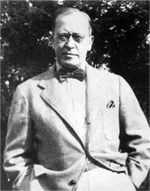
On July 24, 1915, the World War was raging in Europe and the belligerents were vying for the sympathy of the neutral United States. In Lower Manhattan, on a Sixth Avenue elevated train, Secret Service agents were tailing George Sylvester Viereck, a German propagandist and a mysterious companion of his—who was, unbeknown to the agents, Heinrich F. Albert, an attaché in the German Embassy. When Viereck got off at 23rd Street, one agent followed him; Albert continued on to 50th Street, where he suddenly looked up from his newspaper, noticed he had reached his stop, and hurried off the car, leaving behind a brown briefcase that the second agent promptly seized. A chase ensued, but the purloined bag ultimately made it to Treasury Secretary William McAdoo, who shared it with President Woodrow Wilson. The documents that Wilson and McAdoo beheld detailed a sweeping secret campaign, linked to high-ranking German officials, of espionage, sabotage, and propaganda. There were plans to take over American newspapers, bankroll films, send hired lecturers on the Chautauqua circuit, and create pseudo-indigenous movements to agitate on behalf of pro-German policies. More disturbing were schemes to provoke strikes in armaments factories; to corner the supply of liquid chlorine, an ingredient in poison gas, in order to keep it from Allied hands; even to acquire the Wright Brothers’ Aeroplane Company and use its patents on Germany’s behalf.

more from David Greenberg at Slate here.

The Adventures of an Accidental Prison Librarian

Escaperoute2__1293207938_3185-1

Every day, for the almost two years I worked as a staff librarian at the Suffolk County House of Correction at South Bay, the pattern was the same: Seconds after they were released from their units, inmates would not walk, they would run — as though catapulted — towards the prison’s library. Many inmates, especially those in a hurry, arrived with some specific order of business. They would grab a book of case law, or they’d check out a newspaper or magazine and take a seat at the library’s long table. They might disappear into the labyrinth of bookshelves. Many would line up to speak with me. They’d pose legal questions, talk about their families and health concerns, describe their spiritual and educational quests. Time and resources were short, and the needs were urgent. The library was a site of activity, of perpetual motion. In the public debate about our penal system, prison libraries tend to be a point of controversy. Some critics worry that tax money is misspent on coddling convicted felons. Some go further, and stoke public fear that prison libraries are giving violent convicts access to materials that will incite them. The concept of books in prison has been contentious since at least the 19th century, when prison chronicler Enoch Cobb Wines wrote that some government officials considered prison libraries to be “of doubtful influence.”

more from Avi Steinberg at the Boston Globe here.

In Pursuit of a Mind Map, Slice by Slice

From The New York Times:

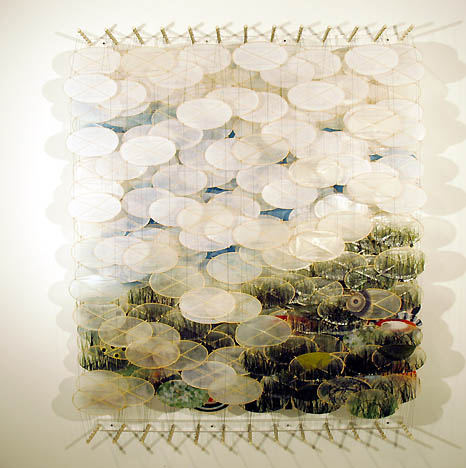
Brain Dr. Jeff Lichtman likes his brains sliced thin — very, very thin. Dr. Lichtman and his team of researchers at Harvard have built some unusual contraptions that carve off slivers of mouse brains as part of a quest to understand how the mind works. Their goal is to run slice after minuscule slice under a powerful electron microscope, develop detailed pictures of the brain’s complex wiring and then stitch the images back together. In short, they want to build a full map of the mind.

The field, at a very nascent stage, is called connectomics, and the neuroscientists pursuing it compare their work to early efforts in genetics. What they are doing, these scientists say, is akin to trying to crack the human genome — only this time around, they want to find how memories, personality traits and skills are stored.

They want to find a connectome, or the mental makeup of a person.

More here.

Denis Dutton, 9 February 1944 – 28 December 2010

ScreenHunter_01 Dec. 28 13.27 I am saddened to report that I just received an email from Sonia Dutton, Denis's daughter, informing me that her beloved father has died. Denis had been battling prostate cancer for some time. He was 66 years old. For those of you who are not familiar with Denis's work, I will simply quote from his Wikipedia entry:

Denis Dutton was an academic, web entrepreneur and libertarian media commentator/activist. He was a professor of philosophy at the University of Canterbury in Christchurch, New Zealand. He was also a co-founder and co-editor of the websites Arts & Letters Daily, ClimateDebateDaily.com and cybereditions.com.

Dutton was from Los Angeles, California and was educated at the University of California, Santa Barbara. He taught at several US universities before emigrating to New Zealand: the University of California, Santa Barbara and the University of Michigan–Dearborn. From 2008 to 2010 he was the acting head of the Philosophy school at Canterbury.

He was one of the founding members of New Zealand Skeptics.

Arts & Letters Daily, of which Denis was the founder and longtime editor, was one of the main inspirations for my starting 3 Quarks Daily. Indeed, the “Daily” in our own name comes in imitation of Denis's site, which had set the gold standard that we have aspired to match in our own curating of slightly different intellectual content on the web. Despite the fact that we were competitors of sorts, Denis was kind and supportive to me personally, and added 3QD to the “favorite websites” section of A & L Daily within weeks after I had started this site in 2004 (and we retain that honor to this day).

Over the years, Denis and I corresponded frequently about various subjects, including the Dutton School which he started in India (my mother started a school in Pakistan, so this was a common interest), his academic work, and, of course, our websites. He once called 3QD “a brilliant web resource and a terrific accomplishment,” which gave me quite a thrill. We often linked to his work and reviews of his work here at 3QD, and also engaged his work more directly, such as when my nephew Asad Raza wrote a critical review of his book The Art Instinct, and I defended Denis in the comments section. In his writing and thinking, Denis was inventively provocative, erudite, and always forward-looking. In addition to A & L Daily and the other similar websites which he started, I always enjoyed looking at his personal website which often contained great gems of reading material.

One of the many instantiations of his sharp sense of humor was the Bad Writing Contest that he started while editor of Philosophy and Literature, a journal put out by Johns Hopkins University Press since 1977. I quote Wikipedia again:

In 1998, the contest awarded first place to University of California-Berkeley Professor Judith Butler, for a sentence which appeared in the journal diacritics:

The move from a structuralist account in which capital is understood to structure social relations in relatively homologous ways to a view of hegemony in which power relations are subject to repetition, convergence, and rearticulation brought the question of temporality into the thinking of structure, and marked a shift from a form of Althusserian theory that takes structural totalities as theoretical objects to one in which the insights into the contingent possibility of structure inaugurate a renewed conception of hegemony as bound up with the contingent sites and strategies of the rearticulation of power.

Dutton said, “To ask what this means is to miss the point. This sentence beats readers into submission and instructs them that they are in the presence of a great and deep mind. Actual communication has nothing to do with it.” Butler challenged the charges of academic pedantry and obscurantism in the pages of the New York Times and the affair briefly became a cause célèbre in the world of academic theorists.

Denis also clearly understood that to run a successful website devoted to curating intellectual content on the web, one must first marry a woman named Margit. That he understood this and acted upon it before I did gave him a headstart and left me trying to catch up! (In other words, by sheer coincidence, we both married women with the not-exactly-common name Margit.)

On behalf of everyone at 3 Quarks Daily I extend my deepest sympathies to Margit, Sonia, and Ben.


Monday, December 27, 2010

Sunday, December 26, 2010

Cuban medics in Haiti put the world to shame

Castro's doctors and nurses are the backbone of the fight against cholera.

Nina Lakhani in The Independent:

Haiti_523319t They are the real heroes of the Haitian earthquake disaster, the human catastrophe on America's doorstep which Barack Obama pledged a monumental US humanitarian mission to alleviate. Except these heroes are from America's arch-enemy Cuba, whose doctors and nurses have put US efforts to shame.

A medical brigade of 1,200 Cubans is operating all over earthquake-torn and cholera-infected Haiti, as part of Fidel Castro's international medical mission which has won the socialist state many friends, but little international recognition.

Observers of the Haiti earthquake could be forgiven for thinking international aid agencies were alone in tackling the devastation that killed 250,000 people and left nearly 1.5 million homeless. In fact, Cuban healthcare workers have been in Haiti since 1998, so when the earthquake struck the 350-strong team jumped into action. And amid the fanfare and publicity surrounding the arrival of help from the US and the UK, hundreds more Cuban doctors, nurses and therapists arrived with barely a mention. Most countries were gone within two months, again leaving the Cubans and Médecins Sans Frontières as the principal healthcare providers for the impoverished Caribbean island.

More here.

Sunday Poem

“The lives of men would be universal hell without the gnat of morality
—all praise to the God of Gnats.” –Roshi Bob

Housing Shortage

I tried to live small.
I took a narrow bed.
I held my elbows to my sides.
I tried to step carefully
And to think softly
And to breathe shallowly
In my portion of air
And to disturb no one.

Yet see how I spread out and I cannot help it.
I take to myself more and more, and I take nothing
That I do not need, but my needs grow like weeds,
All over and invading; I clutter this place
With all the apparatus of living.
You stumble over it daily.

And then my lungs take their fill.
And then you gasp for air.

Excuse me for living,
But, since I am living,
Given inches, I take yards,
Taking yards, dream of miles,
And a landscape, unbounded
And vast in abandon.

You too dreaming the same.

by Naomi Replansky
from No More Masks
Anchor Books, 1973

The new 20-somethings: Why won’t they grow up?

From Salon:

Kids This is a difficult time to be a young adult in America. As one passage from the new book “Not Quite Adults,” by Richard Settersten and Barbara Ray, aptly sums it up: “After two decades on Easy Street,” they write, “young adults awoke in early 2009 to a new nickname, Generation R, for 'recession.' All too suddenly, the party was over and only the hangover lay ahead.” As of April 2010, the unemployment rate for 20- to 24-year-olds stood at 17.2 percent, nearly double the national average. One half of 18- to 24-year-olds have not left home, a 37 percent increase since 1970. And it’s not just the fresh-out-of-college set: 30 percent of 25- to 34-year-olds live with their parents.

With its telling subtitle: “Why 20-Somethings Are Choosing A Slower Path To Adulthood, And Why It’s Good for Everyone,” Settersten and Ray's book gathers eight years of MacArthur Foundation research and hundreds of personal interviews to take the pulse of America’s young adults. Yes, more of them are living at home, delaying other big-person milestones like marriage and child-rearing. But while they sleep in their childhood bedrooms, they are also paying off debt, experimenting with careers and preparing for the time when they are ready to leave the nest and enter a hyper-competitive economy that doesn’t take kindly to failings and missteps.

More here.

The Trouble With Autobiography

From Smithsonian:

Theroux-at-home-in-Hawaii-631 I was born, the third of seven children, in Medford, Massachusetts, so near to Boston that even as a small boy kicking along side streets to the Washington School, I could see the pencil stub of the Custom House Tower from the banks of the Mystic River. The river meant everything to me: it flowed through our town, and in reed-fringed oxbows and muddy marshes that no longer exist, to Boston Harbor and the dark Atlantic. It was the reason for Medford rum and Medford shipbuilding; in the Triangular Trade the river linked Medford to Africa and the Caribbean—Medford circulating mystically in the world.

My father noted in his diary, “Anne had another boy at 7:25.” My father was a shipping clerk in a Boston leather firm, my mother a college-trained teacher, though it would be 20 years before she returned to teaching. The Theroux ancestors had lived in rural Quebec from about 1690, ten generations, the eleventh having migrated to Stoneham, up the road from Medford, where my father was born. My father’s mother, Eva Brousseau, was part-Menominee, a woodland people who had been settled in what is now Wisconsin for thousands of years. Many French soldiers in the New World took Menominee women as their wives or lovers.

More here.

Saturday, December 25, 2010

The Structuralist

1292264773kirsch_121310_380px Adam Kirsch in The Tablet:

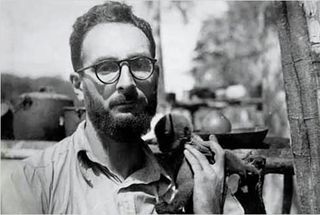
In Claude Lévi-Strauss: The Poet in the Laboratory (Penguin Press, $29.95), Patrick Wilcken has written the biography not just of a man, but of an intoxicating intellectual moment. This was the moment of structuralism, a new way of thinking about human culture that emerged in France in the 1950s and enjoyed a worldwide vogue. The literary critic Roland Barthes, the cultural historian Michel Foucault, the psychoanalyst Jacques Lacan—all were structuralists of one sort or another, and all declared their indebtedness to Claude Lévi-Strauss, the founder of “structural anthropology.” Half a century later, all these names are still by-words for strenuous difficulty and theoretical sophistication; though they are classics by now, they retain the acrid perfume of the avant-garde. When people express contempt or dismay about “French theory,” it is usually the structuralists they have in mind.

It is a wonderful irony, then, that this most cutting-edge and Parisian of movements can be traced to a moment of epiphany in a primitive Indian village in western Brazil. In 1936, Lévi-Strauss and his wife Dina led an anthropological expedition to study the indigenous peoples of this region, at that time barely accessible from the big cities of Brazil’s Atlantic coast. One of the tribes they visited was the Bororo, and though Lévi-Strauss spent just three weeks with them, Bororo culture and myth would lie at the heart of his work for the next 60 years.

What fascinated Lévi-Strauss was not the picturesque elements of Bororo life—what Wilcken calls “the fetishized objects of the Western imagination: penis sheaths, multicolored headdresses, nose feathers, lip ornaments and body paint.” Rather, he became obsessed with the way the Bororo village was laid out.

Carl Schmitt’s Hamlet or Hecuba

TELOS153_MEDDavid Pan and Julia Reinhard Lupton in Telos:

If recent discussions of Schmitt in these pages have made a broad case for the centrality of culture for his thinking, the current issue both specifies and generalizes this approach. The specificity derives from our focus on one key text by Schmitt that is often passed over but is in fact crucial for understanding his work. The generality is a result of the breathtaking sweep of issues that this text opens up for the contributors to this issue: the relation of sovereignty to popular will, the ontological status of modernity, the role of myth in society, the representational structure of human existence, the relation of art and theology to the public sphere. These discussions take our understanding of Schmitt into new directions that draw out not just the aesthetic and cultural aspects of his thought, but also reveal the import of his methods for fundamental questions of epistemology and ontology. He arrives at such questions through the consideration of a single exemplary case: Shakespeare's Hamlet.

His critical intervention has led to an increasing engagement by Renaissance scholars with Schmitt's work over the last decade. In the work of scholars such as Victoria Kahn, Anselm Haverkamp, and Kathleen Biddick, the example of Schmitt never functions as a simple template that would assert the isomorphism of religion and politics, but rather as an invitation to an impasse. What is it about politics that finds itself bound up in the person of the sovereign, the drama of the decision, and the state of exception even while regrounding the rule of law and the legitimacy of a constitution? What is it about politics that remains distinct from the content of ethics, economics, and culture while nonetheless bearing on them? Finally, what is it about politics that both courts and resists theology, catching civic and religious life in an impossible dance of failed separation and catastrophic rapprochement, the Scylla and Charybdis instanced by secularization on the one hand and fundamentalism on the other?

Thomas Bernhard, the Alienator

Peck-t_CA0-articleInline Dale Peck reviews Thomas Bernhard's My Prizes, in the NYT:

For the sympathetic Anglophone charged with reviewing newly translated texts by the Austrian playwright and novelist Thomas Bernhard, the task is a paradoxically onerous one. Put aside the near certainty that Bernhard would have disparaged anything you might say about his work — not just disparaged it, but attacked it with an acid-tongued rant that eviscerated your words, your intellect and your pathetic petit-bourgeois existence. You still have to deal with the almost overwhelming ambition, common to Bernhard fans, to correct his woeful stature in the English-speaking world, as well as the equally oppressive realization that opportunities for doing so are fast running out.

The 21 years since Bernhard died after a lifelong battle with tuberculosis have witnessed a slow but steady trickle of translations, including Old Masters, The Loser and Extinction, which, with Woodcutters, form a loose tetralogy (or, in the formulation of the Bernhard scholar Gitta Honegger, a classical trilogy to which Old Masters is appended as satyr play). These four books, along with “Concrete,” “Yes,” “Wittgenstein’s Nephew” and the five-volume memoir “Gathering Evidence” — oh, and the plays, the plays! — together constitute what some people, this writer included, regard as the most significant literary achievement since World War II. Despite this, Bernhard’s international reputation has never solidified in the manner of a W. G. Sebald, Christa Wolf or Peter Handke, let alone the three most recent German-language writers to receive the Nobel Prize in Literature, Günter Grass, Elfriede Jelinek and Herta Müller — all of whom, one wants to say with a dash of Bernhardian bile, are vastly inferior talents when compared with the master.

All the more urgent, then, for one of those reputation-making panegyrics akin to that with which D. H. Lawrence resuscitated Herman Melville. But how to write it, when most of what’s left of Bernhard’s oeuvre would appear to be ephemera and juvenilia?