Sunday Poem

Sonnet 87
William Shakespeare

Farewell! thou art too dear for my possessing,
And like enough thou know'st thy estimate:
The charter of thy worth gives thee releasing;
My bonds in thee are all determinate.

For how do I hold thee but by thy granting?
And for that riches where is my deserving?
The cause of this fair gift in me is wanting,
And so my patent back again is swerving.

Thyself thou gav'st, thy own worth then not knowing,
Or me, to whom thou gav'st it, else mistaking;
So thy great gift, upon misprision growing,
Comes home again, on better judgment making.

Thus have I had thee as a dream doth flatter—
In sleep, a king; but waking, no such matter.

The Happy Marriage Is the ‘Me’ Marriage

From The New York Times:

POPE-popup Caryl Rusbult, a researcher at Vrije University in Amsterdam who died last January, called it the “Michelangelo effect,” referring to the manner in which close partners “sculpt” each other in ways that help each of them attain valued goals. Dr. Aron and Gary W. Lewandowski Jr., a professor at Monmouth University in New Jersey, have studied how individuals use a relationship to accumulate knowledge and experiences, a process called “self-expansion.” Research shows that the more self-expansion people experience from their partner, the more committed and satisfied they are in the relationship.

To measure this, Dr. Lewandowski developed a series of questions for couples: How much has being with your partner resulted in your learning new things? How much has knowing your partner made you a better person? (Take the full quiz measuring self-expansion.) While the notion of self-expansion may sound inherently self-serving, it can lead to stronger, more sustainable relationships, Dr. Lewandowski says. “If you’re seeking self-growth and obtain it from your partner, then that puts your partner in a pretty important position,” he explains. “And being able to help your partner’s self-expansion would be pretty pleasing to yourself.”

More here.

The Birth and Death of Human Rights Doctrine

From Slate:

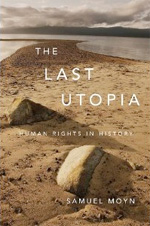
Book Human rights—the notion that the protection of the immutable rights and freedoms of every individual on the planet supersedes all other concerns—did not always enjoy this prominent place in our political debate. Most historians have located the ideology's origins in previous eras, from the ancient Greeks and Hebrews to the Enlightenment to post-World War II. In his erudite new book, The Last Utopia: Human Rights in History, Samuel Moyn proposes a more recent source. He argues that it was only in the 1970s, when other utopian ideologies—socialism, anti-colonialism, and anti-communism—fell by the wayside that human rights assumed its stature as the ultimate moral arbiter of international conduct.

As Moyn tells it, human rights might trace its philosophical lineage to earlier times—few ideas emerge from the intellectual womb as orphans—but its dominant role was not assured until a particular point in time. He takes issue most forcefully with the belief that human rights' ascension was an answer to the extermination of European Jewry. “Contrary to conventional assumptions, there was no widespread Holocaust consciousness in the postwar era, so human rights could not have been a response to it,” he writes.

More here.

Saturday, January 1, 2010

pure american crazy

600full-tim-burton

If, as William Carlos Williams wrote, “The pure products of America / go crazy,” where does that leave Tim Burton, a pure product not just of America but also of Southern California, land’s end of our national phantasmagoria? Hollywood, maybe, where Burton — born in Burbank, raised on TV and the films of Ray Harryhausen, educated at the California Institute of the Arts — landed in the late 1970s. Or London, where he now lives with the actress Helena Bonham Carter and their two kids. Really, though, the landscape Burton occupies is one of the imagination, a territory marked by whimsy and darkness, in which the visuals are the main event. “My background is animation,” he says by phone from his home in England. “Early on, I was essentially a nonverbal person.” Even now, the director of “Beetle Juice,” “Batman,” “Corpse Bride” and “Edward Scissorhands” seems not completely comfortable in conversation; he pauses, backtracks, like someone speaking in a second language, as he discusses “The Art of Tim Burton,” a lavish art book featuring more than 1,000 images, some of which go back to childhood.

more from David L. Ulin at the LA Times here.

why criticism matters

02kirsch-articleInline

Three years ago, Cynthia Ozick published an essay in Harper’s Magazine lamenting the decline of criticism, which she argued was impoverishing literature itself. Without the “consciousness that only a critical infrastructure can supply,” Ozick wrote, readers and writers are doomed to talk at cross-purposes, or at random; it takes a corps of influential critics to unite individual reactions into a common discussion. Indeed, this excellent novelist and excellent critic concluded, “Superior criticism not only unifies and interprets a literary culture but has the power to imagine it into being.” To see what we are missing, all we have to do is contrast our own moment with the postwar decades “when Lionel Trilling prevailed at Columbia,” and “Edmund Wilson, Irving Howe and Alfred Kazin enlivened the magazines.” There is a grim comedy, then, in turning to Kazin’s essay about criticism — written in 1960, when Ozick’s giants walked upon the earth — and reading about “the absence of echo to our work, the uncertainty of response, the confusion of basic terms in which we deal.” It seems to be a case of “the worst is not / So long as we can say, ‘This is the worst.’ ” What looked to Kazin like a dwindling, fissiparous literary culture looks to us like a golden age. (As yet another great critic, Randall Jarrell, once said, in a golden age people go around complaining about how yellow everything looks.)

more from Adam Kirsch at the NYT here.

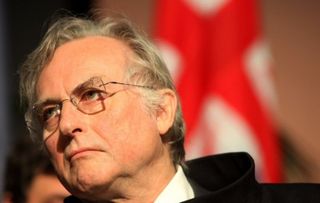
Forgive Me, Spirit of Science: Dawkins on His Love of the KIng James Bible

20101229_86279444_w In the New Statesman:

The King James Bible occupies nearly 42 pages of the Oxford Dictionary of Quotations, only narrowly beaten by Shakespeare, with 45. Not just literature in the high sense but everyday speech is laced, suffused – riddled, even – with biblical phrases the status of which ranges from telling quotation (“They have sown the wind and they shall reap the whirlwind”) to cliché (“No peace for the wicked”) and all points between. A word in season and perhaps we can see eye to eye. Although I wouldn't call the Bible my ewe lamb, and I would have to go the extra mile before I killed the fatted calf for it, you don't need the wisdom of Solomon to see how biblical imagery dominates our English. If my words fall on stony ground – if you pass me by as a voice crying in the wilderness – be sure your sin will find you out. Between us there is a great gulf fixed and you are a thorn in my flesh. We have come to the parting of the ways. I fear it is a sign of the times.

It has to be the King James version, of course. Modern translations break the spell as surely as a sounding brass or a tinkling cymbal. Listen to this, if you can bear to, from the Good News Bible, whose clunking title matches its style:

It is useless, useless, said the Philosopher. Life is useless, all useless./You spend your life working, labouring, and what do you have to show for it? Generations come and generations go, but the world stays just the same.

Older readers might hear the voice of Tony Hancock. Or is it Victor Meldrew? Anyway, now here's the real thing:

Vanity of vanities, saith the Preacher, vanity of vanities, all is vanity./What profit hath a man of all his labour which he taketh under the sun?/One generation passeth away, and another generation cometh: but the earth abideth for ever.

Real thing? Well, let me not emulate that notorious slogan against the teaching of Spanish in Texas schools: “If English was good enough for Jesus Christ, it's good enough for the children of Texas.” Hebrew, alas, is a sealed book to me (yes, that's another one: Isaiah 29:11), but I have it on respected authority that Ecclesiastes, at least, is pretty damn good poetry in the original. If so, it certainly doesn't make it through the Good News mangling. But I shall argue that poetry can gain in translation, and I believe this may have been achieved with the King James Bible.

A Theory of Menopause

SiowAloysius Siow interviewed by Romesh Vaitilingam in Vox EU:

Menopause – or post-reproductive survival – is rare among mammals and, from an evolutionary perspective, anomalous since it reduces consumption for current offspring without producing future offspring. Aloysius Siow of the University of Toronto talks to Romesh Vaitilingam about his theory of menopause, which is based on the fact that, unlike other mammals, humans understand the reproductive process. The interview was recorded at the Centre for Market and Public Organisation in Bristol in October 2010.

Listen here

.

New Year, New Science

News46912a-i1.0Richard Van Noorden, Heidi Ledford and Adam Mann in Nature:

Nature looks at key findings and events that could emerge from the research world in 2011.

The Eemian revealed The North Greenland Eemian Ice Drilling (NEEM) project reached bedrock in July 2010, at a depth of more than 2,500 metres. The fruits of that effort should soon be seen, now that researchers are analysing gas and particles trapped inside the ice core to reveal details of the climate of the Eemian interglacial period (130,000–115,000 years ago), when the average global temperature was about 5°C warmer than today.

GWAS prove their worth Genome-wide association studies (GWAS) have uncovered plenty of links between diseases and particular regions of the genome, but frustratingly haven't revealed much about the biochemistry behind these associations. In 2011, expect to see real mechanistic insights explaining how genes, and non-coding regions, affect the medical conditions they have been linked with. Metabolism, obesity and diabetes are among the hottest targets.

The Caste Buster

02Striver-t_CA1-articleInline Anand Giridharadas in the NYT:

I came to Umred to write about a riot. A few months earlier, power blackouts that rural Indians always suffered silently triggered a violent reaction. Why? Umred was just another small town in the middle of nowhere, dusty and underwhelming. But Umred had begun to dream, townspeople told me, because of television, because of cousins with tales of call-center jobs and freedom in the city. Once Umred contracted ambition, blackouts became intolerable. A psychological revolution, a revolution in expectations, had taken place.

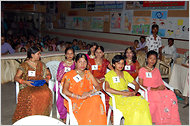
“Electricity is essential to ambition,” an energetic young man named Ravindra Misal explained to me, “because I need it to do my homework, I need it to listen to music if I am a dancer, I need it to listen to tapes of great speakers, I need it to surf the Internet. But I cannot, so people get angry.” Over plates of mutton and chicken, Misal and his friend Abhay offered examples of the little things that were changing in Umred: young men hunting online for wives, farmers’ sons deserting the farms to work at a bank in a nearby town, a deluge of students signing up for English classes. And beauty pageants. “I see Fashion TV on television, Miss India contests in the big cities,” Misal said. “So I thought, Why can’t we have that also?” And so he organized the first Mr. and Miss Umred Personality Contest, which seemed to be half about physical appearance and half about the communication skills that are all the rage in small-town India.

Misal embodies the type of person who will truly transform India: not an engineer or a financier, but an average person who refuses to be satisfied with the status he was born to. Umred rioted because its people had somehow acquired the courage of their own dissatisfaction. But what kind of India will they build?

The Industrialisation of Animals: What Happened to Ethics?

Industrialisation Richard Twine in The Scavenger:

In 1989 Dutch cultural anthropologist and philosopher Barbara Noske in her book Humans and Other Animals coined the phrase the ‘animal industrial complex’.

This event should have kick started a whole array of social science analyses into the political economy of animal agri-business yet in the intervening period I would suggest a paucity of such work and indeed a lack of refinement over just what the concept of the ‘animal industrial complex’ actually means.

I think we can safely assume that Noske took inspiration from the concept of the ‘military industrial complex’ originally named by US President Eisenhower in his farewell address in January 1961 and used to characterise the network of relationships between governments, the various armed forces and the corporate military/security sector that supplies them. One wonders what he would make of the global scale of such relationships 50 years on.

Inherent to that concept and also applicable to Noske’s is a sense of a powerful network acting via a certain sense of concealment. Yet we should also account for the implicit public support of and complicity with such networks and the work that various ideologies perform in presenting a certain natural inevitability to their existence.

In this vein I would like to offer a definition of the ‘animal industrial complex’ as a partially opaque network of relations between governments, public and private science, and the corporate agricultural sector. Within the three nodes of the complex are multiple intersecting levels and it is sustained by an ideology that naturalises the human as a consumer of other animals. It encompasses an extraordinary wide range of practices, technologies, identities and markets.

A large proportion of global crop cultivation is implicated and we must, following Noske, also include the networks and practices of animal experimentation as a part of the complex – indeed, research links between the agricultural and the medical are one of its features. As Noske herself pointed out, “Disease-prone animals are a source of big profits for the pharmaceutical industries.”

The animal-industrial complex achieves the annual slaughter of in excess of 56 billion farmed animals (a Food and Agriculture Organization of the United Nations (FAO) figure), a figure that excludes marine animals, experimented animals and those farmed animals that don’t make it to the slaughterhouse count.

This figure deserves some pause for thought. It’s an annual figure and it’s on an upward trajectory.

So Much for Human Rights: On Morocco’s Occupation of Western Sahara

Jeremy Harding in the LRB blog:

Two things we can learn about Morocco’s illegal occupation of Western Sahara from the US embassy in Rabat, courtesy of WikiLeaks: 1) it’s a source of personal revenue for Moroccan army officers but 2) everything’s fine really.

Western Sahara used to be a Spanish possession, which Madrid was due to hand over to the indigenous population in 1975. King Hassan II of Morocco took advantage of the chaos in Spain at the time of Franco’s death and annexed the territory. The UN deplored the move; the Polisario Front embarked on a liberation war, which resulted in stalemate and a ceasefire in 1989. By this time Morocco controlled most of the territory and was pouring in settlers to outnumber indigenous Sahrawis.

Under UN auspices, both parties – the kingdom of Morocco and Polisario – agreed to a referendum on independence. Twenty years later, the vote is a lost hope: the Moroccans have driven it into the ground with Byzantine objections, year on year. The UN mission has been sidelined; the settler colonial project continues; there are hundreds of thousands of refugees in Algeria and a population inside the territory that’s punished when it calls for independence.

These are trifling matters for Ambassador Thomas T. Riley, filing from Rabat in 2008. What counts is America’s ‘robust military relationship’ with Morocco, confirmed by ‘the purchase of sophisticated weapons from the US to include 24 F-16s this year’. The regime, Riley announces,

has also increased its activities under a partnership arrangement with the Utah National Guard, which regularly deploys to Morocco to conduct joint training and humanitarian relief operations.

Even so, he’s disturbed by corruption in the Moroccan army (total numbers 218,000; between ‘50 and 70 per cent… preoccupied with operations in the Western Sahara region’). Riley cites Lieutenant Geneneral Abdelaziz Bennani, commander of the Southern Section – i.e. the annexed territory. Apparently, Bennani has used his position to

skim money from military contracts and influence business decisions. A widely believed rumour has it that he owns large parts of the fisheries in Western Sahara… There are even reports of students at Morocco’s military academy paying money… to obtain positions in lucrative military postings.

Top of the list: Western Sahara.

A Year Anew

From The New York Times:

Happy_new_year_by_clwoods By now, of course, 2010 feels like a completely familiar, totally used-up year. But why does 2011 still sound like an annum out of science fiction? It’s not as though 2011 is a remoter outpost in the hinterland of the future than, say, 1971 was. Yet here we are in the second decade of the 21st century, living in the very future we tried to imagine when we were young so many years ago. Surely we must have colonies throughout the solar system by now. Surely hunger is no more, and peace is planet-wide.

The coming of the new year reminds us, again, that we live, as we always have, somewhere on a sliding scale between utopia and dystopia and that we continuously carry our burdens and opportunities with us. 2011 is merely a new entry in our ancient custom of chronological bookkeeping, an arbitrary starting point for our annual trip around the sun. But it is also so much more. Who can live without fresh intentions, new purposes? Who does not welcome a chance to start over, if only on a new page of the calendar? Life goes on, but it goes on so much better with hope and renewal and recommitment.

Last night was a night for banishing regrets. Today is for wondering how to live without new ones, how to do right by ourselves and one another.

More here.

A Question of Character

From The Boston Review:

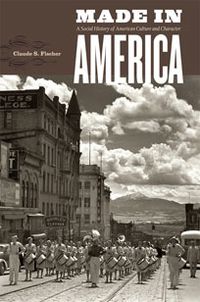
Kennedy_35_6_america On May 11, 1831, a diminutive 25-year-old Frenchman, Alexis de Tocqueville, stepped onto a New York City wharf and began his fateful encounter with America. Over the subsequent nine months, Tocqueville and his traveling companion, Gustave de Beaumont, ostensibly on a fact-finding mission about American prisons, ranged from the cities of the eastern seaboard to the unaxed wilderness west of Detroit. They were, Tocqueville rhapsodized, “overcome with joy,” to see “a place that the torrent of European civilization had not yet reached.” Through crippling cold they descended the great valley of the Mississippi to New Orleans, crossing paths with Choctaw Indians shivering westward on the Trail of Tears. They sipped Madeira in the White House with President Andrew Jackson (“not a man of genius,” Beaumont drolly noted). Everywhere they keenly observed the American scene.

Four years later, Tocqueville published the first volume of his monumental work, Democracy in America. Together with its companion volume, released in 1840, it remains the most astute analysis of American society ever penned, a touchstone and inspiration for all subsequent efforts to grasp the elusive essence of America’s national character.

More here.

Friday, December 31, 2010

Televising The Drug War

GettyImages_107190581_jpg_470x276_q85 Lilia M. Schwarcz over at the NYRB blog:

[T]he drug war in Rio does not explain the rapid spread of the public fear that has become a central theme in national and international depictions of the country. Movies such as News from a Personal War (João Salles, 1999), Central Station (Walter Salles, 1998), City of God (Fernando Meirelles’s 2002 movie based on Paulo Lins’s 1997 book), and the recent Elite Squad 1 and 2 (José Padilha, 2007 and 2010)—the latter, by the way, has become the biggest box-office success in the history of Brazilian cinema—have had an impact both at home and abroad, and have ensured that the subject of violence is never far from the lips of Brazilians. The more recent movies, in particular, which seem to be produced as quickly as TV series, seek to shock audiences with their graphic depictions of turf wars between drug gangs in the favelas, places ordinary Brazilians would not imagine visiting.

These movies, each with their own aesthetic of violence, are immediately exported, disseminating a feeling of fear and terror that fires the foreign imagination and troubles the local population. For those wishing to get a bit closer to the ground, there is a growing industry of “favela tours” that promise visitors the “thrill” of going into a real favela and finding out what life is like there and experiencing the danger first-hand—all in precise, measured doses, of course.

There is also the endless TV coverage of the chaos in the favelas. In recent days, we have been confronted with a veritable avalanche of images of the anti-drug offensive, a 24/7 reality show, with audiences glued to their front-row seats in their living-rooms, ignoring the evidence of the relatively peaceful streets outside. While Rio’s northern zone was experiencing something like a military invasion, in the south, life went on as normal, apart from hotels and restaurants, whose doors remained cautiously shut—just in case.

Most of this reality show leaves no room for nuance or interpretation: the good guys are on one side and the bandits on the other. I’m not defending drug-trafficking or the violence practiced by its participants—it is certainly true that gang warfare and the wars between the police and the traffickers have become an increasingly worrying and invasive part of everyday life in our major cities. But the prevailing black-and-white logic—according to which the drug trade is exclusive to favela life and doesn’t have implications for the police, politicians, or the population as a whole—is nonsense. It is now clear that drug-trafficking has been as omnipresent among certain corrupt police squads as it has in the favelas.

The trouble is that the ugly reality lives right next door; this is particularly ironic given a long history in Rio of attempts to segregate the poor from the rich.

Redoing Student-Teacher Evaluations with Teacher-Student Evaluations, A Modest Proposal

Rob Weir in Inside Higher Ed [for Maeve Adams and Kara Wittman]:

I've just had one of those semesters in which one of my classes had just enough rotten eggs to jeopardize the barrel. You probably know the eggs in question, the ones suffering from SBS (Spoiled Brat Syndrome). Love that term. It was given to me by one of my students who got tired of hearing from peer whiners. SBS students are those who occasionally come to class, voice a few complaints about how (they’ve heard) you conduct it, insist that you personally take responsibility for improving their grades, register moral outrage when told that you intend to hold them to the same standards as lesser-deserving students, and then disappear for several more weeks.

I get through this kind of class because I’ve learned not to waste my time on SBS sufferers. (Seriously, there’s little you can do to please them, so don’t bother trying.) The end-of-semester problem is that our campuses practice the same one-person/one-vote democratic practices that muddy our civic lives. Everyone gets to fill out a class evaluation, whether they're Einstein or the campus idiot, a perfect attendee or a ghost, a hard worker or an SB. Alas, it only takes a few SBs to pull down your class evaluation scores. I’ve written before about what you should and should not take away from student evaluations. My relaxed views on these notwithstanding, this semester’s brush with SBS students aroused my sense of justice. It's just not fair that students get to evaluate us, but we don’t get to say our piece about them. In theory, of course, our grades are their evaluations, but as many on this site have noted, professors who break the institutional curve do so at their own peril. Let’s just say that C has become the new F and B is now the new C. I say it’s time to give profs parallel rights and allow them to evaluate their students. Distribute machine-scored bubble sheets and make the results on each student available campus wide. Heck, let’s even set up a Rate My Students website.

Based on my university's instructor evaluation form, here is a working draft of what one might look like.

Not Exactly Rocket Science’s 11 Lists of Top 10 Science Stories

BeerEd Yong's wonderful lists:

This is the final part of my review of the year, with a more light-hearted look at the past 12 months. But first, here are parts 1-10.

IgNobel tribute awards

First up, a selection of posts that, in the words of the award creators, first make people laugh, and then make them think.

Beer makes humans more attractive to malarial mosquitoes

The good news: beer makes some people much more attractive. The bad news: it makes them more attractive to mosquitoes. Anopheles gambiae (the mosquito that transmits malaria) finds the body odour of beer drinkers to be quite tantalising. The authors even suggest (very speculatively and with tongue somewhat planted in cheek) that mosquitoes might have evolved a preference for the smell of beer-drinkers, “possibly due to reduced host defensive behaviours”.

Why is Rape Different?

Jo3270_thumb3 Naomi Wolf's round II, in Project Syndicate:

As Swedish prosecutors’ sex-crime allegations against WikiLeaks founder Julian Assange play out in the international media, one convention of the coverage merits serious scrutiny. We know Assange by name. But his accusers – the two Swedish women who have brought the complaints against him – are consistently identified only as “Miss A” and “Miss W,” and their images are blurred.

News organizations argue that the policy is motivated by respect for the alleged victims. But the same organizations would never report charges of, say, fraud – or, indeed, non-sexual assault – against a suspect who has been named on the basis on anonymous accusations. In fact, despite its good intentions, providing anonymity in sex-crime cases is extremely harmful to women.

The convention of not naming rape accusers is a relic of the Victorian period, when rape and other sex crimes were being codified and reported in ways that prefigure our own era. Rape was seen as “the fate worse than death,” rendering women – who were supposed to be virgins until marriage – “damaged goods.”

Virginia Woolf called the ideal of womanhood in this period “The Angel in the House”: a retiring, fragile creature who could not withstand the rigors of the public arena. Of course, this ideal was a double-edged sword: their ostensible fragility – and their assigned role as icons of sexual purity and ignorance – was used to exclude women from influencing outcomes that affected their own destinies. For example, women could not fully participate under their own names in legal proceedings.

Indeed, one of the rights for which suffragists fought was the right to be convicted of one’s own crimes.

spirit duplicator

Flores_front

Every technology is a metaphor. That much is clear. The difficult matter is to sort out whether this is a primary or secondary function. Which is to say, did we initially make this universe of instruments, machines, tools, and devices as a way of talking about our condition, only then to discover, post hoc, that all the amassed hardware also proved useful for solving various practical problems (washing dishes, killing neighbors, etc.)? Or did it work the other way around? Did we set out to kill our neighbors, say, and then notice that the sword was a lovely way to say “violence”? At first glance, the latter may seem much more likely. But presumably the sword said “violence” before it was swung. If the question feels abstruse, remember that the stakes are high: Are we apes who learned to talk, or angels who learned to kill?

more from Yara Flores at Cabinet here.

bloodlands

Images

‘Now we will live!’… the hungry little boy liked to say … but the food that he saw was only in his imagination.” So the little boy died, together with three million fellow Ukrainians, in the mass starvation that Stalin created in 1933. “I will meet her … under the ground,” a young Soviet man said about his wife. Both were shot in the course of Stalin’s Great Terror of 1937 and 1938, which claimed 700,000 victims. “Two hundred thousand Polish citizens were shot by the Soviets or the Germans at the beginning of World War II.” “Only Tania is left,” a little Russian girl wrote in her diary in besieged Leningrad, where the rest of her family and nearly one million other Leningraders starved to death. “I am saying good-bye to you before I die. I am so afraid of this death because they throw small children into the mass graves alive,” a twelve-year-old Jewish girl in Belarus wrote to her father. “She was among the more than five million Jews gassed or shot by the Germans.” So begins Bloodlands, a genuinely shattering report on the ideology, the political strategy, and the daily horror of Soviet and Nazi rule in the region that Timothy Snyder calls the bloodlands. In 1933, when the murderous madness began, the bloodlands were made up of independent Poland, Estonia, Latvia, and Lithuania, as well as (within the Soviet Union) Belarus, Ukraine, and some of Soviet Russia’s western provinces. A glance at a map of the same area in 1941 shows that in the intervening years the bloodlands had become two countries: the German Reich and the Soviet Union. Acting in harmony, these two countries swallowed the region’s other countries.

more from Istvan Deak at TNR here.

the bellovian mind

TLS_kirsch_732793a

In 1961, Saul Bellow wrote to Susan Glassman, who would become his third wife: “Have you ever visited a clothing factory, heard the sewing machines rrrrhhhahhrrr with the loudness in the middle of the phrase? I feel like that myself, like the operator sliding in the cloth. Only the machinery is internal and the seams never end”. If you had to pick a single passage from Saul Bellow: Letters, so richly characteristic on every page, to capture the writer’s essence, this would be it. That roar is the key signature of his inner life, which he bestows on every one of his fictional surrogates. The first step in creating a character, for Bellow, is not to imagine what he looks like or what will happen to him, but to set moving the vibration, the agitation, the turbulence (there is no more Bellovian word than “turbulent”) that constitutes consciousness. It is audible in Joseph, from Dangling Man: “if I had as many mouths as Siva has arms and kept them going all the time, I still could not do myself justice”. In Henderson of Henderson the Rain King: “Now I have already mentioned that there was a disturbance in my heart, a voice that spoke there and said, I want, I want, I want! It happened every afternoon, and when I tried to suppress it it got even stronger”. In Ravelstein: “one of those large men . . . whose hands shake when there are small chores to perform. The cause was not weakness but a tremendous eager energy that shook him when it was discharged”.

more from Adam Kirsch at the TLS here.