rage

ID_PI_GOLBE_FATHE_AP_001

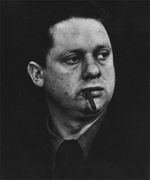
David John Thomas liked to drink alone. Author Paul Ferris illustrated the point in his biography Dylan Thomas with a portrait of David John alone in a corner table at his local Welsh pub, the Bush. He describes David John Thomas as “a clever, disappointed man”. A young colleague, wrote Ferris, remembered once buying a pint for D.J. (as he was called), who accepted, and then chose to drink it in silence, at his table, alone. Pub regulars called the sulking presence who often spent his evenings there “The Professor.” As a boy, D.J. was a promising student. He had received a scholarship to study English at the University College of Wales at Aberystwyth where he graduated with first-class honors. Like many promising students of English, D.J. had dreams of being a poet. Instead, he became a grammar school teacher. He watched in anger and shame as colleagues of clearly inferior worth gained appointments to higher university positions while he remained where he was. D.J. was often ill, and wondered why he had no visitors. He cultivated a devastating schoolmaster’s sarcasm that shielded his fragile pride. Students of Schoolmaster Thomas remember an unforgiving tyrant who cursed stupid boys and dirty boys. But he made Shakespeare come alive and became known for getting his boys into Oxford and Cambridge. D.J.’s great passion for English literature was available for any boy willing to receive it. To his son Dylan, however, the clever, disappointed father gave his entire dream of a poet’s life.

more from Stefany Anne Golberg at The Smart Set here.

Reason evolved to win arguments

Patricia Cohen in the New York Times:

Sperber200 For centuries thinkers have assumed that the uniquely human capacity for reasoning has existed to let people reach beyond mere perception and reflex in the search for truth. Rationality allowed a solitary thinker to blaze a path to philosophical, moral and scientific enlightenment.

Now some researchers are suggesting that reason evolved for a completely different purpose: to win arguments. Rationality, by this yardstick (and irrationality too, but we’ll get to that) is nothing more or less than a servant of the hard-wired compulsion to triumph in the debating arena. According to this view, bias, lack of logic and other supposed flaws that pollute the stream of reason are instead social adaptations that enable one group to persuade (and defeat) another. Certitude works, however sharply it may depart from the truth.

The idea, labeled the argumentative theory of reasoning, is the brainchild of French cognitive social scientists, and it has stirred excited discussion (and appalled dissent) among philosophers, political scientists, educators and psychologists, some of whom say it offers profound insight into the way people think and behave. The Journal of Behavioral and Brain Sciences devoted its April issue to debates over the theory, with participants challenging everything from the definition of reason to the origins of verbal communication.

“Reasoning doesn’t have this function of helping us to get better beliefs and make better decisions,” said Hugo Mercier, who is a co-author of the journal article, with Dan Sperber. “It was a purely social phenomenon. It evolved to help us convince others and to be careful when others try to convince us.” Truth and accuracy were beside the point.

More here. [Photo shows Dan Sperber.]

The recent discovery of really, really big viruses is changing views about the nature of viruses and the history of life

James L. Van Etten in American Scientist:

2011526152378557-2011-07VanEttenF1 The common view of viruses, mostly true, is of tiny burglars that sneak into cells, grab the biosynthetic controls and compel the cell to make huge numbers of progeny that break out of the cell and keep the replication cycle going. Viruses are supposed to be diminutive even compared to cells that are just a micrometer (1,000 nanometers) in diameter. They are supposed to travel light, making do with just a few well-adapted genes.

In 1992, a new microorganism was isolated from a power-plant cooling tower in Bradford, England, where Timothy Robotham, a microbiologist at Leeds Public Health Laboratory, was seeking the causative agent of a local pneumonia outbreak. His search led to the warm waters of the cooling tower, a known reservoir for bacterial pathogens in the Legionella genus, which are the cause of the pneumonialike Legionnaire’s disease. Particles present in the sample were mistakenly identified as bacteria. Gram positive and visible under the microscope as pathogens within the particle-gobbling amoeba Acanthamoeba polyphaga, the entities surprisingly did not generate any product from the gene-amplifying polymerase chain reaction technique using universal bacterial primers.

Eleven years later, in 2003, the mystery organism received a new identity and a new name, Acanthamoeba polyphaga Mimivirus, for microbe-mimicking virus. Mimivirus is the largest virus ever discovered.

More here.

Aid to Pakistan: Advocacy or Analysis?

Anjum Altaf in The South Asian Idea:

Pakistan-us-flag Beyond Bullets and Bombs is the title of the latest report on aid to Pakistan from the Center for Global Development in Washington, DC. In light of the increasingly anti-Pakistan sentiment in the U.S., the report, addressed to decision and policy makers in Washington, takes on the brief to make the best possible case for the continuation of aid. Hence the subtitle: Fixing the U.S. Approach to Development in Pakistan. The report is a revealing illustration of advocacy over analysis; a more open examination would have begun by questioning the impacts of U.S. aid to Pakistan, before deciding if the total benefits of “fixing” it exceeded the total cost to both sides.

It is to the report’s credit that it is forthright and includes all the relevant pieces of information, but the way it uses that information is determined by the choice it makes. What is highlighted or slighted is entirely a function of the case that is to be advocated, and all the evidence in the report could be interpreted quite differently in order to support quite different conclusions.

The point of departure, based on a review of the history of development assistance to Pakistan, is an uncontested matter of fact: “Since 1960, all OECD and multilateral creditors have given an inflation-adjusted total of over $100 billion in development assistance to Pakistan.” The report goes on to note that there is precious little to show for this assistance, mentions all the problems of the moment, and concludes: “None of these problems—in the power, education, and water sectors, or on the fiscal front—will be resolved unless Pakistan’s political institutions and leaders can tackle them head on.”

It would seem that the obvious question to ask would be, have Pakistan’s political institutions and leaders decided, now or ever, to tackle these problems head on?

More here.

Of Course I Take Pictures of My Penis and Send Them to People

John Kenney in The New Yorker:

And I’m not alone in history.

Teddy Roosevelt, for instance, was a big fan of photographing his penis, and would pose for hours at a time. In Paris, in the twenties, it was all the rage. Hemingway’s little-known short story “Look at This Photo of My Penis” attests to it. Stalin often adorned his dacha with framed eight-by-tens, coyly saying to visitors, “Boy-oh-boy, is that a lovely penis, or what?” (The wrong answer proved costly).

Go back further, of course, and you’ll find the drawings. Jefferson was a madman for it, often sending John Adams dozens of sketches of his penis in a single day. Adams is said to have enjoyed them with his wife, Abigail, who was herself a fan of penis portraiture. Even further back, we find that Michelangelo, Raphael, and Titian all made frequent charcoal sketches of their penises, giving them as gifts (a common practice in Florence to this day). And then there are the famous cave drawings at Lascaux, France, purported to be more than seventeen thousand years old, where one sees dozens of penis portraits, crudely drawn, but a statement in their own right: a plea, as if to say, one cave man to another, “My name is Dave. This is my penis. Let us be friends.”

More here.

When bad people write great books

From Salon:

Book A reader, prompted by last week's commentary on whether great books can make you a better person, wrote in to ask a related question. Her favorite author is Charles Dickens; his books have been beacons for her. While she'd like to know more about him, she recalls reading long ago that Dickens behaved badly in his personal life. Should she investigate further, even though she worries that this will lead her to “doubt the impression I always had of Dickens: that he was a kind, sensitive soul who had suffered as a child”? As if hell-bent on providing further illustration of this dilemma, Nobel laureate V.S. Naipaul played the provocateur last week by announcing that he is a better writer than any woman who has ever lived. He offered a variety of reasons for this state of affairs, none of them worth repeating. While his remarks lacked intellectual content, his antics did inspire some thoughtful responses, many of which have pointed out that talented artists can be reprehensible people.

If Dickens sometimes behaved badly, Naipaul is unquestionably a bad man, notorious for his floridly abusive relationships and bigoted ideas. Does this diminish his work? Naipaul's fiction is not to everyone's taste, but the grace of his prose and the power of his early books, especially “A Bend in the River,” is hard to deny; I admired much of that novel even as I gritted my teeth over its blinkered depiction of Africans. “A House for Mr. Biswas” is a veritable touchstone for New Yorker critic James Wood, a tough crowd if there ever was one. For myself, I ended up feeling that Naipaul's prejudices (less glaring in his earlier books, but still evident and clearly fueled by cultural insecurity) bar him from the sort of insight that renders a novelist truly wise as opposed to merely smart. Other writers make for more ambiguous cases. T.S. Eliot was an anti-Semite, Virginia Woolf a snob and Ezra Pound a flaming fascist, but I'm not ready to shrug off “The Waste Land,” “To the Lighthouse” or “The Cantos.”

More here.

From Hitler to Mother Teresa: 6 Degrees of Empathy

From The New York Times:

Evil Dr. Baron-Cohen, a professor of developmental psychology at the University of Cambridge and director of the university’s Autism Research Center, proposes that evil is more scientifically defined as an absence of empathy, exacerbated by negative environmental factors (usually parental, sometimes societal) and a genetic component. When these three exist in tandem they result in what he calls a Zero-Negative personality. Zero-Negative takes at least three forms (and possibly more), borrowing from terms used in psychiatry: Zero Type P (psychopathology), Zero Type B (borderline disorder) and Zero Type N (narcissism).

Whereas psychiatry groups these three loosely under the term “personality disorders,” Dr. Baron-Cohen proposes that they all share the characteristic of zero degrees of empathy. (His “empathy quotient” scale is available in the book or online, with an instant numerical score that is translated into degrees of empathy from zero to six, or super empathy.) Viewing these disorders in terms of empathy “has very different treatment implications,” he maintains. Psychopaths aside, people with low degrees of empathy can be taught empathy, as is done in schools concerned about bullying, and treated with standard psychiatric approaches.

More here.

Monday, June 13, 2011

3QD Science Prize 2011 Finalists

Hello,

The editors of 3QD have made their decision. The twenty semifinalists have been winnowed down to six, and three wildcard entries added. Thanks again to all the participants.

Once again, Carla Goller has provided a “trophy” logo that our finalists may choose to display on their own blogs. And if you like our site, please do add us to your blogroll!

So, here it is, the final list that I am sending to Lisa Randall, who will select the 1st, 2nd, and 3rd prize winners: (in alphabetical order by blog name here)

  1. Finalist_2011_science Cosmic Variance: The Fine Structure Constant is Probably Constant
  2. Dr. Carin Bondar: Sacrifice on the Serengeti
  3. Empirical Zeal: Blind Fish in Dark Caves Shed Light on the Evolution of Sleep
  4. Highly Allochthonous: Levees and the Illusion of Flood Control
  5. Laelaps: The Pelican's Beak – Success and Evolutionary Stasis
  6. Oh, For the Love of Science: Prehistoric Clues Provide Insight into Climate's Future Impact on Oceans
  7. Opinionator: Morals Without God?
  8. Scientific American Guest Blog: Serotonin and Sexual Preference: Is It Really That Simple?
  9. Starts With A Bang: Where Is Everybody?

We'll announce the three winners on or around June 21, 2011.

Good luck!

Abbas

P.S. The editors of 3QD will not be making any comments on our deliberations, or the process by which we made our decision, other than to simply say that we picked what we thought were the best posts out of the semifinalists, and added three others which we also liked.

Sunday, June 12, 2011

Oscar Hijuelos returns to Havana and finds a family of strangers

Oscar Hijuelos in Newsweek:

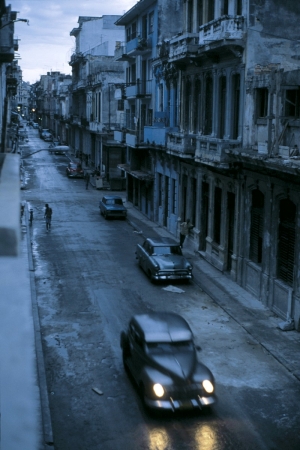
1307758152832 The city of Havana in the late 1940s, with its romantic ambience, its splendid sea-worn architecture, and its wall-to-wall music, was at the heart of my best-known novel, The Mambo Kings Play Songs of Love. Though I had only passed through the city as a boy in 1955, I based much of my novel’s portraiture of Havana on both the music I listened to as a youngster and the stories I had heard about it from the Cuban old-timers who would come to our apartment in Manhattan.

I can remember the colossal excitement that erupted in our little kitchen on New Year’s Eve 1958, when the Spanish-language radio announced that the forces of Fidel Castro were on the verge of entering that city. Toasts were made all around. Little did we know that Fidel’s revolution and the American embargo that resulted would bring an end to an epoch when Cubans like my folks, who had immigrated to the United States in the 1940s, could legally travel to the capital of their patria. No, during those years of the Cold War, Havana, like the rest of Cuba, became an abstraction, a forbidden city that seemed to vanish from our reach.

More here.

Nico Muhly’s tale of Two Boys: don’t expect Facebook – the Opera

Tom Service in The Guardian:

ENO’s viral video advertising Nico Muhly‘s new opera is a kick-ass three minutes of social networking lampooning. However, it’s got zippity-squat to do with the work itself. Far from questioning “how odd your online life is”, Two Boys is a human drama of obsession, love, fantasy, identity and detective work. It’s also not really about “what could go wrong” online. This is a bit of a euphemism for being induced to masturbate on-cam for someone you think is a hot chick but who turns out to be a teenage boy, and then be forced through months of psychological manipulation to stab them.

The point is, the drama of Two Boys will be, or should be, profound and tragic, rather than merely critiquing the trivialities of friend-inculcation on Facebook, as the viral video, produced in collaboration with flyer-merchants Don’t Panic and starring Jolyon Rubinstein, makes out. At least that’s how it seemed to me watching rehearsals for the piece, looking at the score, and talking to the composer himself.

More here.

Sunday Poem

Street Kid

The window opens to a field of sagebrush—
California country northeast of San Francisco.
The sun burns into the hill.
This night is his first taste
of a new ache in the adam's apple,
the hard, dry knot,
a fresh loneliness.
Twilight whirrs with meadowlarks
and insects crawling down the glass
between the bars, and he,
apart from the other boys,
the cool toughs playing ping pong
before lockup, hears his heart stop
the tear before it leaves the eye.
Injun Joe, the nickname given him
by the brothers, the blacks, the chicanos,
is not afraid of the heart of darkness,
but of his own soul beating like a fist
against the wall.

by Duane McGinnis
from American Indian Prose and Poetry
published by Longman Canada Limited,
Toronto, 1974

The Social Psychological Narrative — or — What Is Social Psychology, Anyway?

From Edge:

Wilson640 TIMOTHY D. WILSON, the Sherrell J. Aston Professor of Psychology at the University of Virginia, is author of Strangers To Ourselves (“the most influential book I've ever read”, Malcolm Gladwell), which was named by The New York Times Magazine as one of the Best 100 Ideas of 2002 He is also the coauthor of the best-selling social psychology textbook, Social Psychology, now in its seventh edition. His latest trade book is Redirect: The Surprising New Science of Psychological Change.

“If liberating the unconscious had been Wilson’s only contribution to psychological science, it would have been enough. But it was just the start. Wilson has since discovered and documented a variety of fascinating ways in which all of us are “strangers to ourselves” (which also happens to be the title of his last book—a book that Malcolm Gladwell, writing in the New Yorker, correctly called the best popular psychology book published in the last twenty years). He has done brilliant research on topics ranging from “reasons analysis” (it turns out that when people are asked to generate reasons for their decisions, they typically make bad ones) to “affective forecasting” (it turns out that people can’t predict how future events will make them feel), but at the center of all his work lies a single enigmatic insight: we seem to know less about the worlds inside our heads than about the world our heads are inside.

The Torah asks this question: “Is not a flower a mystery no flower can explain?” Some scholars have said yes, some scholars have said no. Wilson has said, “Let’s go find out.” He has always worn two professional hats — the hat of the psychologist and the hat of the methodologist. He has written extensively about the importance of using experimental methods to solve real world problems, and in his work on the science of psychological change — he uses a scientific flashlight to chase away a whole host of shadows by examining the many ways in which human beings try to change themselves — from self-help to psychotherapy — and asking whether these things really work, and if so, why? His answers will surprise many people and piss off the rest. I predict that this new work will be the center of a very interesting storm.”

— Daniel Gilbert, Harvard College Professor of Psychology at Harvard University; Director of Harvard’s Hedonic Psychology Laboratory; Author, Stumbling on Happiness.

More here.

Rebecca Newberger Goldstein: secular humanist with a soul

From The Christian Science Monitor:

Gold “There's a Hassidic legend, that in any point of history, there are 36 pure souls for the sake of whom God doesn't destroy the world. And they don't know who they are,” Rebecca Newberger Goldstein tells me. It's early Saturday morning, and we're having breakfast in New York's Washington Square Hotel. The dining room is small, put in almost as an afterthought, and barely has room for the guests waiting anxiously for a fresh batch of coffee. Goldstein is dressed in a simple long-sleeved T-shirt and jeans, not completely awake – the consequence of constant travel and an inability to sleep in unfamiliar surroundings. As a young girl, Goldstein suspected that her father, a cantor in White Plains, New York, was one of those 36 pure souls. In her latest novel, 36 Arguments for the Existence of God: A Work of Fiction, the figure of Azarya, a boy genius who has to choose between science and his orthodox Jewish community, is another one. Secular saints, Goldstein calls them both, comparable to Spinoza.

Goldstein, 61, has a powerful presence and a mind that seem too large for her petite figure. She is a philosopher, novelist ( “36 Arguments” is her seventh work of fiction), and author of two nonfiction books. Goldstein has received numerous awards and grants, including a MacArthur fellowship, or “Genius Award.” In 2011, she was named Humanist of the Year by the American Humanist Association. She and her second husband Steven Pinker, professor of Psychology at Harvard, are considered one of Cambridge's true power couples.

More here.

Saturday, June 11, 2011

ashbery does rimbaud

Davis-sfSpan

If Rimbaud anticipated the Surrealists by decades, Ashbery is said to have gone beyond them and defied even their rules and logic. Yet though nearly 150 years have intervened since Rimbaud’s first declaration of independence, many readers in our own age, too, still prefer a coherence of imagery, a sameness of tone, a readable sequential message, even, ultimately, what amounts to a prose narrative broken into lines. Enough others, however, find the “crystalline jumble” intellectually and emotionally revitalizing and say, Yes, please do interrupt the reverie you have created for us to allow an intrusion of Popeye! Besides his early absorption of Rimbaud’s work, Ashbery brings to this translation a long and deep familiarity with French life, language and culture, particularly artistic and literary culture, and the experience of having translated many other French works over the years — by Pierre Reverdy, Raymond Roussel, Max Jacob, Pierre Martory (as well as at least one detective novel, as the amusingly renamed Jonas Berry). These translations are part of a larger body of Ashbery’s work that has served to offer us — his largely monolingual Anglophone readership — access to poets of another culture, either foreign or earlier in time. (Notable, for instance, is his keenly investigatory, instructive and engrossing “Other Traditions,” the six Norton Lectures that open our eyes to the work of such luminaries as John Clare and Laura Riding.) In tandem, then, with his own 20-plus books of poetry (not to mention his teaching and his critical writings on the visual arts), Ashbery has extended his generous explicating intelligence to the work of many others, most recently in “Illuminations.”

more from Lydia Davis at the NYT here.

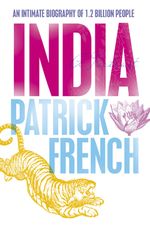
India: A Portrait

India_A Portrait

There are 7 billion people on the planet, and nearly 1.2 billion of them live in India, making it famously the world’s biggest democracy by far. In the thriving, striving new Indian economy, businessmen make sudden, amazing fortunes, as the American robber barons did in the 19th century, and regularly place on the Forbes list of the world’s most wealthy. Yet at least 300 million Indians live in desperate conditions, many of them starving. The poor are sometimes literally bulldozed out of the way for developments, the underclass of the dispossessed and disenfranchised is huge: The go-go sub-continent might look like a democracy only for the elite. “With its overlap of extreme wealth and lavish poverty … its competing ideologies, its lack of uniformity, its kindness and profound cruelty, its complex relationships with religion, its parallel realities and the rapid speed of social change — India is a macrocosm, and may be the world’s default setting for the future,” writes Patrick French in “India: A Portrait,” in which he mingles historical analysis with on-the-spot reportage, aiming to capture the country in all its teeming, volatile complexity. The result is rich, engaging and indeed multi-hued.

more from Richard Rayner at the LAT here.

mamet loves palin

Ab2fe3b2-9305-11e0-9ba7-00144feab49a

Why, if he so loves small-town America and its values, does he live in the liberal enclave of Los Angeles? “There is a lot of work. My wife works there,” he says and then he mentions his daughters. “They are very, very beautiful. It once occurred to me: being able to write is like being the pretty girl at the party. You can’t be diffident about it because that’s a lie but it’s nothing to be arrogant about.” The waitress returns and Mamet asks if she has any fresh fruit. She offers us two plates of berries, bananas and sliced apples. “Yum, yum,” he says appreciatively as the fruit arrives a few minutes later. We are discussing Hollywood and his liberal friends and colleagues. “It is very amusing to listen to some people of my acquaintance who not only own summer homes but transcontinental jets going on about greed and how greed is ruining our country,” Mamet says with a laugh. “You get rich through luck. You get rich through crime. You get rich through fulfilling the needs of another. You can be as greedy as you like. If you can’t do one of those three things, you ain’t going to get any money.” We close with his Phil Spector film and, as Mamet describes a monologue from it, it is clear how much he identifies with the defiantly eccentric and isolated producer – and with Lawrence of Arabia. “He [the Spector character] talks a lot about Lawrence. He loved Lawrence. Either he loved him or I do, I can’t remember. He says in the film Lawrence wanted the one thing that he couldn’t have, which was privacy. He simply wanted to be by himself. Did that make him a monster?”

more from John Gapper at the FT here.

Pakistan After Osama

Pervez Hoodbhoy in Himal South Asian:

ScreenHunter_04 Jun. 11 10.50 Why was Pakistan’s warrior class never tamed by civilian rule? The answer must be sought in the foundation of Pakistan and the state of confusion into which it was born. Beyond the simplistic notion that Hindus and Muslims were incapable of living together, the idea of Pakistan was unclear from the outset. Although he made many speeches, Mohammad Ali Jinnah left no manifesto and authored no book before his untimely death. Critical questions were thus left unanswered: Would the new state be capitalist or socialist, liberal or theocratic, modern or tradition-based? On what basis would power be distributed between its different regions? How would defence, education, science, health, etc be prioritised?

With no clear answers, and lacking a clear basis for legitimacy or direction, the state quickly aligned with the powerful landed class: the army leadership and the economic elite joined forces to claim authority in a nation without definition or cohesion. The Kashmir dispute gave reason for the military to become powerful and to make the acquisition of modern weaponry an overriding priority. The Americans happily obliged, given the burgeoning cold war. A fatal attraction for guns steadily drew Pakistan into the US orbit.

More here.