Trading Stories

Jhumpa Lahiri in The New Yorker:

Jhumpa In the fifth grade, I won a small prize for a story called “The Adventures of a Weighing Scale,” in which the eponymous narrator describes an assortment of people and other creatures who visit it. Eventually the weight of the world is too much, the scale breaks, and it is abandoned at the dump. I illustrated the story—all my stories were illustrated back then—and bound it together with bits of orange yarn. The book was displayed briefly in the school library, fitted with an actual card and pocket. No one took it out, but that didn’t matter. The validation of the card and pocket was enough. The prize also came with a gift certificate for a local bookstore. As much as I wanted to own books, I was beset by indecision. For hours, it seemed, I wandered the shelves of the store. In the end, I chose a book I’d never heard of, Carl Sandburg’s “Rootabaga Stories.” I wanted to love those stories, but their old-fashioned wit eluded me. And yet I kept the book as a talisman, perhaps, of that first recognition. Like the labels on the cakes and bottles that Alice discovers underground, the essential gift of my award was that it spoke to me in the imperative; for the first time, a voice in my head said, “Do this.”

As I grew into adolescence and beyond, however, my writing shrank in what seemed to be an inverse proportion to my years. Though the compulsion to invent stories remained, self-doubt began to undermine it, so that I spent the second half of my childhood being gradually stripped of the one comfort I’d known, that formerly instinctive activity turning thorny to the touch. I convinced myself that creative writers were other people, not me, so that what I loved at seven became, by seventeen, the form of self-expression that most intimidated me.

More here.

So Much More Than Plasma and Poison

Natalie Angier in The New York Times:

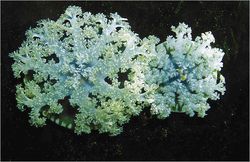
Jelly Among nature’s grand inventory of multicellular creatures, jellyfish seem like the ultimate other, as alien from us as mobile beings can be while still remaining within the kingdom Animalia. Where is the head, the heart, the back, the front, the matched sets of parts and organs? Where is the bilateral symmetry? Yet if any taxonomic dynasty is entitled to the originalist mantle, to the designation of genuine emblematic earthling animal, and also to brand the rest of us the alien arrivistes, it is the jellyfish. A diverse group of thousands of species of gooey, saclike invertebrates found throughout the world, the jellyfish are preposterously ancient, dating back 600 million to 700 million years or longer. That’s roughly twice as old as the earliest bony fish and insects, three times the age of the first dinosaurs.

“Jellyfish are the most ancient multiorgan animal on earth,” said David J. Albert, a jellyfish expert at the Roscoe Bay Marine Biological Laboratory in Vancouver, British Columbia.

More here.

Monday, June 6, 2011

Sunday, June 5, 2011

Imprisonment and the Lash

OB-OD534_0602fl_G_20110602121552 Peter Moskos in the WSJ (via Crooked Timber):

Not too long ago, in 1970, America had 380,000 incarcerated people. That was considered normal. Today, thanks in large part to a misguided war on drugs and get-tough sentencing laws, there are 2.3 million Americans behind bars. Something has gone terribly wrong. Never in the history of the world has a country locked up so many of its people. We have more prisoners than soldiers. We have more prisons than China, and they have a billion more people than we do.

The problem is so abysmal in California that the Supreme Court ordered 33,000 prisoners to be housed elsewhere or released. But even this is a drop in the bucket, compared to what is needed to bring our levels of incarceration back to what is acceptable for a free and civilized republic. Were California to return to its 1970s rate of incarceration, it would have to release more than 120,000 criminals.

Today’s prison reformers—and I wish them well—tinker with the machinery of incarceration while being dismissed too readily as soft on criminals. And even the most progressive reformer has no plan to reduce our prison population by 85%. I do: let’s bring back the lash.

If you think flogging is too cruel to even consider, what would you do if given the choice between five years in prison and 10 brutal lashes? You’d probably choose the lash. Wouldn’t we all? What does that say about prison?

We should offer criminals the choice between the status quo of prison and being caned, Singapore-style. If flogging were really so horrible, nobody would choose it. But of course most people would. And that’s my point. I defend flogging because something radical is needed to reduce the cruelty of incarceration.

Bulb In, Bulb Out

Mag-05lightbulb-t_CA0-articleLarge Andrew Rice in the NYT Magazine:

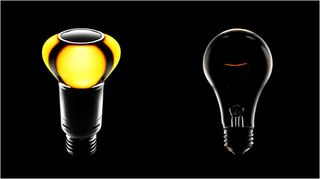
Over the past few years, in conditions of strict secrecy, a multinational team of scientists has been making a mighty effort to change the light bulb. The prototype they’ve developed is four inches tall, with a familiar tapered shape, and unlighted, it resembles a neon yellow mushroom. Screw it in and switch it on, though, and it blazes with a voluptuous radiance. It represents what people within the lighting industry often call their holy grail, an invention that reproduces the soft luminance of the incandescent bulb — Thomas Edison’s century-old technology — but conforms to much higher standards of energy efficiency and durability. The prototype is supposed to last for more than 22 years, maybe as long as you own your house, so you won’t need to stock up at the supermarket. And that’s fortunate, because one day very soon, traditional incandescent bulbs won’t be available in stores anymore. They’re about to be effectively outlawed.

As a consumer product, light bulbs belong to what one industry executive calls a “low-thought category,” and yet, of late, they’ve become a surprising flash point. Conservatives like Rush Limbaugh have denounced the “light-bulb ban” — actually, a new set of federal efficiency regulations that the traditional incandescent can’t meet — as a symbolic case of environmentalist overreaching, and Michele Bachmann invoked it in the Tea Party’s response to the State of the Union. Wherever your political sympathies lie, you may have found yourselves nodding along with Representative Joe Barton, a Texas Republican who has lambasted the harsh glare given off by those “little, squiggly, pigtailed” compact fluorescents. When it comes to making light, a fundamental necessity of human civilization, libertarians and aesthetes are joined in an unlikely alliance. Environmental groups say the complainers are a cranky minority — that consumers will eventually get used to new light — but those in the illumination business can’t afford to be so sanguine.

Morality Without “Free Will”

Boyballoon Sam Harris over at his blog (via Andrew Sullivan):

We are conscious of only a tiny fraction of the information that our brains process in each moment. While we continually notice changes in our experience—in thought, mood, perception, behavior, etc.—we are utterly unaware of the neural events that produce these changes. In fact, by merely glancing at your face or listening to your tone of voice, others are often more aware of your internal states and motivations than you are. And yet most of us still feel that we are the authors of our own thoughts and actions.

The problem is that no account of causality leaves room for free will—thoughts, moods, and desires of every sort simply spring into view—and move us, or fail to move us, for reasons that are, from a subjective point of view, perfectly inscrutable. Why did I use the term “inscrutable” in the previous sentence? I must confess that I do not know. Was I free to do otherwise? What could such a claim possibly mean? Why, after all, didn’t the word “opaque” come to mind? Well, it just didn’t—and now that it vies for a place on the page, I find that I am still partial to my original choice. Am I free with respect to this preference? Am I free to feel that “opaque” is the better word, when I just do not feel that it is the better word? Am I free to change my mind? Of course not. It can only change me.

There is a distinction between voluntary and involuntary actions, of course, but it does nothing to support the common idea of free will (nor does it depend upon it). The former are associated with felt intentions (desires, goals, expectations, etc.) while the latter are not. All of the conventional distinctions we like to make between degrees of intent—from the bizarre neurological complaint of alien hand syndrome to the premeditated actions of a sniper—can be maintained: for they simply describe what else was arising in the mind at the time an action occurred. A voluntary action is accompanied by the felt intention to carry it out, while an involuntary action isn’t. Where our intentions themselves come from, however, and what determines their character in every instant, remains perfectly mysterious in subjective terms. Our sense of free will arises from a failure to appreciate this fact: we do not know what we will intend to do until the intention itself arises. To see this is to realize that you are not the author of your thoughts and actions in the way that people generally suppose. This insight does not make social and political freedom any less important, however. The freedom to do what one intends, and not to do otherwise, is no less valuable than it ever was.

While all of this can sound very abstract, it is important to realize that the question of free will is no mere curio of philosophy seminars. A belief in free will underwrites both the religious notion of “sin” and our enduring commitment to retributive justice.

Sunday Poem

I Try To Wake You In The Dark

I try to wake You in the dark.
From Mecca or Jerusalem.
I try to wake You in the dark.

But You've been sleeping alone on dark stones.
Who knows for how long. In Mecca
or perhaps Jerusalem. Some say
millennia.
Or much longer.

But stubborn me, I still try.
I don’t give up. I'm still trying,
giving it my all, in the dark,
to wake You up.

From Mecca or Medina.
Jerusalem or Hebron.

Can You hear my voice
in the dark? To the right, down
there, in the tunnel?

Can You see me?
A tender youth, in the dusk
of madness?

Because all through the night
I have been throwing words at You,
expecting You.
In vain.

From Mecca or Medina.
Jerusalem or Hebron.

Perhaps some of the words hurt Your feelings?
Forgive me. I am only trying.
Perhaps millennia or more have passed.
In the dark. To wake You up.
With great tenderness.

Now,
from Jerusalem,

or

from Mecca.

Because if You awaken,

spontaneously, with a smile,
as my heart predicted,
You will say

suddenly:
Where art thou?

by Admiel Kosman
from Alternative Prayerbook
publisher: Hakibbutz Hameuchad,
Tel Aviv © 2007
translation by Lisa Katz and Shlomit Naor
© 2010

Life After Kevorkian

William Saletan in Slate:

Kevo Jack Kevorkian is dead. He didn't kill himself. But after years of failing health, he received his own medicine: a merciful end. He was 83. So was my father. Two months ago, my dad passed away. Like Kevorkian, he had cancer. He saw the end coming. He rejected chemotherapy, turned to hospice care, and went home to die. I spent weeks with him. He was at peace with the prospect of oblivion. Two weeks before he died, a group of friends came over to toast him. They said they were really going to miss him. “Well,” my dad joked, “Since I don't believe in an afterlife, I'm not going to miss you.”

Death was OK. But suffocation wasn't. His body, filling up with cancer, couldn't breathe. I saw the anxious look in his eyes, heard the plaintive tone as he asked the nurse for a little extra morphine. She stared back, gauging him. This, I learned, is what good caregivers do. They don't shut you down or hasten your death the first time you ask. They want to be certain you need it. They want to make sure that what's coming out of your mouth is your will, not just a moment of panic.

I always thought Kevorkian was basically right about assisted suicide.

More here.

God Bless You, Mr. Greybeard

Bill Moyers interviews Jane Goodall in Guernica:

Goodall-300 When Jane Goodall walked into the building for this interview, faces lit up. Our security chief told me she does animal rescue work after hours because of Goodall. Our stage manager whispered into my ear, “She’s been my hero for decades.” And the nine-year-old daughter of our video editor hurried into the studio because she was writing a school report on Goodall (she got an A, by the way). Everyone was aware of who Jane Goodall is or what she has done to close the gap between the animal world and our own species. Goodall herself evolved from a youthful enthusiast of animals—inspired by her father’s gift to her of a toy chimpanzee he named Jubilee—to the world’s most noted observer of chimpanzees and a global activist for all of life on earth. Through a chain of unintended consequences, the young Goodall met the famous anthropologist Louis Leakey in Kenya, was hired as his secretary, and then was sent into the forest as his primary researcher on chimps. Over many years in the Gombe Stream National Park, she came to know her subjects as individuals with distinct personalities, and with social and family lives shaped by their emotions, as are our own. Her landmark studies diminished the distance between human and nonhuman, and her television specials were so popular it became easy to think all of us had grown up with her and the chimps.

Bill Moyers: This life you’re living now is such a contrast to the life of the Jane Goodall we first met many years ago, living virtually alone in the forest in the company of chimpanzees, sitting for hours quietly taking notes, observing. And now, three hundred days a year, you’re on the road. You’re speaking. You’re lobbying. You’re organizing. Why? What’s driving you?

Jane Goodall: It actually all began in 1986. In the beginning of the year, I was in my dream world. I was out there with these amazing chimpanzees. I was in the forests I dreamed about as a child, I was doing some writing and a little bit of teaching once a year. And then this conference in Chicago brought together the people who were studying chimpanzees across Africa and a few who were working with captive chimps, noninvasively. We were together for four days and we had one session on conservation. And it was so shocking to see, right across the chimpanzees’ range in Africa, forests going, human populations growing, the beginning of the bushmeat trade, the commercial hunting of wild animals for food, chimpanzees caught in snares, population plummeting from somewhere between one and two million at the turn of the last century to at that time, about 400,000. So I couldn’t go back to that old, beautiful, wonderful life.

More here.

Saturday, June 4, 2011

Philosophy is Useless

Philosophy is useless. How much nicer it is
to brew some tea, to make it strong, to sip it
with apricot preserves, while going through
your chest of treasures: a collection of
clay dragons from Samarkand, with their tails
chipped off and then repaired with good old glue.
If you get bored with that, there is also a collection
of toy lions. One of them, made of grey metal,
is most amusing, with its fierce head
and mangy mane; originally it embellished
the handle of an ancient sword, then someone
ingeniously used it as a model for the corkscrew
that I, unfortunately, cannot put to use because
the thing was given to me as a farewell memento.

Read more »

The Coke Side of Life

From The Paris Review:

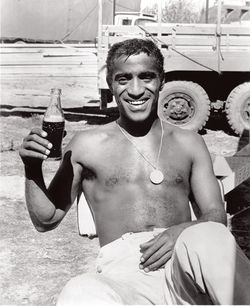
Cocacola_sammydavisjr_BLOG Coca-Cola is the brand par excellence, the marca di tutti marche, the brand the other brands dream about being (even though the brands never sleep). Nothing else is even close. When it comes to what a brand is, Coke, as they say, is it. According to the branding consultancy Interbrand, Coke has a “brand value” of seventy billion dollars, which is twelve billion more than its nearest competitor, IBM. That’s a strange measurement, brand value, because it takes several nebulous things into consideration, including probably love. While many people are fond of Coke, some of them to the point of addiction, who even likes IBM?

Coke’s status is not merely economic or pop cultural or emotional or psychological. Coca-Cola transcends those categories to compete in the broader realm of speech, of monosyllables. We’re told that Coke is the second most recognized word in any language, after okay. There are 6.9 billion people in the world, and according to The Coca-Cola Company they drink 1.6 billion Cokes a day. I don’t have the figures for this, but it may be that right now the only thing people on this planet are doing more than breathing is drinking Coke. There may be more people drinking Coke this very minute than sleeping. There may be more people drinking Coke than awake.

More here.

A brain training exercise that really does work

From PhysOrg:

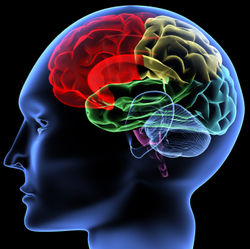
Brain Forget about working crossword puzzles and listening to Mozart. If you want to improve your ability to reason and solve new problems, just take a few minutes every day to do a maddening little exercise called n-back training.

…According to Jonides, the n-back task taps into a crucial brain function known as working memory—the ability to maintain information in an active, easily retrieved state, especially under conditions of distraction or interference. Working memory goes beyond mere storage to include processing information. The n-back task involves presenting a series of visual and/or auditory cues to a subject and asking the subject to respond if that cue has occurred, to start with, one time back. If the subject scores well, the number of times back is increased each round. The task can be done with dual auditory and visual cues, or with just one or the other. A few years ago, Jonides and his colleagues Martin Buschkuehl, Susanne Jaeggi, and Walter Perrig demonstrated that dual n-back training increased performance on tests of fluid intelligence. But the current work extends that finding in several ways. “These new studies demonstrate that the more training people have on the dual n-back task, the greater the improvement in fluid intelligence,” Jonides said. “It's actually a dose-response effect. And we also demonstrate that the much simpler single n-back training using spatial cues has the same positive effect.”

More here.

Friday, June 3, 2011

VS Naipaul finds no woman writer his literary match – not even Jane Austen

From Guardian:

VS-Naipaul-007 VS Naipaul, no stranger to literary spats and rows, has done it again. This time, the winner of the Nobel prize for literature has lashed out at female authors, saying there is no woman writer whom he considers his equal – and singling out Jane Austen for particular criticism. In an interview at the Royal Geographic Society on Tuesday about his career, Naipaul, who has been described as the “greatest living writer of English prose”, was asked if he considered any woman writer his literary match. He replied: “I don't think so.” Of Austen he said he “couldn't possibly share her sentimental ambitions, her sentimental sense of the world”.

He felt that women writers were “quite different”. He said: “I read a piece of writing and within a paragraph or two I know whether it is by a woman or not. I think [it is] unequal to me.” The author, who was born in Trinidad, said this was because of women's “sentimentality, the narrow view of the world”. “And inevitably for a woman, she is not a complete master of a house, so that comes over in her writing too,” he said. He added: “My publisher, who was so good as a taster and editor, when she became a writer, lo and behold, it was all this feminine tosh. I don't mean this in any unkind way.”

More here.

Mobile phones officially under suspicion

From Nature:

News341-i1_0 Mobile-phone use has joined the World Health Organization's purgatorial category of “possibly carcinogenic for humans”. A committee of experts brought together by the International Agency for Research on Cancer (IARC), a World Health Organization (WHO) scientific centre in Lyon, France, announced yesterday that it cannot rule out the possibility that heavy mobile-phone use may increase the risk of brain cancer.

The IARC's formal opinions on such matters — always based on published data — are influential, and likely to raise the temperature of an already overheated debate on mobile-phone use and health. The WHO's 'possible carcinogen' category covers 266 other radiation sources and chemicals, including certain pesticides and gasoline — and also items such as coffee, which joined the list in 1991 as a possible cause of bladder cancer. The IARC regularly puts together expert groups to evaluate evidence for the carcinogenic potential of chemicals and radiation sources that have raised concern. Its categories include 'carcinogenic', 'probably carcinogenic', 'possibly carcinogenic' and 'not classifiable'. The IARC expert group of 31 scientists from 14 countries was headed by epidemiologist Jonathan Samet of the University of Southern California in Los Angeles. The group held a closed conference between 24 and 31 May to assess potential carcinogenic hazards associated with exposure to radiofrequency electromagnetic fields, including radio and television transmitters, as well as mobile phones.

More here.

Friday Poem

High-speed Bird

At full tilt, air gleamed –
and a window-struck kingfisher,
snatched up, lay on my palm
still beating faintly.

Slowly, a tincture
of whatever consciousness is
infused its tremor, and
ram beak wide as scissors

all hurt loganberry inside,
it crept over my knuckle
and took my outstretched finger
in its wire foot-rings.

Cobalt wings, shutting on beige
body. Gold under-eye whiskers,
beak closing in recovery
it faced outward from me.

For maybe twenty minutes
we sat together, one on one,
as if staring back or
forward into prehistory.

by Les Murray
from Taller When Prone
Publisher: Black Inc., Melbourne
© 2010

3 Quarks Daily 2011 Science Prize: Vote Here

ScreenHunter_08 Mar. 04 17.11 Dear Reader,

Thanks very much for participating in our contest. For details of the prize you can look at the announcement here, and to read the nominated posts you can go here for a complete list with links.

If you are new to 3 Quarks Daily, we welcome you and invite you to look around the site after you vote. Learn more about who we are and what we do here, and do check out the full site here. Bookmark us and come back regularly, or sign up for the RSS feed. If you have a blog or website, and like what you see here, we would very much appreciate being added to your blogroll. Please don’t forget!

Results of the voting round (the top twenty most voted for posts) will be posted on the main page on June 11, 2011. Winners of the contest, as decided by Lisa Randall, will be announced on or aorund June 21, 2011.

Now go ahead and submit your vote below!

Cheers,

Abbas

P.S. If you notice any problems, such as a nominee is missing from the list below, please leave a comment on this page. Thanks.

BEWARE: We have various independent ways of keeping track of attempts at voting multiple times, which I am deliberately not revealing publicly. Any attempts at fraud will be thoroughly investigated, and anyone caught trying to vote multiple times will be instantly disqualified. I don’t think I really need to say this, but there are always a couple of bad eggs who will try!