
Matt Taibbi at Racket News:
 Every generation of adults thinks the next is growing up in a broken world. “It is the story of humanity,” says Jonathan Haidt, author of a new book on a youth mental illness epidemic called The Anxious Generation.
Returning to his roots as a professor of moral psychology after a perhaps uncomfortable foray into the center of America’s culture wars, Haidt’s new work describes a “great rewiring” of childhood, whose most frightening feature is its alacrity. In less than ten years, Americans went from nearly 8 in 10 teens not having smartphones to the inverse. By 2022, 46% reported being “almost constantly” online, many steeped in digital addictions causing depression, dysphoria, suicidation. A parent reading The Anxious Generation will feel like a dental patient shown two hours of oral health disaster photos.
What makes this scare tale different?
More here.
 Strangeness – estrangement – is very characteristic of this world – and a world it is, since all these prose works convey a very similar atmosphere and are largely set in the same locale – the Norwegian west coast, with its fjords, its islands, its fishing villages, the omnipresent sometimes threatening, sometimes comforting sea. (It’s rather piquant for an Irish reader to see the word ‘skerries’ coming up often in the English translation – it means of course reefs or rocky islands from Old Norse sker and is a reminder of our own Norse inheritance.)
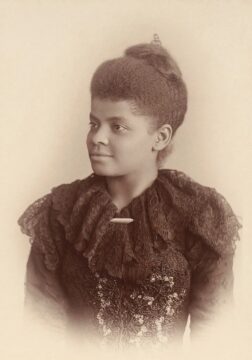 Coppery like a penny, thick like bad molasses, even a little gamey like a possum.
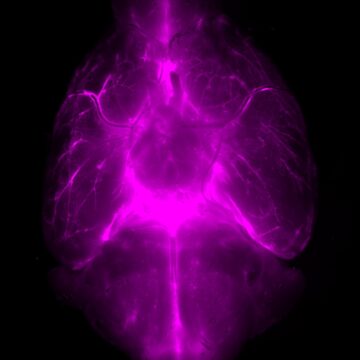 We all need sleep, but no one really knows why. For the past 10 years, a prevailing theory has been that a key function of sleep is to
  Cocktails with George and Martha is a dishy, process-heavy appreciation of a cinematic masterpiece. Gefter shows how, after almost 60 years, the kitchen-sink savagery of the movie—and Edward Albee’s 1962 play, on which it is based—still shatters. The film portrays a long, cocktail-infused Saturday night at the home of middle-aged history professor George (played by Richard Burton in the movie) and his wife, Martha (Elizabeth Taylor). Martha has invited another couple over for drinks, with whom they begin to bicker, then flirt, then wage war. Their heaviest weapon is their imaginary child (they are, in fact, childless), whom they use as a punching bag and a life raft. Gefter locates Albee’s genius in the creation of the child and his poetic language, but also in the tender ending, which suggests that for George and Martha, at least, the sparring has been play-acting, albeit of the most serious kind.
 Imagine a machine that provides a simulation of any experience a person might want, but once the machine is activated, the person is unable to tell that the experience isn’t real. When Robert Nozick formulated this thought experiment in 1974, it was meant to be obvious that people in otherwise ordinary circumstances would be making a horrible mistake if they hooked themselves up to such a machine permanently. During the intervening decades, however, cultural commitment to that core value — the value of being in contact with reality as it is — has become more tenuous, and the empathic use of AI, in which people seek to be understood, cared for and even loved by a large language model (LLM), is on the rise.
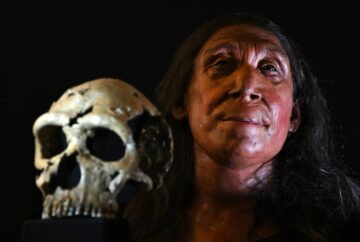 Some 60,000 years ago, Neanderthals in western Eurasia acquired strange new neighbours: a wave of Homo sapiens migrants making their way out of Africa, en route to future global dominance. Now, a study
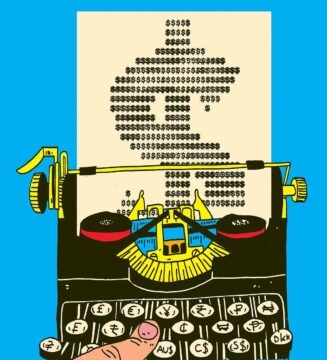 Imagine that in every business school students were told, in all seriousness, that they were in training for being a billionaire. Imagine it was heavily implied that the natural conclusion of their careers—what “making it” in business meant—was legit billionaire-status. Judged from the outside, such a situation would appear the enactment of a collective pathological delusion.
 IN AN
IN AN 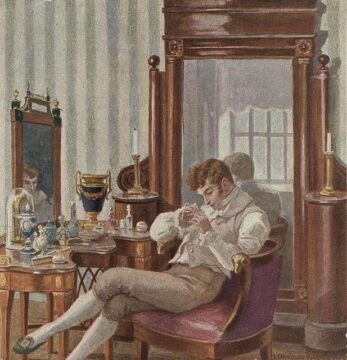 Friends called her Anna Vassilievna, according to the Russian custom of having the patronym follow the given name. As evening fell, I often lay in my child’s pyjamas, on the living room sofa, close to my grandmother, my Babushka. The sofa stood in our living room in the Leipzig apartment, close to the large window. Some light came from the outside.
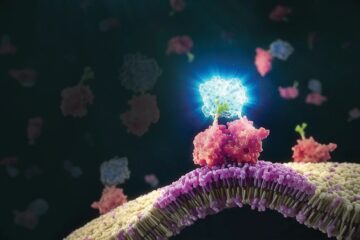 Although chimeric antigen receptor (CAR)-T therapy — where a patient’s T cells are engineered to fight cancer — works well against blood cancers in young people, that success drops dramatically for older patients. The impact of ageing on an older patient’s T cells, so-called cell fitness, could be the problem.
 For the first half of my life, certainly, when I was in my twenties, I was a great disappointment to my parents. College had held no interest for me. I was threatened that I had such a bad record of attendance at Hindu College that I would not be allowed to sit for my final-year exams. Each morning I boarded the University Special, the shuttle bus that the DTC provided for students, but I did so with the sole aim of sitting close to a girl I liked. (In three years, the sum total of our conversation had gone like this: “Would you like to read my poems?” “No.”) Then, I fell in love with another woman, from a different year, a year junior to me. I wrote her many letters, and even received responses, but we spent very little time together. We never even held hands. But I was happy. Instead of going to class, I sat on the college lawns smoking cigarettes, or reading in various libraries in the city, discovering poetry and fiction.
 The Obama administration saw a flurry of tech sector hype about self-driving cars. Not being a technical person, I had no ability to assess the hype on the merits, but companies were putting real money into it, and so I wrote pieces looking at the labor market, land use, and transportation policy implications. But the tech turned out to be way overhyped, progress was much slower than advertised, and then Elon Musk further poisoned the water by marketing some limited (albeit impressive) self-driving software as “Full Self-Driving.”