
Suzanne Schneider in Dissent:
Amid the mass slaughter and starvation of Palestinians in Gaza, it is easy to forget the political drama that gripped Israel only one year ago. After assuming power in December 2022, a new far-right government led by Benjamin Netanyahu had proposed a slate of judicial and administrative reforms that prompted a wave of anti-government protests. Concerned journalists, former U.S. and Israeli government officials, and major American Jewish organizations issued ominous warnings about democratic backsliding. Israel, it seemed, was heading in the direction of illiberal Hungary.
This framing was never quite convincing. While hundreds of thousands of Israelis marched to save democracy, most refused to address, or even acknowledge, the occupation. A country that maintains an unequal citizenship system for Jewish and Palestinian Israelis—and disenfranchises approximately 35 percent of the population in territory it controls on account of their ethnic identity—does not match the conventional definition of democracy. But there is an alternative idea of democracy in vogue among partisans of the global right, one built around the right to discriminate and to privilege the needs of the nation over those of individuals in general and minorities in particular. It is this version of democracy that has long prevailed in Israel, and which the Jewish state’s supporters now offer as a blueprint for illiberal leaders around the world.
Aided by new institutional networks that spur the circulation of right-wing ideas and practices among Israeli, Hungarian, and American conservatives, the Zionist right has acquired ideological heft and global recognition by joining the legal right to discriminate to a defense of national particularism, tradition, and other “conservative values.” The champions of illiberal democracy claim to represent a venerable alternative to both liberalism and fascism; their political vision is more accurately described as ethno-authoritarian. One problem, as Israelis began to experience during last year’s crackdown on anti-government protests, is that states built around eliminating enemies of the people eventually tend to devour their own.
More here.

 In her spirited and richly detailed “Cunning Folk,” Tabitha Stanmore, a specialist in medieval and early modern magic, writes that between the 14th and 17th centuries, “a whole host of magical practitioners” pervaded villages, cities and royal courts — diviners, astrologers, charm makers, healers. Their customers were commoners and courtiers, peasants and merchants, housewives and queens.“This book is not about witches,” Stanmore emphasizes. The cunning folk were different, she explains, because they used “service magic,” not the dark arts, “to positively affect the world around them.” What’s more, “most people” marked a “distinction” between magicians of this kind (good, basically) and witches (evil), although the boundary, she admits, could be “fluid.” That’s because their clients’ requests could be “sinister,” to put it mildly. In 1613, for instance, the depraved Countess of Essex (later imprisoned for murdering a foe with a toxic enema) requested a slow-acting poison from a fortuneteller named Mary Woods, so she could bump off the Count. Woods skipped town rather than comply (so she told authorities) but was tried anyway; her fate is unknown.

 The U.S. Food and Drug Administration (
 Francis Ford Coppola’s Megalopolis took 41 years to make. It might take as long to understand. Coppola’s magnum opus, which premiered in competition at the Cannes Film Festival last night, is a movie of extraordinary highs and baffling lows, alternately dazzling and confounding. Sometimes, in the same moment, it’s both. When I asked colleagues who’d seen it—at a remote early-morning screening, added at the last minute to accommodate Coppola’s preference for IMAX—they looked at me like the mute humans in the
  A decade has passed, but exhuming Elliot Rodger’s life and ghastly final actions remains fraught. It risks inflicting further pain for the victims’ families and other survivors, and new revelations could feed the kind of infamy many perpetrators seek. The case stands out among the hundreds I’ve studied in 12 years of reporting on mass shootings. To this day it fuels copycat attackers who fixate on misogyny, making it an ongoing subject of news coverage and various academic and security research. It also helped catalyze policy change, in particular the spread of “red flag” laws aimed at keeping guns away from unstable people.
 There is a buzz in India today – a sense of limitless possibilities. India has just
 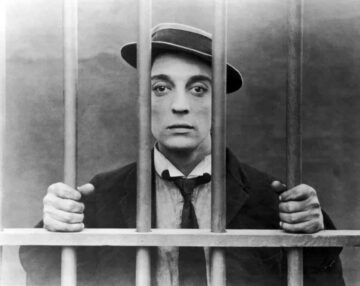 Now we may return briefly to the philosophy of Wittgenstein. If this seems a radical change of subject, an abrupt passage from the familiarity of comedy to the strangeness of technical philosophy, then it may be hoped that such an experience of difference may itself become important. Instead of connecting Keaton to Wittgenstein in some difficult conceptual fashion, I would be happy {great exact use of the word!} simply to convey the impression that in the same way as Keaton may be profound, Wittgenstein may be enjoyable. The relation between them could turn out to be something more interesting than the necessity to choose between comedy and philosophy.
 A
A S
S Higher ed is at an impasse. So much about it sucks, and nothing about it is likely to change. Colleges and universities do not seem inclined to reform themselves, and if they were, they wouldn’t know how, and if they did, they couldn’t. Between bureaucratic inertia, faculty resistance, and the conflicting agendas of a heterogenous array of stakeholders, concerted change
  Genetic information usually travels down a one-way street:
  Every generation of adults thinks the next is growing up in a broken world. “It is the story of humanity,” says Jonathan Haidt, author of a new book on a youth mental illness epidemic called