Dchha42__BLITZ_Logical_Insanity
Definitely worth a listen. More from Dan Carlin and his Hardcore History here.

Dchha42__BLITZ_Logical_Insanity
Definitely worth a listen. More from Dan Carlin and his Hardcore History here.
All Her Life
I lay down for a nap. But everytime I closed my eyes,
mares' tails passed slowly over the Strait
toward Canada. And the waves. They rolled up on the beach
and then back again. You know I don’t dream.
But last night I dreamt we were watching
a burial at sea. At first I was astonished.
And then filled with regret. But you
touched my arm and said, “No, it's all right.
She was very old, and he'd loved her all her life.”
by Raymond Carver
from Where water Comes Together With Other Water
Vintage Books, 1986
From Rediff:

Though Changez is not forcibly taken to America — he is, in fact, the son of a poet in Lahore [ Images ] and had gone to American to study and pursue the American dream — the talk about janissaries has a profound influence on him and plays a key role in making him think of going back to Pakistan. Nair recalled how exactly 11 years ago she desperately sought news of her friends in New York during the Toronto film festival for the North American premiere of Monsoon Wedding [ Images ]. And now she was in town to promote her new film which has 9/11 as one of its characters. But she did not get into the project because of its 9/11 connections, she said. “In truth, the film was not directly inspired by 9/11,” she said. Instead, it was a visit to Pakistan that moved her to make a film based on “a brilliant mind-game of a book.” Her father's family had migrated to India [ Images ] from Lahore, she said, adding that she learned a lot about Lahore's culture and literature from him. Kate Hudson plays Changez's lover and Kiefer Sutherland, his boss in a Wall Street firm. Nair did not disclose how much the film cost but it is believed to have been made for about $15 million and was funded by a Doha financing agency. Nair shot much of the film in India and America, a few scenes in Turkey, and plenty of external shots of Lahore. “I am known as a bulldozer and I get a film done in about two years. But this time it took six years to get the script ready, raise the money and shoot the film,” Nair said. “I just knew I had to do it,” she continued, adding that there is “an increasingly sad divide between the East and the West” that makes fresh dialogue necessary.
More here.
From Discover:

…Would Americans tolerate anti-American preaching from Muslim clerics in this country? We can explore this with the General Social Survey with the SPKMSLM variable. It asks:
Now consider a Muslim clergyman who preaches hatred of the United States.
If such a person wanted to make a speech in your community preaching hatred of the United States, should he be allowed to speak, or not?
The question was asked in 2008 and 2010. Since the sample sizes are large I’ll limit to non-Hispanic whites first.
More here.
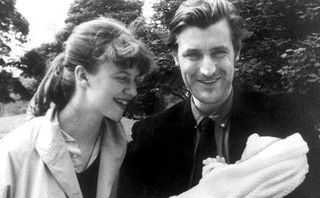
“The analogy between the artist and the child is that both live in a world of their own making,” wrote Anaïs Nin in her diary in 1945. Four decades later, 23 years after Sylvia Plath took her own life at the age of 30, Ted Hughes (1930-1998) wrote to their 24-year-old son, Nicholas. Theletter, found in Letters of Ted Hughes (public library), is superb in its entirety and a worthy addition to history’s finest fatherly advice, but this particular passage speaking to the beautiful vulnerability of our inner child and its longing to be seen, heard, let loose is an absolutley exquisite articulation of the human condition — don’t let the length and density deter you from absorbing it, for once you do, it’ll saturate every cell of your soul.
When I came to Lake Victoria, it was quite obvious to me that in some of the most important ways you are much more mature than I am. . . . But in many other ways obviously you are still childish — how could you not be, you alone among mankind? It’s something people don’t discuss, because it’s something most people are aware of only as a general crisis of sense of inadequacy, or helpless dependence, or pointless loneliness, or a sense of not having a strong enough ego to meet and master inner storms that come from an unexpected angle. But not many people realise that it is, in fact, the suffering of the child inside them. Everybody tries to protect this vulnerable two three four five six seven eight year old inside, and to acquire skills and aptitudes for dealing with the situations that threaten to overwhelm it. So everybody develops a whole armour of secondary self, the artificially constructed being that deals with the outer world, and the crush of circumstances.
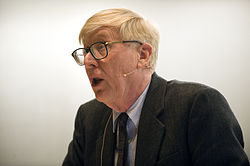
A RECENT BBC PROGRAM showed Boris Johnson, the mayor of London and author of Johnson’s Life of London: The People who Made the City That Made the World (HarperCollins, 2011), inspecting the gigantic sculpture titled ‘Orbit’ in the company of Lakshmi Mittal, the steel magnate, and Anish Kapoor, the designer of this enormous steel tower built for the London Olympics of 2012. The mayor, with his hefty frame and mop of flaxen hair, and the two Indians who made Orbit as a permanent public artwork for the Olympic Park, all seemed to claim ownership of this work, in one way or another, and thereby to stake a claim in the renewal and refashioning of London as a city as important in the 21st century as it had been in the 19th and 20th centuries. Surely this controversial and ambitious British politician and journalist, belonging to the Conservative Party, could not do what he’s doing without the money and the talent of the two Indian men inspecting the humongous structure alongside him.
The scene of seemingly post-imperial, post-racial and post-modern collaboration and camaraderie reminded me with a jolt of three recent essays on the political history of modern India by the British Marxist and intellectual historian Perry Anderson, in the pages of the London Review of Books. Anderson, a long-time editor of the New Left Review, a professor of history at UCLA and a prolific essayist for the past half-century, has not previously written about India, so these three very long pieces—which together total nearly 50,000 words—may come as something of a surprise to Indian scholars. But even more surprising, for his admirers and readers in India, is his weirdly anachronistic reading of modern Indian history. In pursuit of his effort to render a scathing verdict on the Indian present, he has constructed a malign caricature of the Indian past, beginning with two relentless attacks on Mahatma Gandhi and Jawaharlal Nehru.
In the first two of his three essays, devoted respectively to Gandhi and Nehru, Anderson’s zeal to demolish these idols and, by extension, to discredit the Independence movement, leads him unwittingly to a bombastic rhetorical tone that sounds more like Winston Churchill or the latter-day Tory defenders of the Raj than a preeminent British Marxist.
After declaring that “All countries have fond images of themselves, and big countries, inevitably, have bigger heads than others,” Anderson proceeds through a litany of tendentious claims: that the “idea of India” was a “European and not a local invention”; that the Independence movement did nothing to hasten British withdrawal—and indeed even prolonged the Raj; that the advances of the Japanese Army at the end of World War II in Southeast Asia, rather than any Indian efforts, provided the final blow to British rule in India. Anderson’s Gandhi is an almost unrecognisable figure: a charismatic leader and a “first-class organiser and fundraiser” to be sure, but also a religious zealot, a “stranger” to “real intellectual exchange” whose “homemade” faith was indelibly tinted with an ethos of Hindu supremacy.

In the spring of 1983, Esquire convened what it called a revenge symposium. The editors asked a group of well-known writers to “let go unbridled comments” on their harshest and least favorite critics. The results were spectacular.
Jim Harrison called his detractors “tweed fops” and “snack-food artists.” Roy Blount Jr. declared about Larry McMurtry, who panned one of his books: “I hear he is absurdly, egregiously — especially in a cowboy hat — short.” Erica Jong recalled that Paul Theroux, while reviewing her novel “Fear of Flying,” referred to her as a “mammoth pudenda.” (Actually he was referring to the novel’s main character.) She replied: “Since Mr. Theroux has no personal acquaintance with the organ in question, I cannot help but wonder whether some anxieties about his own anatomy were at the root (as it were) of his review.”
It hurts to be criticized, and there is exhilaration in firing back, sometimes literally. The novelist Richard Ford, after a dismissive review from Alice Hoffman in The New York Times Book Review in 1986, shot bullets through one of her novels and mailed the mutilated thing to her. “My wife shot it first,” he reportedly said. Years later he spat in public upon the novelist Colson Whitehead, who had harshly reviewed another of his books. Afterward Whitehead commented, “This wasn’t the first time some old coot had drooled on me, and it probably won’t be the last.”
Ford is old-school. Most of us, when confronted with painful words, can’t resort to firearms or loogies, as much as we’d enjoy it. Instead we stew. We struggle to be as chipper as the novelist Kingsley Amis, who commented that a bad review could ruin breakfast but should not ruin lunch. It probably helped that Amis drank at lunch.
Wallace was tormented by one defining question: was the world anything more than a tissue of representations? A hard philosophical sceptic, he felt imprisoned inside his own head, his dark box. “There is this existential loneliness in the real world,” he told Laura Miller, the co-founder of Salon.com, in an interview collected in Conversations with David Foster Wallace. “I don’t know what you’re thinking or what it’s like inside you and you don’t know what it’s like inside me.” It was his belief (more a hope, as it turned out) that “in fiction I think we can leap over that wall itself in a certain way”. But in his life Wallace, who suffered from clinical depression, kept slamming into that wall of separation between the self and the world. He longed to make connections – with other people, with other minds. He longed to understand better, to be free from the tumult and the pain that he felt, every day, without respite.
more from Jason Cowley at the FT here.
What a pleasant surprise to encounter a book that actually looks beyond the surface of South Africa’s by now well-known story. We’ve read so many accounts of the miraculous transformation of the hideous apartheid state into the rainbow democracy and, in the nearly two decades since that happened, of the flies in the ointment that have marred the fairy tale. In his many visits to South Africa over the last eight years and the year he spent living there, California journalist Douglas Foster, former editor of Mother Jones, has gained a superb understanding of the complexities of South African society. Though never underestimating the burden laid upon present-day South Africa not just by 45 years of apartheid but by centuries of segregation, he has wisely chosen to concentrate on the chaotic present and immediate past as well as trying to see what a very uncertain future might hold.
more from Martin Rubin at the LA Times here.
Carson artfully linked radioactive fallout with the indiscriminate use of pesticides; they were, Souder writes, the “twin fears of the modern age.” The parallels between the chemicals were, to Carson, exact and inescapable: both were invisible, acutely toxic, mutagenic and had effects that could last for generations. Such negative impacts, Carson believed, were the consequence of the “impetuous and heedless pace of man rather than the deliberate pace of nature.” Carson had a knack for encapsulating big ideas and for saying exactly what she meant. Her voice could be clear and plain (“The problem that concerns us here . . . ”) or poetical (she feared “a sterile world ungraced by the curving wing of a bird in flight”). But none of this came easily. Souder paints Carson as an obsessive reviser and a meticulous researcher who was often blocked, she said, by her uneasiness that human beings had acquired the power to reshape the world so profoundly.
more from Elizabeth Royte at the NY Times here.
So Little
I said so little.
Days were short.
Short days.
Short nights.
Short years.
I said so little.
I couldn't keep up.
My heart grew weary
From joy,
Despair,
Ardor,
Hope.
The jaws of Leviathan
Were closing upon me.
Naked, I lay on the shores
Of desert islands.
The white whale of the world
Hauled me down to its pit.
And now I don't know
What in all that was real.
.
by Czeslaw Milosz
from The Collected Poems
Ecco Press, NY, 1988
From The Guardian:

Herman Melville's subversive, digressive masterpiece is narrated by the sailor Ishmael, telling of his voyage on the whaling ship the Pequod. The ship's captain, Ahab, is obsessed with finding the white whale, Moby-Dick, who took his leg, investing him with an “intangible malignity” and pursuing him beyond the bounds of sanity. “Moby-Dick seeks thee not. It is thou, thou, that madly seekest him!” he is told. Unappreciated in Melville's lifetime, the novel is now, according to the American academic and author Jay Parini, a book which “permeates a culture, reinforcing and shaping ideas: ambition, for example, and the drive to conquer nature, the imperial drive, the wish to pursue an ideal to the last degree”.
More here.
Hello,
The voting round of our philosophy prize (details here) is over. A total of 515 votes were cast for the 40 nominees (click here for full list of nominees). Thanks to the nominators and the voters for participating.
So here they are, the top 20, in descending order from the most voted-for:
 FauxPhilNews: Kripke resigns as report alleges that he faked results of thought experiments
The editors of 3 Quarks Daily will now pick the top six entries from these, and after possibly adding up to three “wildcard” entries, will send that list of finalists to Justin E. H. Smith for final judging. We will post the shortlist of finalists here in the next day or two.
Good luck!
Abbas

The international media has not always been kind to Syria’s revolutionary people. For months on end, many of the latter turned themselves into instant citizen-journalists to document their uprising and the violent repression of the Syrian regime, loading clips and photos taken from their mobile-phones to various social networks; still, the established media, insinuating that only it could really be trusted, covered these events with an ever-present disclaimer that these images could not be independently verified. Since the Damascus regime was refusing to allow more than a trickle of foreign media personnel into the country, chaperoned by the infamous minders, what the Syrians themselves were reporting was deemed unreliable.
Nevertheless, an increasing number of brave journalists dared to sneak into Syria at great personal risk, reporting the same events which activists had attempted to spread to the world. For the most part, experienced journalists were perfectly capable of distinguishing between straight propaganda from a regime fighting for its survival and real information from a variety of other sources. Overwhelmingly, ensuing reports about Syria gave a voice to “the other side” or at least quoted opposing points of view, if only for balance. In some cases, journalists found no room to cater for the regime’s claims, especially when reporting from civilian areas under relentless attack by Bashar al-Assad's forces.
It was from the wretched Homs district of Baba Amr, under siege and shelling for an entire month, that the late Marie Colvin, amongst others, testified on the eve of her death under the regime’s shells about the “sickening situation” and the “merciless disregard for the civilians who simply cannot escape.” Like her, most of those who managed to get into Syria have testified about the regime’s repression of a popular uprising, even after the latter evolved to include an armed rebellion.
Robert Fisk, a seasoned war correspondent who has covered the region for decades, surprisingly broke a mould, gradually allowing himself to become a part, and not simply a witness, of the Syrian regime’s propaganda campaign.

Shulamith Firestone’s Airless Spaces (1998) has been sitting in one of my bookcases since 2000. I bought the postcard-sized Semiotext(e) book mostly out of surprise from seeing the name of its author in print: one I realized I hadn’t seen for a very long time and which I didn’t associate with fiction. It has moved with me between various apartments and houses for the last 12 years, unread—not even cracked open until a few months ago (as I write this, it’s the fall of 2011).
My surprise encounter with her name on the spine of Airless Spaces made me acutely aware of my ignorance. What exactly happened, in the interval between 1970 and 1998, to Shulamith Firestone? Of the few American radical feminists I actually read (it was the socialist feminists who really appealed to me), Firestone had seemed the smartest and most interesting, the one with the keenest sense of feminism’s history and of how the problems it sought to rectify intersected with but could not be totally explained or dissolved by Marxism. I thought I should do some research, then got distracted by other projects and forgot about it. Years after this, on one of the many occasions when I took Airless Spaces down and thought about actually reading it—or at least progressing past the opening story, “Of Plastic Wrapping and Cauliflower,” about a recently released hospital patient trying to learn how to use nonplastic utensils again—I deferred that reading once again by desultorily googling, assuming there must have been a string of books between the collection of stories and the work of nonfiction that made Firestone nationally known at the age of 25, The Dialectic of Sex. A string of books that, naturally, I’d be obligated to read before tackling Airless Spaces. But the internet informed me that due to the mental illness and hospitalization of the author, between The Dialectic of Sex and Airless Spaces, there was nothing. A 28 year-long gap.
The paratexts of Airless Spaces are hardly inviting: unhappy title, hospital-blue cover with dull, barely-distinguishable beige print, and large, anxious, unhappy-looking close-up of Firestone on the back cover.
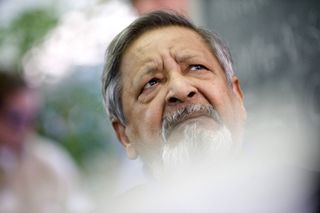
Two years ago, I was invited to a dinner party in New York. It took place on the Upper East Side of Manhattan, in a penthouse apartment. Our host was not merely rich: she had a name that through long association with money had itself become a shorthand for wealth. The dinner was being held in honor of a writer, by now old and famous, on the publication of his latest and perhaps final book. And because the book was about Africa, and because as a man ages his thoughts circle around questions of legacy, the writer, who was not himself African, had requested, in lieu of a normal book launch, a quiet dinner with a group of young African writers. This was how I came to be invited.
I stood in the luxurious living room of the penthouse, glass in hand, surrounded by Morandi’s paintings and Picasso’s prints. To the sound of a small bell, from a private elevator the old writer and his middle-aged wife emerged. He was short and stout—a little fat, even, though you could see he hadn’t always been so—and he walked across the marble floor unsteadily, with the aid of a walking stick, and with the aid of his wife, a dark-haired, dark-eyed woman, taller than him, glamorous in her pashmina. My agent, who was also the old writer’s agent, introduced us. “Teju, meet Vidia Naipaul.”
Detractors of Christopher Hitchens might want to keep that passage in mind as they go about their business of reproaching him for his “views” on, for instance, the war in Iraq. You could disagree with those views, like his close friends Martin Amis, Ian McEwan, James Fenton, and Salman Rushdie did, but the principle of anti-totalitarianism on which those views were founded seem to me worth a good deal of respect, and even admiration. In any case, a man who wrote so well and so thoughtfully, and with such Hazlittean “gusto” — his words, in writing and in speech, had that “double relish” — cannot easily be reduced to the summation of his political views, which often contradicted themselves anyway. James Wood wrote of Orwell not long ago that “contradictions are what make writers interesting. Consistency is for cooking.” The same applies to the Hitch: as Martin Amis pointed out in his eulogy at the Memorial Service, Hitchens was so argumentative, was such an auto-contrarian, that it often seemed as though the only person he thought it worthwhile to argue with was himself.
more from Morten Høi Jensen at The Millions here.
One way of understanding the sacraments, perhaps best articulated by liturgist Gordon Lathrop, is that simple things become central things. When Christians refer to the bath and the table, they refer not only to the specific sacraments of bathing and eating, but they point also to the sacramental character of every bath and every table. The setting apart of one table and one bath shows forth the splendor of all tables and all baths. That setting apart is the calling of Christians but also the vocation of the writer. The attentiveness of the writer is shown in how that writer lifts to the level of extraordinary the most ordinary of people, places, and things. Not surprisingly, the great Catholic writers are extolled for sacramental writing, often for their accounts of communion. Graham Greene’s “The Hint of an Explanation” develops around an overdue confession by a grown altar boy who stole a consecrated wafer as a child. Flannery O’Connor included profound descriptions of the Eucharist in her letters and essays but also included some playful accounts in her fiction, my favorite of which is the old priest in “The Displaced Person” who, not being able to talk theology with Mrs. McIntyre or any of her farmhands, “came regularly once a week with a bag of breadcrumbs” for the peacocks.
more from Casey N. Cep at The Paris Review here.