Pakistan on the Brink

From The Telegraph:

Gardham_main_2197955bAs Britain desperately tries to rescue some pride from its imminent withdrawal from Afghanistan, the best-case scenario may be that we leave behind a less stable and more corrupt version of Pakistan. The vision of that country painted by Ahmed Rashid, one of the leading analysts of the “Af-Pak” relationship, is not an encouraging one. “Pakistan is now considered the most fragile place in the world… It is the most unstable country and the most vulnerable to terrorist violence, political change or economic collapse,” he writes in his latest book, Pakistan on the Brink.

While it is not yet a failed state, Rashid admits that its multiple long-term and short-term problems seem “insurmountable by the present military and civilian leadership”. Among the myriad problems are the corrupt and rundown bureaucracy, judiciary and police force and an elite that “lacks all sense of responsibility towards the public, refuses to pay taxes and is immeasurably corrupt”. There is no drinking water for a third of the population, no electricity for up to 16 hours a day and half the school-age children do not go to school, meaning “young men face a future of little promise and are ready to sign on to jihad”. The judiciary is a “broken instrument incapable of handing down judgments to the real criminals” and retired intelligence officers spread conspiracy theories and blame America on a plethora of high-octane chat shows

More here.

Why Pygmies of Africa are so short

From MSNBC:

PygsWhy the Pygmies of West Africa have such short stature, while neighboring groups don't, has been somewhat of a mystery. Now new research suggests unique changes in the Pygmy's genome have both led to adaptations for living in the forest as well as kept them short. Researchers analyzed the genomes, the “building code” that directs how an organism is put together, of Western African Pygmies in Cameroon, whose men average 4 feet, 11 inches tall, and compared them with their neighboring relatives, the Bantus, who average 5 feet, 6 inches, to see whether these differences were genetic or a factor of their environment.

…The data revealed height had a genetic component related to Bantu ancestry: The more Bantu ancestry an individual from the Pygmy tribe had, the taller that individual tended to be. One part of the genome, on chromosome 3, was especially important in this trait, the researchers said. “We kept seeing a lot of them [these single-letter differences] highlight that region in chromosome 3,” Tishkoff said. “It just seemed like a hot spot for selection and for very high differentiation and, as it turns out, very strong association with height as well.”

Height genes
The researchers zoomed in on the genes in this area of the genome. One of the genes they found had already been associated with height changes in other populations, but the rest hadn't. They found new changes in hormone pathways and immunity that seemed to correlate to the pygmy's short stature. These could have been selected for because of their influence on height or because changes in these genes play other roles in the body that were advantageous to the Pygmies, Tishkoff said. For example: An immunity component might be selected for because it helps the pygmies fight off infections, which are prevalent in their habitat. And the link to hormone pathways also makes sense, Tishkoff said, because changes to them could help the Pygmies reproduce at earlier ages. Shorter height could just be a byproduct of these changes.

More here.

oxford

1335351353258

Growing up in Oxford I looked out the window and saw low grey skies and red-brick walls, a deeply fixed and bounded place. ‘Can’t complain’ was the brightest affirmation I heard; ‘could be worse’ spelled almost ecstasy. My parents, eager products of British India, took me to see Lear at Stratford and we all noticed the power the old patriarch wielded at the play’s beginning, even if he was notionally dividing up his kingdom. We didn’t see that the broken, weeping, almost posthumous king at the end might be closer to the spirit of the land around us. We moved from north Oxford to southern California in 1964 – when I was seven – and suddenly I noticed that living in the future tense could be as treacherous as living in the past; it was ideal so long as you were young and on the move, but it could be exasperating if ever you wanted to lay foundations underneath your feet. Small places were more conducive to enmities and smugness, I came to see, as soon as I was in the devouring open spaces of the Far West, but they were also home to idiosyncrasy, a sense of fun and to privacy.

more from Pico Iyer at Granta here.

kraftwerk

120430_r22133_p465

On an August night in 1981, the German band Kraftwerk played at the Ritz, on East Eleventh Street in Manhattan, in support of its latest album, “Computer World.” The only instruments onstage were actually machines: reel-to-reel tape recorders, synthesizers, keyboards, and a calculator. All four members of the group had short hair and dressed identically, in black button-down shirts, black pants, and shiny shoes, which made them look more like valets than like musicians. That didn’t bother them, as they didn’t like the idea of being a band—or even musicians—and often referred to themselves as “operators.” For the song “Pocket Calculator,” one member triggered percussion with a drumstick. Another used a Stylophone, a metal keyboard played with a small stylus. Florian Schneider, a founding member, played the calculator, which was wired into the sound system, so that pressing the keys made audible beeps. His partner, Ralf Hütter, who is the only remaining original member of Kraftwerk, sang the lyrics of the song in a monotone—an approach that he calls Sprechgesang, or “spoken singing”—and played a small Mattel keyboard. “By pressing down a special key / it plays a little melody,” he intoned. Schneider responded by playing something sort of like a melody with the calculator. At one point, Hütter bent down and let the audience play the keyboard. Recently, Hütter said, “I wanted to show them that anyone could make electronic music.”

more from Sasha Frere-Jones at The New Yorker here.

Thursday, April 26, 2012

On the Quebec Student Strike

Justin E. H. Smith at his own blog:

ScreenHunter_09 Apr. 26 23.17On April 23, writing in the Chronicle of Higher Education, Lilian Radovac aptly described the past few months of upheaval across Quebec as “the biggest student uprising you've never heard of.” This movement, which began building from early February of this year, has at its peak involved over 300,000 students across the province. A demonstration on March 22 attracted over 200,000 participants to the streets of Montreal. There have been scores of arrests.

The official reason for the movement is student opposition to the announcement from the government of provincial prime minister Jean Charest of its intention to raise university tuition around 75% over the next five years, to a little under $4000 per year. At the end of this period, Quebec tuition will still be the lowest of all Canadian universities, which are in turn much less expensive than all American public universities.

In spite of what many outside of the province consider a deal too good to complain about, one frequent demand of the demonstrators is for something even better than what Quebec students had before the hikes: free university education for all. This is of course a tall order, and that it can be made at all has much to do with the unique place of Quebec in North American society, and with the sense of many in this province that it is a society based on a different set of values, and a different set of choices, than those of the rest of the continent. As Sameer Zuberi wrote recently in the Huffington Post, “Quebecers have made a societal choice to keep education accessible to all, regardless of income.”

One question right now is whether Quebec will in fact be able to hold out against the consumer model of education that is sweeping the world around it.

More here.

Paul Theroux on What’s Really Wrong With Africa

Travel writer Paul Theroux on why his latest book, “The Lower River”, looks at the damage done by nongovernmental organizations in Africa.

Maria Streshinsky in Pacific Standard:

Question: You have said it is contemptible “to stay home and invent the exotic, as Saul Bellow did, conjuring up an Africa he had never seen.” Since a strong theme in your new book is the damage nongovernmental organizations have inflicted over the years, how often have you returned?

Cls-a0a0z9-aAnswer: My novel is, among other things, an adventure story, a sort of descent by an unsuspecting American into the unknown, and into a trap. It’s an ordeal — my favorite kind of narrative, whether fiction or travel. I have been back to Africa and to Malawi many times. Teaching in Malawi was my first job, from 1963 to 1965, and then I spent four years in Uganda as a teacher. This seems a long time ago! Our mission was pretty simple: start schools, educate the students, and help create a system that would be self-sustaining. The students would become teachers and our role would be phased out. There were many students and enough aid to see them through. And the students were, on the whole, conscientious. But something changed. What was supposed to happen, didn’t happen.

On my repeated trips back, I saw the pattern I have described — foreign teachers, African students, and now, almost 50 years later, there are still not enough African teachers. The Peace Corps is still at it! It seems an endless cycle, and worse, a deteriorating educational system. So what happened — or, rather, what didn’t happen? I think that the foreign teachers, with the best of motives, unintentionally subverted the system. Malawians don’t want to be teachers — it’s an underpaid and underappreciated profession; and though there is now a medical school in Malawi, few graduates have stayed to be doctors in Malawi, where there is an average of two physicians for every 100,000 people.

Development seemed logical back in the 1960s, but did not take into account political tyranny, corruption, and the simple expedient of emigration. The main character in my book, for whom Africa was an Eden, has to confront this and much else.

More here.

Thinking in a Foreign Language Makes Decisions More Rational

Brandon Keim in Wired:

ScreenHunter_08 Apr. 26 22.39To judge a risk more clearly, it may help to consider it in a foreign language.

A series of experiments on more than 300 people from the U.S. and Korea found that thinking in a second language reduced deep-seated, misleading biases that unduly influence how risks and benefits are perceived.

“Would you make the same decisions in a foreign language as you would in your native tongue?” asked psychologists led by Boaz Keysar of the University of Chicago in an April 18 Psychological Science study.

“It may be intuitive that people would make the same choices regardless of the language they are using, or that the difficulty of using a foreign language would make decisions less systematic. We discovered, however, that the opposite is true: Using a foreign language reduces decision-making biases,” wrote Keysar’s team.

Psychologists say human reasoning is shaped by two distinct modes of thought: one that’s systematic, analytical and cognition-intensive, and another that’s fast, unconscious and emotionally charged.

In light of this, it’s plausible that the cognitive demands of thinking in a non-native, non-automatic language would leave people with little leftover mental horsepower, ultimately increasing their reliance on quick-and-dirty cogitation.

Equally plausible, however, is that communicating in a learned language forces people to be deliberate, reducing the role of potentially unreliable instinct. Research also shows that immediate emotional reactions to emotively charged words are muted in non-native languages, further hinting at deliberation.

More here.

Our steadfast pursuit of a freer Saudi Arabia

Waleed Abu Alkhair in the Washington Post:

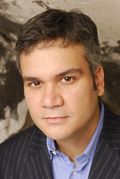
ScreenHunter_07 Apr. 26 22.31Hamza Kashgari visited me several times before he wrote the ill-fated tweets that led to his arrest in February and then to solitary confinement in a Riyadh prison. We discussed social, political and philosophical issues, including some that are taboo in Saudi Arabia. I warned him that his thoughts, if expressed publicly, would lead religious hard-liners to call for his blood.

I find it outrageous that in the 21st century one person could threaten another with death merely for embracing ideas other than religion, God and the prophet Muhammad. But that is exactly what happened at a weekly salon that focuses on political, religious and human rights issues. I named the salon “samood,” a richly textured Arabic word meaning “resistance” or “steadfastness.”

Every week, I am host to several dozen people at my home, most of them politically engaged Saudi youth. I started the salon after government and religious authorities clamped down on gatherings of liberal youth in cafes and bookstores in the wake of Hamza’s arrest, severely constricting the space for free expression in this city. The oppressive trend has accelerated as religious hard-liners have mounted a vicious campaign to cleanse society of what they deem “unbelief” and “deviant thought”: in reality, any ideology different from their own.

More here. [Waleed Abu Alkhair, in photo above, is a human rights activist in Saudi Arabia.]

unlocking the mysteries of life?

Lostonthegenemap

More problematic is the reality that the human genome is still a vast catalogue of the unknown and scarcely known. The Human Genome Project’s most startling finding was that human genes, as currently defined, make up less than 2 percent of all the DNA on the genome, and that the total number of genes is relatively small. Scientists had predicted there might be 80,000 to 140,000 human genes, but the current tally is fewer than 25,000 — as one scientific paper put it, somewhere between that of a chicken and a grape. The remaining 98 percent of our DNA, once dismissed as “junk DNA,” is now taken more seriously. Researchers have focused on introns, in the gaps between the coding segments of genes, which may play a crucial role in regulating gene expression, by switching them on and off in response to environmental stimuli. Gene regulation, whether by introns or by regulator genes, forms one aspect of the burgeoning field of epigenetics, which concerns itself with the process of differential gene expression. In a classic study published in 2004, biologists at McGill University in Montreal identified a regulatory sequence in rat pups that lowered stress hormone production when the mother groomed them; their production of the hormone stayed low throughout their lives. Moreover, the researchers could adjust the gene in healthy adults to increase their stress, and in agitated adults to lower it. Though not their intention, the study provided the genetic evidence to prove Freud right: what happens in childhood has a lasting, though theoretically reversible, biological effect on adult behaviour.

more from Mark Czarnecki at The Walrus here.

body language

Bodylanguage170x145

Two Jews and an Englishman are crossing the ocean on a ship. The Jews, who can’t swim, start arguing with each other about what they should do if it sinks. As they argue, they gesticulate with such vigor that the Englishman backs away to avoid injury. Suddenly, the boat begins to sink. All the passengers except for the Jews, who are too wrapped up in their argument to notice, jump overboard. After a long, exhausting swim, the Englishman finally reaches the shore. He is amazed to find the two Jews there, happily waving him in. Astonished, he asks them how they got there. “We have no idea,” says one of them. “We just kept on talking in the water.” A version of this joke appears in a 1941 dissertation on “the gestural behavior of eastern Jews and southern Italians in New York City, living under similar as well as different environmental conditions.” The study was written by David Efron, who grew up in an orthodox Jewish home in Argentina and arrived in New York for graduate study in the 1930s. By his own account, when he spoke Spanish, he gestured with “the effervescence and fluidity of those of a good many Argentinians.” When he spoke Yiddish, his gestures were more “tense, jerky, and confined.” He sometimes combined the two styles, as when “discussing a Jewish matter in Spanish, and vice versa.” After living in the United States for a few years, he found his gestures becoming “in general less expansive, even when speaking in his native tongue.”

more from Arika Okrent at Lapham’s Quarterly here.

debating high finance

Fay-3_263445m

It is a brave man these days who rallies to the flag of finance. Robert J. Shiller, who teaches Economics at Yale, is one of the few academic commentators who can find a good thing to say about finance theory and financial engineering, and who is even disposed to defend the extravagant sums bankers are paid (one hesitates to say “earn”). He maintains that the financial sector is a crucial component of the infrastructure we need for a “Good Society”, and we should be reinforcing its skills, and extending its reach, rather than cutting it down to size. In so arguing, he is swimming against a strong tide. The Masters of the Universe are having a bad decade. In the 1980s they shrugged off an imaginative assault from Tom Wolfe in The Bonfire of the Vanities. The ugly and rapacious villain Gordon Gekko, in the film Wall Street, became a cult hero. In 1990, Barbarians at the Gate by Bryan Burrough and John Helyar, a racy tale of debt and duplicity, did little to dent the reputations of the dramatis personae, who continue to run one of the most successful private equity funds. No matter how unsavoury the story, it failed to change the public mood.

more from Howard Davies at the TLS here.

Confessions of a Pro-Social Psychopath

James Fallon has lectured worldwide on neurolaw and the brains of psychopathic killers and dictators. Through a series of chance and serendipitous events, this led to a disturbing revelation in his own family, and in his own life.

Fallon is professor emeritus of anatomy and neurobiology and professor of psychiatry and human behavior at the University of California, Irvine’s School of Medicine.

Open Science and Access to Medical Research

Jalees Rehman in Scientific American:

RehmanThe idea of open science goes beyond merely providing public access to published scientific articles because it also includes offering access to the original research data. This would permit fellow researchers to help evaluate and analyze the results, so that the broader scientific community as well as the public can weigh in on the interpretation of the scientific findings. This aspect of open science likely does qualify for being a true paradigm shift, because it will require that we think of ourselves as part of research communities and usher in “networked discovery”, as has been described in a recent book by Michael Nielson and discussed by Bora Zivkovic.

There are still many obstacles that need to be addressed before “open science” becomes generally accepted. Academic publishers currently reap significant profits from selling high-priced annual subscriptions to academic institutions, and they would lose this income if scientists started publishing their results in open-access journals that freely provide articles to readers without charging for subscriptions or per-article fees. Furthermore, academic institutions and individual scientists may be concerned about how they would apply for patents, if the discovery process is networked and involves score sof collaborating scientists.

More here.

Thursday Poem

We Did Not Make Ourselves

We did not make ourselves is one thing
I keep singing into my hands
while falling
asleep

for just a second

before I have to get up and turn on all the lights in the house, one
after the other, like opening
an Advent calendar

My brain opening
the chemical miracles in my brain
switching on

I can hear

dogs barking
some trees
last stars

You think you’ll be missed
It won’t last long
I promise

*

I’m not dead but I am
standing very still
in the backyard
staring up at the maple
thirty years ago
a tiny kid waiting on the ground
alone in heaven
in the world
in white sneakers

I’m having a good time humming along to everything I can still
remember back there

How we’re born

Made to look up at everything we didn’t make

We didn’t
make grass, mosquitoes
or breast cancer

We didn’t make yellow jackets

or sunlight

either

*

I didn’t make my brain
but I’m helping
to finish it

Carefully stacking up everything I made next to everything I ruined
in broad daylight in bright
brainlight

This morning I killed a fly
and didn’t lie down
next to the body
as we’re supposed to

We’re supposed to

Soon I’m going to wake up

Dogs
Trees
Stars

There is only this world and this world

What a relief
created

over and over

by Michael Dickman
from The End of the West
Copper Canyon Press, 2009

Nano nod for lab-on-a-chip

From PhysOrg:

ChipYou wouldn't know it from appearances, but a metal cube the size of a toaster, created at the University of Alberta, is capable of performing the same genetic tests as most fully equipped modern laboratories—and in a fraction of the time. At its core is a small plastic chip developed with nanotechnology that holds the key to determining whether a patient is resistant to cancer drugs or has viruses like malaria. The chip can also pinpoint infectious diseases in a herd of cattle.

Talk about thinking outside the box. Dubbed the Domino, the technology—developed by a U of A research team—has the potential to revolutionize point-of-care medicine. The innovation has also earned Aquila Diagnostic Systems, the Edmonton-based nano startup that licensed the technology, a shot at $175,000 as a finalist for the TEC NanoVenturePrize award. “We’re basically replacing millions of dollars of equipment that would be in a conventional, consolidated lab with something that costs pennies to produce and is field portable so you can take it where needed. That’s where this technology shines,” said Jason Acker, an associate professor of laboratory medicine and pathology at the U of A and chief technology officer with Aquila.

More here.

Wednesday, April 25, 2012

Lawrence Krauss and The Anti-philosophy Complex

KraussMassimo Pigliucci in Rationally Speaking:

“Philosophy is a field that, unfortunately, reminds me of that old Woody Allen joke, ‘those that can’t do, teach, and those that can’t teach, teach gym.' And the worst part of philosophy is the philosophy of science; the only people, as far as I can tell, that read work by philosophers of science are other philosophers of science. It has no impact on physics what so ever. … they have every right to feel threatened, because science progresses and philosophy doesn’t.”

Okay, to begin with, it is fair to point out that the only people who read works in theoretical physics are theoretical physicists, so by Krauss’ own reasoning both fields are largely irrelevant to everybody else (they aren’t, of course). Second, once again, the business of philosophy (of science, in particular) is not to solve scientific problems — we’ve got science for that (Julia and I explain what philosophers of science do here). To see how absurd Krauss’ complaint is just think of what it would sound like if he had said that historians of science haven’t solved a single puzzle in theoretical physics. That’s because historians do history, not science. When was the last time a theoretical physicist solved a problem in history, pray?

And then of course there is the old time favorite theme of philosophy not making progress. I have debunked that one too, but the crucial point is that progress in philosophy is not and should not be measured by the standards of science, just like the word “progress” has to be interpreted in any field according to that field’s issues and methods, not according to science’s issues and methods.

The Particle At the End of the Universe

Sean Carroll in Cosmic Variance:

ScreenHunter_06 Apr. 25 19.34I’m currently hard at work writing The Particle At the End of the Universe, a popular-level book on the Large Hadron Collider and the search for the Higgs boson. If all goes well, it should appear in bookstores at the end of this year or beginning of next. (Ideally, it will go on sale the same day they announce the discovery of the Higgs. I’m trying to bribe the right people to make that happen.) The title is somewhat tentative, so it might change at some point.

This will be a somewhat different book than From Eternity to Here. While both are aimed at a general audience, FETH was a rather lengthy tome that made a careful argument in a hopefully novel way. Anyone could read it, but to get the most out of it you have to really sit and think about certain ideas. Particle, on the other hand, aims to be a fun and narratively gripping page-turner — a book that makes you eager to move quickly to the next chapter, rather than taking a few minutes to let the last one sink into your head. A bodice-ripper, if you will. It will be full of stories and fun anecdotes about the human beings who made the LHC happen and have devoted their lives to searching for the Higgs and particles beyond the Standard Model. A book you would be happy to give to your Grandmom in order to convey some of the excitement of modern physics. (Unless your Grandmom is a particle physicist, in which case she might think it’s at too low a level.)

At the same time, of course, I’m going to try to illuminate the central ideas of the Standard Model in as clear a fashion as I can manage. It won’t just be a list of particles; I’ll cover field theory, gauge bosons, and spontaneous symmetry breaking. All in fine bodice-ripping style. (Maybe get Fabio for the cover?)

More here. [Photo: by Jennifer Oulette.]

Narendra Modi’s Ratings

Hartosh Singh Bal in the International Herald Tribune:

ScreenHunter_05 Apr. 25 17.47Narendra Modi, the leading figure of India’s right-wing Bharatiya Janata Party (B.J.P.), didn’t make Time magazine’s list of the 100 most powerful people in the world this year. Midway through the online polling, after Modi’s stock had started to surge, liberals in India organized a counter-campaign. In the end, 256,792 votes were cast for him and 266,684 votes against.

Too bad for Modi: it’s an election year in the state of Gujarat, where he is chief minister, and he is known to be eyeing the country’s prime minister slot. But I, for one, am relieved: finally a defeat for Modi’s formidable PR team, which routinely manages to whitewash his responsibility for fueling sectarian strife and oversells his economic accomplishments, especially to Western journalists.

More here.