Saturday Poem

Those are not saints in the political undergrowth
those are badgers who think they're saints
—Artis Merril

Worst Nightmare

There were days when you’d shove
your hand into a cupboard in search of a cabbage
and come upon the head of Alfredo Garcia

others when you’d thread a needle
and imagine you were darning a hole
out of which the evil of the world could escape

and times when you’d press a knob on the oven
and conjure the six million
naked, shorn in the shower.

But at night the curtains drawn,
the door locked and bolted
you felt safe, yourself and your care.

No matter how many horror stories
you sidled into your mind
you never imagined this nightmare –

you lived in a democracy, yourself
and your care, under an elected government,
who cherished each citizen

far from the laboratories of jackbooted men.
.

by Celia de Freine
from Fiacha Fola
publisher: Cló Iar-Chonnachta, 2005
translation: Celia de Freine

Adam Yauch, MCA (1964-2012)

Mca

Yauch died today, at the age of forty-seven. In 2009, he was diagnosed with a cancerous tumor he described at the time, in this interview with The Stool Pigeon, as “located in the perotic gland and the neighbouring lymph node.” He fought back, ebbing and strengthening and dimming, as the disease progressed. Friends exchanged messages. “Adam’s doing O.K.” “He’s kinda tired.” Minimizing the situation by using simple language felt like the least hysterical trick you could play on yourself. Sometimes, it felt like a memory might work. “Your remember when Tom and Adam went under the bridge with that car and they almost went into the river?” Nope. Just made it worse, recalling the skinny, loopy kid who took any dare and inflated it until it was beyond foolish. The kid who would think the only problem with cancer is that it wasn’t a good enough punchline. The ideal memorial is written from distance, a generous calculation of merit that proceeds honorably without abandoning accuracy. I have to apologize right now for being unable to give you that—Adam Yauch was a part of my childhood, an ambassador to America from our New York, which is now gone, as is he.

more from Sasha Frere-Jones at The New Yorker here.

eusociality

9ec76b88-9578-11e1-8faf-00144feab49a

“Where do we come from? What are we? Where are we going?” Those famous questions, inscribed by Paul Gauguin in his giant Tahitian painting of 1897, introduce The Social Conquest of Earth. Their choice proclaims Edward O Wilson’s ambitions for his splendid book, in which he sums up 60 distinguished years of research into the evolution of human beings and social insects. Wilson has focused on the biology of behaviour since joining Harvard University as a junior research fellow in 1953. He also has a passion for writing, with 25 books to his credit (including two Pulitzer Prize-winners). The Social Conquest of Earth fully maintains the elegant and informative style of its predecessors. His most influential book, Sociobiology (1975), defined a new discipline, with the message that social behaviour could only be understood through the lens of evolution. At that time the idea that genes and natural selection play such an important role in human society outraged many social scientists and people on the political left. By now the main messages of sociobiology and its offspring, evolutionary psychology, have been absorbed into the intellectual mainstream, though the nature-nurture debate rumbles on as scientists investigate the relative contribution of genes and the environment to various aspects of life.

more from Clive Cookson at the FT here.

bill clinton on Robert Caro

0506-CLINTON-cover-articleInline-v2

You don’t have to be a policy wonk to marvel at the political skill L.B.J. wielded to resuscitate a bill that seemed doomed to never get a vote on the floor of either chamber. Southern Democrats were masters at bottling up legislation they hated, particularly bills expanding civil rights for black Americans. Their skills at obstruction were so admired that the newly sworn-in Johnson was firmly counseled by an ally against using the political capital he’d inherited as a result of the assassination on such a hopeless cause. According to Caro, Johnson responded, “Well, what the hell’s the presidency for?” This is the question every president must ask and answer. For Lyndon Johnson in the final weeks of 1963, the presidency was for two things: passing a civil rights bill with teeth, to replace the much weaker 1957 law he’d helped to pass as Senate majority leader, and launching the War on Poverty.

more from Bill CLinton at the NY Times here.

Friday, May 4, 2012

Interview with Jonathan Safran Foer

Jacques Testard in The White Review:

JonathanSafranFoerMuch has been written about the precocity and talent of Jonathan Safran Foer, whose debut novel Everything is Illuminated (2002) commanded a $500,000 advance and was released when its author was barely 25. Originating in a creative writing thesis written under the guidance of Joyce Carol Oates when he was an undergraduate at Princeton, it tells the story of one Jonathan Safran Foer, a young American Jew in search of the Ukrainian woman who saved his grandfather from the Nazis.

Hailed by The Times as a ‘work of genius’ after which ‘things will never be the same’, it won the Guardian First Book award and was – unfortunately, disastrously – made into a film starring Elijah Wood in 2005. The praise wasn’t universal, with the book also facing charges of preciousness and factual inaccuracy.

His second novel, Extremely Loud and Incredibly Close (2005), is narrated by a 9-year-old boy who has lost his father in the 9/11 attacks. Ending in a flipbook showing a figure falling from the Twin Towers – or ascending, depending how one decides to flip the pages – it also divided opinion. Salman Rushdie called it ‘ambitious, pyrotechnic, riddling, and above all … extremely moving’; influential New York Times critic Michiko Kakutani described it as ‘cloying’. ‘While it contains moments of shattering emotion and stunning virtuosity that attest to Mr Foer’s myriad gifts as a writer,’ she added, ‘the novel as a whole feels simultaneously contrived and improvisatory, schematic and haphazard.’ Meanwhile, the film adaptation, released earlier this year, was ‘almost universally reviled’, according to the Guardian’s Xan Brooks, but made the author himself cry.

This is the way it has been for Safran Foer ever since his extremely successful and unnervingly mature debut: he is the only contemporary writer, with perhaps the current exception of Jonathan Franzen, to command such extreme reactions from the reading public.

More here.

Lawrence Krauss clarifies view of philosophy after hearing from Dan Dennett

Lawrence M. Krauss in Scientific American:

ScreenHunter_10 May. 04 18.28Recently, as a result of my most recent book, A Universe from Nothing, I participated in a wide-ranging and in-depth interview for The Atlantic on questions ranging from the nature of nothing to the best way to encourage people to learn about the fascinating new results in cosmology. The interview was based on the transcript of a recorded conversation and was hard hitting (and, from my point of view, the interviewer was impressive in his depth), but my friend Dan Dennett recently wrote to me to say that it has been interpreted (probably because it included some verbal off-the-cuff remarks, rather than carefully crafted written responses) by a number of his colleagues and readers as implying a blanket condemnation of philosophy as a discipline, something I had not intended.

Out of respect for Dan and those whom I may have unjustly offended, and because the relationship between physics and philosophy seems to be an area which has drawn some attention of late, I thought I would take the opportunity to write down, as coherently as possible, my own views on several of these issues, as a physicist and cosmologist. As I should also make clear (and as numerous individuals have not hesitated to comment upon already), I am not a philosopher, nor do I claim to be an expert on philosophy. Because of a lifetime of activity in the field of theoretical physics, ranging from particle physics to general relativity to astrophysics, I do claim however to have some expertise in the impact of philosophy on my own field. In any case, the level of my knowledge, and ignorance, will undoubtedly become clearer in what follows.

More here.

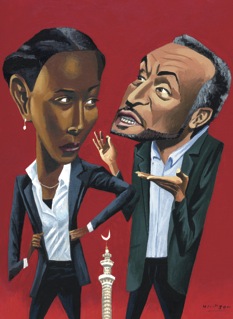
The Retired Terrorist: Osama bin Laden in Abbottabad

Rafia Zakaria in Guernica:

Osama-house-1-credit-shaukat-qadirOn pleasant afternoons, when he was not feeling ill, when the tumult of 23 children didn’t weigh too heavily on his nerves, when the onerous demands of being equally loving to three wives and five daughters didn’t wear him down, Osama bin Laden took a walk. He began at the door that led from his bedroom, then went through a veranda shielded by the now-infamous seven-foot walls. From here he followed a path at the back of the house; the path was flanked on either side by tall trees grown just to shield him. Above his head was the clear Abbottabad sky, over the horizon, the faint outlines of the mountains in the distance. Around the walls and the trees, beyond the gates, was a country whose language he did not speak, and whose government and military his organization, Al-Qaeda, had declared infidel for their crackdowns on Islamic militants.

As Osama walked the tree-lined path, he may have rolled between his fingers the wooden spheres of prayer beads that had accompanied him from the palaces of his childhood to the craggy caves and safe houses of Waziristan, a few hundred miles to the west. At the end of Osama’s walking path would have been a small, sparse building known as the hujra. In Pashtun towns, such buildings are placed front and center of every settlement; they are the beating heart of the tiniest collection of homesteads. The hujra is and has always been a place for men: where important matters can be discussed away from women, their plaintive cries and petty wants.

More here.

radical subtraction

26_imanissa_01

Since 2010, the artist Iman Issa has been working on a series of proposals for alternatives to public monuments she has known since childhood. Each piece, which Issa describes as a display, pairs a collection of objects with a vinyl wall text. All of the installations forge a relationship between those forms and phrases, but none of them spell out exactly what their affiliation may be. The texts allude to monuments that have for one reason or another failed, but the objects remain something of a mystery, drawing on memory and experience to counter the populism and political expediency of the commemorative statues they seek to replace. Issa, who is thirty-two, has been composing such precise and elusive works for a decade. Arranged in series, they create artful chains of association among objects, images, videos, texts, and sounds. There is a certain austerity to her style — a pared-down, oldschool elegance — which sets her apart from the exuberance of youth. Her installations are orderly, her materials relatively plain. Yet this tendency to streamline only adds to the fullness of Issa’s forms — the intense color of a photographic still life, the warm grain of a wooden sculpture, the soft glow of spherical lights. With an extreme economy of visual and spatial phrasing, Issa produces a wealth of possible meanings that always seem just out of reach, on the verge of articulation.

more from Kaelen Wilson-Goldie at Bidoun here.

a study in hate

Wills_1-052412_jpg_470x320_q85

Robert Caro’s epic biography of Lyndon Johnson—this is the fourth volume of a planned five—was originally conceived and has been largely executed as a study of power. But this volume has been overtaken by a more pressing theme. It is a study in hate. The book’s impressive architectonics come from the way everything is structured around two poles or pillars—Lyndon Johnson and Robert Kennedy, radiating reciprocal hostilities at every step of the story. Caro calls it “perhaps the greatest blood feud of American politics in the twentieth century.” With some reservations about the word “blood,” one has to concede that Caro makes good his claim for this dynamic in the tale he has to tell. There are many dramatic events, throughout the volume, that illustrate Caro’s theme. I begin with one that could seem insignificant to those not knowing the background on both sides, because it shows that even the slightest brush between these two triggered rancorous inner explosions. Johnson, newly sworn in as president, had just come back to Washington on Air Force One from the terrible death of John Kennedy in Dallas. Robert Kennedy sped up the steps to the plane and rushed fiercely down the length of the cabin through everyone standing in his way (including the new president) to reach Jacqueline Kennedy.

more from Garry Wills at the NYRB here.

What would Jaurès do?

Jean_Jaures_264921k

Why do French socialists, in this spring of elections and uncertainty, remain fascinated by Jaurès? His hold over the left-wing imagination is not easy to fathom. In the first place, left-wing memories of Jaurès are surprisingly partial; the Left almost seems more concerned with protecting the Jaurès trademark than studying him in detail. Nicolas Sarkozy cheerfully played on this during the 2007 presidential campaign, invoking Jaurès and a later socialist leader, Léon Blum, frequently in speeches. Today, left-wing leaders are trying to make sure their hero is more firmly anchored within their own political rhetoric. There is something of a Jaurès publishing industry developing around this. Short pamphlets containing extracts of Jaurès’s better-known articles and speeches appear regularly, and one has even been specifically addressed to the 2012 presidential candidates (their responses can be read at www.jaurescandidat2012.com). François Hollande, the Socialist candidate for the presidency, has himself felt moved to write a detailed letter covering a number of the big “Jaurès themes”: peace and Europe; tolerance and anti-racism; a justice system that moves away from violence; the ever controversial French theme of laïcité (secularism); social reform and education. The engagement with Jaurès is seen now as an essential reference if the Left is to avoid the humiliating situation of having its weightiest intellectual references deployed against it.

more from Julian Wright at the TLS here.

The Neuroscience of Prayer: It’s a Brain Puzzle

From The European:

Beten_d_rerIn a recent study our team used functional magnetic resonance imaging (fMRI) to investigate how the brain responded to praying in Christian believers. Surprisingly, considering God’s postulated invisibility, omnipresence, omnipotence, and omniscience, we found that conversing with God was not associated with regions that process abstract concepts. Rather, we found a marked pattern of activity in four regions that typically activate when humans relate to other humans. Neurologically, this finding suggests that strong believers process God as a concrete person – in spite of the theologically complex and highly abstract nature of the Christian God. Interestingly, we did not find this pattern in believers who did not use praying regularly. Perhaps the religious brain can learn to treat gods as real persons through regular practice and strong beliefs.

Importantly and somewhat contrary to the widespread assumption that communicating with God constitutes a unique experience reserved for believers, our findings suggest that praying to God is comparable to ‘normal’ interpersonal interaction, at least in terms of brain function. Praying, it seems, is subserved by the basic processing of our biologically evolved dispositions like other complex cultural phenomena, in this case the evolved human capacity for social cognition. One might ask if these findings, then, are evidence that God is just an illusion, an imagined friend that always listens in times of distress? Or may they in fact be proof that God affects us even at the level of brain function? Atheists and believers alike take considerable interest in this kind of research. Fortunately, as a scientist my interest lies solely in the physical world and speculations about the spiritual dimension lie well beyond scientific scrutiny.

More here.

Blonde hair evolved more than once

From Nature:

BlondDoes evolution have a soft spot for blondes? About 5–10% of people from Melanesia, a group of islands northeast of Australia, have naturally blonde hair — the highest prevalence outside Europe. Yet people from the region have the darkest skin pigmentation outside Africa.

Now, a study of people from the Solomon Islands in Melanesia shows that they evolved the striking blonde trait independently of people in Europe. This refutes the possibility that blonde hair was introduced by colonial Europeans, says Carlos Bustamante, a geneticist at Stanford University School of Medicine in Stanford, California, and a senior co-author on the study, which is published today in Science1. “Blonde hair has clearly evolved twice,” he says. To investigate the genetic basis underlying the trait, Bustamante and his colleagues compared the genomes of 43 blonde and 42 dark-haired Solomon Islanders, and revealed that the islanders' blonde hair was strongly associated with a single mutation in the TYRP1 gene. That gene encodes an enzyme that influences pigmentation in mice and humans. Several genes are known to contribute to blonde hair coloration in Europeans, but TYRP1 is not involved.

More here.

Thursday, May 3, 2012

Luxury vs Function in Perfumery

Victoria Frolova in Bois de Jasmin:

Vf-2s-207x300Although the word “perfume” is likely to conjure up a vision of luxurious glass bottles, the reality is that most of us come across perfumes in much more prosaic ways–whenever we do our laundry, wash dishes or brush our teeth. Functional perfumery, as this branch of fragrance is called, is a vibrant field that affects our daily lives much more than designer brand fragrances. It is often at the forefront of development in fragrance chemistry, exploring ideas that eventually make an impact on fine fragrance. Companies like Tide, Colgate, P&G, and Unilever devote much effort to the research and development of detergents, fabric softeners, soaps, beauty care products and other daily necessities. In developing countries, functional scents are the only commercial perfumes people are likely to encounter in their day-to-day lives. Therefore, while functional perfumery does not have the glamour of its fine perfumery counterpart, it is an important aspect of our fragrance experience.

For a perfumer, functional perfumery is a challenging area: the tricky product bases, raw material restrictions, intricate IFRA policies, and complex client demands. Add an extremely tight budget and you have an area of perfumery in which it takes a lot of effort to make a winning scent. It is common for fine fragrance perfumers to start out working in functional fragrances and today all perfumery school curricula include functional perfumery as a mandatory subject. Learning to work with functional fragrance restrictions can give an edge to a perfumer. If one is able to make a memorable, strong and diffusive fragrance on a pitifully small budget, then fine fragrance, with its more flexible parameters, can be an exciting transition.

More here. [Thanks to Alia Raza.]

Byzantium and Islam: Age of Transition (7th–9th Century)

An exhibition at the Metropolitan Museum of Art, New York City.

Peter Brown in the New York Review of Books:

ScreenHunter_07 May. 03 22.23In the century between 630 and 730 a considerable portion of the Old World took on its modern face. Through a series of astonishing campaigns, Arab Muslim armies created a single empire that, for a time, would reach from southern Spain to northern India and the western borders of China. From the “big bang” of these conquests a new galaxy emerged. From then onward, a closely interconnected chain of Muslim regions (one part of which, from modern Morocco to the borders of Iran, came to speak Arabic) stretched across Africa and Eurasia, joining the Atlantic to western China. A new civilization came into being, one that has lasted, with many permutations, into our own days. In the words of Finbarr Flood, a major contributor to the catalog of the Metropolitan Museum’s somewhat modestly titled exhibition “Byzantium and Islam: Age of Transition (7th–9th Century),” the foundation of the Arab empire was “one of the most remarkable achievements in human history.”

The exhibition takes us to the heart of this great detonation. It embraces the last century of the pre-Islamic Middle East and the first two centuries of Islam. To our surprise, we do not find ourselves in a world swept by a mighty wind. Instead, we enter a series of quiet rooms where time seems to stand still. Like a perfect late fall day, only the occasional rustle of a falling leaf startles us into realizing that the seasons are about to change. The few clear signs that Islam had, indeed, become politically dominant in the Middle East by the end of the seventh century strike us with almost ominous intensity. For there are so few of them.

More here.

BILL MURRAY: “I’M NOT ONE OF THOSE GUYS”

From The Talks:

Mr. Murray, you don’t have an agent or a manager and people say you don’t even own a cell phone. What does it take for a filmmaker who has a perfect role in mind for you to bring you on to a project?

ScreenHunter_06 May. 03 22.17The key really would be to have a good script. It’s not that hard. If you have a good script that’s what gets you involved. People say they can’t find me. Well, if you can write a good script, that’s a lot harder than finding someone. It’s much harder to write a good screenplay than to find someone, so you can find someone. I don’t worry about it; it’s not my problem. My problem is having a little peace and quiet. So they need to find me, that’s really their issue. I am not taking ads out or anything, standing on the street corner.

Was there a point in your career where you realized, now I can play “hard to get”?

I don’t really think it changed a whole lot. It’s just sort of a cumulative thing that happens where you get more and more attention and much of it is pleasant, but a lot of it doesn’t really serve you or help you getting anything done, it just takes up a lot of your time. So it’s pleasant enough but it means I don’t get anything else done.

Can you give me an example?

It’s like if I were in the fan mail business – I don’t answer fan mail. I don’t have time for that. It’s like there are hundreds of thousands of people that think they’re going to become millionaires getting autographs from movie actors. I don’t have time for those idiots. I got stuff to do. Spelling my name? I did that a long time ago. When I run into someone on the street that’s one thing, but answering mail for a living? Ay-ay-ay-ay-ay… I like a job where you sleep late, get kind of goofy and have some fun.

More here.

The Massive Palestinian Hunger Strike

Richard Falk in Citizen Pilgrimage:

Falk_081911Can anyone doubt that if there were more than 1300 hunger strikers in any country in the world other than Palestine, the media in the West would be obsessed with the story? It would be featured day after day, and reported on from all angles, including the severe medical risks associated with such a lengthy refusal to take food. At this time two Palestinians who were the first to start this current wave of resistance, Thaer Halaheh and Bilal Diab, entering their 64th day without food, are reported by the prisoner protection association, Addameer, and the NGO, Physician for Human Rights-Israel, to be in critical condition with their lives hanging in the balance. Despite this dramatic state of affairs there is scant attention in Europe, and literally none in North America.

In contrast, consider the attention that the Western media has devoted to a lone blind Chinese human rights lawyer, Chen Guangcheng, who managed to escape from house arrest in Beijing a few days ago and find a safe haven at the U.S. Embassy. This is an important international incident, to be sure, but is it truly so much more significant than the Palestinian story as to explain the total neglect of the extraordinary exploits of these thousands of Palestinians who are sacrificing their bodies, quite possibly their lives, to nonviolently protest severe mistreatment in the Israeli prison system.? Except among their countrymen, and to some extent the region, these many thousand Palestinian prisoners have been languishing within an opaque black box ever ever since 1967, are denied protection, exist without rights, and cope as best they can without even the acknowledgement of their plight.

More here.

The Irrationality of Irrationality: The Paradox of Popular Psychology

Samuel McNerney in Scientific American:

ScreenHunter_05 May. 03 17.06In 1996, Lyle Brenner, Derek Koehler and Amos Tversky conducted a study involving students from San Jose State University and Stanford University. The researchers were interested in how people jump to conclusions based on limited information. Previous work by Tversky, Daniel Kahneman and other psychologists found that people are “radically insensitive to both the quantity and quality of information that gives rise to impressions and intuitions,” so the researchers knew, of course, that we humans don’t do a particularly good job of weighing the pros and cons. But to what degree? Just how bad are we at assessing all the facts?

To find out, Brenner and his team exposed the students to legal scenarios. In one, a plaintiff named Mr. Thompson visits a drug store for a routine union visit. The store manager informs him that according to the union contract with the drug store, plaintiffs cannot speak with the union employees on the floor. After a brief deliberation, the manager calls the police and Mr. Thompson is handcuffed for trespassing. Later the charges were dropped, but Mr. Thompson is suing the store for false arrest.

All participants got this background information. Then, they heard from one of the two sides’ lawyers; the lawyer for the union organizer framed the arrest as an attempt to intimidate, while the lawyer for the store argued that the conversation that took place in the store was disruptive. Another group of participants – essentially a mock jury – heard both sides.

The key part of the experiment was that the participants were fully aware of the setup; they knew that they were only hearing one side or the entire story. But this didn’t stop the subjects who heard one-sided evidence from being more confident and biased with their judgments than those who saw both sides. That is, even when people had all the underlying facts, they jumped to conclusions after hearing only one side of the story.

More here.

Young Obama in Love: A Girlfriend’s Secret Diary

David Maraniss in Vanity Fair:

ScreenHunter_04 May. 03 16.33If Barack and Genevieve were in social occasions as a couple, it was almost always with the Pakistanis. Hasan Chandoo had moved back from London and taken a place in a converted warehouse on the waterfront below Brooklyn Heights. Wahid Hamid, starting a rise up the corporate ladder that would take him to the top of PepsiCo, lived on Long Island with his wife. Sohale Siddiqi was part of the crowd, along with Beenu Mahmood. It was a movable feast, and invariably a matter of bounty and excess, friends losing themselves in food and conversation. Barack for the most part declined alcohol and drugs. “He was quite abstemious,” Genevieve said. She enjoyed the warmth of the gatherings, but was usually ready to go home before him. He was pushing away from the Pakistanis, too, politely, for a different reason, she thought. He wanted something more.

Beenu Mahmood saw a shift in Obama that corresponded to Genevieve’s perceptions. He could see Obama slowly but carefully distancing himself as a necessary step in establishing his political identity as an American. For years when Barack was around them, he seemed to share their attitudes as sophisticated outsiders who looked at politics from an international perspective. He was one of them, in that sense. But to get to where he wanted to go he had to change.

Mahmood remembered that “for a period of two or three months” Obama “carried and at every opportunity read and reread a fraying copy of Ralph Ellison’s Invisible Man. It was a period during which Barack was struggling deeply within himself to attain his own racial identity, and Invisible Man became a prism for his self-reflection.” There was a riff in that book that Mahmood thought struck close to the bone with Obama.

More here.