
Ilias Alami, Tom Chodor, and Jack Taggart in Phenomenal World:
More than three decades ago, John Ruggie offered a definition of one of the most vexed terms in political science. Multilateralism, he wrote, was a group of “institutional forms which coordinate relations among three or more states on the basis of generalized principles of conduct” and operate “without regard to the particularistic interests of the parties or the strategic exigencies that may exist in any specific occurrence.” Today, amid rapidly resurgent economic nationalism and increasing geopolitical tension, it has become clear that the postwar system of multilateral institutions is under direct and sustained assault—often from its erstwhile sponsors.
In trade, the US’ obstruction of the WTO system has rendered the global regime dysfunctional, contributing to deepening protectionism and the multiplication of trade restrictions. In security, the UN notes that “paralysis in the Security Council and deliberations of disarmament bodies, as well as persistent geopolitical rivalries, are alarming signs of a multilateralism that has run out of steam.” The credibility of international law has foundered, as Israel and Russia have blatantly dismissed rulings and injunctions from the UN and the International Court of Justice. The UN Secretary General has affirmed that the institution faces “imminent financial collapse” as over 80 percent of states have not paid their membership fees to the organization.
NATO likewise faces existential threats from within its own ranks, while remilitarization has deepened fragmentation in security arrangements. In global health, the politicization of vaccine distribution during the Covid-19 pandemic exposed the empty promise of multilateralism in responding to major global crises. Climate governance is in peril, with UN environmental conferences captured by fossil fuel interests and the second Trump Administration engaging in prolific climate obstructionism.
In short, multilateral cooperation has been thrown into visible disarray across a number of issue areas, as leading states increasingly pursue unilateral actions, obstruct mechanisms, and bypass or disengage from traditional institutions. What explains this turn against multilateralism, and what might take shape in their place?
More here.
Enjoying the content on 3QD? Help keep us going by donating now.
 The large question going through the book is whether setting God as our moral exemplar makes much sense. If God is understood to set the ultimate criteria for goodness, the idea seems unproblematic: emulating God simply means becoming as good as possible. But when we look deeper into what these criteria entail—as the book’s chapters do from various perspectives—problems arise.
 Ask most opera lovers what comes to mind when they think about Richard Wagner’s Ring cycle, and they’ll likely mention the huge voices and lush, booming orchestras of the so-called golden age of the 1930s and ’40s—not the transparent, mellow instrumental sounds and light, flexible voices typical of period-instrument performances. Indeed, when I mentioned to friends that I’d recently attended a memorable historically informed performance of Siegfried, the third opera in the Ring cycle, I was met with bemused looks.
 H
H Proteins are the building blocks of life. They make up our hair, bone, skin and muscle and are constructed of folded sequences of amino acids. Scientists knew how to create one-dimensional chains but were unable to predict how the resulting strings of amino acids would fold up to form three-dimensional proteins, whose shape determines their function. This greatly restrained their ability to generate new proteins.
 Let’s start with a tragedy: Since the 2020 election, 37 states have introduced legislation designed to limit how Black history can be taught, especially in its relation to institutional racism, and 14 states have successfully imposed such laws,
 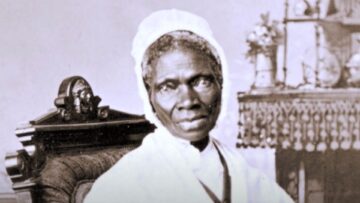 Well children … Well there is so much racket there must be something out of kilter. I think that betwixt the Negroes of the South and the women at the North all talking about rights these white men going to be in a fix pretty soon.
 There are two principal reasons for the superior conditioning of cross-country skiers, according to Laura Richardson, a clinical exercise physiologist at the University of Michigan School of Kinesiology. First, theirs is a quadrupedal sport, with arms and legs working hard at the same time, along with core and back muscles. Because the body’s cardiovascular system is not accustomed to serving those large muscle groups simultaneously at high rates of exertion, they all compete for the available blood. Over time, the body adapts by increasing blood volume, so the heart pumps more blood with each heartbeat. This sends more hemoglobin with oxygen throughout the body. As a result, most elite cross-country skiers like Diggins have an especially powerful heart muscle and an especially large and strong left ventricle to pump out more blood per minute. The mitochondria in muscle tissues — the powerhouses of the cell — in turn grow in size and in numbers to handle the rise in oxygen.