Muddasir Ramzan at Frontline:
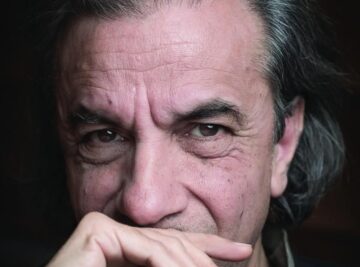 Akeel Bilgrami, the Sidney Morgenbesser Professor of Philosophy at Columbia University, is a public intellectual and a distinctive voice in contemporary philosophy. His four books (Belief & Meaning; Self-Knowledge and Resentment; Secularism, Identity, and Enchantment; and Capital, Culture, and the Commons) and many published papers testify to his ability to forge within a single, coherent framework, analytic epistemology, moral psychology, and a critical and constructive political philosophy that is deeply informed by history and political economy. In this email interview, he reflects on issues that are deeply relevant not just to India but across the world.
Tell us a bit about yourself as an intellectual. How do you see yourself and how would you like to be defined?
I’m not sure I’d like to be defined. And I am wary of the label “intellectual”. What is true is that I don’t have any other talent. I love literature, especially poetry, I love music and listen to it each day with great pleasure, but I have no talent for literary writing or for producing music. Since whatever limited ability I have for intellectual and philosophical reflection is something I constantly exercise—I can’t seem to help doing so—there may be some grounds to call me an intellectual, but I am reluctant to assume any such label.
For two reasons. The first is that the label is used to talk of the “intellectual class”, which for the most part, in the places I’ve spent any time of my life, has been an elite class.
More here. [Free registration might be required.]
Enjoying the content on 3QD? Help keep us going by donating now.

 There are two principal reasons for the superior conditioning of cross-country skiers, according to Laura Richardson, a clinical exercise physiologist at the University of Michigan School of Kinesiology. First, theirs is a quadrupedal sport, with arms and legs working hard at the same time, along with core and back muscles. Because the body’s cardiovascular system is not accustomed to serving those large muscle groups simultaneously at high rates of exertion, they all compete for the available blood. Over time, the body adapts by increasing blood volume, so the heart pumps more blood with each heartbeat. This sends more hemoglobin with oxygen throughout the body. As a result, most elite cross-country skiers like Diggins have an especially powerful heart muscle and an especially large and strong left ventricle to pump out more blood per minute. The mitochondria in muscle tissues — the powerhouses of the cell — in turn grow in size and in numbers to handle the rise in oxygen.
 The unravelling of the aid industry must force a reset of the nexus between peace and economic development. The international-development model has changed little in eight decades. In 1949, at his inaugural address as US president, Harry Truman introduced a linear concept of development — in which countries progress from ‘under-developed’ to ‘developed’ — and recognized that poverty was a “threat” to both less- and more-prosperous areas. Since then, the proportion of the world’s population in extreme poverty has plummeted, from 50–60% to about 10%. Yet, conflicts have surged. Clearly the relationship between economic development and conflict is a complicated one, which is being explored in empirical research.
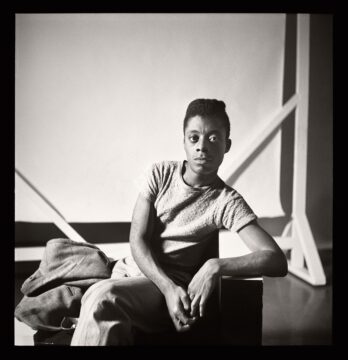 In short, we, the black and the white, deeply need each other here if we are really to become a nation—if we are really, that is, to achieve our identity, our maturity, as men and women. To create one nation has proved to be a hideously difficult task; there is certainly no need now to create two, one black and one white. But white men with far more political power than that possessed by the Nation of Islam movement have been advocating exactly this, in effect, for generations. If this sentiment is honored when it falls from the lips of Senator Byrd, then there is no reason it should not be honored when it falls from the lips of Malcolm X. And any Congressional committee wishing to investigate the latter must also be willing to investigate the former. They are expressing exactly the same sentiments and represent exactly the same danger. There is absolutely no reason to suppose that white people are better equipped to frame the laws by which I am to be governed than I am. It is entirely unacceptable that I should have no voice in the political affairs of my own country, for I am not a ward of America; I am one of the first Americans to arrive on these shores.
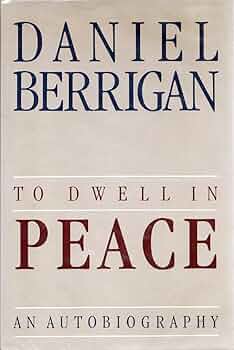 FATHER DANIEL BERRIGAN TURNED FORTY-NINE WHILE HIDING FROM THE FBI IN THE SPRING OF 1970, though pictures from that time suggest the playfulness of a younger man. In shots taken by civil rights movement photographer Bob Fitch, Berrigan mugs at the camera from under a rat’s-nest wig and sombrero, a lampoon of disguise. Beanie-clad, he grins in a parking lot while holding a Coke, takes a comically large step in sparse woods, smiles in a daylit diner booth at someone out of frame. At Cornell University’s Freedom Seder, part of a multiday festival thrown in his honor, he flashes a peace sign from the stage, sunglasses pointlessly and conspicuously on. He’d planned to surrender himself there, then decided not to, and escaped.
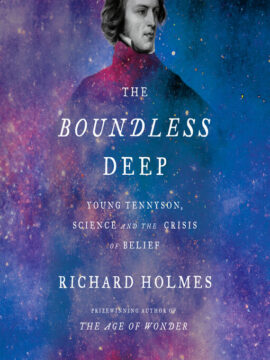 “My dear Fitz, Ain’t I a beast for not answering you before? Not that I am going to write to you now,” the 1847 letter begins. “My Book is out and I hate it and so no doubt will you.” It’s signed, “A. Tennyson.”
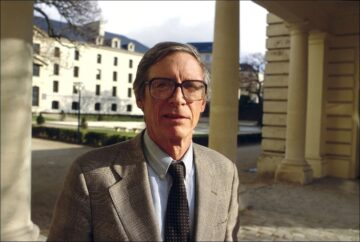 According to popular perception, universities have become cesspools of radical left-wing indoctrination, dominated by cultural Marxism, critical race theory, and post-modernism. As someone who has been working on the inside through the past three decades of intellectual fads and enthusiasms, I am sorry to report that, not only is this false, it is the opposite of true. The hegemonic ideology in the fields of political philosophy, legal theory, and political science, throughout my entire career, has been American liberalism. And not just any old American liberalism, but rather the very specific manifestation of this tradition articulated in the work of John Rawls.
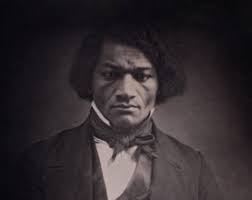 Today is the day that abolitionist and statesman Frederick Douglass chose to celebrate as his birthday. Those born into slavery, as Douglass was, were of course never told their actual birthdays; masters hardly considered such a thing worth remembering. But Douglass later recalled that the last time he had seen his mother was at the age of 7, on an occasion when she had given him a heart-shaped ginger cake to eat, and had called him her “Valentine.” Since she lived on a distant plantation—slave masters typically separated mothers and children as soon as possible, in order to maintain their dominance—it must have been a long walk for her to visit him, he surmised. Thus it must have been a special occasion; perhaps his birthday. Thus he decided to celebrate February 14.
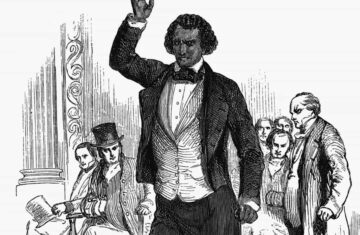 Frederick Douglass sits in the pantheon of Black history figures. Born into slavery, he made a daring escape North, wrote best-selling autobiographies and went on to become one of the nation’s most powerful voices against human bondage. He stands as the most influential civil and human rights advocate of the 19th century. Perhaps his greatest legacy? He never shied away from hard truths.
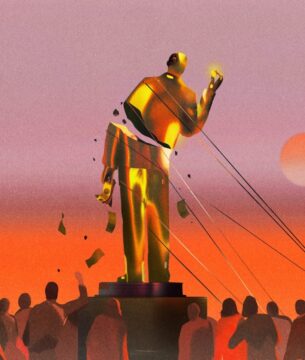 When inequality is too vast to last, it doesn’t. The skyrocketing valuations of Big Tech and the staggering concentration of wealth accruing to its titans only presage a revolt against the depredations of disparity.