
Robin McKie in The Guardian:
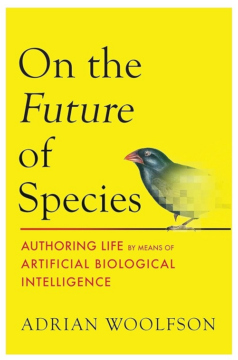 Proteins are the building blocks of life. They make up our hair, bone, skin and muscle and are constructed of folded sequences of amino acids. Scientists knew how to create one-dimensional chains but were unable to predict how the resulting strings of amino acids would fold up to form three-dimensional proteins, whose shape determines their function. This greatly restrained their ability to generate new proteins.
Then, in 2020, AlphaFold2, drawing on neural-network technology also used in systems like ChatGPT, cracked the folding code. The structures of complex proteins can now be predicted with confidence, and as a result we are able to create novel ones for use in medicine or elsewhere.
And if we can make new proteins, we can also contemplate bringing into being new forms of life, writes Woolfson. “Biology now stands at the threshold of transitioning from a largely descriptive science into a generative one. In the future, we won’t just catalogue species, we will create them.”
More here.
Enjoying the content on 3QD? Help keep us going by donating now.