
Vivien Schweitzer at The American Scholar:
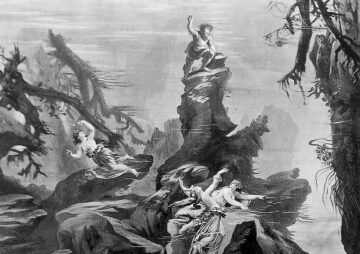 Ask most opera lovers what comes to mind when they think about Richard Wagner’s Ring cycle, and they’ll likely mention the huge voices and lush, booming orchestras of the so-called golden age of the 1930s and ’40s—not the transparent, mellow instrumental sounds and light, flexible voices typical of period-instrument performances. Indeed, when I mentioned to friends that I’d recently attended a memorable historically informed performance of Siegfried, the third opera in the Ring cycle, I was met with bemused looks.
Beginning in the mid-20th century, the historically informed performance (HIP) movement led to dramatic reinterpretations of Renaissance, baroque, classical, and some Romantic era music. Proponents relied on period instruments (or replicas) and scholarly research to convey the stylistic norms and sounds of those earlier eras. In general, this led to swifter tempos and thinner textures; musicians used vibrato and portamento (the smooth gliding transition from one note to another) sparingly, if at all.
more here.
Enjoying the content on 3QD? Help keep us going by donating now.