
Carolyn Eastman in Smithsonian:
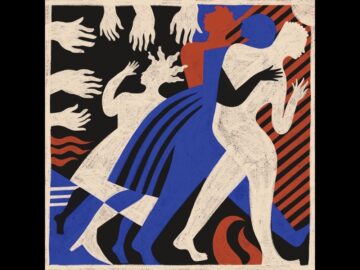 In 1796, when slavery remained both legal and common in New York, a white man named Aquila Giles set out to free Hannah, a 30-year-old woman he enslaved, and her daughter, Abigail, who was about 5. The manumission deed he signed declared his commitment “to serve the cause of humanity by promoting the liberation of such slaves as manifest a disposition to become useful members of society.” But he also put severe limits on Hannah’s and Abigail’s liberty. Hannah, he explained, would receive her freedom six years later—if she continued “to behave with fidelity and zeal in my service.” Abigail would not gain her freedom until 1820, when she would arrive at the age of about 29.
Manumitted in the name of humanity and yet still unfree: Enslaved people like Hannah and Abigail lived for years in this limbo, as did thousands of other Black people in several Northern states during the early Republic. Their extraordinary stories and those of 300 other Black New Yorkers are accessible online for the first time, now that the Museum of the City of New York has digitized a collection of manumission records dating between 1785 and 1809. These legal documents reveal that the horrors of slavery were not confined to the South. In fact, while some enslaved people in the so-called free states of the North were manumitted—freed individually by their enslavers—without restrictions, others like Hannah and Abigail had to wait decades to enjoy freedom. Yet as much as these documents illustrate white New Yorkers’ reluctance to end the institution of slavery, they also underline the bold efforts by African Americans to free themselves, one person at a time.
More here.
Enjoying the content on 3QD? Help keep us going by donating now.
 I
I Opening with a title card that claims its story is “inspired by true events,” The Deliverance chronicles the plight of the Pittsburgh-based Jackson family as they contend with a demonic possession that threatens to destroy them from the inside out. Directed by
  The message emblazoned on a walkway window at the airport in Burlington, Vt., is a startling departure from the usual tourism posters and welcome banners: “Addiction is not a choice. It’s a disease that can happen to anyone.” The statement is part of a public service campaign in yet another community assailed by drug use, intended to reduce stigma and encourage treatment.
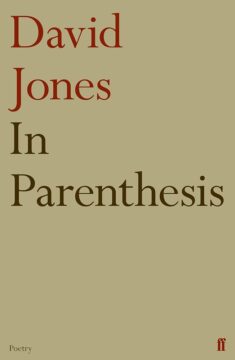 I’m accustomed to saying that In Parenthesis by David Jones is the greatest work of modernist poetry you’ve never read. It exists in the same class as The Waste Land and The Cantos, and is arguably second only to the former. Eliot himself considered Jones a writer of “major importance” and the poem “a work of genius.” W. H. Auden likewise regarded it as “a masterpiece” and “the greatest book about the First World War.” Despite this, it suffered decades of critical neglect, perhaps because of its status as a “prose poem,” or perhaps because, until the late 1980s, Faber didn’t officially list Jones among its published poets, leading to its own parenthetical status in the modernist canon. One can go through an entire undergraduate program and never encounter Jones. This would have been the case for me, too, had I not studied under Thomas Dilworth, an eminent Jones scholar, who has described In Parenthesis as “probably the greatest literary work on war in English” and “the only great epic since Paradise Lost.”
 In recent years, ‘canon-expansion’ has been a hot-button topic, as philosophers increasingly find the exclusivity of the field antithetical to its universal aspirations. As Jay Garfield remarks, it is as irrational ‘to ignore everything not written in the Eurosphere’ as it would be to ‘only read philosophy published on Tuesdays.’ And yet, academic philosophy largely has done just that. It is only in the past few decades that the mainstream has begun to engage seriously with the work of women and non-Western thinkers. Often, this endeavour involves looking beyond the confines of what, historically, has been called ‘philosophy’.
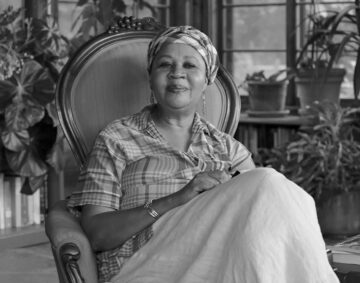 Jamaica Kincaid was born Elaine Potter Richardson on Antigua in 1949. When she was sixteen, her family interrupted her education, sending her to work as a nanny in New York. In time, she put herself on another path. She went from the New School in Manhattan to Franconia College in New Hampshire, and worked at Magnum Photos and at the teen magazine Ingenue. In the mid-’70s, she began to write for The Village Voice, but it was at The New Yorker, where she became a regular columnist for the Talk of the Town section, that everything changed for her. Her early fiction, much of which also appeared in that magazine, was collected in At the Bottom of the River (1983), a book that, like her Talk stories, announced her themes, her style, the uncanny purity of her prose. She has published the novels Annie John (1985), Lucy (1990), The Autobiography of My Mother (1996), Mr. Potter (2002), and See Now Then (2013). A children’s book, Annie, Gwen, Lilly, Pam and Tulip, came out in 1986. Aside from the collected Talk Stories (2001), her nonfiction works include A Small Place (1988), a reckoning with the colonial legacy on Antigua; My Brother (1997), a memoir of the tragedy of AIDS in her family; and two books on gardening, My Garden (Book) (1999) and Among Flowers: A Walk in the Himalaya (2005).
 The United States Constitution is in trouble. After Donald Trump lost the 2020 election, he called for the “
 Earlier this year
 “I
“I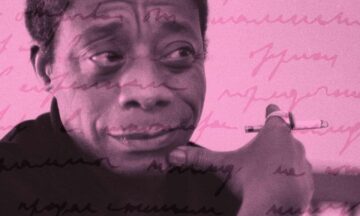 Baldwin was 33 in 1957, when he published his short story Sonny’s Blues, and it might be said that the whole of his lifetime went into the story. Readers today coming for the first time to this tale of Harlem life and heroin addiction might view it in contemporary terms, and there’s no harm in that: the messages in the story are as evergreen as the biblical allusions Baldwin uses in the story. But it is also worth recalling that in 1957 there was no Civil Rights Act, the struggle over Jim Crow laws and segregation had a long way to go, and racial conditions and inequalities were deplorable and disregarded by most white Americans. The story poses two brothers’ estrangement over addiction and their ultimate rapprochement as a quietly implicit analogy to racial division and an inspiration toward unity and love, and rides, as its title suggests, on music, specifically jazz. Only a reader with a heart of stone will fail to be moved to tears of recognition, sorrow and joy when the story reaches its conclusion.
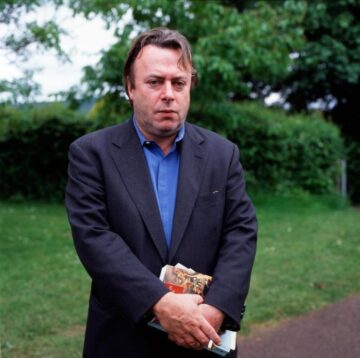 Like Saul Bellow’s Von Humboldt Fleisher, Hitchens was a “champion detractor,” a terrific hater, and always more fun to read when he was denouncing than when he was praising. Rare is the enemy or ideological foe who gets mentioned in these pages without incurring a quick swat of the pen. Thus, we are treated to “the sinister cretin Reagan,” “that recreational vulpicide Roger Scruton,” “Senator Karl Mundt, a dinosaur Republican and tireless witch-hunter,” “James Jesus Angleton, crazed and criminal head of the CIA,” and so on. Some critics have found such comments silly or bad-mannered. “He was always too ready with abuse,” George Scialabba wrote after Hitchens’s death. I agree, and no doubt being so amused by name-calling is a bad habit, but reading these essays I found it one I was more than happy to indulge.
 From causing a stir