Stephen M. Walt in The Ideas Letter:
 This introductory essay advances two main claims. First, I argue that although America’s relative power has declined from its post-Cold War peak, this trend is not as profound as pessimists maintain. The United States still retains enormous advantages relative to all other powers; barring a prolonged series of self-inflicted wounds, it will be the most powerful state in the world for many years to come. Unfortunately, the possibility of decline hastened by misguided policy decisions cannot be ruled out.
Second, I suggest that there is little to fear if America’s relative power declines somewhat, provided US leaders accept this development and adjust their policies accordingly. On the contrary, a more even distribution of power might be beneficial for the United States and for many others around the world. The United States does not need a position of unchallenged primacy to be secure or prosperous, and a somewhat more even distribution of power would force Washington to eschew the dangerous combination of counterproductive unilateralism and liberal hubris that has roiled world politics in recent decades. Although a few states may be alarmed if they can no longer count on unconditional US protection, on balance a modest decline in America’s power position might be a good thing.
More here.
Enjoying the content on 3QD? Help keep us going by donating now.
 M
M T
T Johns Hopkins University-led researchers, working with the Biomarkers for Older Controls at Risk for Dementia (BIOCARD) cohort, have found that certain factors are linked to faster brain shrinkage and quicker progression from normal thinking abilities to mild cognitive impairment (MCI). People with type 2 diabetes and low levels of specific proteins in their cerebrospinal fluid showed more rapid brain changes and developed MCI sooner than others.
 In Vermeer’s Woman in Blue Reading a Letter, the observer is drawn into a simple domestic scene: the titular woman stands illuminated in the light of, we presume, an unseen window. The expression on her face as she reads is perhaps one of surprise, certainly one of concentration. In this vivid, static painting, she seems even more still and more rooted, unmoving though clearly moved by what she is reading. And the observer is similarly absorbed by this intimate moment.
 JAMIE HOOD: Hello!
 When, on January 19, 1939, W.H. Auden boarded at Southampton a ship bound for New York City, he could not have known that he would never live in England again. But some months earlier, he had told his friend Christopher Isherwood that he wanted to settle permanently in the United States. Almost as soon as he arrived in New York, he began to rethink his calling as a poet, and, moreover, to reconsider the social role and function of poetry. (He also began a spiritual pilgrimage that would lead him to embrace the Christian faith of his childhood.)
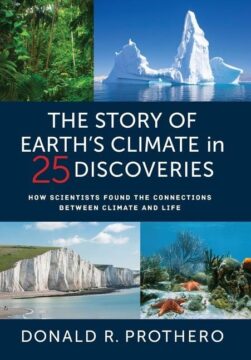 An important goal for Prothero is to explain how we know what we know so that readers understand how the climate works and why it changes. As such, much attention is given to the numerous lines of evidence on which palaeoclimatology draws. The fossils that show
  In a landmark study, the psychologist Philip Tetlock evaluated several decades of predictions about political and economic events. He
 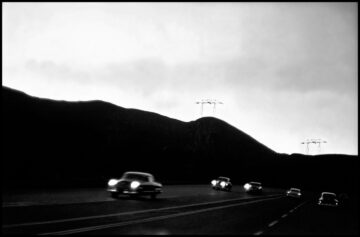 I want to make the case for the power of thinking in the third person. The first person, of course, comes quite naturally to us. We have a vivid sense of our experiences and perspectives: This is who and what I am. People will live their lives with “main character energy.” Yet, with a little more work, we can also view ourselves the way historians and social scientists might: as creatures shaped by larger forces and bound by a culture’s pre-written scripts. That means seeing ourselves as the inheritor and inhabitant of various social identities — and, therefore, as a person like every other.
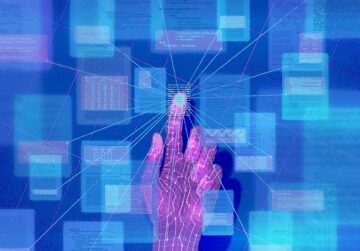 When Sam Rodriques was a neurobiology graduate student, he was struck by a fundamental limitation of science. Even if researchers had already produced all the information needed to understand a human cell or a brain, “I’m not sure we would know it”, he says, “because no human has the ability to understand or read all the literature and get a comprehensive view.”
 In all of English there are few words rich enough in their history and variety of use to warrant a dedicated dictionary that runs to hundreds of pages and multiple editions. That fuck is at the same time one of the most notorious, popular, and emotive words in the language makes it all the more fascinating—and deserving of the attention given to it in this volume.