
Michael Tomasky at The New Republic:
 Weren’t they bothered that Trump is a convicted felon? An adjudicated rapist? Didn’t his invocation of violence against Liz Cheney, or 50 other examples of his disgusting imprecations, obviously disqualify him? And couldn’t they see that Harris, whatever her shortcomings, was a fundamentally smart, honest, well-meaning person who would show basic respect for the Constitution and wouldn’t do anything weird as president?
The answer is obviously no—not enough people were able to see any of those things. At which point people throw up their hands and say, “I give up.”
But this line of analysis requires that we ask one more question. And it’s the crucial one: Why didn’t a majority of voters see these things? And understanding the answer to that question is how we start to dig out of this tragic mess.
The answer is the right-wing media. Today, the right-wing media—Fox News (and the entire News Corp.), Newsmax, One America News Network, the Sinclair network of radio and TV stations and newspapers, iHeart Media (formerly Clear Channel), the Bott Radio Network (Christian radio), Elon Musk’s X, the huge podcasts like Joe Rogan’s, and much more—sets the news agenda in this country.
More here.
Enjoying the content on 3QD? Help keep us going by donating now.
 L
L As a young boy growing up in the Netherlands in the 1990s, Sander van der Linden learned that most of his mother’s relatives, who were Jewish, had been killed by the Nazis, in the grip of racist ideology. At school, he was confronted with antisemitic conspiracy theories still circulating in Europe. It all got him wondering about the power of propaganda and how people become convinced of falsehoods.
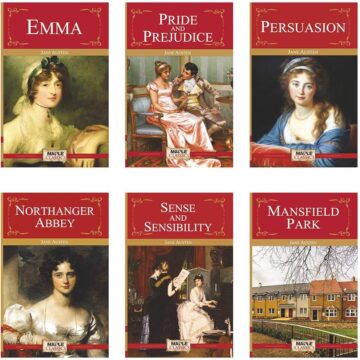
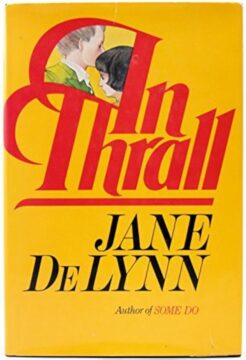 Fiction about young girls has often been in thrall to silence, secrecy, and evasion. In Jane Austen’s Mansfield Park, for example, young Fanny Price moves on tiptoe, daring anyone to notice her. Instead, all the noticing is done by her. Her duty is not merely to stay in the shadows but also to remain quietly pleasant and accommodating. So, too, the young Catherine Sloper in Henry James’s Washington Square shares her feelings with no one, and thus her feelings deepen. She is at her most interesting when she is at her most silent and withdrawn.
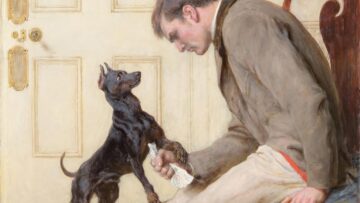 In the 19th and early 20th century, under English and Unites States law, jilted lovers could sue former partners for breaking their hearts. ‘Heartbalm torts’, which continue to be on the rulebooks of some US states to this day, were a category of legal actions that could be brought against romantic misconduct. The underlying idea was that wrongful romantic or sexual behaviour could cause harm that should be compensated by its causer. The sufferer of such harm, in turn, was entitled to receive damages, or solatium, from the inflictor. Most popular among the heartbalm torts were actions for broken engagements, adultery, and seduction.
 Two-thirds of the world’s food comes today from
  I
I Author
  A scientist who successfully treated her own
  A
A BLVR: You’ve said you want to honor all the poets “whose rapturous ecstasy overwhelmed even language’s ability to transcribe it.” Many of those, I imagine, are the authors you included as the editor of The Penguin Book of Spiritual Verse: 110 Poets and the Divine. Spiritual and religious writing offers some of the deepest considerations of the ineffable but feels a little taboo in our increasingly secular culture.